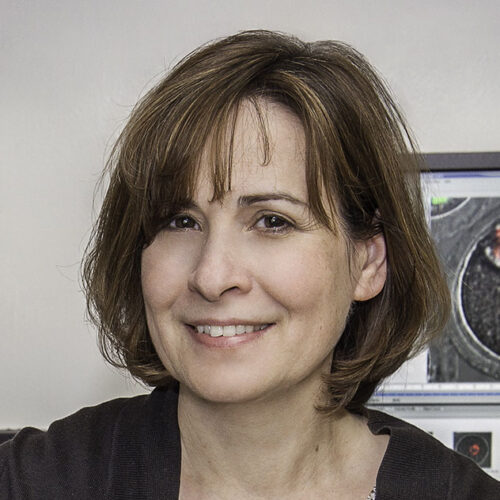
Maria M. Viveiros is an Associate Professor and Assistant Department Head in the Department of Physiology and Pharmacology at the University of Georgia’s College of Veterinary Medicine. Her research integrates experimental approaches like live cell imaging, molecular biology, and genetic mouse models to study meiotic division accuracy in oocytes, genomic stability, and the effects of environmental toxicants on embryonic development. She co-leads the Dr. Viveiros’s Lab and participates in interdisciplinary programs such as the Interdisciplinary Toxicology and Regenerative Biosciences Programs. Dr. Viveiros holds a PhD in Physiology and Pharmacology from the University of Guelph (Canada), an MSc from the same institution, and a BSc from McMaster University (Canada). She coordinates multiple graduate courses, including Integrative Systems Physiology I and II (VPHY 8210 and VPHY 8250), and leads the Endocrine and Reproductive Systems I course (VETM 5194). Her research interests focus on cell and developmental biology, regenerative medicine, reproductive physiology, and toxicology. Key projects address mechanisms regulating meiotic spindle assembly, monitoring chromosome attachment, and assessing how aging and environmental factors disrupt these processes. She explores epigenetic control of oocyte maturation, centromere function, and the impact of chemicals like bisphenol on gamete and embryo health. Publications highlight her work on pericentric satellite transcription, bisphenol toxicity, and epigenetic modifiers in oogenesis. Her contributions bridge molecular and cellular mechanisms with broader implications for human health, such as Down Syndrome and pregnancy loss linked to meiotic errors. She also investigates the role of proteins like ATRX, NEDD1, and Aurora Kinase A in spindle stability and chromosome segregation.