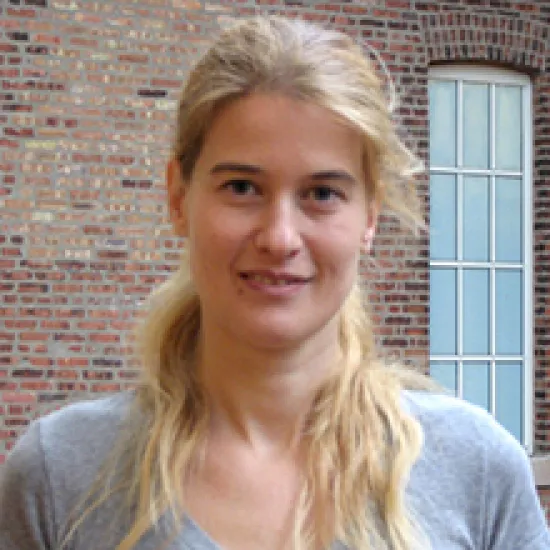
Margrit Betke is a Professor of Computer Science at Boston University, serving as Director of the Master's Admissions and Director of the Master's in AI Program. She co-leads the Artificial Intelligence Research Initiative and the Image and Video Computing Research Group. Her research focuses on computer vision, medical image analysis, human-computer interfaces, and assistive technologies, with notable contributions to the Camera Mouse and lung tumor tracking systems. She holds a PhD from MIT and has published over 200 papers. Her honors include the NSF Early Career Award and being named a Top 10 Woman to Watch in New England. Education: PhD in Computer Science and Electrical Engineering from MIT (1995). Research spans medical imaging, AI for disabilities, and computer vision applications. Her work includes developing patented algorithms for pulmonary nodule detection and the Camera Mouse, a free assistive technology. Awards include the National Science Foundation Early Career Award (2001), Top 10 Women to Watch (2005), and Senior Member statuses in ACM and IEEE (2012). She has advised numerous students, including fourteen PhD graduates and current researchers in AI and assistive tech. Grants include NSF BIGDATA (2018) for public communication analysis and ONR MURI (2018) for neuroscience-inspired robotics. Her labs and teams focus on AI ethics, medical imaging, and multimodal data analysis.
Dr. Marie-Luce Bourguet is a Senior Lecturer in Computer Science at Queen Mary University of London's School of Electronic Engineering and Computer Science. She specializes in Human-Computer Interaction (HCI), multimedia signal processing, and educational technology, with a focus on applying AI and immersive technologies to enhance learning experiences. She teaches in the joint QMUL-BUPT program and leads initiatives such as the EECS Educational Scholarship Centre and the Centre for Academic Inclusion in Science and Engineering. Bourguet holds Senior Fellow status from the HEA and is a Senior Member of IEEE. Education: PhD in Computer Science (details unspecified). Research Interests: HCI, pervasive computing, AI-driven education, and inclusive learning technologies. Her teaching includes modules like Multimedia Fundamentals and 3D Graphics Programming, emphasizing digital media processing, interactive design, and immersive learning. Recent research explores avatar-based instruction, metaverse collaboration, and robot-audience interaction. Awards include HEA Senior Fellowship and IEEE Senior Membership. Awards: Senior Fellow of HEA (202?), Senior Member of IEEE (202?).
Roles & Affiliations Marientina Gotsis is a Professor of Practice at the Interactive Media & Games Division within the School of Cinematic Arts at the University of Southern California (USC). She also serves as a Visiting Professor at the Aristotle University of Thessaloniki School of Medicine in Greece. As founder/director of USC's Creative Media & Behavioral Health Center (CMBHC) , she leads The Garden , an inclusive interdisciplinary research lab focused on healthcare interventions through entertainment media. She co-founded the world's first Media Arts, Games & Health MA program (2015) and spearheaded USC's Games for Health Initiative since 2007. Education BFA in Photography/Film/Interactive Media from UIC (Electronic Visualization Laboratory) MFA in Electronic Visualization from UIC EVL Research Focus Gotsis pioneers serious games addressing health challenges such as autism, PTSD, Parkinson's, obesity, and palliative care. Her work integrates VR , tabletop games, and social media to create accessible tools for: Therapeutic interventions Behavioral change Educational outreach Notable creations include The Brain Architecture Game (2008) and Virtual Sprouts . She emphasizes co-design principles , involving patients and communities in development processes. Grants & Collaborations Her research has been funded by: National Institutes of Health (NIH) Robert Wood Johnson Foundation Department of Defense Children's Hospital Los Angeles She collaborates across disciplines with institutions like Keck School of Medicine and the Shafallah Center for Special Needs Children. Labs & Leadership Leadership roles include: Former co-director, Center for Interactive Media Technologies in Healthcare (CIMTH) Co-director, SMART-VR Rehabilitation Center Advisor to 8+ health equity initiatives
Alessandro Visconti is a PhD student in Computer and Systems Engineering (38th cycle, 2022-2025) at the Polytechnic University of Turin, affiliated with the Department of Control and Computer Science (DAUIN). He serves as an external lecturer and teaching assistant, actively contributing to academic instruction. BSc & MSc in Cinema and Media Engineering, Polytechnic University of Turin (2019, 2021) PhD candidate researching digital twinning, metaverse social interaction, and virtual presence Member of GRAINS (Graphics and Intelligent Systems) group and VR@POLITO lab His research focuses on advancing the Metaverse through consumer technology integration and AI-driven methods, aiming to enhance user immersion and social engagement in virtual environments. Key themes include real-time application development, facial mimicry synthesis, and social VR dynamics. His publications (2023-2025) demonstrate expertise in Metaverse architecture, VR education, and emotion conveyance through avatars. Awards include the 2024 IEEE ICIR Best Paper Award and top 10 most-cited recognition in 2025. 2024: Best Paper Award, IEEE ICIR 2025: Top 10 Most-Cited Publication, Computer Animation and Virtual Worlds Visconti teaches courses like Innovation Management & ICT Product Development, Object-Oriented Programming, and Data & Algorithms, while collaborating on interdisciplinary projects spanning aerospace and management engineering.
Jianbo Jiao is an Associate Professor at the School of Computer Science, University of Birmingham . He leads the MIx (Machine Intelligence + x) research group and holds a Fellowship of the Higher Education Academy . His academic journey includes a PhD in Computer Science from City University of Hong Kong (supported by the Hong Kong PhD Fellowship), postdoctoral work at University of Oxford (BioMedIA and VGG groups), and visiting roles at University of Illinois Urbana-Champaign (IFP group) and Tencent AI Lab . Research Interests: Computer Vision Machine Learning Healthcare Applications AI for Science His work focuses on open-world representation learning with reduced supervision, leveraging multi-modal auxiliary information. This includes significant contributions to medical imaging , 3D scene reconstruction , and AI4Science applications. He also explores transformer models , few-shot learning , and cross-modal knowledge transfer . Publication Trends: Recent articles highlight advancements in medical imaging (fetal ultrasound analysis), 3D scene modeling (Gaussian splatting, novel view synthesis), and multi-modal learning (audio-visual fusion). Key venues include ICLR , CVPR , NeurIPS , and ECCV . Scientific Recognition: Best Paper & Best Presentation (Runner-Up) at MICCAI 2024 ASMUS Workshop Amazon Research Award (2024) Royal Society Short Industry Fellowship (2023) International Exchanges Grant (2023) Outstanding Reviewer Awards at NeurIPS, ICML, and ACCV Academic Service: He serves as Area Chair for NeurIPS , ICML , and ACM MM , and as Associate Editor for T-CSVT , TMLR , and The Visual Computer .
Jens Lundström is a Senior Lecturer at the School of Information Technology, Halmstad University. His research and teaching focus on Machine Learning and Artificial Intelligence, particularly their applications in healthcare, patient experience, and quality of life improvement. Research Area Leader for AI in CAISR Health Coordinator for Halmstad Professionals network (AI, data analytics, cybersecurity, service design) His research integrates applied and theoretical Machine Learning with healthcare domains, covering synthetic data generation, smart home systems, and data privacy. Recent publications highlight his contributions to Explainable AI, Generative Adversarial Networks, and robustness in Deep Learning for health and traffic data. No specific scientific awards or students are mentioned in the provided texts.
Bert Timmermans is a Senior Lecturer in the School of Psychology at the University of Aberdeen, where he has been working since 2013. He leads the SInC (Social Interaction and Cognition) lab, focusing on social cognition and consciousness research. His work bridges experimental psychology with neuroscience approaches to understand how humans interact with each other and with technology. PhD in Psychology (Social Cognition), Vrije Universiteit Brussel (2006) Master in Cognitive Science, Université Libre de Bruxelles (1999) MSc in Psychology (Clinical/Experimental), Vrije Universiteit Brussel (1998) Bert Timmermans' research focuses on social cognition, specifically examining social interaction, action contingencies, interaction dynamics, gaze behavior, eye tracking, social reward mechanisms, virtual avatars, and social agency. His consciousness research investigates perceptual awareness, metacognition, implicit learning, subliminal perception, and agency. He employs advanced methodologies including dual interactive eye tracking with virtual avatars to study real-time social interactions. His work has significant implications for understanding social difficulties in conditions like autism spectrum disorder and developing better human-AI interaction systems. His recent publications demonstrate a strong focus on the dynamics of social interaction, particularly examining how gaze behavior, temporal binding, and social agency function in both human-human and human-AI interactions. His research increasingly integrates computational approaches with traditional psychological methods, exploring how social rewards drive motor learning and how we distinguish between human and computer-generated behaviors in interactive contexts. Scientific Awards and Recognition Higher Education Academy Fellow (2018, University of Aberdeen) Timmermans has successfully secured multiple competitive research grants including a Carnegie Trust Research Incentive Grant (2019-2023), a Marie Curie Career Integration Grant (2015-2019), a Volkswagen Foundation grant (2010-2013), and a Marie Curie Intra-European Fellowship (2009-2011). He actively supervises PhD students and postdoctoral researchers through the SInC lab, with current projects including 'Sense of agency in interactions with AI versus humans' funded by BBSRC EastBio. His teaching responsibilities span undergraduate methodology courses and consciousness studies, as well as postgraduate research methods. As principal investigator of the SInC lab, Timmermans leads a team investigating social cognition through innovative methodologies including dual interactive eye tracking and virtual reality. His lab members work on projects examining visual perspective taking, sense of agency in social interaction, and behavioral effects of gaze in social contexts. He collaborates extensively with researchers across Europe on consciousness and social cognition research.
Alex Reppel is a Reader in Digital Innovation at the School of Business and Management , Royal Holloway, University of London, within the Department of Information and Operations Management. His work explores the intersection of digital technologies and societal impact. Role: Reader in Digital Innovation Institution: Royal Holloway, University of London School: School of Business and Management Email: Alexander.Reppel@rhul.ac.uk Research interests focus on: Self-Sovereign Identity : Studying decentralized identifiers and personal data ownership. Human Representation in Immersive Environments : Examining avatars and digital embodiment in virtual spaces. Visual and Narrative Methodologies : Using storytelling and visual analysis in digital research. Recent publications highlight trends in: Metaverse and AI : Design fiction for digital services and ethical implications of generative AI in marketing. Digital Identity : Impact of decentralized identifiers on consumer behavior. Immersive Technologies : Representational challenges in virtual environments. Scientific awards include: George Fisk Award (2023, 2024) College Teaching Prize: Excellence Commendation (2019) Mittelstaedt Award (2019) Supervision and grants : He supervises PhD students in digital innovation and has secured funding from the Arts & Humanities Research Council and Innovate UK for projects like CoSTAR (National R&D Lab for Creative Industries) and Trading Music Memorabilia in the Metaverse .
M. Çağkan Uludağlı is a Researcher in the Department of Computer Engineering at Izmir University of Economics . He holds a BSc in Computer Engineering from İzmir Institute of Technology (2012) and an MSc in Game Technologies from Middle East Technical University (2017) . Current research focuses on player-computer interaction and game AI Specializes in VR/AR applications for embodiment studies Contributing to social network generation and avatar psychology Research Trends : Recent publications highlight interdisciplinary work spanning virtual reality , game algorithm design , and social network modeling . His 2024 paper introduces novel methods for community-driven network generation, while 2023 work explores AI decision-making architectures for game characters. Laboratory Affiliation : Active member of the Network Lab at Izmir University of Economics.
Georg Eckmayr is a multidisciplinary Lecturer at the University of Vienna , Department of Theatre, Film and Media Studies. He operates at the intersection of digital art, media theory, and algorithmic research, focusing on the entanglement of physical and machine-based realms. Doctorate under Peter Weibel on technical images Supervised academic programs at University of Applied Sciences St. Poelten Research Interests include: Digital culture and knowledge systems Algorithm-based sensuality and synthetic perception Media theory for post-identity societies Cross-disciplinary approaches (systems theory, feminist epistemology) Artistic Practice spans networked sculptures, robotic performances, and digitally signed objects, exploring contradiction as a productive force. His 2025 exhibition RAW MATERIAL & DATA GESTURES examines algorithmic politics. Scientific Recognition : 2006 Editorial Award, Vienna, @ KUNSTRAUM NOE Featured in RGBMTL 2025 (Montreal) and Hereafter The Art Project Academic Contributions include 15 recent articles on digital operative space, AI perception systems, and decentralized authorship, with keywords spanning Computer Science , Media Studies , and Artificial Intelligence . Collaborations with institutions like objkt.com and Studio Offbeat highlight his work.
Terrasa Ulm is a Professor of Practice at Clark University’s Becker School of Design & Technology, specializing in emergent media, game development, and interactive art. They hold an MFA from Lesley University, a graduate degree in interactive programming from Parsons School of Design (The New School), and a computer science background from Smith College. Ulm is a pioneering figure in serious games, experimental media, and AI-driven interactive experiences. Research focuses on games for social impact, AI’s role in new media, and extended reality (XR) applications. Notable works include Waiting for Obols , an AI-driven interactive play, and Boehm Porcelain , a VR cultural heritage project. Their art explores themes of human-machine interaction, narrative design, and community-driven creativity. Recent grants include NSF funding for data science education and climate justice projects, along with Fulbright and Grammy Foundation support. Recipient of the Higgins Institute Arts & Tech grant and Sherman Fairchild Foundation awards. Ulm leads interdisciplinary projects at Clark, including interactive theatre experiments and collaborative ventures with local maker-spaces. Their work emphasizes practice-based research, bridging academic innovation with community engagement.
Dr. Muhammad Akram is a Senior Lecturer (Associate Professor) in Digital Marketing & Strategy at the Department of Management & Marketing, Essex Business School (University of Essex). He serves as Programme Director for MSc Marketing and MSc Digital Marketing & Analytics programmes. His research focuses on digital marketing strategies, consumer behavior in digitally disruptive environments, and metaverse marketing, with emphasis on ROI analysis and ethical considerations. He has published in top journals like Psychology & Marketing and Journal of Business Research , and edited special issues like the 2022 Technological Forecasting & Social Change on Social Customer Journey. Education: PhD and MRes from IAE Aix-Marseille Graduate School of Management, France. Professional affiliations include Fellow of the Higher Education Academy (FHEA), Commonwealth Scholarship Commission Advisor, and editorial roles in leading journals. Research interests span digital marketing effectiveness, omnichannel strategies, metaverse marketing, and marketing analytics methodologies. He actively supervises PhD students in Management and Marketing, with recent completions including Adam Adams (2024) and Mohammed Saad A Al Shayi (2025). Current grants include Innovate to Elevate projects for local businesses and KTP applications. Teaching includes Marketing Strategy (BE554), Marketing Analytics (BE564), and capstone/dissertation modules. His work bridges academic research with industry applications through collaborative projects and executive education.
Guo Freeman is a Dean's Associate Professor in Clemson University's School of Computing, where she directs the Gaming and Mediated Experience Lab (CUGAME). Her research examines social dynamics in multiplayer games, social VR, and streaming platforms. Research explores harassment mitigation in virtual spaces, AI-assisted game development, and LGBTQ+ experiences in social VR. Funded projects include NSF-supported work on generative AI for creative workflows and social VR safety mechanisms. Teaching includes game design and computing ethics courses. Extensive service includes leadership roles as General Chair for ACM CHI PLAY 2024 and CHI Games Subcommittee Chair. Education includes a Ph.D. in Information Science from Indiana University. Awards: 14 Best Paper Honors from ACM conferences Grants: NSF support for VR safety and AI creativity projects Students: Mentored 10+ graduate researchers in HCI and games
Sanja Fidler is an Associate Professor at the University of Toronto (Department of Computer Science) within the Mathematical and Computational Sciences School. She is also a co-founder and affiliated faculty at the Vector Institute and serves as VP of AI Research at NVIDIA. Her research focuses on the intersection of Computer Vision, Machine Learning, and Graphics, with emphasis on 3D reconstruction, generative models, and interactive methods. She previously held a Research Assistant Professor position at the Toyota Technological Institute at Chicago. Research Interests: Dr. Fidler specializes in Computer Vision and Machine Learning, particularly in areas such as 3D vision, 3D reconstruction/synthesis, object detection, and interactive scene understanding. Her work bridges graphics and vision, addressing challenges in geometric representations, generative models, and real-world applications like medical imaging and autonomous systems. Awards: She has received notable awards including the Canada CIFAR AI Chair (2018), Connaught Innovation Award (2020), NVIDIA Pioneer of AI Award (2016), and multiple outstanding reviewer distinctions at top conferences. Her teaching excellence was recognized with the Professor of the Year award by UofT's CS Student Union in 2014/2015. Collaborations & Labs: Leading the NVIDIA Toronto AI Research Lab and contributing to initiatives at the Vector Institute, her work integrates academic and industrial research. She co-organized workshops on topics like 'Geometry Meets Deep Learning' and '3D Indoor Scene Understanding' at major conferences.
Dr. Patrik Huber is a Research Fellow affiliated with the Department of Computer Science at the University of York and a Visiting Academic Researcher at the Centre for Vision, Speech and Signal Processing at the University of Surrey. His research focuses on Computer Vision, Computer Graphics, and Machine Learning, with specialization in statistical 3D face models and metrically accurate 3D avatars from 2D inputs. He earned his PhD in Computer Vision from the University of Surrey and MSc in Computer Science from the University of Basel. His research integrates classical computer vision techniques with deep learning approaches. Recent publication trends show strong emphasis on 3D face reconstruction, generative models for facial synthesis, neural surface reconstruction, and applications in biometric security. He founded 4dface Ltd, specializing in professional 3D face modeling solutions. As Principal Investigator, Dr. Huber leads projects on neural implicit representations and multimodal face generation. His work involves significant industry collaboration and technology transfer through his startup venture.