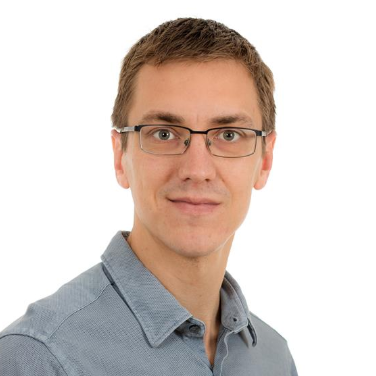
Jan Helmdag is an Assistant Professor at the Swedish Institute for Social Research (SOFI) and Managing Director of the Social Policy Indicators (SPIN) database . His work focuses on taxation, social policy design, and political economy , with particular emphasis on income inequality mitigation through institutional data analysis. SPIN's collaboration with the Democracy, Environment, Migration, Social Policy, Conflict, and Representation (DEMSCORE) infrastructure highlights his cross-domain engagement. Research Interests : Helmdag investigates how social policy architecture affects income inequality , notably through his Benefit Dualization Index (BDI) which quantifies welfare state disparities between labor market insiders and outsiders . His EU pension reform analysis reveals systemic prioritization of financial sustainability over benefit adequacy and gender modernization in socio-economic governance. Helmdag has conducted comparative studies across OECD countries on unemployment benefit dynamics and active labor market policies , demonstrating conditioned policy learning among welfare regimes . His 2024-26 FORTE-funded project on Swedish social rights dualization builds upon his extensive work in benefit replacement rate analysis and policy indicator development .
Jonas Bärgman is a Professor at Chalmers University of Technology, leading the Safety Evaluation research group within the Division of Vehicle Safety at the Mechanics and Maritime Department . His work focuses on understanding traffic safety through interdisciplinary research involving driver behavior, vehicle automation, and environmental factors in pre-crash scenarios. Key research themes include: Quantifying driver comfort zone boundaries using naturalistic driving data Developing counterfactual simulation methods for safety impact assessment Analyzing crash causation mechanisms and driver response modeling Integrating human factors into automated vehicle development Recent publications demonstrate expertise in: Automated emergency braking algorithms Lane change dynamics and timing Crash scenario generation across severity ranges Bayesian modeling of driver behavior Validation of human benchmark models for AV approval He actively contributes to: Teaching Vehicle and Traffic Safety (TME202 masters course Lecturing on Active Safety systems International standardization through ISO participation Collaborative research projects like SENSI , V4SAFETY , and SHAPE-IT
Sara Saeidian is a researcher at KTH Royal Institute of Technology's School of Electrical Engineering and Computer Science (EECS), specifically within the Information Science and Engineering department under the Intelligent systems division. She completed her doctoral dissertation titled "Pointwise Maximal Leakage: Robust, Flexible and Explainable Privacy" in 2024, establishing herself as a promising researcher in information-theoretic privacy. Dr. Saeidian's research program centers on developing a comprehensive framework for privacy-preserving systems with three essential criteria: explainability (operationally meaningful privacy guarantees), robustness (resilience against diverse adversaries), and flexibility (applicability across contexts and data types). Her primary contribution is the development and analysis of pointwise maximal leakage (PML) as a privacy measure that quantifies information leakage about a secret variable to a publicly available related variable. Her publication record from 2021-2025 demonstrates a cohesive research trajectory examining PML's theoretical foundations, composition properties, and practical applications. She has established critical relationships between PML and existing privacy notions like differential privacy, while challenging misconceptions about the impossibility of meaningful inferential privacy guarantees. Her work spans theoretical investigations of optimal privacy mechanisms under leakage constraints to practical applications in privacy-preserving machine learning frameworks like PATE. Dr. Saeidian's research has been published in premier venues including IEEE Transactions on Information Theory, IEEE Transactions on Information Forensics and Security, and proceedings of the IEEE International Symposium on Information Theory, reflecting the significance and quality of her contributions to the field of data privacy.
Nitin Chaudhary is a postdoctoral Researcher at the Department of Physical Geography and Ecosystem Science , Lund University , Sweden. He is affiliated with interdisciplinary networks such as MERGE (ModElling the Regional and Global Earth system) and BECC (Biodiversity and Ecosystem services in a Changing Climate). His work focuses on integrating methane biogeochemistry into global vegetation models like LPJ-GUESS and coupling them with regional Earth System Models ( RCA-GUESS ). He also develops CryoGrid 3.0 , a permafrost model incorporating hydrology and water-soluble tracers (dissolved organic carbons, heavy metals, isotopes). His doctoral research pioneered dynamic vegetation-hydrology-peat accumulation functionality in Arctic LPJ-GUESS to study long-term carbon processes. His 15 recent publications (including 2025, 2023, and 2022 works in One Earth , Geoscientific Model Development , and Journal of Geophysical Research: Biogeosciences ) emphasize peatland-mediated climate feedbacks , permafrost dynamics , and Arctic carbon cycling . Key trends include modeling methane emissions, quantifying carbon fluxes, and analyzing boreal ecosystem radiative effects. He actively contributes to climate science through collaborations across 5+ countries and serves as a session chair at the European Geosciences Union General Assembly 2024 . His research aligns with UN Sustainable Development Goals for climate action and life on land, with expertise in physical geography and climate science .
Miriah Meyer is a Professor in the Department of Science and Technology (ITN) at Linköping University, supported by the Wallenberg Autonomous Systems Program (WASP). Her research focuses on designing visualization tools to enhance data analysis and understanding through interdisciplinary approaches integrating computer science, design, social science, and humanities. Previously, she held positions as an Associate Professor at the University of Utah’s School of Computing and completed a postdoctoral fellowship at Harvard University. Education: Bachelor’s in Astronomy and Astrophysics, Penn State University PhD in Computer Science, University of Utah Postdoctoral Fellowship in Visualization, Harvard University Research Interests: Meyer’s work emphasizes human-centered design of visualization systems to address societal challenges. Key areas include: Exploratory and reflective data analysis Interdisciplinary methodologies Design studies in visualization Impact of technology on societal perceptions Publications: Her recent work explores feminist theory in visualization (2025), preregistration in research design (2024), and socio-technical transitions in dashboarding (2024). She advocates for rigorous, ethical practices in visualization design. Awards: Recognitions include TED Fellow (2013), MIT TR35 (2012), and Microsoft Research Faculty Fellowship (2011). Labs & Teams: Active in the Visualization and Interaction Design Group at LiU and former contributions to the Scientific Computing & Imaging Institute (SCI) at the University of Utah.
Fredrik Lindsten is a Senior Associate Professor in Machine Learning and Head of the Division of Statistics and Machine Learning at Linköping University's Department of Computer and Information Science (IDA). His research focuses on statistical machine learning, emphasizing probabilistic modeling and uncertainty quantification in methods such as approximate Bayesian inference, representation learning, and graph-based approaches. Applications span weather forecasting, materials science, biochemistry, and automotive industry challenges. Education: MSc (2008), PhD (2013) in Automatic Control from Linköping University; Postdoctoral roles at University of Cambridge, UC Berkeley, and University of Oxford. Affiliations: WASP (Wallenberg AI, Autonomous Systems and Software Program), ELLIIT (Lab for Information and Communication Technology). Research Interests: Lindsten’s work bridges statistical methodology and machine learning, particularly in quantifying uncertainty in predictions. His team explores method development across diverse applications, including spatio-temporal models and graph-based techniques. Recent projects include probabilistic weather forecasting with graph neural networks and cryo-EM reconstruction techniques. Publications: Over 25+ peer-reviewed articles, with recent highlights in Nature Methods , NeurIPS , and Physical Review Materials , focusing on Bayesian methods, generative models, and computational statistics. Awards: Ingvar Carlsson Award (Swedish Foundation for Strategic Research), Benzelius Award (Royal Society of Sciences in Uppsala). Grants & Teams: Supervises 7+ PhD students; active in collaborative projects funded by WASP, ELLIIT, and VR (Swedish Research Council). Labs/Teams: Leads the Division of Statistics and Machine Learning (STIMA) at IDA, fostering interdisciplinary research in probabilistic machine learning.
Patrik Norqvist is an Associate Professor in the Department of Physics at Umeå University , Sweden, and a recognised university teacher. He is a member of the Solar-terrestrial physics and space weather research group, conducting research and teaching across a wide spectrum of physics courses from foundation year to technical physics and teacher-training programmes. Education: Recognised university teacher qualification (exact degree titles not specified in text). Research Focus: Dr Norqvist’s work centres on space physics , with particular emphasis on the Earth’s magnetotail dynamics , auroral processes , and solar-terrestrial interactions . Using data from missions such as Cluster , THEMIS , and Freja , he investigates how energy and momentum are transported and converted within the magnetosphere and how these processes manifest as space-weather phenomena. Publication Trends: His recent articles (2002-2017) reveal a sustained focus on multi-spacecraft observations of plasma flows, magnetic reconnection, energy conversion regions, and the coupling between the solar wind and the ionosphere. Studies often combine statistical analyses with case studies to quantify the scale sizes, lifetimes, and IMF dependencies of dynamic structures in the plasma sheet and auroral regions. Scientific Awards: No specific awards or honours are listed in the provided text. Teaching & Advising: Dr Norqvist teaches at all undergraduate levels—from preparatory courses bridging upper-secondary school to advanced technical physics and teacher-programme courses. While individual PhD or Master’s students are not named in the text, his extensive publication record and research-group membership indicate active mentoring within the Solar-terrestrial physics team. Laboratory & Teams: He is affiliated with the Solar-terrestrial physics and space weather research group at Umeå University, located at Fysikhuset, Linnaeusväg 24.
Maria Hamrin is an Associate Professor of Physics at Umeå universitet, Sweden, and Director of the Engineering Programme in Physics. Her research focuses on space plasma physics, with particular emphasis on magnetosheath jets, solar wind-magnetosphere interactions, and planetary plasma environments. She holds a Docent title and is recognized as a Distinguished University Teacher. Research interests include: magnetosheath dynamics, ionospheric response to solar wind disturbances, cometary plasma environments (e.g., 67P/Churyumov-Gerasimenko), and planetary magnetospheres (e.g., Venus, Mars). Her work leverages multi-spacecraft missions (e.g., MMS, Cluster, Rosetta) and ground-based observations. Recent articles highlight studies on magnetic hole generation, bow shock current closure, and magnetotail neutral sheet dynamics. Notable contributions include revealing 3D magnetosheath jet structures and quantifying dB/dt spike occurrences across three solar cycles. Scientific Awards: Distinguished University Teacher (Umeå universitet) Labs/Teams: Head of the Solar-Terrestrial Physics and Space Weather research group Grants: Funding from Swedish Research Council and EU Horizon 2020 (inferred from publication activity)
John Barton is affiliated with the Division of Fire Safety Engineering at Lund University's Faculty of Engineering (LTH), specializing in experimental fire safety research focused on material behavior in hypoxic (low-oxygen) environments. His work utilizes cone calorimetry to investigate critical fire parameters under controlled atmospheric conditions. His primary research interests include Oxygen Concentration Effects , Cone Calorimeter Testing , Heat Release Rate Dynamics , and Fire Properties of Industrial Composites . He examines how materials like acrylonitrile butadiene styrene, polyethylene bubble wrap, and cardboard behave in reduced-oxygen settings, which has direct applications for fire safety in data centers, museums, and facilities using inert gas suppression systems. Analysis of his 2019-2022 publications reveals a consistent experimental approach to fire science, with emphasis on quantifying combustion characteristics of industrial products under oxygen-depleted conditions. His research bridges fundamental fire dynamics and practical safety engineering, particularly through the Fire-Induced Radiological Integrated Assessment project that explored aerosol generation and material flammability metrics.
Harald Hammarström serves as Professor in General Linguistics at Uppsala University's Department of Linguistics and Philology, where he maintains an active research program bridging computational methods with linguistic theory. His work fundamentally shapes modern approaches to language classification and documentation through major digital infrastructure projects. His research spans linguistic typology , historical linguistics , and computational modeling , with signature contributions to Glottocodes (standardized language identifiers) and Grambank (genealogical constraint analysis). He pioneers solutions for bibliographic bias in typological databases and develops computational frameworks for vocabulary evolution modeling. Current work emphasizes digital atlas creation, morphological typology of numeral classifiers, and integrating genetic-linguistic comparative studies. Recent publications reveal a cohesive trajectory toward methodological rigor in computational historical linguistics, combining phylogenetic modeling with real-world language documentation challenges. Key trends include correcting sampling biases in typological research, creating interoperable digital language resources, and quantifying language endangerment impacts on structural diversity through projects like the revised Pacific Language Atlas.
Linnéa Öberg serves as an Affiliated Researcher in General Linguistics at Uppsala University's Department of Linguistics and Philology, focusing on multilingual language development and disorders. Her research examines diagnostic assessment methodologies for bilingual children with developmental language impairments across multiple linguistic contexts. Education PhD (specific institution and dissertation title not provided in source materials) Research Focus Öberg's primary investigations center on vocabulary acquisition, phonological working memory, and diagnostic markers for Developmental Language Disorder (DLD) in Arabic-Swedish and Turkish-Swedish bilingual children. She analyzes how language exposure, socioeconomic status, and age influence assessment outcomes, challenging monolingual-biased diagnostic criteria through rigorous cross-linguistic comparison. Her work bridges clinical linguistics and educational practice to improve identification of language disorders in multilingual populations. Publication Trends Between 2019-2024, Öberg's research consistently addresses bilingual language assessment challenges, particularly nonword repetition tasks and vocabulary metrics for DLD diagnosis. Her publications demonstrate methodological innovation in quantifying language exposure effects and establishing culturally appropriate reference data. A significant contribution involves developing assessment frameworks that account for bilingualism's impact on diagnostic accuracy, with implications for clinical practice across Scandinavian educational contexts.
Markus Nilsson is a Postdoctoral Fellow at the Division of Engineering Geology within the Faculty of Engineering (LTH) at Lund University. His research focuses on nondestructive testing and structural health monitoring of civil engineering structures, with particular expertise in advanced ultrasonic techniques for detecting early-stage corrosion in concrete-embedded steel components. He earned his doctoral degree from Lund University in 2024, completing a thesis titled "Nonlinear Ultrasonic Evaluation for Corrosion Assessment of Steel Plates Embedded in Concrete". His educational background includes advanced studies in engineering geology and applied mechanics. Nilsson's primary research interests lie in the application of nonlinear ultrasonic methods for structural health monitoring. He investigates wave propagation phenomena, including harmonic generation and wave modulation, to detect and quantify corrosion in steel plates encased in concrete, especially in nuclear power plant containment structures. His work aims to enhance the safety and longevity of critical infrastructure through innovative non-destructive evaluation techniques. His recent publications (2023-2025) demonstrate a consistent focus on nonlinear ultrasonics for corrosion assessment in concrete-embedded steel. The research employs both linear and nonlinear evaluation approaches, with applications in nuclear infrastructure. Key contributions include the development of imaging techniques and the analysis of sidebands for early damage detection, addressing challenges in aging structures. Nilsson serves as an Assistant Supervisor for a doctoral project on non-destructive testing of glass at Lund University. He is the Principal Investigator for multiple research projects funded by the Swedish Radiation Safety Authority, Swedish Energy Agency, and Energiforsk AB. These projects target non-destructive methods for nuclear power plant components, digital twins for reactor containment, and corrosion detection in embedded steel plates.
Christel Häggström is a researcher in register-based epidemiology at Lund University, Sweden. She contributes to large-scale population studies linking obesity, metabolic factors and genetic markers to cancer risk and outcomes, with a focus on bladder and prostate malignancies. Her work supports the UN Sustainable Development Goals by generating evidence that can guide preventive strategies and optimise cancer care. Research interests Häggström’s primary research lies at the intersection of epidemiology, oncology and health economics . Key areas include: Quantifying body-mass-index and metabolic syndrome impacts on over 100 cancer subtypes using Swedish national registries. Evaluating cost-effectiveness of molecularly-guided neoadjuvant chemotherapy in muscle-invasive bladder cancer. Investigating germline PSA polymorphisms and their influence on tumour biology and clinical prognosis in prostate cancer. Methodologically she employs prospective pooled cohort designs, mediation analyses and register linkage, ensuring high external validity and policy relevance. Scientific output trends Across her 16 most recent publications (2024–2025), a clear pattern emerges of translational epidemiology : moving from descriptive risk-factor associations to actionable clinical and economic evaluations. Studies repeatedly integrate multi-source Swedish registry data (4.1 million individuals) with genomic and health-economic modelling to inform precision oncology. Supervision & grants Häggström has served as Assistant supervisor on the doctoral dissertation project “Pinpointing the Association between Obesity and Cancer Risk” (2020–2024), led by PhD candidate Sun M, with main supervisor Dr. Tanja Stocks and additional assistant supervisor Dr. Josef Fritz. The project has achieved widespread dissemination, being covered by 24 news outlets and attracting 39 Mendeley readers. Laboratory / Research group While no formal laboratory name is provided, her affiliation with Lund University’s register-based epidemiology environment and her extensive collaboration network across Sweden and Europe indicate participation in a multi-disciplinary team leveraging national quality-of-care and population registries.
Zheng Duan is a Senior Lecturer and Associate Senior Lecturer in the Department of Physical Geography and Ecosystem Science at Lund University. He holds roles as Principal Investigator in the BECC (Biodiversity and Ecosystem services in a Changing Climate) and MERGE (ModElling the Regional and Global Earth system) research groups. His research focuses on satellite remote sensing, hydrological modelling, glacier dynamics, and machine learning applications in environmental science. Duan leads several international projects, including BioClima (EU Horizon Europe) and initiatives on Tibetan Plateau lake bathymetry and Arctic hydrology. He has advised two students and published over 150 peer-reviewed articles. Notable contributions include advancing soil moisture downscaling, glacier-hydrological model integration, and drought monitoring using satellite data. His work aligns with UN SDGs 6 (Clean Water), 13 (Climate Action), and 15 (Life on Land). Education details are not explicitly provided in the text, but his research career spans institutions like the Swedish National Space Agency and Crafoord Foundation-funded projects. Collaborations include researchers from China, Sweden, and global networks through EGU General Assemblies and media engagements (e.g., interviews on lake color changes). Research interests are anchored in Earth observation technologies and their application to water cycle dynamics, ecosystem resilience, and climate change mitigation. Recent projects emphasize multi-source satellite data fusion, machine learning for hydrological prediction, and quantifying environmental variables like dissolved organic carbon in river systems. His articles collectively address themes such as drought detection, lake bathymetry estimation, and improving hydrological models through data integration. Key methodologies include triple collocation analysis, Bayesian optimization, and deep learning frameworks. Duan’s work bridges theoretical ecology with practical applications, supporting sustainable water management and climate policy. He leads 11 active/ongoing projects, including BioClima (2025–2028), which integrates Earth observations for biodiversity and climate monitoring. Grants include funding from the European Commission, Swedish National Space Agency, and Crafoord Foundation. Media participation highlights public communication of scientific findings, such as lake color changes linked to human activities. Lab affiliations include BECC and MERGE, where interdisciplinary teams tackle global environmental challenges. Future work emphasizes scaling up satellite-derived insights for policy-relevant solutions in water security and ecosystem conservation.
Fredrik Engström is a Senior Lecturer and Associate Professor in Logic at the Department of Philosophy and Logic, Faculty of Humanities, University of Gothenburg. He also serves as Vice-Dean for Postgraduate Education and Facilities within the Faculty of Humanities. He has been affiliated with the University of Gothenburg since 2006, progressing from research assistant to senior lecturer in 2018. PhD in Mathematics (2004), Chalmers University of Technology Doctoral studies partially completed at the University of Birmingham under Richard Kaye Former Senior Lecturer in Mathematics, Mid Sweden University Head of Department (2016–2021), Department of Philosophy, Linguistics and Theory of Science His research lies at the intersection of mathematical logic, philosophical logic, and cognitive modeling. Key areas include dependence logic, generalized quantifiers, definability, logicality, and the foundations of team semantics. He leads the VR-funded project The Foundations of Team Semantics: Meaning in an Enriched Framework , which explores the expressive power and philosophical implications of modern logical systems. The 15 most recent publications reflect a sustained focus on formal systems with team semantics, particularly dependence logic extended with generalized quantifiers. His work combines deep technical results in model theory and proof theory with cognitive and philosophical considerations, especially in reasoning under bounded resources and the nature of logical constants. Collaborations with prominent logicians such as Juha Kontinen, Jouko Väänänen, and Claes Strannegård highlight the interdisciplinary nature of his research. Scientific Awards: No awards listed in the provided text. Fredrik Engström has supervised or co-supervised several students, though specific names are not listed. He has led significant institutional roles, including departmental leadership and vice-dean responsibilities. His grants include funding from the Swedish Research Council (VR) for foundational research in logic. He is active in multiple research communities, presenting at international logic and philosophy workshops. He is involved in research teams focused on logic and cognition, particularly in projects combining formal logic with cognitive modeling. His future work likely continues to explore the foundations of semantics, the limits of expressiveness in logical systems, and the cognitive plausibility of formal reasoning frameworks.