معرفی
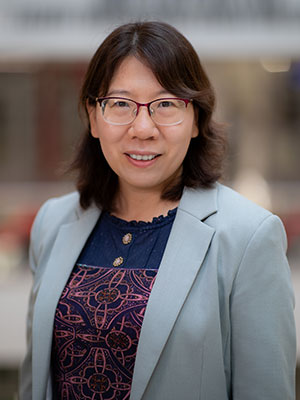
Zheng Duan is a Senior Lecturer and Associate Senior Lecturer in the Department of Physical Geography and Ecosystem Science at Lund University. He holds roles as Principal Investigator in the BECC (Biodiversity and Ecosystem services in a Changing Climate) and MERGE (ModElling the Regional and Global Earth system) research groups. His research focuses on satellite remote sensing, hydrological modelling, glacier dynamics, and machine learning applications in environmental science. Duan leads several international projects, including BioClima (EU Horizon Europe) and initiatives on Tibetan Plateau lake bathymetry and Arctic hydrology. He has advised two students and published over 150 peer-reviewed articles. Notable contributions include advancing soil moisture downscaling, glacier-hydrological model integration, and drought monitoring using satellite data. His work aligns with UN SDGs 6 (Clean Water), 13 (Climate Action), and 15 (Life on Land).
Education details are not explicitly provided in the text, but his research career spans institutions like the Swedish National Space Agency and Crafoord Foundation-funded projects. Collaborations include researchers from China, Sweden, and global networks through EGU General Assemblies and media engagements (e.g., interviews on lake color changes).
Research interests are anchored in Earth observation technologies and their application to water cycle dynamics, ecosystem resilience, and climate change mitigation. Recent projects emphasize multi-source satellite data fusion, machine learning for hydrological prediction, and quantifying environmental variables like dissolved organic carbon in river systems.
His articles collectively address themes such as drought detection, lake bathymetry estimation, and improving hydrological models through data integration. Key methodologies include triple collocation analysis, Bayesian optimization, and deep learning frameworks. Duan’s work bridges theoretical ecology with practical applications, supporting sustainable water management and climate policy.
He leads 11 active/ongoing projects, including BioClima (2025–2028), which integrates Earth observations for biodiversity and climate monitoring. Grants include funding from the European Commission, Swedish National Space Agency, and Crafoord Foundation. Media participation highlights public communication of scientific findings, such as lake color changes linked to human activities.
Lab affiliations include BECC and MERGE, where interdisciplinary teams tackle global environmental challenges. Future work emphasizes scaling up satellite-derived insights for policy-relevant solutions in water security and ecosystem conservation.