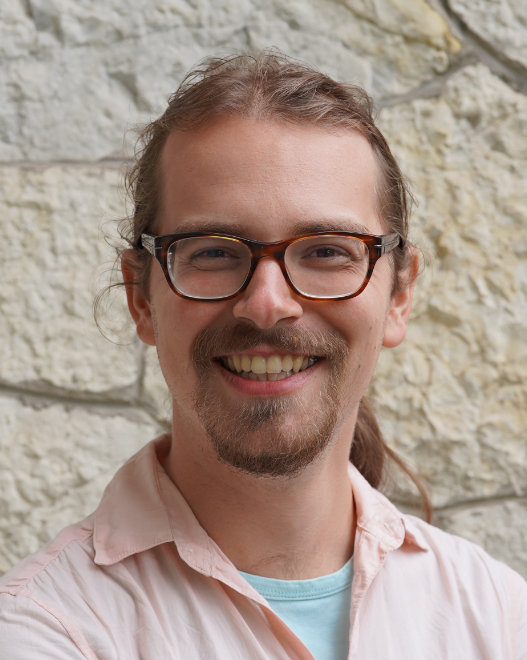
Prof. Dr. Wolfgang Reichel is a faculty member at the Karlsruhe Institute of Technology (KIT) , affiliated with the Department of Mathematics and leading the Workgroup Nonlinear Partial Differential Equations . He serves as deputy speaker of the Collaborative Research Center (CRC) 1173 "Wave Phenomena: Analysis and Numerics", and is a speaker for the KIT-Center MathSEE "Mathematics in Sciences, Engineering, and Economics". His research focuses on nonlinear partial differential equations, mathematical modeling, and numerical analysis of wave phenomena. His workgroup includes postdocs, doctoral researchers, and master students, and he collaborates with colleagues like Thomas Bartsch, Bernd Kawohl, Michael Plum, Guido Sweers, and Tobias Weth. Regular events organized by Prof. Reichel include the Karlsruhe PDE-Seminar and annual Nonlinear PDE Days summer/winter schools. He has taught courses such as Rand- und Eigenwertprobleme, Functional Analysis, and Analysis of PDEs across multiple semesters. Scientific publications reveal a focus on nonlinear wave equations (e.g., Maxwell's, Klein-Gordon, Lugiato-Lefever), soliton dynamics, frequency comb generation, and symmetry properties in elliptic PDEs. Articles often address existence proofs, stability analysis, and numerical methods for wave phenomena in periodic media and nonlinear optics. Collaborative work spans institutions like MacMaster University, University of Stuttgart, and University of Connecticut.
Hilário Alencar is a full Professor at the Federal University of Alagoas (UFAL), affiliated with the Institute of Mathematics. He holds significant leadership roles, including Coordinator of the Center for Research in Computational Mathematics (CPMAT/UFAL) and President of the Commission for Monitoring and Evaluation of the Management Contract (MCTI/IMPA). Previously, he served as President of the Brazilian Mathematical Society (2009–2013; 2015–2017) and Provost of Graduate Studies and Research at UFAL (1995–2000). His research focuses on Differential Geometry , particularly hypersurfaces, curvature flows, and geometric analysis, with additional interests in mathematics education for basic education. He co-founded the PROFMAT national professional master's program in mathematics. Alencar has advised 3 doctoral and 21 master's students, emphasizing geometric analysis and applied mathematics. His recent publications (2014–2025) explore rigidity theorems, self-shrinkers, and geometric inequalities in Riemannian manifolds. Awards and Honors: Order of Scientific Merit (Commander and Grand Cross classes) University Merit Medal (UFAL 45 years) FAPEAL Merit Commendation Honorary Member of the Brazilian Mathematical Society Full Member of the Brazilian Academy of Sciences and The World Academy of Sciences (TWAS) He leads the Computational Mathematics Research Center (CPMAT) and has coordinated major projects funded by CNPq, CAPES, and FINEP, strengthening mathematical infrastructure and education in Brazil.
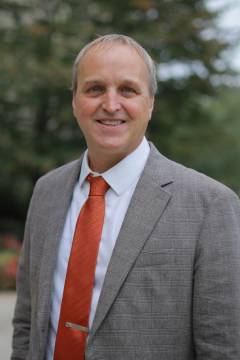
Sebastian Schmidt is a Postdoctoral Researcher at the University of Zurich's Department of Philosophy (Faculty of Philosophy) and Research Associate at the University of Johannesburg's African Center for Epistemology and Philosophy of Science (ACEPS). Holding a doctorate summa cum laude from Friedrich-Alexander University Erlangen-Nuremberg, he specializes in epistemology and metaethics with cross-disciplinary expertise spanning philosophy of mind, metaphilosophy, Wittgenstein's late work, and ancient philosophy. His educational background includes: Doctorate in Philosophy, Friedrich-Alexander University Erlangen-Nuremberg (2015-2020) Master of Arts in Philosophy, Friedrich-Alexander University Erlangen-Nuremberg (2013-2015) Bachelor of Arts in Philosophy and German Studies, Friedrich-Alexander University Erlangen-Nuremberg (2011-2014) Dr. Schmidt's research interrogates the intersection of epistemic and moral responsibility, with seminal contributions to understanding epistemic blame, doxastic dilemmas, and mental agency. His work uniquely bridges analytic epistemology with Wittgensteinian insights and ancient philosophical traditions, examining how normative constraints govern belief formation in both individual and social contexts. Recent projects critically engage with applied epistemic phenomena including genocide denial, vaccine refusal, and climate change discourse. Analysis of his 15 most recent publications (2019-2025) reveals a methodological evolution from pure epistemology toward socially embedded normative frameworks. While maintaining rigorous focus on foundational questions of rationality and evidence, his scholarship increasingly addresses structural epistemic injustices and collective responsibility, demonstrating how theoretical epistemology informs urgent contemporary crises through interdisciplinary lenses. Dr. Schmidt has secured competitive research funding including an SNF Postdoc Mobility Fellowship (2022-2023) supporting collaborative work at the University of Southern California and University of Glasgow, alongside prior support from the German National Academic Foundation. His teaching portfolio includes advanced epistemology courses at the University of Zurich. He actively contributes to two major research collectives: the Zurich Epistemology Group on Rationality (ZEGRa) at UZH and the African Center for Epistemology and Philosophy of Science (ACEPS), facilitating transnational dialogue between European and African epistemological traditions.
Krist Vaesen is an Associate Professor in the Philosophy of Innovation at Eindhoven University of Technology (TU/e), within the Department of Philosophy & Ethics in the School of Industrial Engineering and Innovation Sciences. He is a founding member of the Eindhoven Meta-Science Center (META/e) and maintains an external position as a Research Fellow at Leiden University's Human Origins Group, Faculty of Archaeology. Dr. Vaesen earned his degrees in Applied Biology (1998) and Philosophy (2003) from the University of Leuven, Belgium, and completed his PhD at TU/e in 2008 with a dissertation on artifacts and norms. His academic career progressed from post-doctoral researcher (2008-2012) in the NWO program 'Things that make us smart' to Assistant Professor (2012), and eventually to his current Associate Professor position. He received a prestigious NWO Vidi grant in 2014 for his research on cultural evolutionary theory. Vaesen's research spans multiple interconnected domains including the philosophy of innovation, meta-science, cultural evolution, and the philosophy of scientific models. His current work focuses extensively on meta-scientific questions examining science funding practices, interdisciplinary research challenges, PhD attrition causes, academic research values, and research integrity. He is preparing a book titled 'Neophilia--why our obsession with innovation leads to bad science' addressing replication crises in science. His publication record shows consistent scholarly output, with 49 research outputs documented through 2025, appearing in high-impact journals across multiple disciplines including Proceedings of the National Academy of Sciences, Behavioral and Brain Sciences, PLoS ONE, and various philosophy and anthropology journals. His work demonstrates a clear trajectory toward increasingly meta-scientific concerns, with recent publications focusing on research values, PhD attrition, and science funding ethics. NWO Vidi Award (2013) for 'The Darwinisation of culture' Excellence grant from TU/e's Executive Board for work on the 'Things that make us smart' program Elected member of the Eindhoven Young Academy of Engineering (2018) Vaesen has supervised multiple graduate students (with 4 supervised works documented) and secured significant research funding, including his Vidi grant for the 'Darwinizing culture' project (2014-2019). He has been actively involved in science policy discussions, particularly regarding research funding reform and interdisciplinary research assessment. His work has generated substantial media attention, with 127 press/media mentions including coverage by Times Higher Education, Volkskrant, and various radio outlets. As co-founder of the Eindhoven Meta-Science Center, Vaesen plays a key role in advancing meta-scientific research at TU/e. His external position at Leiden University's Human Origins Group demonstrates his interdisciplinary reach across philosophy, anthropology, and evolutionary studies. He teaches courses including 'Metascience' (since 2024), 'Philosophy of science and technology,' and 'Research methodology for the innovation sciences,' shaping the next generation of scholars in these critical areas.
Stacy Neier Beran, PhD, is a Senior Lecturer in the Department of Marketing at the Quinlan School of Business, Loyola University Chicago, where she also serves as the Faculty Director of Experiential Learning. She has been a faculty member since 2008 and is recognized for her innovative teaching and leadership in design thinking and community-engaged learning. Her educational background includes a PhD in Research Methods from Loyola University Chicago, an MBA in Marketing & International Business from the same institution, and dual BS degrees in Marketing and Textile & Apparel Management from the University of Missouri-Columbia. Dr. Beran’s research centers on design thinking, experiential education, and community-based learning . She integrates Ignatian pedagogy with design methodologies to help students navigate uncertainty and develop creative problem-solving skills. Her work emphasizes student co-creation, reflection, and real-world application through projects with community partners. Her recent publications reflect a strong trend in educational innovation, particularly at the intersection of design, marketing, and Jesuit values . She has published in journals such as the Journal of Marketing Education and Jesuit Higher Education , and authored the book Think by Design , showcasing her deep commitment to transformative learning. Dr. Beran has received numerous awards, including: Mission-Driven Faculty of the Year (2024) Adolfo Nicolas SJ Excellence in Engaged Learning and Teaching Award (2023) Kolvenbach Award for Engaged Teaching (2017) Undergraduate Teacher of the Year (2013) She is actively involved in advising and leadership, serving on the Loyola Limited Board of Advisors and mentoring students through experiential courses. She has led initiatives such as the Ignatian Design Thinking course and the Microenterprise Consulting program. Her grants and projects often involve partnerships with community organizations like Chicago Fair Trade and the Rogers Park Business Alliance. Dr. Beran is affiliated with several professional organizations, including the Society of Experiential Education, the Interaction Design Foundation, and the Editorial Review Board of the Journal of Marketing Education . She also contributes to industry innovation through collaborations with Mintel, dscout, and PinPoint Collective.
Wolfgang Stammer is a PostDoc researcher in the Machine Learning Group at TU Darmstadt's Computer Science Department. His work focuses on making AI models more interpretable and interactive, particularly in explainable AI (XAI), neuro-symbolic architectures, and systematic compositionality challenges in neural networks. He completed his Ph.D. in Machine Learning at TU Darmstadt (2019–2025), an M.Sc. in Computer Science at Goethe University Frankfurt (2016–2018), and a B.Sc. in Cognitive Science at the University of Osnabrück (2011–2015). Research Interests : Stammer's research bridges gaps between human understanding and AI capabilities. Key areas include: Explainable AI (XAI) and interactive machine learning (XIL) Neuro-symbolic integration for logical reasoning and visual concepts Mitigating shortcut learning and confounding factors in datasets Concept discovery and program synthesis for interpretable models Publications : His work spans foundational contributions to AI benchmarks (e.g., V-LoL, SLR-Bench) and frameworks (Neural Concept Binder, Revision Transformers). Recent studies highlight AI's limitations in systematic generalization and propose solutions for aligning reinforcement learning agents with human values. Grants & Labs : He contributes to the Machine Learning Lab at TU Darmstadt and co-organized workshops like the Interactive Machine Learning Workshop @ AAAI 2022. His research bridges theoretical advances with practical applications in healthcare and ethical AI systems.
Joel H. Steckel is a Professor of Marketing at the Leonard N. Stern School of Business, New York University, where he has been a faculty member since 1989. He currently serves as the Vice Dean for Doctoral Education and previously chaired the Marketing Department. His academic work bridges marketing science, strategy, and consumer behavior. His education includes: Ph.D. in Marketing/Statistics, University of Pennsylvania (1982) M.A. in Statistics, University of Pennsylvania (1980) M.B.A. in Management Science, University of Pennsylvania (1979) B.A. in Mathematics, Columbia University (1977) Professor Steckel's research focuses on marketing strategy, branding, marketing research, and consumer behavior measurement . He explores methodologies for one-to-one marketing and forecasting, with an emphasis on how brands signal identity and value. His work integrates statistical modeling with managerial decision-making to improve marketing effectiveness. The most recent articles reflect sustained engagement with brand relevance, consumer psychology, and strategic adaptation , particularly in the context of generational shifts and digital culture. His publications span top journals in marketing and decision sciences. His scientific contributions have been recognized through leadership roles and editorial appointments: Founding President, INFORMS Society for Marketing Science Co-Editor-in-Chief, Marketing Letters Professor Steckel has advised numerous doctoral students and led major academic initiatives at NYU Stern. He has held prior faculty positions at the University of California, Los Angeles, and the University of Pennsylvania. His research has been supported by academic and professional institutions, though specific grant details are not listed in the text. He continues to influence marketing thought through publications, interviews, and academic leadership. He is actively involved in research and academic administration, with no indication of retirement or reduced status.
Prof. Gabriela Alves Werb, Ph.D. is a faculty member affiliated with the Bundesbank Research Data and Service Centre (RDSC) and holds her academic background from Johann Wolfgang Goethe University Frankfurt am Main. Her research spans interdisciplinary areas at the intersection of finance, machine learning, and digital economy, with a focus on non-financial risks and search engine analytics. Education: Doctoral Dissertation (2020), Goethe-Universität Frankfurt Research Interests include machine learning applications in financial risk assessment, user-generated content analysis, and digital marketplace dynamics. Her work bridges computational methods with economic policy challenges. Recent Publications highlight trends in climate-related financial data, predictive modeling in marketing, and the economic implications of search engine visibility. Key subfields span ESG investing, SEO vulnerability, and digital risk assessment.
Andrew Geers is a Professor in the Experimental Psychology - Social department at the University of Toledo, with his office located in University Hall, Room 6524. He maintains an active research profile with current contact information and ongoing NIH/ARC-funded projects. He earned his Ph.D. from Ohio University in 2001, establishing his academic foundation in experimental psychology. Dr. Geers' research centers on psychological mechanisms of health behavior, specifically examining how expectations, social communication, and affective processes influence placebo/nocebo responses, drug side effects, and health belief formation. His work bridges clinical applications with fundamental social-cognitive principles, particularly investigating how verbal suggestions and framing techniques modulate physical symptom experiences. Analysis of his 15 most recent publications (2018-2025) reveals a dominant focus on nocebo phenomena in medical contexts, with substantial attention to vaccine side effects, dental fear interventions, and pain management. His methodological approach combines experimental paradigms, population surveys, and clinical protocols to dissect how social transmission, information framing, and affective states generate adverse treatment expectations. Dr. Geers currently leads or collaborates on five major research grants totaling over $6 million, including NIH R01 funding for dental fear mechanisms ($1.28M), ARC Discovery Projects on nocebo effects of generic medicines ($328K) and socially-induced nocebo responses ($349K), and a substantial NIH UG3 grant ($4.27M) for youth dental phobia treatment in underserved populations. He directs the InSPHIRe Lab (Implicit and Social Processes in Health and Illness Research), which employs interdisciplinary approaches to investigate psychological pathways between cognition, emotion, and physical health outcomes through controlled experiments and clinical applications.
Tihomir Vranešević, PhD, is a faculty member at the Faculty of Economics & Business - Zagreb (FEB) within the Marketing Faculty . His research focuses on brand management, social media marketing, consumer behavior, and digital marketing strategies. Key Research Areas: Brand origin effects, social media advertising metrics, customer loyalty models, and cross-cultural brand perception. Recent Article Trends: His 2024-2022 publications analyze Generation Z's brand preferences, reverse country-of-origin effects, CRM effectiveness, and challenges in social media advertising. Earlier works explore nation branding, private label strategies, and consumer value perception. Academic Contributions: He has published extensively in Croatian and international contexts, comparing consumer attitudes in Eastern Europe and investigating digital adaptation of brands.
Dagna Siuda is a faculty member at the Lodz University of Technology , affiliated with the Faculty of Organization and Management under the Institute of Marketing and Sustainable Development. She serves as the Student Exchange and Foreign-Language Studies Coordinator and is a member of the Business Studies and Master of Business Studies Study Programme Council . Research Areas: Brand management, e-marketing, virtual brand communities, green marketing, and sustainable consumption. Scientific Activity: Focused on renewable energy adoption models, sustainable packaging, pandemic-era advertising, and digital consumer behavior. Her work explores how virtual brand communities drive loyalty and value co-creation. Academic Roles: Coordinates international exchange programs and contributes to curriculum development for business studies.
Lendel Narine serves as an Extension Associate Professor within the Youth Programs Department at Utah State University Extension, based at the Logan Campus. His role centers on evaluation and reporting for statewide extension initiatives, focusing on evidence-based program development and impact assessment across Utah's diverse communities through rigorous methodological frameworks. Dr. Narine's educational foundation includes: PhD in Agricultural Education and Communication, University of Florida (2018) MS (M.Phil.) in Agricultural Economics, The University of the West Indies (2013) BS in Agribusiness Management, The University of the West Indies (2010) His research specializes in quantitative evaluation methodologies including competency modeling, outcome metrics, and cost-benefit analysis, with growing emphasis on behavior change mechanisms and diversity-integration frameworks. He applies the Ranked Discrepancy Model extensively for needs assessment in agricultural and youth programming contexts. Analysis of his 2024-2025 publications reveals three dominant research trajectories: food/financial security programming in Utah communities, innovative evaluation frameworks for extension services, and workforce development through emerging technologies like AI. These works consistently employ advanced statistical methods to address critical issues including climate adaptation and health disparities. His award portfolio features 13 major honors including: Distinguished Team Award (2023) Susan Barkman Award for Research and Evaluation (2023) Outstanding Article of the Year (2020) Visionary Leader Award (2020) Best Research Poster (2019) Early Career Service (2021) New Specialist Award (2022) Excellence in 4-H Citizenship Programming (2023) Communication Award: Educational Publication (2022) Florence Hall Award (2022) Innovative Program (2022) Don Dean Felker Financial Management Award (2023) Excellence in Workforce Development Programming (2023) Dr. Narine advises graduate students through ongoing mentorship since 2019 and has evaluated USU Extension's internal funding mechanisms including the mini-grant program. His grant leadership spans civil rights compliance initiatives and Western regional evaluation capacity building projects addressing organizational advancement and diversity metrics. He actively directs multiple extension teams including the Climate Adaptation Intern Program, CORE Professional Development, and Civil Rights Compliance initiatives, while contributing to multi-state collaborations on leadership development and generative AI applications in extension education through the Western Extension region.
Professor Noreen Heraty is Head of the Department of Work and Employment Studies at the Kemmy Business School, University of Limerick. With a career spanning decades, she has established herself as a leading authority in Human Resource Management and Organizational Behavior, teaching across graduate, undergraduate, professional, and executive programs. Her research focuses on critical workplace issues including ageism dynamics, generational employment challenges, post-retirement careers, workplace learning, and cross-national HRM trends. She co-directs the Age in the Workplace Research Network (AWR-net) and has contributed to the UN Sustainable Development Goals related to Quality Education and Decent Work. Scientific awards include: Citation of Excellence from ANBAR (1995) Irish American Partnership Scholarship (1990) Literati Club 1998 Award for Excellence Literati Club 1998 Highly Commended Award Recent publications analyze performance appraisal systems in multinational enterprises, critical mass effects on CSR implementation, and contextual approaches to HRM. Her work has appeared in top journals like Human Resource Management and International Journal of Human Resource Management .
Dr. Lawton Stewart serves as a Professor and Extension Coordinator in the Department of Animal and Dairy Science at the University of Georgia's College of Agricultural & Environmental Sciences. With over 15 years of experience at UGA, Dr. Stewart leads statewide extension and applied research initiatives focused on beef cattle production systems in Georgia, building a synergistic program that leverages knowledge, collaboration, communication, and technology to improve the livelihood of Georgia's beef cattle producers. Dr. Stewart's educational background includes: B.S. in Animal Science from the University of Georgia M.S. in Agronomy with emphasis in Forage Management from the University of Florida Ph.D. in Animal Science with emphasis in Ruminant Nutrition and Forage Utilization from Virginia Tech Post-Doctoral Research Fellowship at the University of Kentucky investigating nitrogen metabolism in ruminants Dr. Stewart's research and extension program focuses on beef cattle nutrition, management, and forage systems, with particular emphasis on improving production efficiency in Georgia's diverse beef operations. His work integrates fundamental animal science research with practical extension programming to address challenges specific to southeastern US agriculture. Key areas include optimizing beef-forage systems, evaluating preconditioning and backgrounding strategies, developing sustainable parasite control methods, and investigating the impacts of nutrition on reproductive performance. He actively explores opportunities in beef cattle production such as stockering and retained ownership to enhance producer profitability. Analysis of Dr. Stewart's recent scholarly output reveals a strong thematic focus on integrated beef-forage systems, with particular attention to alfalfa-bermudagrass mixtures, nutritional impacts on reproductive physiology, and innovative management strategies for southeastern production environments. His publications bridge fundamental research with practical applications, addressing challenges like cotton byproduct utilization, baleage production, and sustainable grazing systems while maintaining scientific rigor through collaborations across multiple institutions. Dr. Stewart has received recognition for his contributions to student development: Student Career Success Influencer Award (2023) As an active researcher, Dr. Stewart manages a substantial portfolio of funded projects totaling significant grant support, primarily through the Georgia Commodities Commission for Beef, Cotton Incorporated, Merck & Co., and the Georgia Farm Bureau Federation. His research program includes studies on parasite control, forage improvement, cotton byproduct utilization, and sustainable beef production systems. He coordinates the UGA Beef Team, providing travel and educational support for student competitions including the Elite Stockman Short Course and Top Hand Stockmanship and Stewardship Contest, demonstrating his commitment to developing the next generation of agricultural leaders. Dr. Stewart participates in multiple interdisciplinary research teams focused on beef-forage systems across the southeastern United States, collaborating with agronomists, animal scientists, and extension specialists to address complex challenges in beef production. His program maintains strong industry partnerships that ensure research addresses practical on-farm challenges while advancing scientific understanding of beef cattle production systems in the southeastern agricultural environment.
Dr. Tegwen Malik, a Senior Lecturer at Swansea University's School of Management and Senior Fellow of the Higher Education Academy (SFHEA), bridges artificial intelligence research with biomimetic innovations. Her multifaceted roles include Deputy Programme Director for MSc Management, Director of Education and Content at the i-Lab Research Centre, and leadership in the "Global and Social Challenges" theme. Senior Lecturer, School of Management (since 2022) Deputy Director, MSc Management Programme Director of Education, i-Lab Research Centre UKAT Recognised Practitioner in Advising Her research explores Artificial Intelligence applications across sectors, particularly in higher education, and biomimicry innovations for water management in arid regions. Collaborative work spans engineering (Welsh Centre for Printing and Coating), medicine, and management, with external partnerships at Lifescaped, MIT, and ESPCI. Recent publications analyze agentic AI systems , generative AI impacts , and bioinspired water collection mechanisms. The 2023 I3E Conference awarded her for transformative AI research in education. Best Research Paper Award, I3E 2023 Brazil Co-PI on international projects (Lifescaped, MIT, ESPCI) Supervisor for 4 active PhD students Editorial reviewer for Government Information Quarterly and Information & Organisation Dr. Malik also investigates digital marketing adoption , operations management , and international standards , with practical experience in product commercialization and transnational projects. Her teaching focuses on mathematics and analytics for business , reaching over 600 MSc Management students annually.