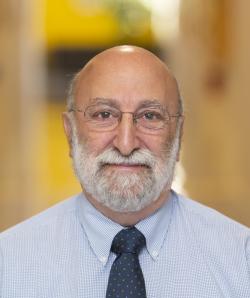
Licio Collavin is a Full Professor in Cellular and Applied Biology at the Department of Life Sciences, University of Trieste. He serves as a member of the Research Evaluation Commission (CVR), Department Board, and Course of Study Recommendations Committee. Additionally, he acts as Deputy Coordinator for multiple Doctoral Colleges in Molecular Biomedicine and Medical Biotechnology. Dr. Collavin's educational background includes: Graduated in Biological Sciences PhD from the International School for Advanced Studies (SISSA) in Trieste Postdoctoral research at Harvard Medical School in the Department of Cell Biology under Prof. Marc W. Kirschner Professor Collavin's research focuses on the molecular basis of cancer, particularly on tumor suppressor genes in differentiation and oncogenesis. His laboratory investigates the complex interaction of cancer cells with their environment, including other cells and the immune system. Key research areas include: Exploring gain-of-function properties of mutant p53 through novel interacting proteins Studying the tumor suppressor DAB2IP as a target for post-transcriptional inactivation in cancer Investigating how mutant p53 binds and inhibits DAB2IP, affecting cancer cell responses to inflammation and insulin Examining DAB2IP inactivation by micro-RNAs and their impact on cancer progression Analysis of Professor Collavin's recent publications reveals a consistent focus on molecular oncology, particularly the interplay between tumor suppressor genes and cancer progression. His work demonstrates a strong emphasis on p53 mutations and their oncogenic properties, DAB2IP function and inactivation mechanisms, and the complex signaling pathways that regulate cancer cell behavior. The research spans from fundamental molecular mechanisms to potential therapeutic applications, showing a translational approach to cancer biology. Professor Collavin leads an active research group with several doctoral students and postdoctoral fellows. His laboratory has received funding for multiple research projects including "BIO-D - Development of Diagnostic Biomarkers for Precision Medicine and Personalized Therapy," "National Center for Gene Therapy and Drug Based on RNA Technology," and "Innovative Models for Advanced Omics Science Applications." His group members include current researchers Olga Pastorino, Nicoletta Franco, Arooj Fatima, and Monica Rossin, as well as notable past members who have gone on to successful careers in academia and industry. Professor Collavin's laboratory is part of the Tumor Suppressor Genes in Differentiation and Oncogenesis research group within the Department of Life Sciences. The lab focuses on understanding the molecular mechanisms driving cancer progression and the complex interactions between cancer cells and their microenvironment. Current research projects include investigating mutant p53's impact on cancer cell responses to microenvironmental stress and exploring DAB2IP regulation in epithelial cells under conditions of high cell density.