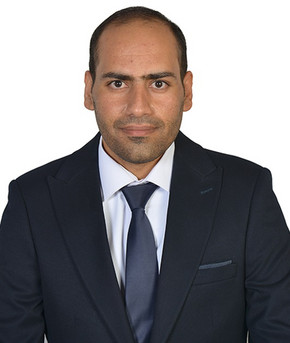
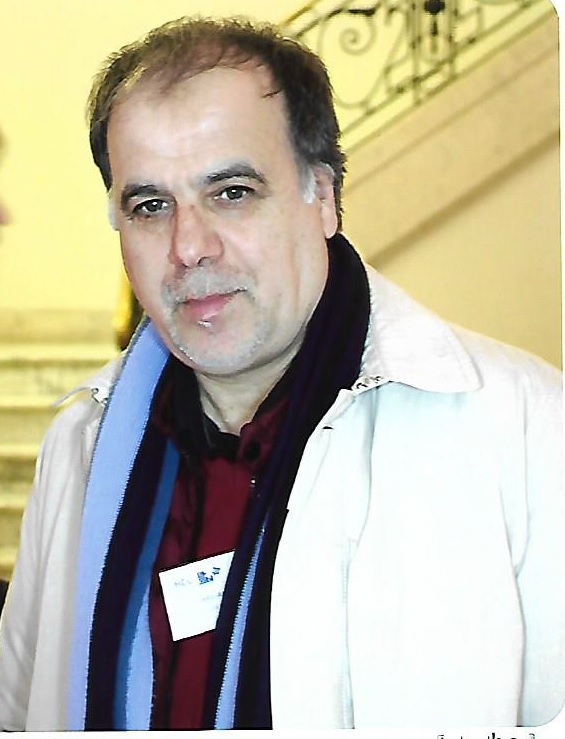
Prof. Cengiz Kahraman is a Professor in the Department of Industrial Engineering at Istanbul Technical University (ITU). He holds a PhD in Industrial Engineering from ITU and has held numerous academic and administrative roles, including Head of Department (2010–2013) and Vice Dean (2004–2008). His research focuses on fuzzy logic, multi-criteria decision making, engineering economics, and statistical analysis. He has supervised over 60 theses and led projects funded by TUBITAK and private institutions, including studies on fuzzy decision support systems, warranty cost analysis, and performance evaluation systems. Education: PhD in Industrial Engineering, Istanbul Technical University (1992–1996) MSc in Industrial Engineering, Istanbul Technical University (1988–1990) BSc in Industrial Engineering, Istanbul Technical University (1984–1988) Research Interests: Fuzzy logic extensions (e.g., spherical, Pythagorean, neutrosophic sets) Multi-criteria decision-making methodologies (AHP, TOPSIS, VIKOR) Applications in supply chain management, sustainability, and engineering economics Key Awards: Applied Soft Computing Journal Best Paper Award (2024) ITU Engineering Science Award (2023) TUBITAK Science Award (2018) Memorial Da Ruan Award (2014) Recent Projects: Intelligent multi-criteria legal tracking systems Fuzzy inference techniques for debt collection optimization Social innovation platforms for education volunteers Warranty cost modeling for Arçelik products Grants & Advising: Recipient of multiple TUBITAK Publication Incentives (2011–2015) Advisor to over 60 graduate students in fuzzy decision-making and engineering Directed projects totaling over ₺1.2 million in funding Labs/Teams: Leads research groups focusing on fuzzy decision systems and sustainable engineering solutions.
Dr. Adel Aazami is an Assistant Professor at the Institute of Transport Economics and Logistics at Vienna University of Economics and Business (WU Vienna) since 2023. His academic journey began with a B.Sc. in Industrial Engineering from University of Tehran (2010-2014), followed by an M.Sc. (2014-2016) and Ph.D. (2016-2021) from Iran University of Science and Technology (IUST), Tehran. Prior to his current position, he worked as a Postdoctoral Researcher at Sharif University of Technology (2021-2022) and was a Visiting Researcher at the University of Toronto (2020). His educational background includes: Ph.D. in Industrial Engineering (2016-2021) - Iran University of Science and Technology (IUST), Tehran, Iran M.Sc. in Industrial Engineering (2014-2016) - Iran University of Science and Technology (IUST), Tehran, Iran B.Sc. in Industrial Engineering (2010-2014) - University of Tehran, Tehran, Iran Dr. Aazami's research spans multiple interconnected domains within operations research and supply chain management. His primary focus areas include Operations Research and Optimization, Supply Chain and Logistics, Production and Distribution/Transportation Planning, Competition and Game Theory, Stochastic Programming, and Decomposition Algorithms. His work demonstrates a strong emphasis on developing mathematical models and optimization algorithms for complex supply chain problems, particularly those involving perishable goods, competitive environments, and sustainability considerations. He has made significant contributions to integrating environmental factors into traditional logistics problems and developing robust optimization approaches for supply chain networks. Analysis of Dr. Aazami's publication record reveals a consistent trajectory of increasingly sophisticated research in supply chain optimization. His work shows a clear progression from foundational mathematical optimization techniques to increasingly complex integrated problems involving multiple stakeholders, uncertainty, and environmental considerations. A notable trend is his focus on perishable products within supply chains, developing models that account for limited product lifetimes while optimizing across multiple echelons of the supply chain. More recently, his research has expanded to incorporate green logistics considerations, developing algorithms that balance economic and environmental objectives in transportation and distribution problems. His notable scientific achievements include: Winner of the 'Best Student' award among nationwide students evaluated by the Iranian Ministry of Science (2020) Winner of the Iranian Nobel Prize (known as the Alborz National Foundation Prize) (2019) Winner of the Best Student Award at IUST (2018) Winner of the Top Researcher Award at IUST (2018) Annual Awards of the National Elites Foundation Iran (2015-2020) Dr. Aazami has extensive teaching experience across multiple Iranian universities including Tehran University, Amirkabir Technical University, Isfahan University, Yazd University, Zanjan University, Damghan University, Abrar University and Iran Technical University. His peer review activities include reviewing for prestigious journals such as Soft Computing, Expert Systems with Applications, and Annals of Operations Research. While specific grant information isn't detailed in the provided text, his research output suggests active engagement with complex optimization problems relevant to transportation and logistics industries. At WU Vienna, Dr. Aazami is part of the research team at the Institute of Transport Economics and Logistics, working alongside other faculty members including Prof. Kummer and Prof. Wakolbinger. His research integrates theoretical optimization methods with practical applications in transportation and logistics, contributing to the institute's focus on sustainable and efficient supply chain solutions.
Maurizio Bevilacqua serves as a Full Professor in the Department of Industrial Engineering and Mathematical Sciences at the University of Ancona (Università Politecnica delle Marche). His academic focus falls under the scientific sector IIND-05/A - Impianti industriali meccanici (Mechanical Industrial Plants). Based at the university's Engineering faculty located at Via Brecce Bianche in Ancona, Italy, Professor Bevilacqua maintains an active research profile with numerous publications spanning industrial engineering, digital transformation, and smart manufacturing technologies. Professor Bevilacqua's research interests center on cutting-edge industrial engineering topics including Digital Twin technology, Industry 4.0 implementation, smart retrofitting of industrial machinery, maintenance engineering, and robotics applications in manufacturing. His work demonstrates particular expertise in applying these technologies to challenging sectors such as oil and gas, food manufacturing, and maritime transportation. His research bridges theoretical innovation with practical industrial applications, as evidenced by his numerous case studies across different manufacturing sectors. An analysis of his recent publications (2023-2025) reveals a strong emphasis on digital transformation in industrial settings, with particular focus on Digital Twin implementations across various sectors. His work shows a progression from foundational Industry 4.0 concepts toward more sophisticated applications including Digital Triplet frameworks and human-machine integration approaches that anticipate Industry 5.0 paradigms. Many of his studies combine multiple advanced techniques such as machine learning, fuzzy cognitive maps, and association rule mining to solve complex industrial problems. Professor Bevilacqua's research demonstrates strong industry collaboration, with numerous case studies conducted in real industrial settings across multiple sectors including oil and gas, food manufacturing, and maritime transportation. While specific grant information isn't provided in the available materials, his extensive publication record suggests active participation in research projects that bridge academic theory with practical industrial implementation. His work frequently addresses challenges related to legacy system modernization, operational resilience, and sustainable manufacturing practices. Though specific laboratory affiliations aren't detailed in the available information, Professor Bevilacqua's research appears to focus on industrial applications of digital technologies, suggesting collaboration with industrial partners and possibly university research centers focused on manufacturing innovation, robotics, and industrial IoT. His work on smart retrofitting solutions indicates involvement with projects that transform conventional machinery into intelligent systems capable of integration within modern digital manufacturing ecosystems.
Allel Hadjali is a Full Professor in Computer Science specializing in Data Engineering at ISAE-ENSMA (École Nationale Supérieure de Mécanique et d'Aérotechnique) in Poitiers, France. He is affiliated with the Laboratory LIAS (Laboratoire d'Ingénierie des Applications de la Connaissance et des Systèmes) at ISAE-ENSMA. His academic career includes progression from Associate Professor to his current Full Professor position, with extensive teaching experience across multiple computer science domains. Professor Hadjali's research falls within the data science domain, with particular focus on Exploitation, Extraction, and Recommendation (E2R). His work applies Computational Intelligence and Soft Computing techniques to massive data exploitation and analysis, including flexible querying approaches (Skyline, Gradual, and Bipolar queries), modeling and querying uncertain/incomplete data, cooperative answering techniques, and data reduction through linguistic summaries. He also conducts research in recommendation systems (learning-based and group recommendation) and extraction techniques (mining gradual patterns), along with related interests in data quality, intelligent systems, and crowdsourced data management. His publication record demonstrates consistent contributions to top-tier journals and conferences, with recent work focusing on skyline query processing, uncertain data management, RDF knowledge bases, and explainable AI. His research shows a clear trajectory from foundational work in fuzzy logic and uncertain databases toward more applied research in semantic web technologies and machine learning explainability. Professor Hadjali serves on the editorial boards of several prestigious journals including the Journal of Smart Environments and Green Computing, Sensors Journal, and the Universal Journal of Aeronautics and Aerospace Research. He has also organized special issues on topics such as uncertainty in cloud computing and managing uncertain data. At ISAE-ENSMA, Professor Hadjali teaches courses including Formal aspects of software engineering, Language interpretations and compilation, Programming languages, and Data management and exploitation. Previously as an Associate Professor, he taught courses on object modeling, distributed algorithms, operating systems, and advanced databases focusing on preferences and uncertainty. He leads the Data Engineering team within the Laboratory LIAS, which focuses on developing computational intelligence approaches for modern data challenges. His current projects include work on data quality (QDoSSI project funded by CNRS Mastodons 2016-2018) and research actions in GDR MADICS 2018 related to scientific data quality.
Pekka Parviainen is an Associate Professor in the Department of Informatics at the University of Bergen, within the Faculty of Mathematics and Natural Sciences. His research spans machine learning, probabilistic modeling, and AI theory, with a focus on Bayesian and Markov networks, adversarial robustness, fairness, and energy forecasting. He is affiliated with the Center for Data Science (CEDAS), an active research center at the university. His research interests include: Structure learning in graphical models Probabilistic forecasting using graph neural networks Adversarial robustness and defense mechanisms Fairness in clustering and machine learning Optimization and approximation in learning algorithms Applications in renewable energy and quantum sensing His recent publications (2020–2025) reflect a strong theoretical grounding combined with real-world applications, particularly in energy systems and AI safety. The works trend toward scalable and interpretable models, with increasing focus on fairness and robustness. Key themes include Bayesian network learning, metric learning, and causal graph modeling. Scientific contributions include: Development of novel adversaries (e.g., Voronoi-epsilon) for measuring robustness Scalable algorithms for learning large DAGs and Bayesian networks Integration of continuous optimization with combinatorial heuristics Applications in electricity demand forecasting and gas sensing Parviainen advises PhD students, including Hyeongji Kim (2023 thesis on distance in machine learning), and collaborates extensively with researchers in Norway and internationally. He has received computational support via Sigma2 (NN9884K) and is part of the CEDAS project, which fosters interdisciplinary data science research. While no specific grants are detailed, his involvement in funded projects and high-impact publications indicates active grant engagement. He is associated with the Center for Data Science (CEDAS), where he contributes to advancing data-driven methodologies across domains. The team emphasizes scalable, robust, and fair AI systems, aligning with national and international research priorities in trustworthy machine learning.
Marija Blagojević is a Full Professor at the Department of Information Technologies within the Faculty of Technical Sciences in Čačak, University of Kragujevac, Serbia. With over fifteen years of experience in teaching and research, she has established herself as a leading academic in Information Technologies and Systems. Her work spans multiple domains including artificial intelligence, machine learning, and educational technologies, contributing significantly to both theoretical advancements and practical applications in these fields. Dr. Blagojević began her academic career at the Technical Faculty in Čačak in October 2007, initially conducting exercises for courses in Informatics Methodology and IT Applications-Practicum. She was appointed as an Assistant in June 2008 and has since advanced to her current position as Full Professor. Throughout her career, she has continuously expanded her expertise through various specialized courses including Oracle Academy courses in database design and programming, machine learning from Stanford University, and certifications in Huawei AI technologies. Her research interests primarily focus on the application of artificial intelligence techniques to solve complex problems across diverse domains. She has made significant contributions to neural network applications, developing models for predicting apricot yields, air pollution levels, and student success in programming courses. Her work in e-learning technologies demonstrates innovative approaches for adaptive course delivery using data mining techniques. She has also pioneered research at the intersection of AI and psychology, exploring concepts like 'Artificial Psychology' and 'PsAIchology'. Analysis of Dr. Blagojević's recent publications reveals a clear trajectory toward interdisciplinary applications of artificial intelligence. Her work increasingly bridges computer science with psychology, healthcare, and environmental science. A notable trend is her focus on explainable AI, ensuring complex machine learning models remain interpretable for end-users. Her research also demonstrates strong commitment to applying technology for social good, particularly in education and rural development contexts, as evidenced by projects like WINnovators Space. Scientific Awards and Recognitions Award from 'dr Milivoje Urošević' foundation for best graduating student in 2006/2007 Four awards from Technical Faculty for excellent academic results each school year Scholarship from Fund for Young Talents Scholarship from University of Kragujevac (as one of 11 best students) Scholarship from Čačak municipality Scholarship from 'Denise Hale' Foundation Award for the best second-place innovative idea from the Union of Engineers and Technicians of Serbia (February 2020) Recognition for the best female scientist with most research results at University of Kragujevac (February 2022) Dr. Blagojević has been actively involved in research supervision and grant-funded projects throughout her career. She has served as a reviewer for three scientific journals and participated in significant research initiatives including 'Development of new information and communication technologies using advanced mathematical methods' (Project III 44006) and 'Application of biomedical engineering in preclinical and clinical practice' (Project 41007). Her international collaboration includes participation in TEMPUS project 544482-TEMPUS-1-2013-1-IT-TEMPUS-JPHES and Erasmus mobility at Alexandru Ioan Cuza University of Iaşi. As a member of the Computer Science Laboratory at the Faculty of Technical Sciences, Dr. Blagojević contributes to a collaborative research environment focused on advancing information technologies. Her interdisciplinary approach connects computer science with psychology, healthcare, and environmental science, demonstrating how technology can address complex real-world challenges while enhancing educational outcomes and community development.
Dr. Fabio Caraffini is an Associate Professor in Computer Science at Swansea University's School of Mathematics and Computer Science. He holds dual PhDs in Mathematical Information Technology (University of Jyväskylä, 2016) and Computer Science (De Montfort University, 2014), along with BSc and MSc degrees in Engineering from the University of Perugia. His research focuses on computational intelligence, particularly heuristic optimization methods like evolutionary algorithms and differential evolution. He also holds an honorary position as Senior Research Fellow at De Montfort University (2022–2024). Education History: BSc in Electronics Engineering (University of Perugia, 2008) MSc in Telecommunications Engineering (University of Perugia, 2011) PhD in Mathematical Information Technology (University of Jyväskylä, 2016) PhD in Computer Science (De Montfort University, 2014) Research Interests: Dr. Caraffini's work bridges theoretical optimization and practical applications. Key areas include evolutionary computing, structural bias analysis in algorithms, and interdisciplinary AI applications such as medical imaging, climate risk modeling, and robotics. His SOS Platform and BIAS toolbox are notable contributions to algorithm benchmarking and bias detection. Recent projects include AI-driven solutions for crop mapping, medical record analysis, and rail scheduling optimization. Publications & Trends: His 150+ publications span journals like Information Sciences , IEEE Transactions , and Applied Soft Computing . Themes include algorithmic robustness, constraint handling, and real-world optimization challenges. Notable works address differential evolution improvements, climate transition risk prediction, and medical decision support systems. Awards & Grants: Fellow of the Higher Education Academy (FHEA) Recipient of multiple research grants for projects in optimization and AI applications Advising & Collaboration: Actively supervises PhD students in AI-driven optimization and interdisciplinary applications. Collaborates with institutions globally on topics like microgrid energy management and pandemic prediction through self-organizing maps. Labs & Teams: Engaged in Swansea's Computational Foundry and the Morgan Advanced Studies Institute (MASI), contributing to cross-disciplinary research initiatives in AI and computational science.
David Jones - Academic Overview David Jones is a Professor of Biological Systems Engineering and Courtesy Professor in the Food Science & Technology Department at Utah State University (USU). He currently serves as the Dean of the College of Engineering at USU. Previously, he was the Department Head of Biological Systems Engineering (2017–2023) and Associate Dean for Undergraduate Programs (2011–2017) at the University of Nebraska-Lincoln. His research focuses on fuzzy set theory, bioenergy, mathematical modeling, and engineering education innovation. Jones has been recognized with numerous awards, including ASABE Fellow (2015) and the Massey-Ferguson Educational Gold Medal (2014). Education Ph.D. in Agricultural Engineering, Oklahoma State University M.S. and B.S. in Agricultural Engineering, Texas A&M University Research Interests Jones' work integrates computational methods (fuzzy logic, soft computing) with agricultural and biomedical systems. Key areas include microwave heating modeling, hyperspectral imaging for food quality assessment, and bioenergy processes like biomass gasification. His engineering education initiatives aim to enhance undergraduate pathways and innovation through programs like S.T.E.P. (Strengthening Transitions to Engineering Programs). Recent Contributions His articles address cutting-edge topics in food engineering (e.g., microwave heating dynamics), biomedical applications (e.g., microwave ablation modeling), and sustainable energy systems (e.g., biomass gasification optimization). Collaborative projects include improving beef tenderness forecasting via hyperspectral imaging and advancing crowd-sourced disaster response technologies. Awards & Honors ASABE Fellow (2015) ASABE Massey-Ferguson Educational Gold Medal (2014) UNL Parents Association Recognition Award (2012, 2011) Holling Family Master Teacher Award (2008) Grants & Leadership NSF-funded S.T.E.P. program to streamline community college-to-university engineering transitions Leadership in NSF initiatives for innovation in engineering education Labs & Teams Directs interdisciplinary teams focusing on precision agriculture, food safety systems, and renewable energy technologies. Active in professional societies including ASABE and ASEE.
Dr. Seyed Mojtaba Sajadi is an Assistant Professor (Lecturer) in Operations and Supply Chain Simulation at Aston Business School, part of Aston University's College of Business and Social Sciences. He holds a PhD in Industrial Engineering from Amirkabir University of Technology and has extensive academic experience, including roles as Associate Professor and Assistant Professor at the University of Tehran (2010–2020), and Assistant Professor at Coventry Business School (2021–2022). His research focuses on simulation-based optimization in supply chain management, healthcare systems, and disaster management, leveraging techniques like Discrete Event Simulation (DES), Agent-Based Simulation (ABS), and metaheuristic algorithms. Education: PhD in Industrial Engineering, Amirkabir University of Technology MSc in Industrial Engineering, University of Tehran BSc in Industrial Engineering, Sharif University of Technology PGCert in Higher Education, Coventry University Research Interests: Simulation-Based Optimization Applied Operations Research Machine Learning Supply Chain and Production Optimization Healthcare and Disaster Management Editorial Roles: Associate Editor, Journal of Simulation (2023–Present) Editorial Advisory Board, Journal of Enterprise Information Management (2024–Present) Advising and Grants: Supervised over 20 PhD candidates, including current projects on disaster-resilient smart cities and Industry 4.0 in food sustainability. Active in securing funded research projects, such as an Aston PhD Studentship and a Saudi Government-funded initiative. Labs/Teams: Engaged in collaborative research across international institutions, including the Operational Research Society Simulation Workshop (SW25, 2025) and interdisciplinary projects in healthcare logistics and smart supply chains.
Mahdieh Zabihimayvan is an Assistant Professor in the Computer Science Department at Central Connecticut State University , specializing in Cybersecurity and Artificial Intelligence applications. Her research focuses on enhancing proactive cyber threat intelligence and privacy protection using applied machine learning and complex systems analysis . Areas of Expertise: Machine learning for Cybersecurity, Complex systems analysis Memberships: European Society for Fuzzy Logic and Technology, ACM-W Women in Network Science, Women in Machine Learning, WomenTech Network Courses Taught: Computer Security, Secure Software Development, Big Data Programming, Systems Programming, Secure Software Designs, Introduction to Internet Programming Research Interests include cybersecurity , machine learning , and complex systems . She has published extensively on topics such as darknet traffic classification , phishing attack detection , and web robot identification , often leveraging fuzzy logic and deep learning techniques. Scientific Awards include a nomination for the Undergraduate Research Competition in 2022. Her work intersects cybersecurity , machine learning , and privacy protection , particularly in analyzing Tor networks , dark web systems, and biomedical data .
Doc. RNDr. Martin Štěpnička, Ph.D. , Associate Professor at the Institute for Research and Applications of Fuzzy Modeling, University of Ostrava, serves as Vice-Rector for Research and Artistic Activities. His work bridges applied mathematics and fuzzy modeling. Research focuses on fuzzy relational compositions, inference systems, and time series analysis Developed software tools like lfl (Linguistic Fuzzy Logic in R) Organized international conferences (IFSA, EUSFLAT) Research Interests Štěpnička explores theoretical foundations and practical implementations of: Fuzzy relational equations and dragonfly operations Extensional fuzzy numbers and their applications Ensemble techniques for time series prediction Projects & Leadership Principal investigator for Czech Science Foundation grants Co-organizer of Czech-Japan seminars on data analysis Contributes to fuzzy logic software development
Dr. Arne Johannssen is a Lecturer at the University of Hamburg's Faculty of Business Administration, where he is affiliated with the Institute of Mathematics and Statistics. His research spans both methodological and applied statistics, with particular emphasis on developing analytical frameworks for real-world challenges. Contact is available via email at arne.johannssen@uni-hamburg.de. Research Focus: Johannssen's work integrates theoretical statistics with practical applications across multiple domains. Key research themes include: Methodological Development : Innovations in statistical process control, fuzzy hypothesis testing, and state-space modeling techniques Computational Statistics : Algorithm design for probability distributions and time-series analysis Domain Applications : Healthcare analytics, actuarial science, industrial quality control, and financial risk modeling Emerging Topics : COVID-19 data analysis and statistical literacy research Publication Trends: His recent articles demonstrate a strong focus on enhancing statistical methodologies for quality control and risk management, with notable applications in healthcare and insurance. Collaborative work with Dr. Nataliya Chukhrova frequently appears in journals spanning statistics, operational research, and computational intelligence. Research outputs show consistent emphasis on developing robust statistical tools for variable process environments. Teaching Portfolio: Johannssen teaches diverse courses including Quantitative Risk Management, Actuarial Methods, Regression Models, and Statistical Computing, serving business administration and economics students across undergraduate and graduate levels.
Baidaa Al-Bander is a Lecturer at Keele University's School of Computing and Mathematics. She holds an MSc in Computer Engineering from the University of Baghdad and a PhD in Electrical Engineering from the University of Liverpool (2018), followed by a Postdoctoral Research position at the University of Dundee. Her research focuses on AI-driven solutions for healthcare and real-world applications, including medical imaging analysis, explainable AI, and deep learning algorithms. She collaborates with experts in medicine, engineering, and computer science to address practical challenges, emphasizing interdisciplinary approaches. Al-Bander's work spans glaucoma diagnosis, melanoma detection, and autonomous medical systems, with publications in top-tier journals like PLoS One and Electronics . She actively reviews for leading conferences and journals, contributing to advancing AI ethics and applications. Her educational background and industry partnerships position her as a key figure in computational healthcare research. Education: MSc Computer Engineering, University of Baghdad (Iraq) PhD Electrical Engineering, University of Liverpool (2018) Research Interests: AI in Healthcare Computer Vision Explainable AI Deep Learning for Medical Imaging Data Science in Structural Engineering Key Contributions: Developed AI models for automated software testing using large language models. Pioneered emotion-aware mental health chatbots integrating BERT and GPT frameworks. Advanced glaucoma diagnosis techniques via deep learning-based retinal image analysis. Benchmarked deep learning algorithms for skin cancer and melanoma detection. Collaborations: Works with interdisciplinary teams in medicine, civil engineering, and cybersecurity to apply AI to real-world problems like seismic risk assessment and network intrusion detection.
Carlos D. Barranco is a Professor at Universidad Pablo de Olavide , Spain, with over two decades of experience in Computational Intelligence , Fuzzy Logic , and Soft Computing . His work focuses on applying these techniques to Big Data , Flexible Querying , and Imperfect Information Management in databases. He teaches courses in Computer Science at both bachelor's and master's levels, including Advanced Programming , Big Data , and Data Analysis in Digital Humanities . Research interests include: Fuzzy Database Systems : Developing indexing strategies for possibilistic and fuzzy numerical/temporal data to improve query efficiency in traditional RDBMS. Big Data Applications : Leveraging fuzzy logic in bioinformatics, energy consumption forecasting, and medical image retrieval. Interdisciplinary Work : Bridging computational methods with Digital Humanities (e.g., medieval charter databases) and Medical Imaging . Collaborations span institutions across Spain and Europe, with publications in journals like Applied Soft Computing , International Journal of Intelligent Systems , and IEEE Transactions on Fuzzy Systems . His work has been presented at major conferences including IWBBIO , FUZZ-IEEE , and Flexible Query Answering Systems . Contact: cdbargon@upo.es
Ali Ala is a Post Doc Research Fellow Lvl I at the School of Mechanical and Materials Engineering, University College Dublin (UCD), where he works on the ReAMPS project addressing medicines shortages. He holds a PhD in Industrial Engineering and Management Science from Shanghai Jiao Tong University (2020) and an M.Eng from Wuhan University of Technology (2014). Previously, he served as a researcher at the Tokyo Institute of Technology (2018–2019) and a research fellow at INTI International University, Malaysia (2021). Education: PhD in Industrial Engineering and Management Science, Shanghai Jiao Tong University (2020) M.Eng in Industrial Engineering, Wuhan University of Technology (2014) Research Interests: Healthcare operations optimization, artificial intelligence applications in supply chains, multi-criteria decision-making, and sustainable energy systems. He has published extensively on topics like healthcare scheduling, supply chain resilience, and IoT-driven precision farming. Grants & Projects: Principal Investigator: ReAMPS Project (National Challenge Fund Programme, Ireland, 2024) SGC Scholarship (Chinese Government, 2014–2020) Professional Activities: Peer reviewer for journals like Applied Soft Computing and Engineering Applications of Artificial Intelligence ; committee member of the European Operations Management Association (EurOMA) and INFORMS. He has also served on doctoral thesis panels and interview committees.