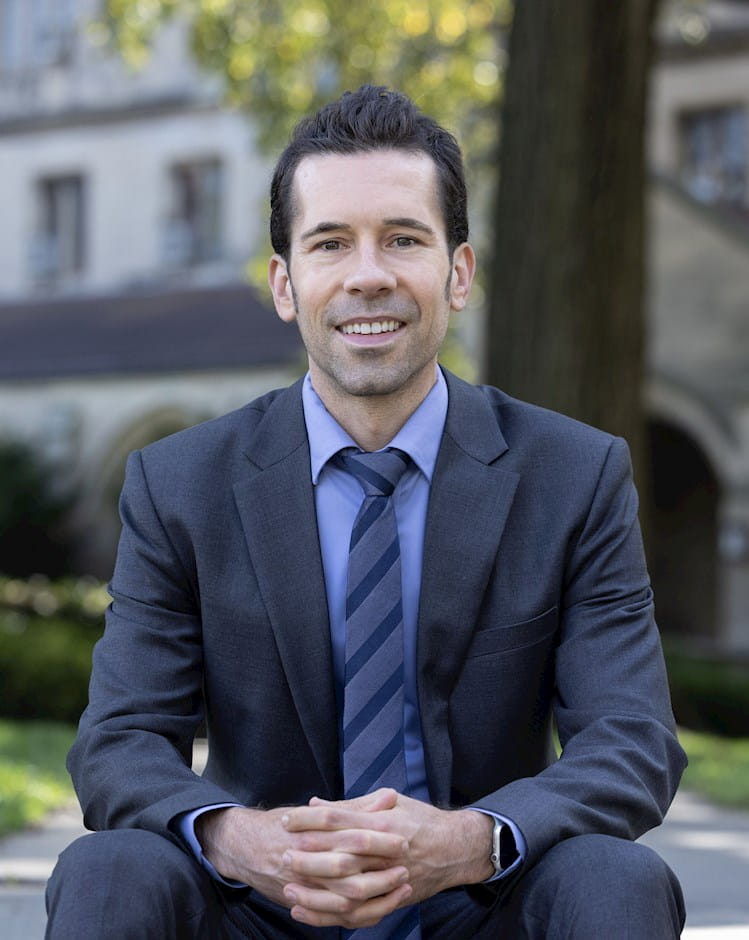
Maarten van Bezouwمشاهده پروفایل
استادیار
Dr. Maarten van Bezouw serves as an Assistant Professor in the Department of Social, Health and Organisational Psychology at Utrecht University's Faculty of Social and Behavioural Sciences. His research examines psychological mechanisms within disadvantaged groups, focusing on social identity dynamics, political behavior patterns, and precarious work conditions across diverse societal contexts. Van Bezouw's work investigates how job insecurity manifests among precariously employed workers and analyzes barriers preventing disadvantaged groups from engaging in collective action. His research integrates social identity theory with political psychology to explore responses to global crises like the coronavirus pandemic, emphasizing cross-cultural variations in trust toward scientific information and compliance with health measures. Current projects examine future work selves as moderating factors in proactive behavior during employment uncertainty. Analysis of his 2019-2025 publications reveals three dominant research trajectories: (1) pandemic response psychology with emphasis on ideological divides in trust toward scientific institutions, (2) political inaction mechanisms across Brazilian, Hungarian, and Dutch populations, and (3) job insecurity dynamics within the future of work framework. His methodological approach consistently employs multilevel analyses across 21+ countries while maintaining focus on marginalized worker experiences. Van Bezouw actively supervises bachelor's and master's theses while teaching Organizational Psychology courses including 'Organization Development: Monitoring and Changing Culture and Behavior.' His research receives institutional support through Utrecht University's Groups & Identity Lab and WORK Lab infrastructure. As a core member of both the Groups & Identity Lab and WORK Lab, van Bezouw contributes to research on social identity processes and evolving work paradigms. His committee role with the RAPSODI Register demonstrates applied engagement with political participation dynamics, bridging academic research with real-world social challenges through the IOS - Future of Work initiative.