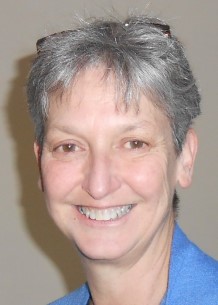
Dr. Julie Rugg is Reader in Social Policy at the University of York's School for Business and Society. She specializes in policy evaluation with expertise in private rented sector dynamics, housing assistance systems, and qualitative analysis of housing behaviors. Her current ESRC-funded project examines criminality in the private rented sector through co-produced solutions. Rugg directs research on rental sub-markets, tenant-landlord relationships, and enforcement effectiveness. Her work has influenced national policy discussions on housing welfare reforms and rental market regulation. She also leads the Cemetery Research Group, investigating historical and contemporary burial practices. Recent projects include nationwide analyses of property supply to lower-end rental markets and investigations into criminal landlord practices. Rugg's methodological approach combines policy analysis with qualitative investigations of housing experiences.
University of Versailles Saint-Quentin-en-YvelinesFrance
Pauline Lemaigre-Gaffier is a Lecturer in Modern History at the University of Versailles Saint-Quentin-en-Yvelines (UVSQ), affiliated with the Institute of Cultural and International Studies (IECI) and the Department of History. She co-leads the VoCriPat project (2023–present) and participates in the DIM PAMIR committee (2022–present) and ANR ACADEC project (2022–present). Her research focuses on European court societies (festivals, ceremonies, urban interactions) Cultural history (material culture, documentary writings) Political history (public finance, administrative practices) Economic history (privileges and businesses) Heritage sciences Her 15 most recent publications explore topics like archival practices in early modern Europe French court administration of the arts economic networks of privileged enterprises royal household logistics spanning 2015–2024, with upcoming works on economic history and heritage sciences in 2025. She has received the Benabou Prize (2012) and was a Thiers Foundation scholarship holder (2009–2010) . Her career includes editorial roles at Entre-Temps (2021–2023) and educational management for the 'Music, Performance, and Heritage' degree (2014–2016). She collaborates with institutions like the Centre de recherche du Château de Versailles and the Heritage Sciences Foundation.
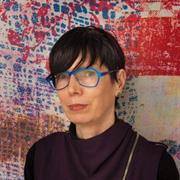
Jayne Wallace is a Professor of Craft, Digital Creativity, and Wellbeing at Northumbria University's School of Design. She leads the CoCreate research community, focusing on design, technology, and participation in human contexts. Her work includes EPSRC-funded projects like Enabling Ongoingness and the EU Marie Curie OpenDoTT initiative. Wallace co-founded the Journal of Jewellery Research and the Research Through Design conference series, emphasizing craft ethos and IoT ethics. Her research spans digital creativity, wellbeing, and participatory design, addressing dementia care, citizenship, and technology's societal impact. Education: PhD in Design Studies (2007). Notable collaborations include work with Beamish Museum on pottery and wellbeing, and projects like Centring and Connected Craft. She actively organizes workshops on ethical internet practices and co-creation methods. Research interests emphasize craft's role in digital innovation, mental health, and intergenerational dialogue. Awards include Best Paper Awards (2020) and an Honourable Mention (2018). Grants include EPSRC, AHRC, and EU funding. Her lab, CoCreate, involves over 50 researchers exploring design's societal applications.
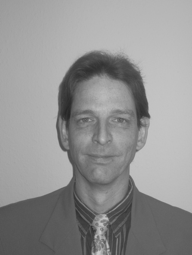
PD Dr. Jens Wolff is a German theologian and researcher at the Faculty of Theology, University of Rostock . His work bridges image theory , cultural hermeneutics , and negative theology , with a focus on Lutheran theology and its intersections with literature and art . Education : Studied at Eberhard-Karls-Universität Tübingen, Martin-Luther-Universität Halle/Wittenberg, Ludwig-Maximilians-Universität München. Academic Timeline : 1995–1998 Heidelberg Academy researcher, 1998–2002 assistant at Münster's Faculty, 2003 PhD, 2005 ordained pastor, 2009–2012 DFG project on Sigmund von Birken, 2012–2015 DFG project on Image Theory, 2015 habilitation. Wolff's research explores image and media theory through theological lenses, interrogating figurative knowledge , religious rhetoric , and intercultural hermeneutics . His work connects Baroque literature (e.g., Klopstock, Hamann) with contemporary philological and deconstructive methods , examining tensions between sacralization and secularization . His recent publications analyze the word of God as performative polysemy in Lutheran thought, death and utopia in Stefan Andres' work, and iconic anthropology in Reformation contexts. He co-edited the two-volume Bild und Tod (2016), a foundational text on image-death relations. Awards: Martin-Luther-Preis für den akademischen Nachwuchs (2005) for his dissertation on Metapher und Kreuz . Wolff's advising and collaborative work focus on interdisciplinary image studies , including DFG-funded projects and symposia like the Image and Sound conference (2014). He maintains links to institutions in Bratislava , Frankfurt , and Brazil .
Gil-Soo Han is a Professor in the Department of Communications and Media Studies at Monash University, Faculty of Arts, where he has been a faculty member since 2008. His interdisciplinary research bridges sociology, media studies, and cultural analysis, with a focus on intercultural communication, religious communication, health communication, and contemporary Korean society. Disciplinary Background: Sociology with applications in media, religion, and migration Institution: Monash University, Australia Department: Communications and Media Studies Teaching: Global and intercultural communications, media industries His research interests include: Intercultural and global communications Religious communication, especially Korean Christianity Health communication among migrants Media representation of ethnic minorities Nationalism and grassroots movements in South Korea Funeral rites and death culture in Korea and Australia The Korean diaspora in Australia and New Zealand His recent publications reflect a strong trend toward analyzing nationalism, identity, and socio-cultural change in South Korea, particularly through media discourse and public movements such as the 2016–2017 Candlelight Revolution. He also explores end-of-life practices among migrants, highlighting cultural continuity and change. His scientific awards include: Good Practice in Teaching, Monash University (2007) Winner of Korean Education Minister’s Book Prize (2020) He has received research funding from the Academy of Korean Studies and the Australian Research Council. He is actively involved in supervising PhD students and contributing to public discourse through media engagement. He leads an international project on Local Agency and National Responses to Globalisation and has published extensively on Korean diaspora, media, and religion. He is affiliated with the following research groups and platforms: ORCID: 0000-0003-4135-211X Google Scholar, ResearchGate, Academia.edu
Professor Robyn Healy is the Associate Deputy Vice Chancellor (Learning and Teaching) and Head of the School of Fashion and Textiles at RMIT University. She holds a Professorial rank within the Department of Design and Social Context. Her career includes roles as Senior Curator at the National Gallery of Victoria and National Gallery of Australia, alongside extensive academic leadership. Her research focuses on fashion design, curatorial practices, museums, material culture, and practice-led research, with a PhD exploring new museum exhibition methodologies for fashion. She is a Category 1 research supervisor and leads a vibrant research team overseeing numerous PhD projects in fashion and design innovation. Education Leadership: Spearheaded restructuring of fashion programs to enhance cross-disciplinary studios and industry engagement. Professional Roles: Chair of IFFTI Research Sub-Committee, member of TEQSA accreditation panels, and advisor to national cultural institutions. Research Interests: Robyn’s work bridges fashion design, museology, and material culture with a focus on curatorial innovation and the phenomenology of wear. Her projects explore sustainable fashion practices, digital curation, and the intersection of fashion with health and technology. Awards: Centenary Medal (2013) for contributions to Australian fashion, and Gordon Darling Foundation Travel Scholarship. Supervision & Grants: Active in mentoring over 20 PhD and Masters candidates, with research projects addressing topics like sustainable textile methods, fashion curation in digital spaces, and biomimetic design. Engaged in collaborative grants exploring wearable health technologies and fashion’s environmental impact. Labs/Teams: Directs the School of Fashion and Textiles, fostering industry partnerships and innovative research initiatives in sustainable design and curatorial practices.
Dr. Juliette Calvarin is a researcher at the Institute for Art and Visual History (HU Berlin) since July 2021. She earned her BA in European and North-American history from Yale University (2013) and her PhD in Art History from Harvard University (2021), supervised by Jeffrey Hamburger and Evelin Wetter (Abegg-Stiftung). Her research focuses on East-Central Europe in the late Middle Ages, medieval textiles, liturgical symbolism, and material culture reuse. Supervised dissertation: Ornamenta Sacerdotum: Marian Chasubles for Priestly Bodies in pre-Hussite Prague Current role: Researcher in the Bildkulturen des Mittelalters group led by Prof. Kathrin Müller Her publications address topics like bishops’ rings, altarpieces, and textile semiotics, with fellowships from Munich’s Zentralinstitut für Kunstgeschichte and Mainz’s Institut für europäische Geschichte. She explores how liturgical objects shape clerical identity and medieval theological discourse.
Prof Roger Rees is the Head of the School of Classics and a Professor at the University of St Andrews. His research focuses on Latin Literature and Roman history from the Late Republic to Late Antiquity, with a specialization in panegyrical discourse and the XII Panegyrici Latini collection. He holds a PhD from the University of St Andrews (1997) and a BA from the University of Cambridge (1990). His current projects include a collaborative commentary on the Panegyrici Latini (with Bruce Gibson and Jan Willem Drijvers) and a biography of Emperor Diocletian. He has supervised doctoral student Xiyuan Meng and contributed to interdisciplinary studies on late antiquity, including editing volumes like From East to West in late antiquity (2024). Research Interests: Panegyric rhetoric, Roman imperial politics, late antique cultural dynamics, and the reception of classical material in modern poetry (e.g., Ted Hughes). His work bridges literary criticism, historical analysis, and textual commentary. Awards: Leverhulme Research Fellowship (2010–2011). He is an editorial board member for journals like Phoenix and Journal of Late Antiquity . Grants & Collaborations: Project funding for panegyric commentary and international scholarly partnerships. His research emphasizes the socio-political role of praise in ancient governance and cultural identity.
Amy Faulkner is a Lecturer in Old and Middle English Literature at University College London (UCL), Department of English Language and Literature, since August 2024. Prior to this, she served as an Associate Lecturer (Teaching) at UCL from September 2020 to July 2024. She has previously taught at the University of Oxford, University of Cambridge, and Royal Holloway, University of London. Education: DPhil in Old English Literature (University of Oxford) Her research focuses on Old English literature, particularly Alfred the Great's translations and their cultural-historical contexts. Key themes include material culture, the representation of the mind, and the role of Scripture in medieval texts. Her monograph Wealth and the Material World in the Old English Alfredian Corpus (2023) explores wealth and immaterial values in Alfredian prose. Amy's recent publications analyze topics such as wisdom in the Pastoral Care (2025), materiality in the Phoenix (2023), and life course themes in Genesis A and Beowulf (2021). Her work bridges literary analysis with medieval cultural studies. Teaching interests span Old and Middle English language and literature, including courses on Chaucer, medieval poetry, and graduate-level medieval book studies. She is available for supervision, mentoring, and collaborative research projects.
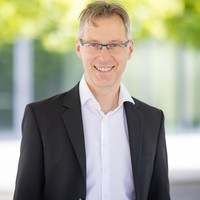
Oliver Krüger is a Full Professor of Religious Studies in the Department of Social Sciences at the University of Fribourg, Switzerland. Appointed in 2007, he has served as president of the Swiss Association for the Study of Religion (2011-2014) and is a Fellow of the International Centre for Advanced Studies Morphomata at the University of Cologne. His academic journey spans from studying Sociology, Archaeology and Religious Studies in Bonn to research positions at Princeton University and Heidelberg University, establishing him as a leading scholar at the intersection of religion, media, and digital culture. Dr. Krüger studied Sociology, Archaeology and Religious Studies at the University of Bonn (1994-1999), working with scholars including Werner Gephart, Karl Hoheisel, and Wolfgang Gantke. He received his doctorate in 2003 from the University of Bonn with a dissertation on "Virtuality and Immortality: The Visions of Posthumanism," which was awarded by the German Association for the History of Religion. His academic development included research at Heidelberg University's Collaborative Research Center Ritual Dynamics (2002-2005) on Wicca movement communication online and at Princeton University's Center for the Study of Religion (2005-2007) exploring alternative funeral culture in the United States. Professor Krüger's research focuses on the intersection of religion, media, and digital culture, with particular emphasis on posthumanism and transhumanism. His work critically examines how religious concepts and practices transform in digital environments, analyzing phenomena like online rituals, virtual communities, and the religious dimensions of emerging technologies. He has developed significant theoretical frameworks for understanding "virtuality" as "the availability of the unavailability" and has consistently challenged normative preconceptions in the study of religion and media. His scholarship demonstrates how religious studies frameworks can illuminate technological discourses that often present themselves as purely secular. His publications reveal a consistent trajectory from early work on internet-based religious communities to current explorations of AI, posthumanism, and digital religion. Recent works increasingly analyze the relational aspects between secular and religious interpretations of technological progress, showing how posthumanist visions often replicate traditional religious patterns while claiming scientific objectivity. Krüger's approach emphasizes dynamic, relational perspectives over static definitions of religion, contributing significantly to paradigm shifts in the field. Professor Krüger has received notable recognition for his scholarly contributions, including: Dissertation Prize from the German Association for the History of Religions (2003/2004) Fellowship at the International Centre for Advanced Studies Morphomata, University of Cologne (2012/13) At the University of Fribourg, Krüger supervises graduate students researching digital religion, posthumanism, and media theory. He has edited several special journal issues that have shaped scholarly discourse, including "Theory and Methodology" (2005), "Religion and Ecology" (2022), and "The Dynamics of Religion, Media and Community" (2022). His habilitation thesis "Media-based religion. Problems and perspectives of media research in religious studies and the sociology of knowledge" (2012) comprehensively examines the history and research field of religion and media. Professor Krüger has been instrumental in developing academic networks around digital religion and posthumanism. He co-founded and edits the journal AЯGOS (Argonauts), which focuses on innovative approaches in religious studies. At Fribourg, he leads research initiatives examining the intersection of religion, media, and technology, fostering collaborations between scholars in religious studies, sociology, philosophy, and digital humanities. He has also worked extensively on the history of religious studies, particularly on Edmund Hardy (1852-1904), contributing to a more nuanced understanding of the discipline's development.
James Chlup is an Associate Professor at the University of Manitoba , where he teaches in the Department of Classics within the Faculty of Arts . His academic career spans multiple institutions, having earned a PhD in Latin from Durham University, an MA in Ancient History from Dalhousie University, and a BA (Honours) in Classics from the University of New Brunswick. Specializes in Roman history (Middle to Late Republic, 250-30 BCE) Research focuses on Greek/Latin historiography, military manuals, and biographical traditions Currently working on a commentary of Plutarch's Life of Crassus and related articles on Frontinus, Appian, and Roman decapitation practices Chlup's publications reveal particular interest in ancient military theory, exempla tradition, and intertextual relationships between Plutarch's Lives. He has co-edited volumes on Greek and Roman military manuals while maintaining active research into Roman imperialism and its literary representations. His work frequently bridges classical texts with contemporary political theory frameworks. As a member of the Department of Classics, Chlup teaches diverse courses spanning: Greek and Roman mythology Ancient history surveys Latin language instruction (beginner to advanced) Specialized seminars on Roman Republic topics
Seria Yamazaki is an Assistant Professor (tenure-track) at Waseda University's School of Humanities and Social Sciences, specializing in Egyptology and Archaeology . Her research focuses on Egyptian Middle Kingdom , funeral rituals , coffin studies , and object frieze analysis. Education: PhD in Letters, Arts and Sciences (2021), Waseda University MA in Letters, Arts and Sciences (2017), Waseda University Research Projects: She leads studies on Egyptian funerary rituals funded by Japan Society for the Promotion of Science, including diachronic analysis of vessel offering rituals and ceremonial syntax theory. Her work spans the Old Kingdom to New Kingdom periods. Scientific Awards: 44th Encouragement Award (2022), The Japan Near Eastern Studies Association Kawamata Memorial Encouragement Award (2019), Japanese Society for West Asian Archaeology Teaching: She instructs courses like Archaeology , Introduction to Archaeology , and Practical Egyptology Research at Waseda University and Ibaraki Christian University.
Professor Jennifer Tieman (Flinders University) is a leading Matthew Flinders Professor and Director of the Research Centre for Palliative Care, Death and Dying. As inaugural Dean (Research) of the College of Nursing and Health Sciences, she leads nationally/internationally recognized programs to enhance Australian health/aged care systems through digital knowledge tools like CareSearch , palliAGED , and ELDAC . Education: PhD (Flinders University, 2011), MBA (University of South Australia, 2008), BSc(Hons) (Melbourne University) Research Focus: Digital knowledge translation in palliative/aged care, evidence-based end-of-life resources, home care funding models, and death doula integration. She established Flinders Filters – a bibliometric research group. Teaching: Led the Dying2Learn MOOC (6,000+ enrollments) and developed palliative care training modules for aged care nurses (60,000+ completions). Scientific Awards: Innovation in Palliative Care award (2017, Dying2Learn MOOC) Finalist in 2024 Innovation in Palliative Care Awards Professional Engagement: Sits on National Advisory Group (Doctors Legal Knowledge Project), Advance Care Planning Australia committee, and Palliative Care Australia’s expert panel. Leads the CareSearch project and co-led ELDAC’s Knowledge Hub.
Dr. Mariske Westendorp is an Assistant Professor in Cultural Anthropology at the Faculty of Social and Behavioural Sciences, Utrecht University. She specializes in the anthropology of religion, urban deathscapes, and migration studies. Her work examines intersections of religion, urbanization, and cultural practices, particularly focusing on burial spaces, migrant communities, and religious materiality. She co-authored New Perspectives on Urban Deathscapes (2023) and contributed to research on Islamic burial practices in Europe and translocal cemetery dynamics. Research Interests: Her research explores lived religion in urban contexts, including death rituals, religious materiality, and public contestations over sacred spaces. She investigates how urbanization shapes religious practices and vice versa, with a focus on Hong Kong, Europe, and Asia. Teaching: She teaches courses on Anthropology of Death, Cultural Anthropology theory, and scientific writing methods. Her pedagogy emphasizes ethnographic fieldwork and qualitative research. Publications: Her recent work analyzes burial policies in Luxembourg, Islamic cemetery adaptations in Northern Europe, and Buddhist activism in Hong Kong's Umbrella Movement. She has published in journals like Culture and Religion and Religions , focusing on ethnographic studies of urban religious practices. Awards: No specific prizes mentioned, though her research has been cited widely in migration and urban studies literature.
Anna Puzio is a philosopher, theologian, and ethicist working at the University of Twente as part of the Netherlands-wide ESDiT Research Programme (Ethics of Socially Disruptive Technologies) . She also holds a visiting researcher position at the University of California, Berkeley, USA. Her research spans interdisciplinary intersections of technology, identity, and ethics, with a focus on humanoid robotics, medical technologies, and queer AI. Education: Doctorate in interdisciplinary philosophy at Munich School of Philosophy, focusing on transhumanist anthropology; prior studies in Catholic theology, German literature, and philosophy at Westfälische Wilhelms-Universität Münster and Hochschule für Philosophie Munich. Research Interests: Puzio specializes in technological anthropology , robot ethics , and environmental ethics , with additional work on transhumanism , new materialism , and religion-technology intersections . Her eco-relational approach to robot ethics emphasizes sustainable human-environment-technology interactions. Publication Trends: Recent work addresses AI's disruption of personhood , queer perspectives in healthcare technology , and ethics of religious robots , reflecting her commitment to socially relevant technological dilemmas. Scientific Awards: Hanns Seidel Foundation Scholarship for her doctoral program. Networks: Co-founder of the Network for Theology and AI , contributing to interdisciplinary collaborations in technology ethics.