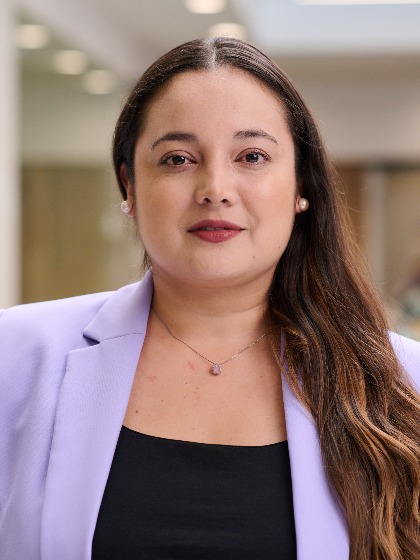
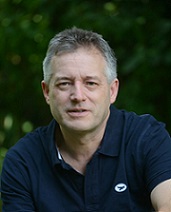
Biancamaria Raganelli is an Associate Professor in the School of Economics, Law and Governance at the University of Rome Tor Vergata, specializing in Public Procurement Law, European Union Law, and Administrative Law. Her academic work focuses on the intersection of legal frameworks and economic policies, particularly in crisis management, renewable energy, and anticorruption measures. Her research explores critical areas such as State Aid Regulation , Private-Public Partnerships , and Financial Regulation , with a strong emphasis on judicial interpretations by European courts. Recent publications analyze the legal implications of emergency scenarios, including the impact of the COVID-19 pandemic on procurement processes and the role of Supreme Courts in environmental compliance. She has contributed to debates on competition law , digital finance , and regulatory innovation , often addressing the balance between governmental powers and individual rights. Her teaching includes courses on Banking Law , Public Economic Law , and Sustainable Development Regulation .
Takis Tridimas is a Professor of EU Law at King’s College London and the Nancy A. Patterson Distinguished Faculty Scholar at Pennsylvania State University. Previously, he held the Sir John Lubbock Professorship of Banking Law at Queen Mary University of London (2004-2013). He served as a référendaire to Advocate General Sir Francis Jacobs at the European Court of Justice (1992-1995) and has advised institutions like the European Central Bank, European Parliament, and EU Court of Auditors. His expertise spans EU legal frameworks, judicial protection mechanisms, comparative constitutionalism, and economic/monetary union governance. Research interests focus on EU law’s application in judicial contexts, banking regulations, and constitutional remedies. His work frequently addresses CJEU case law interpretations and the intersection of international law with EU legal systems. Key projects include the European Network on Soft Law Research (2016-2019) and LAwTTIP (2016-2019), examining legal ambiguities in trade agreements. As a barrister at Matrix Chambers, he contributes practical insights to academic research.
Maria Lorena Flórez Rojas is an Assistant Professor in Technology Law at the University of Groningen's Faculty of Law, specializing in AI ethics, consumer rights, and legal tech innovation. She holds a PhD in Law and Society from Scuola Superiore Sant'Anna (Italy) and an LLM in Law and Technology from Tilburg University (Netherlands). Her research focuses on AI accountability, algorithmic governance, and the ethical-legal impacts of emerging technologies. Education: PhD in Law and Society (2015–2018, Scuola Superiore Sant'Anna, Italy) LLM in Law and Technology (2014–2015, Tilburg University, Netherlands) Law Degree (2008–2013, Universidad de los Andes, Colombia) Research Interests: Artificial Intelligence Accountability and Governance Digital Consumer Rights and Data Protection Legal Frameworks for Emerging Technologies Blockchain and Legal Innovation Publications: Her recent work explores AI in public administration, blockchain transparency, and ethical AI design. She co-edited the report AI and Public Administration: The (legal) limits of algorithmic governance (2024) and contributes to UNESCO's Global Toolkit on AI and the Rule of Law. Awards: Faculty of Law Starting Grant (2022–present) for AI accountability research Grants & Activities: Member of the Netherlands Network for Human Rights Research External Researcher at CinfonIA (AI research group) Co-organizer of the JuLIA Project on AI and Fundamental Rights (2024–2025) Labs/Teams: Part of the Security, Technology & e-Privacy (STeP) research group and the Transboundary Legal Studies Department at Groningen.
Dr. mr. H.H. (Harry) Runia is an Assistant Professor (University Lecturer) at the Faculty of Law, University of Groningen. He specializes in Legal Methods, Legal History, and Private Law, with a focus on Dutch Civil Law and Legal Theory. His research explores historical and doctrinal aspects of legal systems, particularly the evolution of the Dutch Civil Code (Burgerlijk Wetboek) and legal methodologies. He holds a PhD from the University of Groningen (2016) and teaches courses such as Legal Research Skills, Legal History, and Roman Law. His teaching emphasizes Dutch legal traditions and comparative legal frameworks. Professional activities include academic presentations on legal codification, the work of legal scholars like Paul Scholten and E.M. Meijers, and contributions to legal education. Research Interests: Legal History, Civil Law Reforms, Property Rights, Legal Theory, Dutch Legal Tradition Teaching: Juridische Onderzoeksvaardigheden, Legal History I & II, Introduction to Dutch Law Dr. Runia has published extensively on topics such as the historical development of legal doctrines, ownership and possession in civil law, and the legacy of prominent Dutch legal scholars. His work bridges historical legal analysis with contemporary doctrinal debates, contributing to both academic and practical legal discourse.
Professor Keith Martin is a leading academic in the Information Security Group at Royal Holloway, University of London , where he serves as Director of the EPSRC Centre for Doctoral Training in Cyber Security for the Everyday. His research spans Cryptography , Key Management , and Geopolitical Aspects of Cyber Security , influencing both technical and societal dimensions of digital security. His research interests focus on cryptographic systems, including Cryptographic key management for mobile and distributed environments Geopolitical implications of cyber threats Quantum-resistant cryptography Security in vehicular and wireless sensor networks Recent publications highlight trends in Quantum Cryptography , 5G Privacy , and Secure Communication Protocols , with applications in healthcare, maritime security, and policy. His textbook Cyber Security Foundations (2025) bridges technical and societal perspectives. Supervision includes completed PhDs on topics like Attribute-Based Access Control , Anonymous Authentication , and Cryptographic Applications in RFID Systems , with students now holding academic and industry roles globally.
Oskar Gstrein is an Associate Professor at the University of Groningen's Faculty of Law, specializing in Governance and Innovation (G&I). He holds a secondary position as Lecturer at Saarland University. His research focuses on data protection, AI ethics, digital identity governance, and EU regulatory frameworks. Key research interests include: Artificial Intelligence regulation and societal impacts Data autonomy in smart cities and digital environments Transparency in investment migration and privacy law EU data retention policies and counterterrorism measures He has published over 70 works, including articles on GDPR enforcement, AI Act compliance, and blockchain-based identity systems. Notable awards include the 2018 ITS Rio de Janeiro Fellowship and the 2012 Hans Werner Osthoff Prize. Gstrein actively engages in public discourse on digital sovereignty, cybersecurity, and ethical AI through media contributions and conferences.
Martin Mennecke is an Associate Professor in International Law at the Department of Law, University of Southern Denmark (SDU), affiliated with the Faculty of Business and Social Sciences. His research focuses on international law frameworks related to atrocity prevention, the Responsibility to Protect (R2P), international criminal justice mechanisms, and UN policy dynamics. Key research areas include: Responsibility to Protect (R2P) implementation International Criminal Court operations Human rights enforcement mechanisms Arctic governance issues UN institutional effectiveness His recent work emphasizes small states' roles in global governance, Danish foreign policy contributions to R2P, and interdisciplinary approaches to war termination. Over 32 publications demonstrate engagement with topics like transitional justice, new war legal frameworks, and international legal accountability. Active in academic outreach, he has organized over 100 conferences, workshops, and expert meetings on topics including the International Criminal Court's challenges and R2P implementation strategies. Engaged in media commentary on contemporary issues like war crimes prosecution and UN resolutions. Teaching includes courses on international law fundamentals, transitional justice, and laws governing modern conflicts. Supervised projects include contributions to textbooks and research initiatives like the 'Nordic Approaches to R2P' project (2020-2021).
Julia Laffranque is a prominent legal scholar and practitioner, serving as a Professor at the University of Tartu’s Faculty of Law and School of Law, specializing in Public Law and European Union Law. She concurrently holds roles as Director of Programme at the European Law Academy (ERA) and Judge at the Estonian Supreme Court. Her career includes significant contributions to European human rights law, notably through her tenure as a Judge at the European Court of Human Rights (2011–2020). Education: Doctor of Law (2003), University of Tartu (Dissertation: Judicial Dissent in Supreme Courts). LL.M., University of Münster (1997–1998). Legal Studies, University of Tartu (1992–1997). Research Interests: Focus on judicial independence, European human rights frameworks, and the interplay between national and supranational legal systems. Her work emphasizes ethical foundations of European law and legal harmonization across jurisdictions. Publications Overview: Over 95 publications, including seminal works on the European Court of Human Rights’ jurisprudence, judicial dissent mechanisms, and constitutional amendments. Recent works explore the role of ombudsmen in human rights enforcement and the impact of ECHR rulings on national legal systems. Leadership & Service: President of the Estonian Association of European Law (2004–2013). President of the International Federation for European Law (2010–2012). Member of the European Union Agency for Fundamental Rights’ Scientific Committee (2018–present). Advisory & Grants: Led the project 'Estonian Legal Space in Global Legal Space' (2006–2011), focusing on European legal integration. Engaged in policy advising on judicial reforms and human rights compliance. Labs & Teams: Active in the European Law Academy’s research initiatives on judicial independence and human rights legal frameworks.
Manfred Stelzer is Professor of Public Law and Head of the Department of Constitutional and Administrative Law at Vienna University since 2007, with his professorship dating back to 1993. His academic career includes teaching positions at the University of Applied Sciences "Campus" Vienna (2002-04), Military Academy in Wiener Neustadt (1998-01), and deputizing chairs at Johann-Wolfgang-Goethe University Frankfurt/Main and Constance University in Germany. Stelzer's research spans constitutional law, comparative constitutional systems, human and fundamental rights, legal aspects of political parties, and biotechnology law. His scholarly work demonstrates deep engagement with European constitutional frameworks, judicial review mechanisms, and the evolving relationship between national and supranational legal orders. His publications consistently address theoretical and practical dimensions of constitutional governance. His publication record shows significant scholarly productivity between 2010-2013, with multiple contributions to major constitutional law handbooks and specialized monographs. The works reveal a consistent focus on constitutional interpretation methods, competence distribution systems, and the practical application of constitutional principles in complex legal environments. His research bridges theoretical constitutional scholarship with practical governance challenges. Among his notable recognitions is the Theodor-Körner Prize awarded in 1992, highlighting early career excellence in legal scholarship. His work appears in prestigious international publications including the Routledge Handbook of Constitutional Law and specialized European constitutional references. With over a hundred publications to his name according to his biography, Professor Stelzer has established himself as a significant figure in Austrian constitutional scholarship. His career demonstrates sustained contribution to legal education and constitutional theory development, particularly in the Central European context.
Karen Shalev is a Professor in Missing Persons Studies at the University of Portsmouth, affiliated with the Faculty of Humanities & Social Sciences and the School of Criminology and Criminal Justice. She is the Director of the Centre for the Study of Missing Persons, which she founded in 2012, and has been a key figure in advancing research and policy in this field since joining the university in 2004. Her research focuses on applied criminology and investigative psychology, particularly in the area of missing persons. Her work spans topics such as risk assessment, media appeals, safeguarding vulnerable populations (including children, unaccompanied migrants, and people with dementia), and international best practices in investigations. She has led multiple research projects in collaboration with police forces, NGOs, and international partners. Her recent publications show a strong trend toward understanding the operational, psychological, and social dimensions of missing person cases, with increasing attention to digital engagement, policy evaluation, and the experiences of families and first responders. She has also contributed significantly to public discourse through media appearances and expert commentary. British Psychological Society Research Seminars Series (2013) Karen Shalev actively supervises PhD students and has advised on policy development, including advising MP Ann Coffey and contributing to national guidelines. She leads externally funded research projects such as 'The hidden impact: The experiences of siblings of missing persons in the UK and Australia' and has served as Principal Investigator on initiatives funded by West Yorkshire Police, Hertfordshire Constabulary, and the European Federation for Missing & Sexually Exploited Children. She is the co-editor-in-chief of the International Journal of Missing Persons and contributes to both undergraduate and postgraduate teaching, particularly in criminology, psychology, and missing person investigations. Her work aligns with several UN Sustainable Development Goals, particularly those related to justice, safety, and well-being.
Prof. AE Schilder is an Associate Professor at the Faculty of Law of Vrije Universiteit Amsterdam. He holds positions in the Constitutional and Administrative Law department, the Kooijmans Institute, Fundamental Rights, Regulation and Responsible Government, and Public Contract Law. His research focuses on constitutional law, public order, privacy, and regulatory frameworks. He actively contributes to legal education through courses like Gemeenterecht and publishes extensively on topics such as privacy rights, municipal governance, and legal principles in public order cases. His research interests span constitutional law, administrative law, and privacy law, with a particular emphasis on balancing security measures with fundamental rights. Recent work includes analysis of secret policing, public space regulations, and religious freedom cases. He frequently engages with media as an expert on legal issues related to public order and governance. Prof. Schilder has supervised four PhD theses and participates in editorial work for De Gemeentestem . His activities include organizing conferences on topics like counter-terrorism and radicalization, reflecting his engagement with contemporary legal challenges.
Dr. Valentina Moscon is a Senior Research Fellow at the Max Planck Institute for Innovation and Competition, specializing in Intellectual Property and Competition Law. She also collaborated with the University of Trento’s Faculty of Law in seminars on topics like Open Access and Google Books’ copyright implications. Her research focuses on Comparative Law, Law and Technology intersections, Intellectual Property Law, Privacy, Contract Law, and Tort Law. She explores issues such as Open Access implementation in legal frameworks, copyright modernization, and university technology transfer policies. Key publications include contributions to Law, Development and Innovation (Springer, 2015), analyzing international law dimensions of open access and university knowledge transfer. Her work bridges legal theory with practical applications in digital environments. She is part of interdisciplinary teams at the Max Planck Institute, collaborating with scholars like Roberto Caso and Giuseppe Bellantuono on topics such as information regulation and privacy law.
Marc García Solé is an Assistant Professor in the Department of Law at Esade Law School, affiliated with the Institut d'Estudis Laborals. His work focuses on legal frameworks surrounding guardianship, civil society reforms, legislative analysis, and mistreatment-related legal issues. He contributes to interdisciplinary research through the IEL project (2022-2025), funded by AGAUR. Research interests include animal rights legislation, fundamental rights protection, and legal reforms. His publications address gaps in animal cruelty laws and explore restrictions on fundamental rights through a legal lens. He currently participates in the Institut d'Estudis Laborals research group, collaborating on labor and societal legal challenges. No formal advising or grants are explicitly listed, though his involvement in the IEL project underscores ongoing scholarly engagement.
Aurika Lazorivna Paskar is an Associate Professor at the Department of Procedural Law, Faculty of Law, Yuriy Fedkovych Chernivtsi National University in Ukraine. With a PhD in Law, she teaches courses on Civil Procedure Law, Judicial System of Ukraine, Advocacy of Ukraine, and European standards of Advocacy. Department of Procedural Law, Faculty of Law Yuriy Fedkovych Chernivtsi National University Dr. Paskar completed her education at Yuriy Fedkovych Chernivtsi National University, where she has continued her academic career. Her scholarly work demonstrates a deep commitment to advancing legal knowledge and education in Ukraine. Dr. Paskar's research focuses on fundamental aspects of justice systems, with particular emphasis on e-justice, European Court of Human Rights case law, the right to a fair trial, and access to justice. Her work bridges theoretical legal scholarship with practical applications in judicial reform, especially relevant in the current Ukrainian context. She has extensively examined how digital transformation impacts judicial procedures and how European standards can be implemented in Ukrainian law. Her research is characterized by a strong focus on ensuring that legal systems remain accessible and fair for all citizens. Analysis of Dr. Paskar's recent publications reveals a consistent focus on the intersection of traditional legal principles with contemporary challenges. Her work increasingly addresses the impact of digital transformation on judicial systems, the adaptation of European legal standards to Ukrainian contexts, and the critical importance of maintaining access to justice during extraordinary circumstances such as martial law. There's a clear trajectory in her scholarship from theoretical examinations of civil procedural law toward more applied research addressing Ukraine's specific judicial challenges and reforms. Dr. Paskar has made significant contributions to legal scholarship through numerous publications including articles in professional Ukrainian publications, international journals, and participation in academic conferences. Author of the monograph "Civil Procedural Legal Relations: Structural-Functional Analysis" (2014) Contributor to multiple academic textbooks on civil procedure in Ukraine Co-author of scientific articles in international journals including the European Journal of Law and Public Administration Dr. Paskar is actively involved in academic life through teaching specialized courses, developing methodological materials, and contributing to scholarly discourse on judicial reform in Ukraine. She has created numerous specialized course programs related to court systems and civil procedure, demonstrating her commitment to comprehensive legal education and professional development.
Kęstutis Vitkauskas is an Associate Professor at Vytautas Magnus University's Faculty of Law , affiliated with the Department of Public Law since September 1, 2018. Academic credentials: Doctor of Sciences (1991), Associate Professor (2014) Key research areas: Administrative law, Human rights Contact: kestutis.vitkauskas@vdu.lt | vitkauskas.kestutis17@gmail.com Language proficiency: Native Lithuanian, Advanced English, Very Good Russian His work focuses on legal frameworks governing public administration and fundamental human rights protections. While specific publications and awards aren't detailed in this profile, his contributions to public law scholarship span decades.