Gino Panza is an Assistant Professor within the Department of Occupational Therapy at Wayne State University's Eugene Applebaum College of Pharmacy and Health Sciences . He also serves as a Health Science Specialist at the Department of Veterans Affairs John D. Dingell Medical Center and holds affiliations with Wayne State University's Department of Physiology and Department of Veterans Affairs . Ph.D. in Rehabilitation Science (2017), George Mason University M.A. in Exercise Physiology (2013), Central Michigan University B.A. in Exercise Science (2010), Adrian College Dr. Panza specializes in Clinical Exercise and Applied Physiology , focusing on Intermittent Hypoxia Therapy for neurological conditions like Spinal Cord Injury and Obstructive Sleep Apnea . His research employs advanced methods including Near Infrared Spectroscopy , Heart Rate Variability Analysis , and Physical Performance Assessment . Recent publications demonstrate expertise in respiratory plasticity , autonomic dysfunction , and cardiovascular rehabilitation for spinal cord injured populations. Key collaborators include Jason Mateika and Safwan Badr . Notable awards include the Experimental Biology Usha Award and multiple VA Research Grants . Dr. Panza mentors students like Lexi Soltesz , recipient of the 2025 Anthony F. DiMarco MD Award . He teaches graduate courses in Neuroscience for Health Care Professionals , Occupational Therapy Research III , and Motor Control .
Masaki Kakeyama is a Professor at the Faculty of Human Sciences , Waseda University, Japan. With a Ph.D. from Waseda University, he leads research at the intersection of behavioral neuroscience, environmental toxicology, and developmental neurobiology. Key Affiliations: Japan Society of Endocrine Disrupters Research, Japanese Society of Toxicology, Japan Neuroscience Society Research Focus spans neurodevelopmental impacts of environmental chemicals (dioxins, BPA, PCB congeners), neuronal migration mechanisms, and schema-based memory consolidation. His work explores how prenatal exposures alter medial prefrontal cortex and hippocampal function, leading to behavioral inflexibility and cognitive deficits in rodent models. Scientific Contributions include: Characterizing aryl hydrocarbon receptor (AhR) overactivation effects on cortical development Developing FlavorMap and IntelliCage automated behavioral assays Demonstrating neuronal heterotopia -induced distant brain region dysfunction Identifying developmental origins of metabolic disorders via maternal dioxin exposure Awards: Encouragement Award, Japanese Society for Hygiene (2012) Methodological Innovations include fluorescence laser microdissection-RTqPCR for single-cell gene expression analysis and live imaging techniques for neurochemical dynamics assessment. Education: Ph.D. in Life Sciences (1995) from Graduate School of Human Sciences, Waseda University.
Dr. Kaori Ishii is a Professor at the Faculty of Sport Sciences, School of Sport and Sciences at Waseda University in Japan. With a Doctor of Medicine from Tokyo Medical University (2009) and graduate studies at JF Oberlin University Graduate School of International Studies Human Sciences (2005), she has established herself as a leading researcher in sports sciences and public health. Dr. Ishii's educational background bridges medical science and human sciences, providing her with a unique interdisciplinary perspective. Her Doctor of Medicine from Tokyo Medical University in 2009 laid the foundation for her research in health outcomes, while her earlier graduate work at JF Oberlin University focused on international studies and human sciences, informing her approach to public health interventions. Her research primarily focuses on understanding the relationships between physical activity, sedentary behavior, and health outcomes across different age groups. Dr. Ishii has made significant contributions to the field of sedentary behavior research, particularly examining how screen time, sitting patterns, and physical activity affect children's academic performance, older adults' frailty, and various metabolic health markers. Her work often incorporates the influence of built environment factors on physical activity patterns, with studies conducted in dense urban Asian contexts. Analysis of Dr. Ishii's extensive publication record reveals several consistent research themes. She has pioneered research on the joint associations of physical activity and screen time with academic performance in children. More recently, her work has expanded to include innovative interventions such as virtual reality exergames to reduce cardiometabolic risk, and investigations into how dietary patterns affect biological aging. Her research frequently employs objective measurement tools like accelerometers and integrates multiple methodologies from epidemiology to experimental physiology. Dr. Ishii has received recognition for her work, including the 4th Japan Society of Health Education and Research Encouragement Award in 2014. Her research has been supported by numerous grants, particularly through WASEDA'S Health Study, a cohort study she has been involved with since its launch in 2014. As a principal investigator on the WASEDA'S Health Study, Dr. Ishii leads a multidisciplinary research team examining the relationships between physical activity, sedentary behavior, dietary patterns, and various health outcomes in Japanese adults. Her work often involves international collaborations, particularly with researchers from Australia, Canada, and the United States, reflecting the global relevance of her research on physical activity and health.
Michel J.A.M. van Putten is a Full Professor of Clinical Neurophysiology at the TechMed Centre, University of Twente , with an h-index of 52 and 9261 Scopus citations. His research focuses on: EEG-based outcome prediction in post-cardiac arrest coma Deep learning applications for seizure and interictal discharge detection Neurophysiological modeling of epilepsy and traumatic brain injury Cultured cortical neural networks for disease mechanism inference AI-driven analysis of brain connectivity and excitation-inhibition balance His work contributes to UN Sustainable Development Goals for Health and Well-being , Human-AI Interaction , and Economic Impact of AI . Recent research includes: 2025: Automated inference of disease mechanisms in patient-derived neuronal networks 2025: Expert-level deep neural network for interictal discharge detection 2024: Grassmann manifold methods for invariant EEG/MEG feature extraction Scientific recognition includes: 2011: NVvTG Congres Prize 2012: Tripartite prize for Near Infrared Spectroscopy and EEG research His datasets on EEG analysis and cortical network modeling are publicly available through Zenodo, and he has presented 17 oral presentations on topics including: Post-ictal brain recovery mechanisms Mathematical models of peripheral axons Ischemic cerebral damage pathways
Bernhard Prinz serves as a Research Assistant in both the Bachelor's and Master's Degree Programs in Training & Sport at the University of Applied Sciences Wiener Neustadt (FHWN), located at Campus 1 in Wiener Neustadt, Austria. His academic work focuses on exercise physiology with particular emphasis on oxygen dynamics and performance assessment in athletic populations. Prinz's research interests center around exercise physiology , specifically examining oxygen uptake kinetics, muscle deoxygenation patterns, and performance metrics across different populations. His work primarily investigates youth cycling development , tracking physiological changes over multi-year periods in competitive adolescent cyclists. He also explores specialized equipment effects (such as carbon running shoes), critical power determination across testing environments, and physiological adaptations in high-demand occupational groups like special forces personnel. His recent publications (2022-2024) demonstrate a strong focus on longitudinal studies of youth athletes, with particular attention to how aerobic fitness and muscle oxygenation evolve during development. These studies employ advanced measurement techniques including near-infrared spectroscopy for real-time muscle oxygenation assessment during exercise. Prinz has contributed to significant research projects including: Carbon shoes (2025-2026): Investigating physiological responses to advanced running footwear Muscle deoxygenation in youth athletes (2017-2025): Longitudinal study of oxygen extraction changes Critical power in laboratory and field conditions (2016-2025): Methodological comparisons Special forces Ministry of the Interior (2017-2023): Training intervention effects His research has practical applications for coaches, sports scientists, and occupational health professionals seeking to optimize training programs and understand physiological adaptation processes. Prinz's work bridges theoretical exercise physiology with real-world performance applications across diverse athletic and occupational settings.
Dr. Stefano Silvoni is a Research Fellow in the Department of Cognitive and Clinical Neuroscience at the Central Institute of Mental Health, Mannheim, actively contributing to the “Learning and Brain Plasticity in Mental Disorder” research group. His work bridges clinical neuroscience and digital health interventions, focusing on neuroplasticity mechanisms in aging and cognitive disorders. His research spans Neuroscience , Clinical Neuroscience , and Neurorehabilitation , with specialized expertise in sensorimotor training , cognitive impairment , and digital therapeutics . Key investigations include developing adaptive home-based training systems using tablets and mobile applications to address mild cognitive impairment and frailty in elderly populations, leveraging neuroimaging to quantify cortical changes. Analysis of his 2019-2025 publications reveals a cohesive trajectory from clinical trial design to efficacy validation of sensorimotor interventions, emphasizing real-world applicability through home-based digital platforms. His work consistently integrates functional near-infrared spectroscopy (fNIRS) with clinical assessments to demonstrate neural and behavioral improvements in cognitive decline. Scientific awards: No awards or fellowships were documented in the source material. Advising and grants: The provided text contains no references to doctoral students, grant funding, or supervised research projects. Labs and teams: As a core member of the “Learning and Brain Plasticity in Mental Disorder” group, he collaborates on interdisciplinary studies combining cognitive neuroscience, geriatrics, and engineering to develop accessible interventions for mental health disorders.
Vincent Roncin is an Assistant Professor (Maître de Conférences) at University of Paris 13, affiliated with the Laboratoire de Physique des Lasers (LPL), UMR 7538. His research focuses on optical communications, particularly all-optical signal processing techniques for high-speed telecommunications. Roncin's primary research interests span optical communications, all-optical regeneration, clock recovery mechanisms, semiconductor and quantum dot lasers, frequency metrology, and Brillouin amplification. His work bridges fundamental photonics research with practical telecommunications applications, particularly in high-speed optical networks requiring precise timing and signal quality. He has made significant contributions to understanding patterning effects in clock recovery systems and developing techniques for frequency stability transfer using advanced laser technologies. His publication record shows a consistent research trajectory from 2003 to 2022, with recent work focusing on frequency stability transfer using quantum dash lasers and fiber-based ring cavities. The publications demonstrate a progression from fundamental optical regeneration techniques to more specialized frequency metrology applications, reflecting both depth and evolution in his research focus. His work primarily appears in high-impact optics and photonics journals including IEEE Journal of Quantum Electronics, Optics Express, and Applied Optics. Roncin maintains active collaborations with researchers across France and internationally, particularly with institutions in Rennes and Dublin. His research has practical applications in optical telecommunications, precision metrology, and high-speed data transmission systems. He completed his PhD at University of Rennes 1 in 2004 with a thesis on optical functions based on semiconductor optical amplifiers for telecommunications signal regeneration. In 2019, he obtained his Habilitation à diriger des recherches (HDR) from University of Paris 13 with research on self-pulsing semiconductor lasers and their applications to optical telecommunications and frequency metrology. Roncin works within the Laboratoire de Physique des Lasers, a research unit (UMR 7538) that focuses on atomic physics, quantum gases, laser development, and optical metrology. His experimental work utilizes specialized optical laboratories including experimental space L312 at University of Paris 13.
Sean T. Roberts is an Associate Professor in the Chemistry Department at the University of Texas at Austin, where he leads a dynamic research group focused on understanding energy, charge, and spin dynamics in molecular materials. His work bridges fundamental physical chemistry with practical applications in energy conversion and optoelectronics. Roberts received his BS in Chemistry from UCLA in 2003, followed by a PhD from MIT in 2010. He completed postdoctoral training at the University of Southern California from 2010-2013 before joining UT Austin in 2014 to establish his independent research program. His career trajectory demonstrates steady progression from graduate student to established faculty member with significant research impact. His research interests center on developing and applying ultrafast spectroscopic techniques to visualize transport phenomena in nanoscale materials. Key focus areas include singlet fission for enhanced solar energy conversion, photon upconversion systems, nanoscale energy transfer mechanisms, and optical probes for studying buried interfaces. His group actively develops new methodologies including transient absorption microscopy and electronic sum frequency generation to address fundamental questions in materials science. Analysis of Roberts' recent publications reveals a strong emphasis on quantum dot-molecule hybrid systems, with particular focus on silicon quantum dots coupled with organic molecules for photon upconversion applications. His work increasingly integrates computational approaches with experimental measurements, and shows growing collaboration with groups specializing in synthesis, theory, and device fabrication. The research demonstrates a clear progression from fundamental mechanistic studies toward applications in solar energy conversion and photopolymerization. NSF CAREER award recipient Sloan Research Fellow Cottrell Scholar William H. Wade Endowed Professorship in Chemistry (2021) Roberts actively mentors a large research group comprising over a dozen graduate students and numerous undergraduates. His research is supported by multiple major grants including NSF awards, Welch Foundation funding, and W.M. Keck Foundation projects. He also directs the CDCM's education and outreach initiatives and co-created the Chemical REsearch At TExas (CREATE) program to introduce community college students to chemical research. His laboratory has expanded significantly since 2014, with documented growth in space and equipment as shown in multiple photo galleries documenting lab construction and expansion.
Professor Dan Gordon is a distinguished Professor of Exercise Physiology at Anglia Ruskin University's Cambridge Centre for Sport & Exercise Sciences within the Faculty of Science and Engineering. With over 20 years of experience in sports physiology, he established the Sport and Exercise Science degree program at ARU in 2000. Gordon also holds an Honorary Lectureship and is an Associate Researcher at the Université Paris-Saclay, and serves as Patron for Living Sport in Cambridgeshire and Peterborough. His educational background includes: PhD 'The Oxygen Uptake Work-rate Relationship: Factors Limiting VO2max and the Implications for Exercise Stress Testing in the Field' from Anglia Ruskin University (2012) MSc Sports Science Fitness and Health from University of Essex (1998) BSc (Hons) Sport and Exercise Science from University of Northumbria (1996) HND Business and Leisure Management from Bolton Institute of Higher Education (1993) Professor Gordon's research focuses on the physiological limitations to oxygen uptake during exercise, marathon physiology, menstrual function and exercise, and disability sport & physical activity. His work bridges the gap between elite athletic performance and clinical populations, with particular expertise in cardiorespiratory exercise physiology and the assessment of endurance physiology. His research has fostered global collaborations and partnerships with multinational companies including Google, FiBit and FCB. Analysis of Professor Gordon's recent publications reveals a strong focus on the intersection of genetics and exercise response, physiological adaptations to various training methodologies (particularly blood flow restriction and high-intensity interval training), and the impact of physical activity on special populations including those with Down Syndrome and visual impairments. His work also addresses contemporary issues such as the effects of the COVID-19 pandemic on physical activity patterns. Professor Gordon has received significant recognition for his contributions to the field: BASES accredited Exercise Physiologist Senior Fellow of the Higher Education Academy Senior Fellow of the Royal Society of Medicine Author of the textbook 'Coaching Science' adopted in higher education institutions worldwide Over 140 published papers and abstracts As an academic supervisor, Professor Gordon currently mentors six PhD students including Ruby Cain, Chloe French, Jonathan Melville, David Whitelock, Andie Riches, and Mathew Slater, while having successfully supervised eight PhD candidates to completion. His research group has secured numerous grants supporting work in exercise physiology, including collaborations with UK Athletics, Cambridge Regional Swimming Squad, and various international institutions. He established the Exercise Physiology Summer School in 2020, which has become an international platform attracting students and speakers worldwide. Professor Gordon leads the Sport and Exercise Sciences Research Group at ARU and collaborates closely with the Université Paris-Saclay on international research initiatives. His work extends beyond academia through media engagement as a regular contributor to BBC programs including The Naked Scientists, Radio 4, Radio 5 Live, and World News, as well as writing for major publications like The Times, Telegraph, and Daily Mail. His 22 articles for The Conversation have garnered over 2.9 million reads, demonstrating his commitment to public engagement with science.
Prof. Cengiz Acartürk is a faculty member at Jagiellonian University's Faculty of Philosophy, Department of Cognitive Science . He holds a PhD in Cognitive Science from the University of Hamburg (2010) and completed a habilitation in psychology (2025). As director of the Multimodal Interaction and Integration Laboratory (MiiL) , he leads cutting-edge research in human-computer interaction, multimodal systems, and cognitive integration. Education PhD in Cognitive Science, University of Hamburg (2010) Habilitation in Psychology, Jagiellonian University (2025) Research Focus : His work combines eye-tracking and fNIRS technologies to study multimodal comprehension and human-artificial agent interaction. Current projects include social modulation of gaze (funded by NCN, 2025–present) and multi-agent communication analysis (Jagiellonian University, 2021–present). Key Contributions : Co-designer of MultiplEYE - an EU COST framework for multilingual eye-tracking data collection Principal investigator of international cognitive science projects Head of the MiiL Lab - a leading center for multimodal interaction research Contact : ul. Ingardena 3, 30-060 Kraków
Dr. Michał Ociepka is an Adjunct Professor at the Department of Cognitive Science within the Faculty of Philosophy at Jagiellonian University. His research focuses on the cognitive and neurophysiological mechanisms underlying fluid intelligence and complex cognitive functions, particularly the neural foundations of reasoning and working memory. Education: Master's in Computer Science, PhD in Psychology He employs behavioral experiments, psychometric methods, and advanced neuroimaging techniques such as EEG, fNIRS, and tACS. His work includes computational modeling, machine learning applications, and development of analytical tools for cognitive neuroscience. His recent research trends include the role of theta/gamma oscillations in fluid intelligence, temporal predictability effects on motor inhibition, and semantic distractibility in schizophrenia. He also contributes to methodological advancements like the Graph Mapping test for fluid reasoning assessment. Labs: ERPinator Lab (Cognition, Emotion, and Action), Krakow CogSci Group (Complex Cognition)
Izabela Maria Sztuka is a Visiting Researcher and Postdoctoral Researcher at the Center for Environmental Neuroscience, Max Planck Institute for Human Development in Berlin, a position held since March 2024 following her Predoctoral Research Fellowship there from 2019 to 2024. Her academic credentials include: MSc in Computational Neuroscience & Cognitive Robotics from the University of Birmingham (2018-2019) MSc in Psychology of Mental Health from the University of Edinburgh (2017-2018) BA in Psychology from Dublin City University (2016-2017) BA in Archaeology from the University of Warsaw (2005-2011) Dr. Sztuka's research integrates environmental neuroscience, human-environment interactions, and neuroecology of migration through computational modeling and neuroimaging techniques like fNIRS and DOT. Her work examines neural mechanisms underlying human adaptation to environmental contexts and migratory patterns, bridging cognitive robotics with ecological frameworks to analyze bidirectional human-environment relationships. Affiliated with the Center for Environmental Neuroscience, she contributes to interdisciplinary collaborations between neuroscientists, environmental scientists, and roboticists. No scientific awards or grant details are documented in available sources, and information regarding student mentorship remains unspecified.
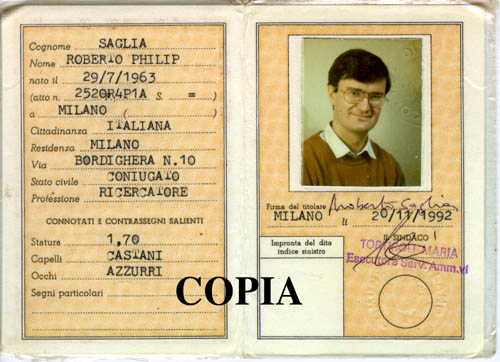
Roberto Philip Saglia is a prominent astrophysicist and researcher at the Max Planck Institute for Extraterrestrial Physics (MPE) in Garching, Germany, where he works in the Optical and Interpretative Astronomy (OPINAS) department. With a career spanning several decades, Dr. Saglia has established himself as a leading expert in galaxy formation and evolution, cosmology, and extragalactic astronomy. Dr. Saglia's research primarily focuses on understanding the structure and evolution of galaxies, with particular emphasis on stellar populations, dark matter distribution, and black hole physics. He is a key contributor to the Euclid space mission, a European Space Agency project designed to investigate the nature of dark energy and dark matter through precise measurements of galaxy shapes and redshifts. His recent work (2023-2025) has centered on analyzing Early Release Observations from the Euclid mission, examining various aspects of galaxy clusters, dwarf galaxies, globular clusters, and large-scale cosmic structures. Dr. Saglia has published extensively in leading astronomy journals, with over 170 publications to his name, demonstrating his significant contributions to the field. As evidenced by his numerous collaborative papers, Dr. Saglia works with an extensive international network of astronomers and cosmologists across Europe and beyond. His research combines observational data with sophisticated theoretical modeling to address fundamental questions about the universe's structure and evolution. Dr. Saglia has received support from prestigious research programs including the Priority Program 1177 Witnesses of Cosmic History, the Transregional Collaborative Research Center TRR 33 - The Dark Universe, and the Cluster of Excellence for Fundamental Physics - Origin and Structure of the Universe.
Dr. Yves Grosdidier is a Lecturer in the Department of Physics at the University of Sherbrooke's Faculty of Science, where he has taught theoretical physics courses since 2002. His academic journey includes doctoral research at Université de Montréal (1995-2000) and a postdoctoral position as Support Astronomer at Instituto de Astrofísica de Canarias (2000-2001). His research focuses on stellar mass-loss phenomena in Wolf-Rayet stars and planetary nebulae, with particular expertise in turbulent outflows, wind inhomogeneities, and dust formation in massive binary systems. Complementing this astrophysical work, he investigates radiative transfer in multifractal cloud structures , analyzing scaling properties across spatial scales from kilometers to meters using satellite data and Monte Carlo simulations. Analysis of his 59 publications (1997-2009) reveals three dominant research threads: (1) High-resolution studies of Wolf-Rayet nebulae like M1-67 using HST and CFHT data, (2) Characterization of wind fluctuations in [WC]-type planetary nebula nuclei through spectroscopic monitoring, and (3) Development of multifractal models for radiative transfer in optically thick clouds. His most influential works establish scaling laws in astrophysical turbulence and provide evidence for episodic dust formation in long-period WR+O binaries. 5,340 publication reads and 301 citations reflect community engagement with his work Extensive collaboration with international teams including NASA, ESO, and Canadian observatories Methodological contributions to structure function analysis and multifractal modeling As a teaching-focused academic, Dr. Grosdidier integrates his research expertise into theoretical physics instruction while maintaining active research collaborations. His work bridges observational astrophysics and theoretical fluid dynamics, with particular attention to scaling phenomena across multiple orders of magnitude.
Dr. Ilona Kotlewska is an Assistant Professor at Jagiellonian University in Krakow and maintains a teaching position at SWPS University where she instructs courses on biological bases of behavior. As a neurobiologist and neuropsychologist with a PhD in biological sciences from the Nencki Institute of Experimental Biology of the Polish Academy of Sciences, she bridges experimental biology with psychological research. Her academic journey includes interdisciplinary studies at the University of Warsaw's College of Inter-Faculty Individual Studies in Mathematics and Natural Sciences, followed by research fellowships at the University of Barcelona, Leibniz Institute for Neurobiology in Germany, and Dartmouth College in the United States. Dr. Kotlewska's research focuses on brain processes, particularly the development of self-awareness and attention mechanisms. She specializes in advanced neuroimaging techniques including electroencephalography, magnetic resonance imaging, and functional near-infrared spectroscopy. Her current research at Jagiellonian University investigates attention processes and leads a grant on the neurobiological foundations of ownership. Her work spans cognitive neuroscience, neuropsychology, and social neuroscience, with particular interest in how the brain processes self-referential information, ownership perception, and social stimuli. Her recent publications demonstrate consistent output in brain imaging methodologies and cognitive processes, with a focus on self-awareness development, attention mechanisms, and ownership perception. The research employs multimodal neuroimaging approaches to address fundamental questions about how the brain constructs self-referential processing and responds to external stimuli. Fulbright Junior Research Award (2017-2018) ETIUDA-4 scholarship from the National Science Centre START scholarship from the Foundation for Polish Science Dr. Kotlewska actively supervises research projects and leads her own grant on neurobiological foundations of ownership. Her research program maintains international collaborations stemming from her fellowships at prestigious institutions worldwide. She balances her research with teaching responsibilities at SWPS University and significant science popularization efforts through lectures, radio appearances, and online publications. As a member of the Spokesmen of Science association, Dr. Kotlewska actively participates in science communication initiatives. Her research group likely provides opportunities for students to engage with advanced neuroimaging techniques while exploring fundamental questions about brain function and self-awareness development.