Ahmed Gomaa Radwan is a Professor at Cairo University's Department of Engineering Mathematics and Physics, Egypt. His research spans fractional-order systems , chaotic dynamics , FPGA implementations , and bio-impedance modeling , with numerous publications in IEEE Access, Microelectronics Journal, and Circuits Systems Signal Processing. Key collaborators include Lobna A. Said , Wafaa S. Sayed , and Ahmed Soltan . His work emphasizes chaos-based encryption , fractional calculus , and hardware accelerators for real-world applications. Publications highlight trends in fractional-order chaotic systems , memristor technology , and secure image processing , often involving CNTFET designs and nonlinear resonators .
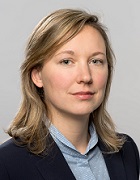
Sehrish Shafeeq, M.Sc. is a Research Associate and PhD student at the University of Hamburg's Department of Informatics. She contributes to the Computer Networks team, focusing on IT-Security and Security Management. Her research emphasizes data integrity, trust management in smart urban data, and blockchain applications for IoT security. Education: Pursuing PhD in Informatics at University of Hamburg Her research interests span data security, privacy in IoT systems, blockchain technology, and trust management frameworks. She explores innovative solutions for decentralized access control and secure data aggregation in urban environments. Her publications highlight advancements in secure blockchain-based data aggregation (SEBDA), privacy-aware systems, and IOTA ledger improvements using cuckoo filters. No grants or awards listed are explicitly mentioned in available information. She collaborates within the Computer Networks research group at UHH.
Prof. Dr. Frank Meyer, LL.M. (Yale) is a Professor of Criminal Law and Criminal Procedure Law with special emphasis on European and international aspects at the Institute for German, European and International Criminal Law and Criminal Procedure Law, Faculty of Law, Heidelberg University. He has held this W3 professorship since August 1, 2022. His educational background includes: 1995-2000: Studied law in Hamburg 2000: 1st State Examination 2002: Doctorate, University of Hamburg 2004: 2nd State Examination 2004-2005: LL.M. program at Yale Law School 2011: Habilitation, University of Bonn (Venia Legendi for Criminal Law, Criminal Procedure Law, European and International Criminal Law, Comparative Criminal Law) Prof. Meyer's research focuses on transnational and international criminal and criminal procedural law. His work centers on three main areas: the constitution and constitutionalization of transnational spheres of power and the function of punishment within them; the structures, principles, and objectives of an increasingly cross-border, integrated criminal justice system; and comparative criminal law. His research examines the legitimacy of criminal sanctions in transnational contexts, new forms of international cooperation in criminal matters, and the impact of digitalization on criminal procedure. His recent publications demonstrate a strong focus on electronic evidence, transnational law enforcement, and European criminal law. These works address critical issues in the digital age, including the collection and preservation of electronic evidence under the e-Evidence Regulation, whistleblowing in transnational contexts, and the implications of ECJ rulings on cross-border criminal investigations. Prof. Meyer leads the Chair of Criminal Law and Criminal Procedure Law at Heidelberg University, supervising academic staff and teaching courses including European Criminal Law, Criminal Law Practice for Beginners, and seminars on International Criminal Law and Criminal Law in the Age of Digitalization. He also co-organizes the Corporate Criminal Law Days conference series with colleagues from several European universities.
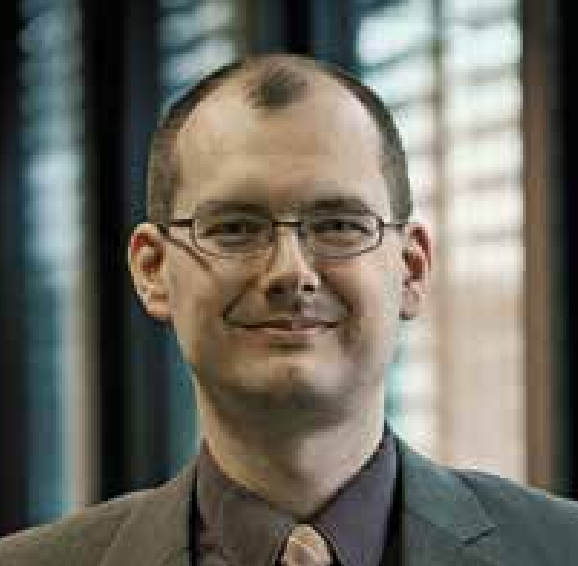
Christoph Sorge is a full Professor and Head of the Chair of Legal Informatics at Saarland University, where he leads interdisciplinary research at the intersection of law and computer science. His work focuses on data protection, IT security, and the legal implications of emerging technologies such as AI, blockchain, and wearables. He is actively involved in teaching courses like 'Recht der Cybersicherheit' and 'IT-Forensik für Juristen'. The Chair of Legal Informatics is engaged in numerous high-impact research projects funded by BMBF, DFG, and BMWK, including D'Accord , EDWI , K3I-Cycling , PAIRS , ScaleTrust , and research on botnet crime . These projects explore adaptive privacy systems, data spaces, AI governance, and cybersecurity compliance, often in collaboration with legal and technical partners. His research interests span data protection law , cybersecurity , AI and law , digital ecosystems , and applied cryptography . He has contributed to the legal classification of Bitcoin and digital signatures, and his team develops tools for transparent and compliant data processing. The recent publications reflect a strong trend toward interdisciplinary compliance solutions , combining legal analysis with technical design. Themes include GDPR-compliant privacy dashboards, secure data exchange in crises, ethical AI, and legal frameworks for data trusteeship. The work consistently emphasizes user rights , transparency , and technical feasibility in legal contexts. Notable scientific contributions include project-based research rather than individual awards, though the impact is evident in policy-relevant outputs and collaborations with public institutions like the Saarland State Chancellery. Prof. Sorge supervises research staff on topics such as algorithmic summaries of court rulings, legal issues of cryptography, wearable data protection, and cloud security. While formal PhD students are not listed, his team includes researchers like Aljoscha Dietrich and Bianca Steffes. The Chair also contributes to eGovernment education through the eGov Campus project, developing data protection training for administrative staff. Lab and team activities are centered around the Chair of Legal Informatics , which functions as a research hub for legal-technical innovation, hosting internal projects and participating in national and international collaborations.
Lukas Horn is a Researcher at the Chair of Software Engineering (Informatik II) at the University of Würzburg under Prof. Samuel Kounev. He holds a Master of Science and Bachelor of Science in Computer Science from the same institution. His research focuses on homomorphic encryption, secure multiparty computation, and privacy-preserving machine learning, with applications in cryptography and performance benchmarking. Education: Master of Science in Computer Science (Oct 2020 - Mar 2025) Bachelor of Science in Computer Science (Oct 2019 - Feb 2023) Research Interests: Design and implementation of homomorphic encryption systems (e.g., CKKS) Secure group communication protocols for IoT Performance analysis of cryptographic algorithms Privacy-preserving machine learning techniques Awards & Scholarships: Würzburg Software Engineering Award 2022 (Best Bachelor Thesis) Exposé Stipendium (Studienstiftung, 2025) Long-term scholarship from Studienstiftung (2021–2025) Teaching Contributions: Lecturer for Systems Benchmarking (SS25) Seminar leader for homomorphic encryption applications (SS25) Teaching Assistant for Fundamentals of Programming, Software Technology, and Theoretical Computer Science Labs & Projects: Active contributor to the Secure Software Systems Group, focusing on interdisciplinary cybersecurity research and education initiatives.
Mohamed I. Ibrahem is an active academic researcher specializing in cybersecurity applications for smart grid infrastructure and Internet of Things systems. His work bridges computer science, electrical engineering, and artificial intelligence with a particular focus on privacy-preserving techniques and secure machine learning applications. Dr. Ibrahem's research interests center on smart grid security , where he has developed innovative approaches for electricity theft detection, false data injection prevention, and privacy-preserving monitoring systems. His work in federated learning security addresses critical vulnerabilities in distributed machine learning systems, particularly against Trojan attacks and evasion techniques. Additional research areas include explainable AI applications in healthcare diagnostics, IoT security mechanisms, and deep learning optimization for resource-constrained environments. His recent publication trends reveal a growing emphasis on practical security implementations for real-world energy infrastructure, with increasing attention to explainability and robustness in AI-driven security systems. The interdisciplinary nature of his work connects cybersecurity principles with specific domain challenges in power systems and healthcare applications. Dr. Ibrahem has secured research funding for multiple projects focused on smart grid protection systems and privacy-preserving machine learning frameworks, though specific grant details are not visible in the publication metadata. His collaborative research network spans multiple international institutions with strong connections to Middle Eastern universities.
Prof. Christian Forler is a Professor of Operating Systems at Berlin University of Applied Sciences, Department of Computer Science and Media. He specializes in IT security, cryptography, and operating systems with a focus on GNU/Linux. His research includes password hashing (e.g., Catena), authenticated encryption (e.g., POET/POEx), and cryptographic protocol design. He actively participates in international competitions like the Password Hashing Competition and CAESAR. He teaches courses on operating systems, algorithms, and network security. Education: Not explicitly listed but inferred through research contributions. Research interests span IT security fundamentals, including cryptographic primitives, memory-hard functions, and secure communication protocols. His work emphasizes practical implementations and robustness against attacks. He contributes to open-source libraries like libstring and maintains a lab affiliation with the Pervasive Systems Engineering (PSE) Lab. Publications focus on authenticated encryption schemes, password security, and cryptographic algorithm analysis. He has authored over 20 papers in leading conferences and journals since 2008. Awards: None explicitly mentioned. Advising involves guiding students in thesis topics related to his research areas. Teaching includes programming courses in C and Java, with a focus on real-time systems and security. Labs/Teams: Member of the PSE Lab, contributing to applied systems engineering research.
Prof. Dr. Patrick Felke is a Professor for IT Security at the University of Applied Sciences Emden/Leer, affiliated with the Department of Technology, Electrical Engineering and Informatics. His research focuses on advanced cryptographic techniques, including cryptanalysis of encryption algorithms, IoT security vulnerabilities (e.g., Z-Wave protocols), and mathematical foundations of cryptographic primitives. He leads the IT-Sec Lab (https://itsec-lab.hs-emden-leer.de/), which explores topics like multivariate cryptography, symmetric cipher design, and side-channel attack mitigation. His research spans both theoretical and applied aspects of information security, with notable contributions to cryptanalysis of TETRA encryption algorithms, analysis of multivariate encryption schemes (e.g., EFLASH), and identification of critical flaws in wireless communication standards. Felke also contributes to the Digital Hub Ostfriesland initiative, focusing on IT security advancements in regional technology ecosystems. Key areas of expertise include: Cryptographic protocol vulnerability analysis Z-Wave and IoT device security Design and cryptanalysis of symmetric/asymmetric encryption systems Mathematical foundations of nonlinear functions in cryptography Publications emphasize practical cryptanalysis methods, algorithmic decomposition techniques, and cryptographic standard evaluation. His work bridges academic research with real-world cybersecurity challenges in telecommunications and embedded systems.
Prof. Alanwar Amr is a Professor at the Chair of Cyber-Physical Systems within the TUM School of Computation, Information and Technology at Technical University of Munich (TUM). His research focuses on data-driven reachability analysis, security-assured reinforcement learning, and privacy-preserving estimation techniques using advanced mathematical frameworks like zonotopes. He holds a PhD from TUM and has held prior positions as an Assistant Professor at Jacobs University Bremen and a postdoctoral researcher at KTH Royal Institute of Technology. His work bridges formal verification, control theory, and cybersecurity in cyber-physical systems. Education: PhD in Automation and Control from TUM (under Prof. Althoff) Research Associate at UCLA and Engineer at Siemens/Morpho Research Interests: Data-driven formal verification methods Secure and resilient control systems Privacy-preserving set-based estimation Adversarial attack defense mechanisms His recent publications emphasize advancements in zonotope-based techniques for safety verification, privacy in distributed systems, and AI-driven control systems with formal guarantees. Key contributions include logical zonotopes for boolean function analysis and diffusion-based observers for multi-agent systems. Notable awards include the KTH Postdoctoral Fellowship, Qualcomm Innovation Fellowship finalist distinctions (2017/2018), and a best demonstration award at IPSN 2017. His work addresses critical challenges in autonomous systems, cybersecurity, and privacy in IoT environments.
Antonia Wachter-Zeh is an Associate Professor at the Technical University of Munich (TUM) in the School of Computation, Information and Technology. She heads the Coding and Cryptography (COD) group and holds an ERC Starting Grant and the DFG Heinz Maier-Leibnitz Prize. Her research focuses on coding theory, post-quantum cryptography, and their applications in storage, communication, and machine learning. Education: M.Sc. in Electrical Engineering/Communications Engineering, Ulm University (2009) PhD in Electrical Engineering (2013), jointly from Ulm University and Université de Rennes 1 Research Interests: Coding Theory: Rank-metric codes, insertion/deletion correcting codes, DNA storage Post-Quantum Cryptography: Code-based and lattice-based schemes Coded Computing: Secure federated learning, privacy-preserving distributed algorithms Recent Publications: Focus on coded distributed computing, DNA-based storage, and cryptographic protocols. Key contributions include FedGT for malicious client detection and LowMS for rank-metric code-based KEMs. Awards: Johann Philipp Reis Award (2023) ERC Starting Grant (2019-2024) DFG Heinz Maier-Leibnitz Prize (2018) Grants & Teams: Leads projects like PQ-Prime (encrypted computing), DiDaX (DNA data storage), and PQ-CROWD (cryptography with skew codes). Collaborates internationally with institutions like ICL and DLR. Labs/Teams: Coding and Cryptography (COD) group at TUM, active in organizing workshops like MWCC and ITW.
Mira Mezini is a Professor of Computer Science at Technical University of Darmstadt (TU Darmstadt), Germany. She leads the Software Technology Lab and is co-spokesperson for the Excellence Cluster Reasonable Artificial Intelligence . Mezini serves on the board of the National Research Center for Applied Cybersecurity ATHENE and co-directs hessian.AI, the Hessian Center for Artificial Intelligence. Her academic leadership includes past roles as Dean of Computer Science (2013-2014) and Vice President of TU Darmstadt (2014-2019). PhD in Computer Science, University of Siegen Assistant Professor, Northeastern University (USA) Visiting Professorships: Lancaster University (UK), Università della Svizzera Italiana (Switzerland) Research Interests : Mezini develops programming systems for reliable distributed software and AI, focusing on large-scale module concepts, adaptability, and extensibility. She creates intelligent software development environments leveraging web-based resources to automate programming rules and patterns. Her work spans automated API misuse detection , session types , and foundational code models . Scientific Contributions : Mezini has (co)authored over 200 peer-reviewed publications, including 15 recent representative works on: Modular multi-language analysis (2024) Secure distributed programming models (2023-2024) Effect systems for concurrency (2023) Reactive programming frameworks (2018-2024) Formal verification of cryptographic APIs (2018) Core languages for cloud computing (2016) ACM Fellow ERC Advanced Grant (2012) AITO Dahl-Nygaard Senior Prize (2025) Horst Görtz IT Security Award (2014, second prize) IBM Eclipse Innovation Awards (2005, 2006) Google Research Award (2017) Leadership : Mezini has chaired major conferences (OOPSLA, ECOOP, ICSE) and served on panels including the European Research Council Consolidator Grant, ACM SIGPLAN Executive Committee, and DFG Senate. She mentors through the SIGPLAN long-term program and contributes to DEI initiatives at conferences like SPLASH. Labs & Collaborations : Leads the Software Technology Lab at TU Darmstadt. Collaborates with institutions including EPFL (session types), ETH Zurich (language design), and Carnegie Mellon University (code analysis). Her teams focus on decentralized systems, API security, and programming language foundations.
Daniel Rausch is a Researcher at the University of Stuttgart , affiliated with the Institute of Information Security . His work focuses on cryptographic protocols, particularly in electronic voting systems, universal composability, and accountable security frameworks. Key research areas include Cryptography , Computer Security , and Formal Verification . Recent publications explore password-hardened encryption, zero-knowledge proofs, and tally-hiding mechanisms for e-voting. Scientific contributions span: Provably secure password-hardened encryption with round-optimal schemes Accountable bulletin boards with UC security guarantees Zero-knowledge proofs for ballot validity in ElGamal-encrypted elections Publicly tally-hiding protocols preserving vote privacy UC-IITM model unification for composability frameworks Collaborations include researchers like Ralf Küsters , Nicolas Huber , and Marvin Bechtold . Notable implementations include Fabric*BB for distributed ledger applications and Kryvos for verifiable elections.
Lorenzo Grassi is a postdoctoral researcher in symmetric cryptography at Ruhr University Bochum's Cluster of Excellence CASA and a consultant at Ponos Technology. He holds a PhD in Mathematics from Graz University of Technology (2019) and a degree in Mathematics from the University of Milano. Funded by the CASA Jump.Start Program for Postdocs since 2023, he focuses on cryptography for future applications, including quantum-resistant protocols and MPC-/FHE-/ZK-friendly schemes. Education: University of Milano (Mathematics), Graz University of Technology (PhD in Mathematics) Positions: Ruhr University Bochum (CASA Cluster), Ponos Technology (Consultant), Radboud University Nijmegen (2020-2023) His research spans symmetric encryption, hash function design, algebraic attacks, and cryptanalysis of modern cryptographic primitives. Recent work includes Gröbner basis attacks, side-channel secure implementations, and quantum cryptanalysis. Key trends in his publications include the development of zero-knowledge proof-friendly hash functions (e.g., Poseidon2), structural analysis of symmetric primitives (e.g., Subspace Trails, Feistel networks), and optimization of cryptographic schemes for MPC and FHE applications. Quantum cryptanalysis and truncated differential attacks also feature prominently. Scientific Awards: ERC Starting Grant 2024 Grassi contributes to advancing cryptographic security through innovative designs like Monolith and Reinforced Concrete, while also analyzing vulnerabilities in schemes like AES and Grendel. His work bridges theoretical analysis with practical implementations, emphasizing efficiency and resistance to emerging threats.
Nico Döttling is a faculty member at the CISPA Helmholtz Center for Information Security, where he leads research in cryptographic foundations. His work focuses on advancing theoretical and practical aspects of modern cryptography, with particular emphasis on homomorphic encryption, post-quantum cryptography, and secure multi-party computation. Dr. Döttling received his PhD in Computer Science from the Karlsruhe Institute of Technology in 2014 under the supervision of Jörn Müller-Quade. Prior to joining CISPA in 2018, he held positions as an Assistant Professor at Friedrich-Alexander University Erlangen-Nuremberg (2017-2018), a postdoctoral researcher at UC Berkeley (2016-2017) supported by a DAAD fellowship, and a postdoctoral researcher at Aarhus University's Cryptography Group (2014-2016) working with Ivan Damgård and Jesper Buus Nielsen. Dr. Döttling's research centers on the theoretical foundations of cryptography with practical applications. His work spans public-key encryption, communication-efficient secure multi-party computation, homomorphic encryption, and post-quantum cryptographic systems. He has made significant contributions to laconic cryptography, time-lock puzzles, and verifiable delay functions, with his ERC Starting Grant project 'Next Generation Laconic Cryptography (LACONIC)' driving innovation in communication-efficient cryptographic protocols. His research bridges theoretical computer science with practical security applications, addressing fundamental questions while developing usable cryptographic primitives. Analysis of Dr. Döttling's recent publications reveals a strong focus on efficient cryptographic primitives with particular attention to communication complexity, security proofs, and practical implementations. His work spans theoretical foundations of cryptography, post-quantum security, and novel applications of cryptographic techniques to real-world problems. A notable trend is his exploration of laconic cryptography - developing protocols with minimal communication overhead - which has applications in resource-constrained environments and large-scale distributed systems. Dr. Döttling's scientific achievements have been recognized with several prestigious awards: ERC Starting Grant for the project 'Next Generation Laconic Cryptography (LACONIC)' (2021) Best Paper Award at Crypto for 'Identity-Based Encryption from the Diffie-Hellman Assumption' (2017) Postdoctoral Fellowship at UC Berkeley sponsored by DAAD (2016) Best Paper Award at ProvSec 2015 for 'From Stateful Hardware to Resettable Hardware Using Symmetric Assumptions' (2015) Biennial dissertation award for best dissertation in computer science at Karlsruhe Institute of Technology (2014) As a faculty member at CISPA, Dr. Döttling leads an active research group focused on cryptographic foundations. His ERC Starting Grant provides significant research funding to advance laconic cryptography. While specific information about his advisees is not provided in the source material, his extensive publication record with multiple co-authors suggests active collaboration with students and researchers. His work bridges theoretical cryptography with practical security applications, making contributions that advance both academic understanding and real-world cryptographic implementations. Dr. Döttling leads the Algorithmic Foundations and Cryptography research group at CISPA, focusing on developing theoretically sound yet practically efficient cryptographic protocols. His team explores innovative approaches to longstanding cryptographic challenges, particularly in making cryptographic protocols more communication-efficient without sacrificing security. Current research directions include post-quantum cryptographic systems, verifiable delay functions, and novel applications of homomorphic encryption to privacy-preserving computation.
Damian Weber is a Professor at the Faculty of Engineering of Saarland University of Applied Sciences . He specializes in Cryptography and IT Security , with a focus on computational number theory and cryptographic protocols. Currently teaching Security Engineering and Cryptography Engineering modules, he maintains an active role in academic administration as Dean of Studies. Contact: damian.weber@htwsaar.de Office hours: Wednesday 10:30-11:30 (by prior registration) Location: Room 6313, Goebenstraße 40, Saarbrücken His research spans discrete logarithms , number field sieve , elliptic curve cryptosystems , and authenticated encryption . Publications demonstrate sustained contributions to cryptanalysis and cryptographic algorithm design since the mid-1990s.