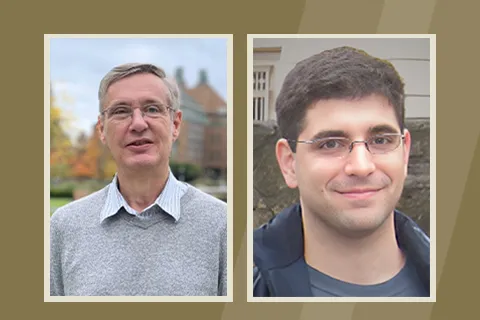
Shasthri Sivaguru is an Associate Professor at the School of Engineering & Physical Sciences, University of Hertfordshire. His research expertise spans aerodynamics, energy storage systems, and mechanical engineering. Key areas of focus include optimizing vehicle design for aerodynamic efficiency, enhancing thermal energy storage technologies using metal foams and heat pipes, and advancing manufacturing processes like plastic injection molding through mathematical modeling. His work contributes to UN Sustainable Development Goals, particularly in sustainable energy and industrial innovation. Recent research highlights include mesh convergence analysis for sedan vehicles, experimental studies on latent heat storage systems, and systematic reviews on thermal energy storage enhancements. No scientific awards or grants are explicitly mentioned in the provided text. He is open to supervising PhD students and has published widely in peer-reviewed journals and conferences since 2004.
Professor Jordan Morelli is a Professor in the Department of Physics, Engineering Physics and Astronomy at Queen's University, affiliated with the Faculty of Arts and Science. His research focuses on magnetic confinement fusion using the STOR-M tokamak, non-automotive combustion engineering, renewable energy systems, and electrical energy integration. He holds a Ph.D. (2003) and M.A.Sc. (1998) in Electrical and Electronics Engineering from the University of Saskatchewan and University of Windsor, respectively. Research interests include distributed generation (wind power), plasma dynamics in field-reversed configurations (FRCs), and eddy current-based non-destructive testing for nuclear reactor components. His work spans experimental plasma physics, fusion reactor design, and energy systems optimization. Notable affiliations include leadership roles in QUFA committees and collaborations with the University of Saskatchewan's Plasma Physics Laboratory. Recent publications emphasize FRC collisional merging, plasma diagnostics, and eddy current applications in fusion and nuclear engineering contexts. His contributions bridge fundamental plasma physics with practical energy solutions, including fusion reactor core modeling and advanced instrumentation development.
Professor Diane Beauchemin is a faculty member in the Department of Chemistry at Queen's University, part of the Faculty of Arts and Science. Her research focuses on improving inductively coupled plasma mass spectrometry (ICP-MS) for environmental and food safety analysis, including matrix effects mitigation, sample introduction techniques, and speciation studies. She holds academic positions since 1988, becoming a Full Professor in 2001. Contact: beauchem@queensu.ca, Chernoff Hall Office 308. Education: B.Sc. (1980), Ph.D. (1984) in Analytical Chemistry from Université de Montréal. Postdoctoral work at the National Research Council of Canada. Research Interests: ICP-MS optimization, environmental trace element analysis, speciation methods, and applications in food safety, forensic analysis, and nanoparticle measurement. Her work emphasizes reducing sample waste and enhancing analytical robustness through pre-evaporation and flow injection techniques. Recent Publications: Focus on ICP-MS advancements, including arsenic speciation in seafood, chromium kinetics, and mixed-gas plasma studies. These contributions address environmental monitoring, food safety, and analytical instrumentation challenges. Awards: Alan Date Memorial Award (1988), Maccoll Prize (1991), NSERC Senior Industrial Fellowship (1995), Maxxam Award (2017), Gerhard Herzberg Award (2018), Clara Benson Award (2019). Grants/Collaborations: Co-PI on NSERC grants for soil characterization and fuel cell catalyst layers. Collaborates with ANSES (France) on food safety methods. Co-director of Queen's Facility for Isotope Research (QFIR). Labs: Chernoff Hall, Rooms CHE 106/338.
Öivind Andersson is a Professor at Lund University's Department of Energy Sciences, specializing in Combustion Engines within the Faculty of Engineering (LTH). He has held roles including Project Manager in the Cooperation Office and membership in LTH's Aerosols and Energy Transition profile areas. His research focuses on diesel engine combustion, in-cylinder soot processes, and optical measurement techniques in research engines. He transitioned from industry (Volvo Car Corporation) to academia in 2007, becoming a Docent (Reader) in 2010 and Professor in 2011. Educational Background: PhD in Combustion Physics (not explicitly detailed but inferred from career path). Research interests emphasize sustainable transportation technologies aligned with UN SDGs, particularly Vehicle Engineering and Energy Systems. His work includes publications on spark ignition dynamics, hydrogen engine diagnostics, and fuel density effects in CI engines. He leads the Internal Combustion Engine Laboratory and supervises multiple PhD students in automotive and energy engineering. Awards: Fellow of SAE, Forest R. McFarland Award, and recognition for teaching excellence (ETP Practitioner). Active in supervising 15+ doctoral projects, including GenDies, KCFP PPC-LD Optical, and Bio-Inspired AUS-32 Dosing. His projects often involve collaboration with industry partners like Volvo and focus on alternative fuels and emission reduction.
Dr. David Emberson is an Associate Professor at the Norwegian University of Science and Technology (NTNU) in the Department of Marine Technology. His research focuses on combustion engine optimization, alternative fuels like ammonia and biofuels, and advanced experimental techniques such as optical combustion diagnostics. His research explores compression ignition systems, spray dynamics, and sustainable fuel solutions including hydrogenated oils, glycerol emulsions, and ammonia combustion. He employs optical methods for in-flame soot measurement and flow optimization. Dr. Emberson's publications (2013-2021) predominantly analyze combustion efficiency, emission reduction, and fuel characterization in engines. Trends include biofuel applications, optical diagnostics, and innovative ignition methods. He teaches courses including Marine Machinery, Internal Combustion Engines, and Propulsion Systems at NTNU.
Dr. Yuhan Huang is a DECRA Fellow and Senior Lecturer at the School of Civil and Environmental Engineering, University of Technology Sydney (UTS). He is also an Academic Visitor at the University of Oxford. His research focuses on computational fluid dynamics, renewable energies, vehicle emissions, urban planning, and hydrogen energy. Huang has published over 80 papers in top journals like Nature Sustainability and Science Advances , with over 2100 citations and an h-index of 26. He leads or participates in projects totaling over AU$2M, including ARC DECRA and CSIRO-funded initiatives. Education: BEng from Huazhong University of Science and Technology (2011), PhD from UTS (2017). Prior roles include Postdoctoral Research Fellow (2017–2021) and Visiting Research Fellow at the Jockey Club Heavy Vehicle Emissions Testing and Research Centre (2017–2019). He serves as an Associate Editor for Frontiers in Environmental Science and Guest Editor for multiple journals. Research Interests: Hydrogen energy, carbon capture, urban air pollution mitigation, urban heat island solutions, and sustainable urban development. Awards: World Top 2% Scientist (Stanford, 2021–2022), DECRA Fellowship, UTS Chancellor’s Research Fellowship. Grants: ARC DECRA Scheme (2022), NSW Small Business Innovation Program (2024), CSIRO Hydrogen Collaboration (2023). His work bridges engineering and environmental science, addressing climate action, sustainable cities, and clean energy. Huang supervises postgraduate students and teaches Fluid Mechanics.
Jim Hermanson is a Professor in the Department of Aeronautics and Astronautics and an Adjunct Professor in the Mechanical Engineering Department at the University of Washington. He has held roles at various institutions, including the UW Applied Physics Laboratory and United Technologies Research Center, and previously served as faculty at Worcester Polytechnic Institute, where he was the George I. Alden Chair in Engineering. Professor Hermanson's education includes: BS in Aeronautics and Astronautics from the University of Washington (1977) MS in Aeronautics from California Institute of Technology (1980) PhD in Aeronautics from California Institute of Technology (1985) His research focuses on aerothermofluids, combustion, gas dynamics, and microgravity science. Key areas include aerospace propulsion, turbulent flames, fuel injection in supersonic flows, film condensation under reduced gravity, heat transfer, and biofuels applications. His work contributes to scramjet development and low-emissions combustor design for terrestrial and space-based systems. He has received notable honors such as: Fellow of the ASME Associate Fellow of the AIAA 2024 Distinguished Educator Awards (A&A Department) 2024 FACET Awards for career mentorship Hermanson has advised students and led grants funded by ONR, NSF, NASA, and private industry. His mentorship has been recognized through awards, demonstrating his commitment to teaching and career guidance. He has been affiliated with the UW Applied Physics Laboratory and United Technologies Research Center. His current research collaborations focus on experimental and numerical studies in combustion and fluid dynamics within the A&A Department.
Dr. Petros Lappas is a Senior Lecturer in the School of Engineering at RMIT University, Australia. He specializes in Thermodynamics, Fluid Mechanics, and Renewable Energy Systems, and coordinates the Master of Sustainable Energy Program. His research focuses on improving thermal efficiency in internal combustion engines, laser diagnostics (PIV, LDV, spectroscopy), aerosol dynamics, and renewable energy technologies. Dr. Lappas holds a PhD and has received awards including the Westcoast Energy Inc. Jack Davis Scholarship (2000) and the University of British Columbia Graduate Scholarship (1998–2000). He has supervised numerous research projects on topics like nasal drug delivery, combustion noise, and desalination systems. His recent articles emphasize droplet dynamics, combustion diagnostics, and thermal management systems. Key contributions include studies on ferrofluid cooling, CNG engine performance, and nasal spray atomization. Dr. Lappas collaborates on projects involving automotive engineering, renewable energy, and thermal energy recovery systems.
Professor Yasuhiro Tachibana is affiliated with the School of Engineering at RMIT University (Melbourne, Australia) and serves as Guest Professor at Osaka University (Japan). His research and teaching focus on perovskite solar cells , photocatalysis , and nanostructured materials . He is available for Masters Research or PhD student supervision and media inquiries via yasuhiro.tachibana@rmit.edu.au . Research Interests: Physical Chemistry, Materials Chemistry, Nanotechnology, Photocatalysis, Artificial Photosynthesis, Quantum Dot Sensitized Solar Cells Teaching: Program Manager for Master of Engineering (Sustainable Energy), Course Coordinator for PV Systems (MIET2130) and Renewable & Solar Fuels (MIET2372) Scientific Awards: Centre of Excellence (COE) Postdoctoral Fellowship Engineering and Physical Sciences Research Council (EPSRC) Postdoctoral Fellow Service & Engagement: Editorial Board Member, Scientific Reports (2014–present) Editor, Proceedings of SPIE (2011–2011) Organized conferences: ICACC 2015, PacRim10, MRS Spring Meetings Member of American Ceramic Society, Japan Applied Physics Society, Japan Chemical Society
Professor Ralph C. Aldredge holds a dual role as a Professor in the Department of Mechanical and Aerospace Engineering at the University of California, Davis, and as Associate Dean of Undergraduate Studies. His research focuses on combustion dynamics, fluid dynamics, biotransport, and forensic science. He has pioneered studies in flame propagation, blood-flow dynamics around catheters, and DNA degradation analysis in fire-exposed biological materials. Key research areas include tumor growth influenced by extracellular matrix interactions, micro-combustor optimization for lean fuel mixtures, and the design of advanced intravascular diagnostic catheters. He has been recognized with the NSBE Lifetime Achievement Award and election to ASME Fellow. Scientific Awards: NSBE Lifetime Achievement Award, ASME Fellow Research Contributions: Over 30 peer-reviewed articles spanning combustion, biomedical engineering, and energy systems His work bridges mechanical engineering with biomedical applications, including collaborations on catheter design for drug delivery and vascular imaging, as well as sustainable energy solutions such as hydrogen integration in CI engines.
Dr. Hongjie Ma is a Senior Research Fellow at the University of Portsmouth , affiliated with the School of Electrical and Mechanical Engineering and the Centre for Operational Research and Logistics . With over a decade of experience, his work bridges Artificial Intelligence and Embedded Systems , focusing on smart industrial applications and energy optimization. His research interests include: AI-based abnormal detection AI-based decision optimisation Embedded systems for machine learning Smart industrial sensors Operational Research Logistics Recent publications span combustion engineering , fuel cell technology , and autonomous driving frameworks . His work has garnered over 500 citations and includes contributions to REF 2021 impact case studies. Key scientific awards include the IEEE Leadership Award . He supervises PhD students and has secured grants from Innovate UK , EPSRC , and Horizon Europe . He chairs the IEEE Smart World Congress and serves as guest editor for journals like the Journal of Marine Science and Engineering .
Fırat Bolat serves as a Professor in the Department of Marine Engineering at Istanbul Technical University. His research focuses on critical maritime safety and environmental issues, with particular expertise in Port State Control, Energy Efficiency Design Index compliance, and human error analysis in cargo operations. His research interests span the Maritime Sector , Port State Control , Energy Efficiency Design Index , CO2 Reduction , Human Error Probability , and Detention analysis. His work addresses regulatory compliance, environmental sustainability, and operational safety challenges within international shipping. Analysis of his publication trends reveals consistent focus on maritime regulatory frameworks (particularly Paris Memorandum of Understanding), environmental compliance metrics, and human factors engineering. His recent work (2021-2025) shows increasing emphasis on cybersecurity threats to navigation systems and alternative fuel implementation for emission reduction. SASAKAWA FELLOWSHIP (2016) Professor Bolat's research contributes significantly to maritime safety frameworks and environmental compliance metrics. His work on port state control analysis and human error probability modeling provides practical insights for regulatory bodies and shipping companies seeking to improve operational safety and environmental performance.
Dr. Umer Saleem is a Lecturer in the Department of Mechanical and Aerospace Engineering at the University of Strathclyde. He holds a PhD in Mechanical Engineering from Heriot-Watt University (Edinburgh, UK), with additional degrees in Mechanical Engineering. His postdoctoral research focused on computational fluid dynamics (CFD) and carbon capture and storage (CCS), contributing to the EU-funded STEMM-CCS project. He teaches Thermodynamics, Fluid Mechanics, and related subjects, and is a Fellow of the Higher Education Academy (FHEA). His research emphasizes numerical modeling of CO2 dispersion in marine sediments, CFD, and renewable energy systems like concentrated solar power and steam turbines. Key affiliations include the American Society of Mechanical Engineers (ASME) and the Institution of Mechanical Engineers (IMechE). He has published widely in journals such as Renewable and Sustainable Energy Reviews and International Journal of Greenhouse Gas Control , with notable work on CO2 leakage detection and sub-seafloor storage integrity. Awards include Chartered Engineer status from IMechE and a Registered Engineer credential from PEC.
Suo Yang is the Richard & Barbara Nelson Assistant Professor in the Department of Mechanical Engineering at the University of Minnesota, College of Science and Engineering. He is an active researcher in combustion, plasma-assisted technologies, and high-speed reacting flows, with a strong focus on sustainable and high-performance propulsion systems. He is currently accepting PhD students and leads multiple externally funded research projects. Education: PhD in Aerospace Engineering, Georgia Institute of Technology, 2017 MS in Computational Science & Engineering, Georgia Institute of Technology, 2015 BS in Mathematics & Applied Mathematics, Zhejiang University, 2011 His research interests lie at the intersection of combustion science , plasma physics , and computational fluid dynamics . He investigates plasma-assisted ammonia combustion , transcritical fuel injection , detonation dynamics , and multi-fuel engine systems , contributing to sustainable energy and hypersonic technologies. His work aligns with UN Sustainable Development Goals related to clean energy and climate action. The analysis of his recent publications reveals a strong trend toward ammonia-based fuels , non-equilibrium plasma applications , and high-fidelity modeling of complex reacting flows. His work integrates advanced numerical methods with experimental validation, focusing on ignition enhancement, flame stabilization, and emission reduction in next-generation propulsion systems. Scientific Awards and Recognition: No specific awards or fellowships are listed in the provided text. Research Advising and Grants: Dr. Yang is actively mentoring PhD students and leading significant research initiatives. He serves as Principal Investigator (PI) on multiple grants from the U.S. Department of Defense (Air Force, Navy), the National Science Foundation, and industry partners. His funded projects include research on micro-jetting in detonations , plasma-assisted ammonia combustion , transcritical phase change , and multi-fuel engine control for unmanned systems . These projects reflect his leadership in advancing fundamental and applied combustion science. Laboratories and Research Teams: While specific lab names are not mentioned, Dr. Yang leads a research group focused on computational and experimental combustion at the University of Minnesota. His collaborations span institutions and include work with Spectral Energies, LLC, and researchers across mechanical and aerospace engineering disciplines. His team employs high-performance computing and advanced diagnostics to study complex flow and combustion phenomena.
Nan Zhang is a Senior Lecturer in the CE - Academic & Research division, affiliated with the Centre for Process Integration. Their research focuses on process optimization, sustainable energy systems, and computational methods applied to chemical engineering challenges. Key areas include heat exchanger network design, decarbonization strategies, and waste heat recovery. They have contributed to over 46 peer-reviewed publications and actively engage in professional associations like the Institute of Chemical Engineers. Research interests emphasize integrating computational algorithms with industrial processes to enhance efficiency and sustainability. Notable work includes studies on green hydrogen polygeneration systems, carbon footprint analysis, and energy storage solutions for chemical industries. Zhang has supervised 20 academic works, though student names are not listed. Collaborations span global institutions, addressing challenges in blast furnace injection fuels, renewable energy integration, and lifecycle assessments. Their work aligns with UN Sustainable Development Goals, particularly in clean energy and reducing environmental impact. Publications highlight advancements in thermal systems optimization, CO₂ utilization, and smart process monitoring. Despite no explicitly listed awards, their contributions to impactful research demonstrate significant academic and industrial relevance.