Nelson Yaw Dzadeمشاهده پروفایل
استادیار
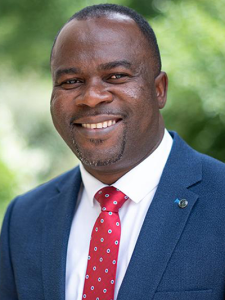
Nelson Yaw Dzade serves as an Assistant Professor in the John and Willie Leone Department of Energy & Mineral Engineering within Penn State University's College of Earth and Mineral Sciences. His research integrates computational approaches with energy materials science to address critical challenges in sustainable energy systems. His office is located in 212 Hosler Building at University Park, PA. Dr. Dzade has extensive expertise in surface science, catalysis, and computational materials chemistry, with research focused on employing state-of-the-art computer simulations based on Density Functional Theory (DFT). His work centers on designing new materials with tailored functionalities, describing interface phenomena including adsorption and surface chemical reactions, and obtaining atomic-level information that may be difficult to access experimentally. His recent research specifically targets the computer-aided design of iron-sulfide nanocatalysts for solar-driven conversion of CO2 to fuels, aligning with his broader research themes of Climate and Natural Systems and Integrated Energy Systems. Analysis of Dr. Dzade's publication record reveals a strong focus on energy conversion technologies, particularly in solar energy harvesting and storage. His research spans heterojunction engineering for photovoltaic applications, catalytic materials for CO2 reduction, and electrocatalysts for water splitting. The publications demonstrate expertise in computational modeling combined with experimental validation across multiple energy-related domains, with particular emphasis on materials interfaces and surface phenomena. DOE Early Career Research Award (2024) Dr. Dzade leads research projects including 'Addressing the Energy Transition Puzzle Through Combined Experimental and Computational Efforts' and 'Rational Design of Bio-Inspired and Earth-Abundant Catalysts for Carbon Dioxide Reduction into Fuels and Fine Chemicals.' His work appears to involve significant collaboration with researchers across multiple institutions, as evidenced by his extensive co-authorship network. While specific grant details aren't provided in the source material, his research aligns with major funding priorities in sustainable energy and climate solutions. His research group appears to focus on computational materials design with strong connections to experimental validation, particularly in the areas of surface science and catalysis. The work leverages advanced computational techniques to understand and design materials for energy applications, with particular emphasis on interface phenomena that govern performance in energy conversion systems.