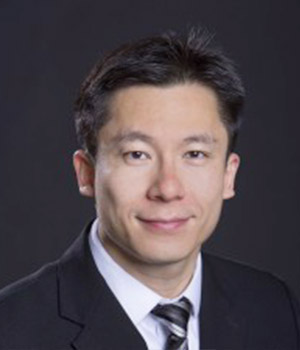
Alireza Talebpour is an Assistant Professor in the Department of Civil and Environmental Engineering at the University of Illinois. He leads the Smart City Lab and focuses on advancing transportation systems through research in automated vehicles, traffic flow theory, and quantum computing applications. His work bridges microeconomic principles with microscopic traffic modeling to enhance urban mobility solutions. Education Ph.D. Civil and Environmental Engineering, Northwestern University (2015) M.Sc. and B.Sc. Civil and Environmental Engineering, Sharif University of Technology (2009, 2007) Research Interests His research spans quantum computing for infrastructure optimization, human-automated vehicle interactions, and AI-driven traffic management. Key areas include: - Mixed traffic systems with connected/autonomous vehicles - Smart city infrastructure and policy design - Microscopic traffic simulation (e.g., TGSIM dataset) - Freight and public transit consolidation strategies Key Contributions Recent work explores: - Charging lanes for EVs and their traffic impacts - Lane-changing behavior in automated driving environments - Quantum algorithms for EV charging station placement - Safety implications of self-enforcing street designs Affiliations He chairs the Traffic Flow Theory Committee at the Transportation Research Board and collaborates on national efforts for autonomous vehicle integration. Current projects include: - Developing game-theoretic frameworks for intersection maneuvers - Enhancing traffic prediction via machine learning - Evaluating infrastructure impacts of truck platooning
Mohammed Quddus is a Professor and Chair in Intelligent Transport Systems at Imperial College London's Department of Civil and Environmental Engineering (Faculty of Engineering). Previously, he was Professor and Head of Transport & Urban Planning at Loughborough University. He holds a PhD from Imperial College London (2006), MEng from National University of Singapore (2001), and BSc from Bangladesh University of Engineering and Technology (1998). As a Fellow of the Higher Education Academy (UK), his research focuses on autonomous vehicles, transport safety, big data analytics, and connected transport systems. His work emphasizes AI-driven solutions for map-matching algorithms, vehicle-infrastructure integration, and traffic safety. He leads interdisciplinary projects funded by EPSRC, National Highways, UK Department for Transport, and EU grants. Professor Quddus has authored over 140 journal articles, 130 conference papers, and pioneered influential methods adopted by car manufacturers and transport agencies. Key research themes include: Autonomous/Semi-Autonomous Vehicle Operations Real-Time Crash Prediction Systems Intelligent Mobility Infrastructure Connected Vehicle Ecosystems Urban Traffic Optimization His lab develops advanced driver assistance systems, traffic simulation frameworks, and safety assessment models. Current focus areas include evaluating lane closure impacts for autonomous vehicles, optimizing parking policies in smart cities, and enhancing mobility equity through AI-driven transport planning.
Dr. Alexandra Kondyli is an Associate Professor of Transportation Engineering in the Department of Civil, Environmental, and Architectural Engineering at the University of Kansas. She holds the Thomas E. Mulinazzi Chair’s Council position. Her research focuses on traffic operations, highway capacity, driver behavior analysis, microsimulation, and Intelligent Transportation Systems (ITS). She has been funded by entities including Kansas DOT, Florida DOT, FHWA, USDOT, and NCHRP. Dr. Kondyli earned a Graduate Diploma from the National Technical University of Athens (2003), an M.S. (2005), and a Ph.D. (2009) in Civil Engineering from the University of Florida. Education: Ph.D. in Civil Engineering, University of Florida, 2009 M.S. in Civil Engineering, University of Florida, 2005 Graduate Diploma in Rural and Surveying Engineering, National Technical University of Athens, 2003 Research Interests: Traffic flow theory, microsimulation modeling, driver behavior analysis, freeway capacity, and ITS applications. She leads the Driving Simulator Lab, exploring human factors in automated vehicles and safety innovations. Labs/Teams: Driving Simulator Lab (focusing on driver behavior, automated vehicle systems, and safety). Professional Roles: Member of TRB’s Highway Capacity and Quality of Service Committee (AHB40) and Chair of its Freeways/Multilane Highways Subcommittee. She has consulting experience in traffic operations, geometric design, and roadway safety.
Adel W. Sadek is a Professor in the Department of Civil, Structural and Environmental Engineering at the University at Buffalo. He serves as the Founding Director of the Stephen Still Institute for Sustainable Transportation and Logistics within the School of Engineering and Applied Sciences. His research focuses on Intelligent Transportation Systems, Connected and Automated Vehicles, Big Data Analytics, AI/Machine Learning, and Traffic Operations. He leads initiatives in advancing sustainable transportation through cutting-edge technologies, including autonomous vehicle control, traffic delay prediction, and energy-efficient vehicle systems. His work integrates machine learning and big data to solve complex transportation challenges, such as border crossing delays and freeway lane-drop management. Recent publications emphasize the safety evaluation of autonomous shuttles, deep reinforcement learning for traffic control, and sensor performance under varying weather conditions. His research has been published in prestigious journals like ASCE Journal of Transportation Engineering and IEEE Transactions on Intelligent Transportation Systems. Dr. Sadek’s contributions span academic leadership, innovative research, and industry collaboration through the Stephen Still Institute, driving progress in sustainable logistics and smart transportation networks.
Nikolaos Geroliminis is a Full Professor at École polytechnique fédérale de Lausanne (EPFL) holding multiple appointments across the institution. He serves as Full Professor at the Urban Transport Systems Laboratory (LUTS) within the School of Architecture, Civil and Environmental Engineering (ENAC), Full Professor at SGC-ENS (Teaching), and Full Professor at SHS-ENS (Teaching). Additionally, he is a Member of the Diversity Office at ENAC (DOENAC), PhD program committee member for both Civil and Environmental Engineering and Robotics, Control and Intelligent Systems doctoral programs, and Head of Unit for the ENAC Academic Evaluation Committee. Dr. Geroliminis received his Diploma in Civil Engineering from the National Technical University of Athens (NTUA) in 2003, followed by an M.S. in Civil and Environmental Engineering from the University of California, Berkeley in 2004, and completed his Ph.D. in Civil and Environmental Engineering from UC Berkeley in 2007. Prior to joining EPFL, he served as an Assistant Professor in the Department of Civil Engineering at the University of Minnesota. His research primarily focuses on urban transportation systems with particular emphasis on traffic flow theory, control, and optimization of large-scale networks. His work spans multiple domains including public transportation, logistics, ride-hailing systems, drone-based traffic monitoring, and the Macroscopic Fundamental Diagram (MFD) concept. Dr. Geroliminis has pioneered research using drone swarms for traffic monitoring through the pNEUMA experiment, which has generated high-resolution traffic data for studying congestion propagation, lane-changing behavior, and emission patterns. His recent work increasingly addresses emerging mobility systems including autonomous vehicles, electric vehicle charging management, and urban air mobility. His publication record demonstrates a clear evolution from fundamental traffic flow theory toward increasingly complex multimodal transportation systems. Recent publications (2023-2025) show strong emphasis on drone-based traffic monitoring, optimization of ride-sharing systems, integration of public transit with ride-hailing services, and applications of artificial intelligence to traffic forecasting and control. His work consistently bridges theoretical developments with practical applications for improving urban mobility. ERC Starting Grant 'METAFERW: Modeling and controlling traffic congestion and propagation in large-scale urban multimodal networks' Dr. Geroliminis serves as Associate Editor for Transportation Research Part C and is on the editorial boards of Transportation Research Part B, Transportation Letters, and Journal of ITS. He is actively involved in multiple doctoral programs at EPFL and serves on the Transportation Research Board's Traffic Flow Theory Committee. His research has been supported by the Swiss National Science Foundation, Board of the Swiss Federal Institutes of Technology, European Union, and Innosuisse – Swiss Innovation Agency. As head of the Urban Transport Systems Laboratory (LUTS), Dr. Geroliminis leads a research team focused on developing sustainable transportation solutions through innovative modeling approaches. His laboratory has been instrumental in conducting large-scale field experiments like pNEUMA, which employs drone swarms to collect unprecedented traffic data. The lab's work bridges transportation engineering, control theory, and data science to address pressing urban mobility challenges.
Yiqi Zhang is an Associate Professor at The Pennsylvania State University's Marcus Department of Industrial and Manufacturing Engineering, with affiliation at the Larson Transportation Institute. Her interdisciplinary research bridges human factors engineering and transportation systems. Intelligent Transportation Systems Human-Vehicle Interaction Autonomous Vehicle Design Computational Cognitive Modeling Recent research focuses on driver behavior in automated environments, including takeover requests, cognitive modeling of response times, and human-AI collaboration dynamics. Her work spans both transportation safety and AI applications in healthcare. Awards include the Center for Socially Responsible AI Big Ideas Grant (2023) and recognition for contributions to human factors engineering (2022). She has collaborated on studies involving bus operator workstations and chronic disease management systems. Her publications reveal trends in multimodal takeover interfaces, mixed traffic adaptation, and safety-critical human performance modeling across connected vehicle systems. Current projects investigate trust dynamics in automated driving styles and AI-based homecare solutions. Scientific Awards: Center for Socially Responsible AI Big Ideas Grant (2023) Recognition for contributions to human factors engineering in transportation (2022) As a leading researcher in transportation-human interaction, she contributes to advancing equitable built environments through her work at Penn State's College of Engineering. Her laboratory investigates driver performance metrics and develops computational models for safer autonomous systems.
Miguel Perez is an Associate Professor in the Department of Biomedical Engineering and Mechanics at Virginia Tech, with a concurrent appointment as a Research Scientist in the Division of Data and Analytics at the Virginia Tech Transportation Institute. His work bridges biomechanics, transportation safety, and data analysis, focusing on driver distraction, collision avoidance systems, and accessibility in transportation infrastructure. Ph.D., Industrial and Systems Engineering, Virginia Tech, 2005 M.S., Industrial and Systems Engineering, Virginia Tech, 1999 B.S., Industrial Engineering, University of Puerto Rico - Mayaguez, 1997 Dr. Perez specializes in naturalistic driving studies, data standardization, and modeling driver performance in complex environments. His research extends to temporary disability assessment and infrastructure accessibility for individuals with physical limitations, leveraging statistical models and machine learning for safety improvements. His scientific awards include the Golden Pen Award (multiple contract recognitions over $5M), Liviu Librescu Faculty Prize, and Ford Foundation Fellowship. He has mentored students in biomechanics, data analysis, and transportation safety, including J. Valente, A.E. Badger, and W. Huang. Division of Data and Analytics Lab Collaborator in SHRP 2 Focus on real-world driver behavior and crash risk modeling
Anurag Pande is a Professor of Civil (Transportation) Engineering at California Polytechnic State University (Cal Poly) in the College of Engineering, Civil and Environmental Engineering Department. He also serves as the faculty liaison for Cal Poly's Service-Learning program, working with faculty and regional agencies to support mutually beneficial projects. With over 15 years of experience since joining Cal Poly in 2008, Pande has established himself as a leading researcher in transportation safety and mobility. His educational background includes: Ph.D. in Civil Engineering (Transportation), 2005, University of Central Florida Graduate Certificate in Data Mining: SAS Institute/Department of Statistics, University of Central Florida M.S. in Civil Engineering (Transportation), 2003, University of Central Florida B.Tech. in Civil Engineering, 2002, Indian Institute of Technology Bombay, Mumbai (India) Professor Pande's research focuses on critical areas of modern transportation systems. His work spans traffic and transportation engineering, roadway safety, urban planning, sustainable mobility, bicycle and pedestrian infrastructure, transportation resilience, service-learning, and community engagement. He has developed expertise in transportation safety, travel demand and VMT (vehicle-miles traveled) estimation, traffic simulation and analysis, and emergency evacuation and network resilience modeling. His research often incorporates equity considerations, examining how transportation systems impact different demographic groups and developing solutions that serve all community members. His recent scholarly output demonstrates a clear trajectory toward increasingly sophisticated transportation modeling, with growing emphasis on equity considerations in transportation planning, sustainable mobility solutions, and the safety implications of emerging transportation technologies. His work bridges theoretical transportation engineering with practical community applications, particularly through his service-learning initiatives. Professor Pande has received numerous prestigious awards recognizing his contributions to the field: Young Researcher Award from the Transportation Research Board (2007) Cal Poly's Distinguished Scholarship Award (spring 2022) University-level Outstanding Dissertation Award (2006) Presidential Doctoral Fellowship at UCF Provost's Fellowship at UCF CATSS Scholarship at UCF Best Office Bearer award at IIT Bombay National Scholarship Scheme - Merit Scholarship by Government of India As a research leader, Pande has managed approximately $2.5 million in research funding since joining Cal Poly in 2008, with projects funded by the National Science Foundation, U.S. Department of Transportation, Caltrans, and the San Luis Obispo Council of Governments. His leadership extends beyond his own research, as evidenced by his appointment as chair of the American Society of Civil Engineers — Transportation and Development Institute Safety Committee in May 2022. He also serves as editor of the seventh edition of the Traffic Engineering Handbook, published by the Institute of Transportation Engineers. Through his role as faculty liaison for Service-Learning, Pande has created meaningful connections between academic work and community needs, demonstrating his commitment to the Cal Poly "Learn by Doing" philosophy. His work bridges engineering expertise with practical community applications, particularly in transportation planning and safety initiatives that directly benefit local communities.
Peter Savolainen is the Chair of the Department of Civil and Environmental Engineering (CEE) and an MSU Foundation Professor at Michigan State University’s College of Engineering. His research focuses on road user behavior, traffic safety, and the operational impacts of roadway design and traffic characteristics. He has authored over 100 peer-reviewed articles and contributed to critical areas like naturalistic driving research, crash-injury severity analysis, and countermeasure evaluation. Education: Ph.D., Civil Engineering, Purdue University (2006) M.S., Civil Engineering, Purdue University (2004) B.S., Civil Engineering, Michigan Technological University (2002) Professional Roles: Associate Editor, ASCE Journal of Transportation Engineering Chair, ITE Education Council Member, TRB Standing Committee on Safety Performance Analysis His research emphasizes roadway features such as speed limits, rumble strips, and red-light cameras, alongside in-vehicle distractions. Recent work explored pandemic impacts on travel behavior and driver adaptation to autonomous vehicles. He has received numerous awards, including TRB Best Paper recognitions and ITE’s Innovation in Education Award (2022). Awards: Fellow, Institute of Transportation Engineers (2020) MSU Foundation Professorship (2018) Charles W. Schaefer Teaching Award (2016) Dr. Savolainen’s advisory contributions include leadership in ITE’s professional development programs and TRB committees. His work bridges academic research with practical transportation policy, ensuring safety and efficiency in evolving traffic systems.
Branislav Dimitrijevic is an Assistant Professor in the Department of Civil & Environmental Engineering at New Jersey Institute of Technology (NJIT). He holds a Ph.D. in Transportation Engineering from NJIT (2018) and specializes in transportation systems analysis, planning, and intelligent transportation systems (ITS), with a focus on road weather management, traffic safety, and drone applications in traffic operations. Education: Ph.D., Transportation Engineering, NJIT (2018) M.S., Transportation Engineering, NJIT (2001) B.S., Transportation Engineering, University of Belgrade (1999) Research Interests: His work spans transportation data analytics, multimodal freight systems, integrated corridor management, and innovative mobility solutions. He has contributed to projects like the federal TELUS program, developing land-use modeling software, and improving traffic signal prioritization for the New Jersey Department of Transportation (NJDOT). Recent research includes leveraging connected vehicle data, drones for traffic surveillance, and crash risk prediction models. Research Trends: His publications emphasize data-driven approaches to traffic management, safety, and infrastructure optimization. Key themes include real-time incident detection, dynamic pricing models, and the application of machine learning to crash severity analysis and work zone capacity estimation. Awards: No awards explicitly mentioned in the text. Grants & Advising: His work has been supported by NJDOT and federal grants. He has advised on projects involving smart arrival notification systems for paratransit services, adaptive traffic control systems, and hardware-in-the-loop simulations. No formal advisees are listed in the provided materials. Labs & Teams: Involved in NJIT’s Department of Civil and Environmental Engineering research teams, contributing to projects on traffic analytics, drone applications, and transportation infrastructure resilience.
Randy Machemehl is a Professor and the Associate Chair for Academic Affairs at the University of Texas at Austin. He holds the Nasser I. Al-Rashid Centennial Professorship in Transportation Engineering, reflecting his expertise in this field. His research focuses on transportation system operations, public transportation systems planning and design, traffic data acquisition, traffic simulation, transportation demand forecasting, freeway operations optimization, and freeway bottleneck identification and resolution. Education: Ph.D., Civil Engineering, University of Texas at Austin, 1975 M.S.C.E., Civil Engineering, University of Texas at Austin, 1973 B.S.C.E., Civil Engineering, University of Texas at Austin, 1970 Research Interests: Professor Machemehl’s work addresses critical aspects of modern transportation infrastructure, including system efficiency, data-driven decision-making, and simulation-based solutions. His technical interests span urban and freeway traffic management, demand forecasting methodologies, and the design of sustainable public transit systems. These areas collectively aim to enhance mobility and safety in transportation networks. Grants & Advising: Information about grants, advising, or lab affiliations is not explicitly provided in the text. His contributions are primarily highlighted through his academic roles and technical expertise.
Dr. Matt Albrecht is a Senior Research Fellow at The University of Western Australia (UWA), based in the School of Psychological Science and the Western Australian Centre for Road Safety Research. He holds a PhD in Pharmacology from UWA (2012) and has expertise in psychopharmacology, neurocognitive research, and road safety interventions. His research spans schizophrenia, Alzheimer’s, autism, and drug effects on cognition, with a current focus on road safety solutions tailored to Western Australia. Current Projects: Statistical modeling of road treatments (Black Spots, intersections, regional roads) Driving simulator analyses of innovative intersection designs Medical cannabis impacts on driving performance Hangover effects on hazard perception Research Interests: Multidisciplinary approaches to road safety, advanced statistical methods, Bayesian modeling, and translational clinical research. Collaborates extensively with Main Roads WA to implement evidence-based infrastructure improvements. Grants & Projects: Main Roads WA Fellowship (2024–2028) Integrated Safety Analysis: Vehicular Dynamics on Freeway Ramps (iMove CRC, 2024–2025) Operational Characteristics of Turbo Roundabouts (2024–2026) Labs/Teams: Leads the Western Australian Centre for Road Safety Research team, focusing on simulator-based evaluations and large data platforms for safety innovations.
Taylor Li is an Associate Professor in the Department of Civil Engineering at The University of Texas at Arlington (UTA). He specializes in Intelligent Transportation Systems (ITS), Traffic Signal Systems, and Smart Traffic Sensors. His work focuses on improving traffic management through advanced technologies like LiDAR, connected vehicles, and data-driven optimization. Education PhD in Civil Engineering, Virginia Polytechnic Institute and State University (2009) MS in Systems Engineering, Beijing Jiaotong University (2002) BS in Mechanical Engineering and Control, Beijing Jiaotong University (1999) Research Interests Dr. Li's research emphasizes traffic signal optimization, sensor-based safety systems, and the integration of connected and automated vehicles (CAVs) into infrastructure. His work addresses challenges in urban traffic efficiency, pedestrian safety, and resilient transportation networks. Recent projects include developing dynamic signal timing algorithms using real-time data and LiDAR-based tracking systems to reduce red-light running incidents. Grants & Awards Recipient of multiple grants from USDOT, TxDOT, and NSF totaling over $3 million Finalist for TRB Network Modeling Committee Best Paper Award (2016) Best Paper Awards from ITS America and the International Road Federation (2009) Professional Service Associate Editor, ASCE Journal of Urban Planning and Development Chair, TRB Traffic Signal Systems Committee (ACP25) Member, Transportation Research Board Simulation Committees (ACP80) Labs & Teams Leads the Smart Transportation Systems Lab at UTA, collaborating with industry partners like PTV AG and TxDOT on real-world deployment of innovative traffic management solutions.
Xiao Qin is a Professor in the Department of Civil & Environmental Engineering at the University of Wisconsin-Milwaukee (UWM), holding the Lawrence E. Sivak '71 Professorship. He serves as Director of the Institute for Physical Infrastructure and Transportation (IPIT) and Founder/Director of the Safe and Smart Traffic Lab. His research focuses on highway safety, traffic operations, intelligent transportation systems (ITS), and statistical methods in transportation analysis. Dr. Qin earned his PhD in Civil Engineering from the University of Connecticut (2002), and MSc and BSc degrees in Transportation Engineering from Southeast University, China (1999 and 1996 respectively). His work integrates spatial data analysis (GIS/GPS) with safety modeling, yielding impactful contributions to transportation safety policy and infrastructure design. Key research areas include crash severity analysis, work zone safety, driver behavior modeling, and emergency medical services optimization. His studies often apply advanced statistical techniques like quantile regression and structural equation modeling to transportation datasets. Notable achievements include TRB Best Paper Awards for work on crash distribution quantiles and truck corridor safety metrics. Dr. Qin's projects address real-world challenges such as bridge strike prevention, rural EMS accessibility, and climate-related traffic risks. He collaborates with state agencies like WisDOT on infrastructure policy evaluations and safety intervention strategies.
Dr. Nizam Uddin is a Professor and Undergraduate Coordinator in the Department of Statistics and Data Science at the University of Central Florida (UCF), part of the College of Sciences. He has held this position since joining UCF and oversees undergraduate academic programs while maintaining an active research agenda. Education: Dr. Uddin holds a Ph.D. in Statistics from Old Dominion University (1989), an M.S. in Mathematics from the University of Saskatchewan (1985), and dual M.S. and B.S. degrees in Statistics from the University of Dhaka, Bangladesh (1979 and 1977). Research Interests: His work focuses on statistical methodology including experimental design (linear/nonlinear models, ANOVA/covariance analysis), regression techniques, and categorical data analysis. He has applied these methods to diverse domains such as transportation safety engineering, biostatistics, environmental science, and healthcare analytics. Recent research emphasizes predictive modeling for traffic safety interventions, analysis of driver behavior patterns, and statistical methods for environmental contamination studies. Professional Contributions: Dr. Uddin has authored over 100 peer-reviewed articles spanning experimental design theory, transportation safety analytics, and interdisciplinary applications of statistical methods. His work bridges theoretical statistical advancements with real-world problem-solving in areas like infrastructure safety optimization and public health policy analysis. Office & Contact: Located in TC2 Room 208, Dr. Uddin can be reached at 407-823-2692 or via email at Nizam.Uddin@ucf.edu.