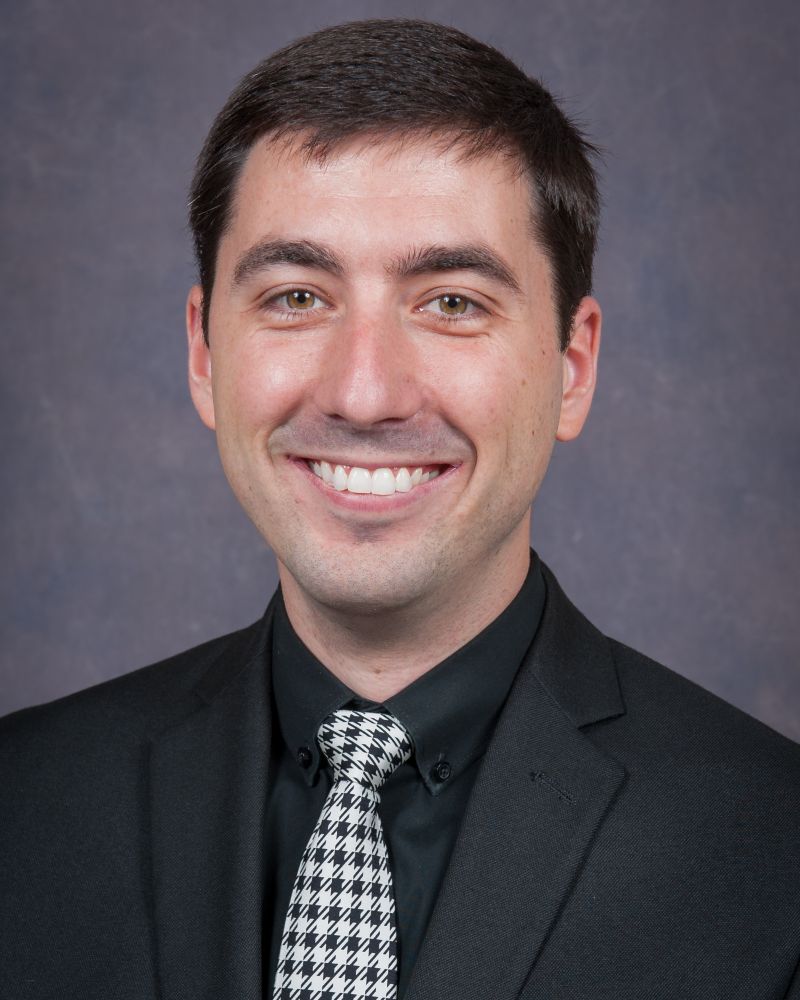
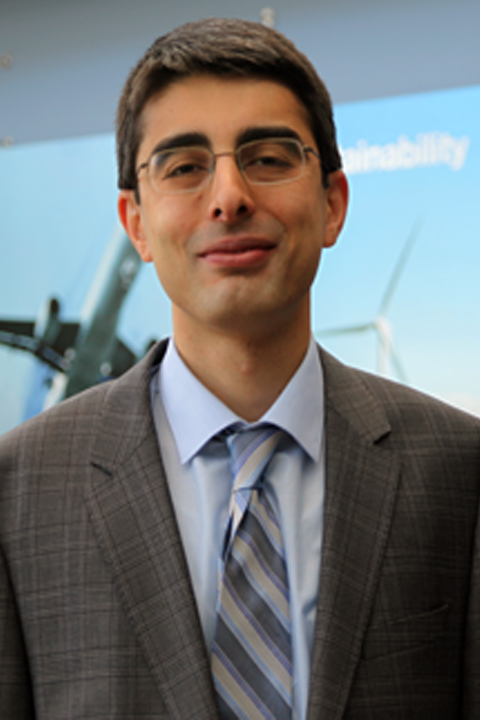
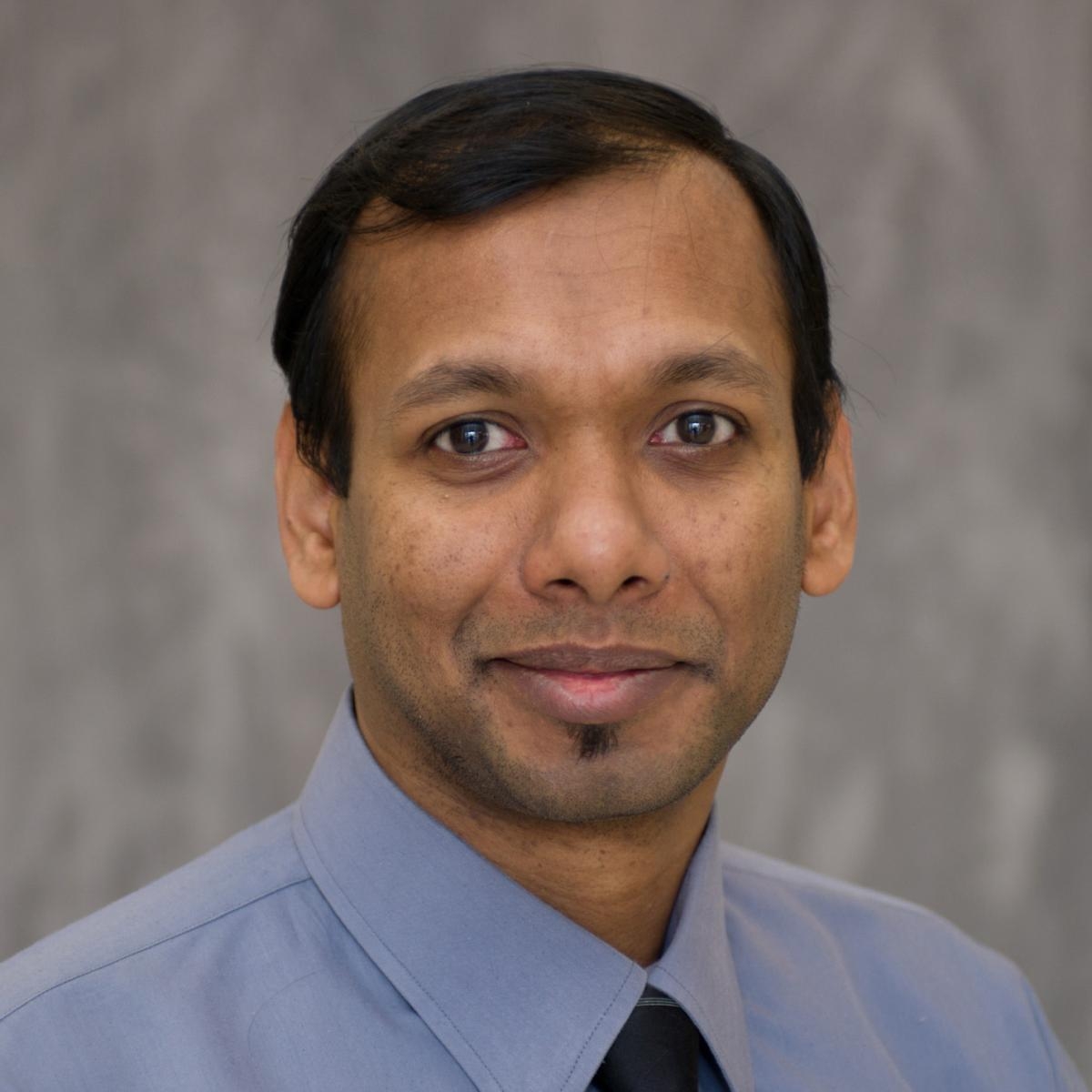
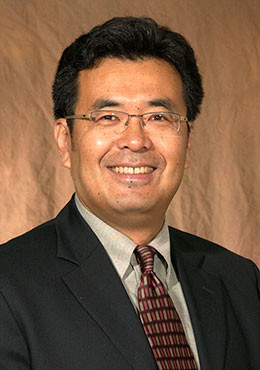
Anshu Bamney, Ph.D., is a Human Behavior/Factors Researcher at the Connecticut Transportation Safety Research Center (CTSRC) within the Connecticut Transportation Institute (CTI) at the University of Connecticut. He joined in 2022 after completing his Ph.D. at Michigan State University, focusing on traffic safety. His expertise spans highway safety, multimodal transportation, context-sensitive design, naturalistic driving analysis, and field data collection. Bamney has led projects for agencies like the Michigan Department of Transportation (MDOT), Federal Highway Administration (FHWA), National Cooperative Highway Research Program (NCHRP), and National Safety Council. His research interests include driver distraction, pandemic impacts on transportation, road safety for vulnerable road users (motorcyclists, pedestrians, bicyclists), and non-motorized transportation. He currently analyzes real-time data from Wejo to study harsh decelerations and crash relationships in Connecticut. He has co-authored articles in journals like Accident Analysis and Prevention and serves as a reviewer. His work addresses critical areas such as dynamic speed feedback signage efficacy, post-pandemic travel behavior, and infrastructure design for safety and accessibility.
Anna Grana is an Associate Professor in the Department of Roads Railways Airports at the University of Palermo's College of Engineering. She specializes in road infrastructure engineering with a focus on road safety, traffic operations, and sustainable transportation systems. Her educational background includes a Classical high school diploma from Umberto I classical high school in Palermo (1991), a Degree in Civil Engineering with honors (1995/1996), a PhD in Road Infrastructure Engineering (2002), and a Specialization diploma in Public Management (1999). Dr. Grana's research focuses on the analysis of risk associated with road traffic, functional design of road geometry (particularly non-signalized intersections and roundabouts), and environmental sustainability of transport infrastructures. Her work covers preventive analysis of road safety, safety and reliability of transport infrastructure, and crash analysis and modeling. Over the past decade, her research has evolved toward smart mobility solutions, with increasing focus on cooperative driving systems and the integration of connected and automated vehicles into existing infrastructure. Her recent publications demonstrate strong engagement with intersection design, traffic simulation, and resilience assessment in urban environments. Editor-in-chief for the Journal of Sustainable Development (since 2011) Associate editor for the International Journal of Statistics and Probability (since 2011) Member of SIIV (Italian Society of Road Railway and Airport Infrastructures) since 2003 Elected member of SIIV Board since 2010, serving as treasurer since 2013 Dr. Grana has been actively involved in teaching, serving as a member of PhD committees for Road Railway and Airport Engineering, Architecture of Systems for Mobility, and Civil and Environmental Engineering programs. She has supervised numerous final year students and has been instrumental in developing postgraduate courses focused on sustainable transport infrastructure. Her research has been supported by multiple National Relevant Research Programs (PRIN) and collaborations with the Municipality of Palermo, focusing on urban road safety and traffic management solutions. She has led research projects on non-standard roundabouts and urban road intersections, contributing significantly to the field of transportation engineering.
Gary A. Davis is Professor and Richard P. Braun/CTS Chair in Transportation Engineering at the University of Minnesota’s Department of Civil, Environmental, and Geo-Engineering, College of Science and Engineering. His work integrates statistical modeling with traffic-safety engineering to improve roadway design, policy, and automated-vehicle deployment. Education: Specific degrees are not detailed in the provided text. Research Interests: Davis focuses on causal inference in traffic safety, application of accident-reconstruction techniques to engineering questions, Bayesian statistical methods for transportation data, and optimization approaches to traffic and planning problems. His recent studies address crash-modification factors, freeway rear-end collision risk under automated vehicles, and uncertainty quantification in pedestrian-impact severity models. Projects & Grants: Principal Investigator on “Tool to estimate the safety impact of vehicle levels of automation on Minnesota roads” (2021-2025, MnDOT) Principal Investigator on “Impact of speed limit changes on urban streets” (2020-2023, MnDOT) Principal Investigator on “Driver Comprehension of Flashing Yellow Arrows” (2020-2023, MnDOT) Co-Investigator on “Remaining Service Life Asset Measure, Phase 2” (2019-2022, MnDOT) Principal Investigator on “Criteria and Guidelines for Three-Lane Road Design and Operation” (2018-2023, MnDOT) Over 21 funded projects in total since 2006. Laboratory & Teams: Davis collaborates extensively with colleagues at the Center for Transportation Studies (CTS) and maintains an active network with MnDOT engineers, post-docs, and graduate researchers, although individual student names are not listed in the provided text.
Marjan Hagenzieker is a Professor at Delft University of Technology (TU Delft) in the Department of Transport & Planning under the Faculty of Civil Engineering and Geosciences. She holds a PhD from Leiden University and specializes in traffic safety, particularly focusing on road user behavior, distraction, vulnerable road users (e.g., cyclists, elderly), and interactions between road users and automated vehicles. Her research integrates psychological and engineering perspectives to improve road safety. **Education**: PhD in Experimental Psychology (Leiden University), MSc in related fields (not explicitly stated). **Research Interests**: Road safety effects of transport systems, driver/road user behavior, automated vehicles, road infrastructure design, and cyclist/pedestrian safety. She leads the Traffic and Transportation Safety Lab and supervises numerous PhD students, including recent works on automated vehicle HMIs, cyclist interactions, and freeway curve safety. **Teaching**: Courses include Traffic Safety and contributions to the online Delft Road Safety Course. She also teaches modules in the Master of Transport, Infrastructure, and Logistics (TIL) program. **Recent Projects**: Co-investigator in SAMEN (mixed traffic automation), AfroSAFE (road safety in Africa), and MEDIATOR (driver-automation mediation). She is an editorial board member of Transportation Research Part F and IATSS Research . **Grants & Labs**: Involved in EU-funded projects and part of TU Delft’s DAIMoND Lab and Automated Driving & Simulation Lab. Ancillary roles include membership in the CBR Supervisory Board (2024–2026).
Prof. Otto Anker Nielsen is a Full Professor and Head of the Transport Modelling Division at the Technical University of Denmark (DTU), within the Department of Technology, Management and Economics. He specializes in transport modelling, with 27 years of expertise across passenger and freight transport, and has led over 55 projects at national and EU levels. His work focuses on route choice models, road pricing, public transport optimization, and sustainable mobility. Education: Ph.D. in Transport Modelling, DTU (1992–1994) M.Sc. in Civil Engineering, DTU (1987–1991) Research Management Education, Copenhagen School of Business (CBS) (2008) Research Interests: His research spans transport modelling methodologies, including dynamic traffic assignment, bicycle route choice, and integrated transport systems. He emphasizes sustainable development goals, electrification, and automation in transport. Recent work includes studies on transit-oriented development (TOD), travel time reliability, and crowdshipping optimization. Grants & Projects: Over the last five years, he has secured €9.5 million in grants, leading projects like Quantra (quantum computing in transport) and IPTOP (public transport optimization). He oversees DTU’s inter-departmental transport center and advises international transport models (e.g., Sweden, Norway). Awards: INFORMS Railway Application Section 2016 Student Paper Award (2016) Member of the Danish Academy of Technical Sciences Advising: Supervised 25 PhD students (14 since 2010), 100+ MSc, and 70+ BSc theses. Active in academic leadership, including editorial roles and international conference committees. Labs/Teams: Leads the Transport Modelling Division at DTU and collaborates with global institutions on projects like the European TransTools model. His team develops tools such as the OTM model and Copenhagen-Ringsted Transport Model.
Rod E. Turochy is the James M. Hunnicutt Professor of Traffic Engineering in the Department of Civil and Environmental Engineering at Auburn University, part of the Samuel Ginn College of Engineering. He also serves as Associate Director for Outreach at the Auburn University Transportation Research Institute. He earned his Ph.D. in Civil Engineering from the University of Virginia in 2001, an M.S. from Virginia Tech in 1997, and a B.S. from the same institution in 1991. He has been licensed as a Professional Engineer in Alabama and Virginia. Ph.D., Civil Engineering, University of Virginia, 2001 M.S., Civil Engineering, Virginia Tech, 1997 B.S., Civil Engineering, Virginia Tech, 1991 Dr. Turochy's research focuses on traffic operations, road safety, and pedestrian safety, with additional work in work zone safety, freeway management, and pavement design. His current projects include improving pedestrian facilities in Alabama’s Black Belt region, analyzing queue warning systems, and enhancing work zone mobility. His work often emphasizes safety for vulnerable road users and historically underserved communities. His recent publications span topics such as breakdown probability models, calibration of traffic simulation tools, trip generation for student housing, and wrong-way driving analysis. The research reflects a strong integration of data analysis, simulation, and real-world application in transportation planning and safety. Dr. Turochy has received multiple teaching awards, including the James M. Robbins National Excellence in Teaching Award and Auburn’s Undergraduate Teaching Excellence Award. His contributions to transportation education are evident in his numerous publications on curriculum development and instructional practices. James M. Robbins National Excellence in Teaching Award from Chi Epsilon Auburn Alumni Association's Undergraduate Teaching Excellence Award Outstanding Faculty in Civil Engineering Excellence in Teaching Award for the Southern District of Chi Epsilon William F. Walker Award for Teaching Excellence from the Samuel Ginn College of Engineering He has advised numerous students and collaborated on federally and state-funded research projects through centers like STRIDE and the Alabama Transportation Assistance Program. His leadership in outreach includes directing ATAP from 2018 to 2022 and developing educational programs for K-12 students. He leads research teams focused on transportation safety, data analysis, and infrastructure resilience, often collaborating with state agencies and national research bodies.
Dr. Alex Hainen serves as an Associate Professor in the Department of Civil, Construction, and Environmental Engineering within the College of Engineering at The University of Alabama. He directs the Center for Transportation Operations, Planning, and Safety (CTOPS) and maintains affiliations with the Alabama Transportation Institute (ATI), Center for Advanced Vehicle Technology (CAVT), and Center for Advanced Public Safety (CAPS). BSCE from Michigan Technological University MSCE and PhD from Purdue University Dr. Hainen's research focuses on traffic engineering, intelligent transportation systems (ITS), transportation systems management and operation (TSMO), and connected and automated vehicles (CAVs). His work integrates advanced data analytics with field implementation to optimize traffic flow, enhance safety, and develop next-generation transportation systems. He has pioneered approaches for traffic signal optimization using connected vehicle data and developed innovative methods for crash prediction and work zone safety. His recent publications reveal a strong trend toward machine learning applications in transportation, real-time traffic management using connected vehicle data, and safety analysis through advanced data analytics. The research spans theoretical modeling, field implementation, and practical applications with significant emphasis on data-driven decision making. Donald H. McLean Civil Engineering Professor of the Year, 2023 Institute of Transportation Engineers' Transportation Safety Award, 2022 Educator of the Year Award, Engineering Council of Birmingham, 2020 Faculty Excellence in Research & Innovation Emerging Scholar Award, 2019 Donald H. McLean Civil Engineering Professor of the Year, 2019 Dr. Hainen has secured nearly $45 million in research funding from diverse sources including USDOT, FHWA, NSF, USDOE, FTA, DOD, and AAA Foundation. His current projects include a $3 million FTA/USDOT initiative for autonomous bus safety and a $16.8 million smart transportation network transformation in the Tuscaloosa area. He collaborates extensively with ALDOT and leads multidisciplinary teams addressing critical transportation challenges in West Alabama.
Saurabh Amin is the Edmund K. Turner Professor in Civil Engineering at the Massachusetts Institute of Technology (MIT) . He serves as the Director of the Henry L. Pierce Laboratory for Infrastructure Science and Engineering and the Undergraduate Officer in the Department of Civil and Environmental Engineering (CEE). He is affiliated with the Laboratory for Information and Decision Systems (LIDS) , Operations Research Center (ORC) , Institute for Data, Systems and Society (IDSS) , and Center for Computational Science and Engineering (CCSE) . Education: B.Tech. in Civil Engineering, Indian Institute of Technology (IIT) Roorkee, 2002 M.S. in Transportation Engineering, University of Texas at Austin, 2004 Ph.D. in Systems Engineering, University of California (UC) Berkeley, 2011 Research Interests focus on combining control theory , game theory , and optimization to address challenges in resilient infrastructure systems . His work emphasizes: Resilient Network Control for highway transportation, electric power distribution, and urban water networks Information Systems and Incentive Design to improve public goods under strategic entities Optimal Resource Allocation for restoring systems after natural disasters or attacks He explores cyber-physical interactions in infrastructure, aiming to rigorously model vulnerabilities and develop implementable solutions for operators. Scientific Awards include: Common Ground Excellence in Teaching Award (2025) HSCC Test-of-Time Award (2024) MIT CEE Distinguished Service and Leadership Award (2023) Samuel M. Seegal Prize (2022) NSF CAREER Award (2015) His research has been supported by grants from the National Science Foundation , Google , DoD-Science of Security Program , AFOSR , Siebel Energy Institute , and C3.ai Digital Transformation Institute .
Professor Balázs Adam Kulcsár is a faculty member in the Automatic Control research group at the School of Electrical Engineering and Computer Science, Chalmers University of Technology. With 104 publications and involvement in 34 research projects, he is a prominent researcher in intelligent transportation systems. His work spans multiple domains within transportation engineering and control theory, with significant contributions to traffic flow modeling, electric vehicle routing, and advanced control systems. Professor Kulcsár's research primarily focuses on intelligent transportation systems design, traffic flow modeling for control, Linear Parameter Varying systems, and failure diagnostics. His work demonstrates a strong integration of control theory with practical transportation challenges, particularly in the context of electric mobility and sustainable transportation. Recent research shows a growing emphasis on machine learning applications for transportation optimization, electric vehicle infrastructure, and urban traffic management. Analysis of his recent publications reveals a clear trajectory toward sustainable transportation solutions, with electric vehicle charging infrastructure, fleet management, and public transit optimization as dominant themes. His work increasingly incorporates machine learning techniques, particularly graph neural networks and reinforcement learning, to address complex transportation challenges. The research demonstrates strong interdisciplinary collaboration across engineering disciplines, with a focus on practical implementation of theoretical advances. Professor Kulcsár leads and participates in numerous research projects focused on future transportation systems, including projects on electric mobility, traffic optimization, and intelligent transportation infrastructure. His research group collaborates extensively with industry partners like Volvo and Heart Aerospace, as well as with other academic institutions. Current projects include Rethinking the Sustainability of V2G, Quantum computing for future mobility solutions, and Digital Twin for Energy Prediction. His research group maintains strong connections with transportation industry stakeholders and contributes to major initiatives such as the Transport Area on Advance project, which aims to achieve leading competence in future green, safe, and efficient transport systems. The team operates at the intersection of theoretical control systems and practical transportation applications, with particular expertise in modeling complex traffic phenomena and developing implementable control solutions.
Dr. Kakan Dey is an Associate Professor in the Department of Civil and Environmental Engineering at Michigan State University, College of Engineering. His research focuses on connected and automated mobility, intelligent transportation systems (ITS), machine learning modeling, and traffic safety. He has secured grants from NSF, USDOT, and multiple state DOTs. His work includes editing the textbook Data Analytics for Intelligent Transportation Systems and serving as an Associate Editor for IEEE and IET journals. Education: Ph.D., Civil Engineering (Transportation), Clemson University (2014) M.S., Civil Engineering (Transportation), Wayne State University (2010) B.S., Civil Engineering, Bangladesh University of Engineering & Technology (2005) Research Interests: Dr. Dey’s research emphasizes data-driven approaches to ITS, autonomous vehicle integration, traffic safety analytics, and resilience of transportation networks under climate change. He explores innovative solutions for pedestrian safety, wrong-way driving prevention, and sustainable mobility systems. Grants and Awards: CAREER: Transportation Network Maintenance under Climate Change (NSF, 2023–2028) NSF Early CAREER Award (2023) George N. Saridis Best Transactions Paper Award (2017) ASCE ExCEEd Fellowship (2017) Recent Projects: Current projects include analyzing pedestrian hybrid beacon operations (MN DOT), modeling infrastructure resilience (NSF), and evaluating turbo roundabouts (NV DOT). He collaborates on smart transportation technologies and policy frameworks for emerging mobility services.
Dr. Jalil Kianfar is Associate Professor of Civil Engineering at Saint Louis University and licensed Professional Engineer (Missouri). He holds Ph.D. (University of Missouri) and M.Sc. (Azad University-Tehran South) degrees in Civil Engineering, complemented by five years of industry experience as a traffic engineer. Research focuses on traffic operations optimization, work zone safety management, and emerging transportation technologies. Current investigations examine driver behavior modeling, connected vehicle systems, and smart city infrastructure. Recent publications demonstrate applied research in variable speed limit systems, roadside equipment optimization, and work zone traffic control. Professional credentials include PTOE (Professional Traffic Operations Engineer) and RSP I (Road Safety Professional) certifications. He actively contributes to Transportation Research Board committees and leads STEM outreach initiatives exploring aviation-based engineering education.
Dr. Angshuman Guin is a Senior Research Engineer at the School of Civil and Environmental Engineering, Georgia Institute of Technology. He returned to Georgia Tech as faculty in 2007 after industry experience. His research focuses on enabling data-driven decisions in transportation systems through innovations in data collection, quality assurance, and processing. Key areas include Freeway Operations, Connected/Autonomous Vehicles, Intelligent Transportation Systems, and Smart Cities. He co-founded InstaData Systems to translate research into practice. Dr. Guin holds a Ph.D. from Georgia Tech and serves on Transportation Research Board (TRB) committees including Information Systems, Human Factors, and Safety Management. He reviews for journals like IEEE Transactions on ITS and ASCE Journal of Transportation Engineering. His work spans 93+ publications, emphasizing simulation, emissions analysis, intersection safety, and digital twin frameworks. Recent projects include optimizing Atlanta’s MLK Smart Corridor using reinforcement learning, evaluating Restricted Crossing U-Turn emissions, and developing tools for autonomous vehicle merging behaviors. He collaborates with Georgia DOT and FHWA on projects like incident detection systems and corridor performance metrics. Dr. Guin’s research bridges theory and practice, contributing to safer, smarter transportation systems through advanced analytics and emerging technologies.
Qian Wang is an Associate Professor of Teaching and Director of Undergraduate Studies in the Department of Civil, Structural, and Environmental Engineering at the University at Buffalo (SUNY). He holds multiple leadership roles including Co-Director of the Lab Expenditure Committee and Director/Principal Investigator of the 2021 National Summer Transportation Institute. His primary affiliation is with the School of Engineering and Applied Sciences. Wang's research focuses on transportation systems engineering, with emphasis on traffic accident analysis, urban freight logistics, and data-driven decision support systems. His work integrates advanced statistical techniques like entropy maximization and machine learning with transportation infrastructure challenges. Key contributions include predictive models for traffic accidents and border crossing delays, as well as innovative approaches to assessing transportation sustainability and community livability. His publication trajectory reflects sustained contributions to transportation engineering since 2003, with recent work emphasizing real-time traffic prediction, freight carrier behavior analysis, and policy evaluation for road pricing initiatives. Over 15 peer-reviewed articles demonstrate methodological rigor and practical relevance to urban transportation challenges. Wang has actively contributed to transportation education through undergraduate program leadership and has led research initiatives funded by transportation authorities including the Port Authority of New York and New Jersey. His work bridges theoretical advancements with applied solutions for smarter, safer transportation systems.
Lee D. Han is a Professor in the Department of Civil and Environmental Engineering at the University of Tennessee, Knoxville, within the College of Engineering. He is also a Collaborating Scientist at Oak Ridge National Laboratory (ORNL), reflecting his strong ties to national research initiatives. His work bridges academia and applied transportation systems, with a focus on intelligent transportation, traffic operations, and emergency management. Dr. Han earned his PhD from the University of California, Berkeley, an MS from Virginia Tech, and a BS from National Taiwan University, all in Civil & Environmental Engineering. His educational background reflects a strong foundation in transportation systems and infrastructure. His research interests are centered on traffic engineering, intelligent transportation systems (ITS), traffic flow theory, emergency evacuation, crash analysis, and transportation data systems. He has pioneered work in evacuation modeling, license plate recognition, and adaptive signal control. His research integrates simulation, data analytics, and real-world applications to improve safety and efficiency in transportation networks. The recent articles highlight a consistent focus on intelligent transportation technologies, including driver behavior analysis, incident detection, evacuation modeling, and freight systems. His work often combines empirical data with advanced computational methods such as machine learning, fuzzy logic, and optimization. There is a clear trend toward real-time, adaptive systems that enhance traffic safety and operational efficiency. TCE Teaching Fellow, 2019 L.R. Hesler Award for Excellence, 2017 Chancellor's Citation for Research, 2014 TCE Research Achievement Award, 2014 TCE Teaching Fellow, 2013 Leon & Nancy Cole Superior Teaching Award, 2012 Chair of Faculty Senate Research Council, 2011-13 TRB University Representative, 2007- Charles E. Ferris Faculty Award, 2007 COE Teaching Fellow Award, 2013 Closest to Hole prize at the 15th ASCE Scholarship Golf Tournament, 2012 Dr. Han has secured over $10 million in externally sponsored research funding, significantly reducing institutional fiscal burden by recovering much of his salary. He advises PhD students, including Stephanie Hargrove, who has received the NSF EPASI and Dwight D. Eisenhower Fellowships. He leads the Transportation Systems Laboratory (TSL) and an eFacility for data transfer, supporting collaborative research with sponsors, visiting scholars, and students. He leads the Transportation Systems Laboratory (TSL) at Perkins Hall and has established an eFacility for secure data exchange. The lab supports research in traffic modeling, simulation, and ITS applications, serving as a hub for students, faculty, and collaborators. His team engages in both theoretical and applied research, often in partnership with federal and state agencies.
Dr. Felix Dreger is a Research Associate in the Experimental Ergonomics department at the Leibniz Research Centre for Working Environment and Human Factors (IFADO) in Dortmund, Germany. He works under the leadership of Prof. Dr. Edmund Wascher in the Cognitive Ergonomics Working Group, focusing on human-technology interaction, automation systems, and work design. Dr. Dreger holds a B.Sc. and M.Sc. in Psychology from Eberhard Karls University of Tübingen, with additional academic experience at the University of Connecticut and Delft University of Technology. His educational background includes specialized training in cognitive and media sciences from the University of Duisburg-Essen. His research interests center on cognitive ergonomics, human-technology interaction, and human factors in automation and robotics. Dr. Dreger specializes in studying how humans interact with complex systems, particularly in industrial settings involving robotic collaboration, crane operations, and forestry machinery. His work examines learning processes, workload assessment, and feedback design in human-machine systems. Analysis of Dr. Dreger's publication record from 2020-2025 reveals a strong trajectory in human-robot collaboration research, with increasing focus on industrial applications. His work spans multiple domains including forestry operations, crane control systems, and multi-human multi-robot collaboration frameworks. The research demonstrates expertise in both theoretical frameworks like cognitive ergonomics and practical applications in workplace settings. Dr. Dreger has extensive international research experience, including collaborations with Virginia Tech Transportation Institute and Delft University of Technology. His work has been supported by EU-funded projects including Marie Curie Skłodowska RISE and EU Horizon initiatives like FELICE and EU-SOPRANO. His laboratory work focuses on experimental ergonomics, utilizing methodologies including hierarchical task analysis, neuroergonomics with mobile EEG, and human factors assessment in real-world industrial settings. The research team he works with at IFADO maintains strong connections with both academic institutions and industry partners to ensure practical relevance of their findings.