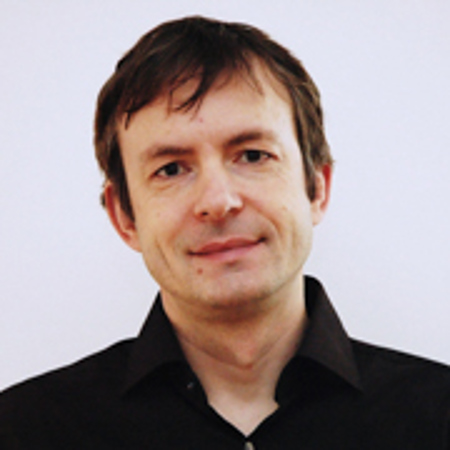
Wenzel Jakob is an Associate Professor and leader of the Realistic Graphics Lab at EPFL's School of Computer and Communication Sciences , currently on sabbatical at the University of Tokyo until Fall 2025. His work bridges inverse graphics , physically based rendering , and compiler/systems research , with a focus on developing robust differentiable rendering frameworks. Key research themes include: Backpropagation through rendering algorithms for inverse problems Material appearance modeling and optical measurement systems Compiler design for differentiable rendering pipelines Manifold sampling techniques and light transport derivatives His group created Mitsuba renderer , Dr.Jit , and Instant Meshes (recipient of the SGP Software Award). Recent publications (2021–2024) explore volumetric rendering, SDF-based differentiable systems, and efficient Monte Carlo estimators. Awards include the ACM SIGGRAPH Significant Researcher Award , Eurographics Young Researcher Award , and ERC Starting Grant . Teaching roles (2016–2024) span Advanced Computer Graphics and Numerical Methods for Visual Computing courses at EPFL.
Dr. Craig S. Levin is a Professor of Radiology at Stanford University's Molecular Imaging Program at Stanford (Nuclear Medicine), with courtesy appointments in Physics, Electrical Engineering, and Bioengineering. He also holds memberships in Bio-X, the Cardiovascular Institute, the Wu Tsai Human Performance Alliance, and the Stanford Cancer Institute. Dr. Levin received his B.S. Summa Cum Laude in Physics and Mathematics from UCLA in 1985, followed by M.S., M.Phil., and Ph.D. degrees in Physics from Yale University in 1987 and 1993. His educational achievements were recognized with multiple honors including Phi Beta Kappa, Sigma Pi Sigma, and various departmental awards at UCLA. Dr. Levin's research focuses on the development of novel instrumentation and software algorithms for molecular imaging. His work spans medical physics, biomedical engineering, and instrumentation development with specific emphasis on positron emission tomography (PET), gamma camera technology, and multimodal imaging systems. His laboratory explores new concepts in radiation detection, image reconstruction algorithms, and the application of these technologies to cancer, heart disease, and neurological disorders. A notable aspect of his research involves pushing the physical limits of sensitivity and spatial, spectral, and/or temporal resolutions in imaging systems. His recent publications demonstrate a strong focus on enhancing PET technology, particularly time-of-flight capabilities, with significant work on improving coincidence timing resolution, developing MR-compatible PET systems, and applying deep learning techniques to image reconstruction and normalization. His research shows a clear trajectory toward higher resolution imaging with improved quantitative accuracy for both clinical and preclinical applications. Dr. Levin's scientific achievements have been recognized with numerous awards: American Institute for Medical and Biological Engineering's College of Fellows Academy of Radiology Research Distinguished Investigator Recognition Award National Research Service Award from NIH (1993-5) Pilot Research Award from the Society of Nuclear Medicine (1996) Multiple honors from UCLA including Phi Beta Kappa and Sigma Pi Sigma Full Tuition and Research Fellowship and Bates Graduate Fellowship from Yale University As an educator and mentor, Dr. Levin directs the NIH-NCI funded T32 Stanford Molecular Imaging Scholars postdoctoral training program and serves as a Doctoral Dissertation Advisor for students in Bioengineering and Biophysics. He currently advises five postdoctoral scholars and three doctoral candidates. His laboratory, the Molecular Imaging Instrumentation Laboratory, comprises approximately 20 members who work on developing new imaging technologies and translating them into clinical applications. Dr. Levin has secured substantial NIH funding as Principal Investigator along with grants from other government agencies, industry partners, and private institutions to support his research program. Dr. Levin's Molecular Imaging Instrumentation Laboratory is at the forefront of developing new imaging technologies that bridge physics, engineering, and medicine. The lab focuses on creating instrumentation for in vivo imaging of cellular and molecular signatures of disease, with particular emphasis on pushing the physical limits of imaging performance. Their work spans computer modeling, sensor development, electronics design, data acquisition systems, and advanced image processing algorithms. The lab maintains strong industry partnerships to translate their innovations into products used for patient care worldwide.
Mia Consalvo is a Professor and Canada Research Chair in Game Studies & Design at Concordia University. She serves as Graduate Program Director in Communication Studies and directs the Concordia Centre for Technoculture, Art and Games. Her research focuses on game studies, qualitative methods, new media, and popular culture. Education: BA in Communications, Lyndon State College MA in Communications, University of Washington PhD in Mass Communications, University of Iowa Her recent work analyzes livestreaming platforms like Twitch, socio-economic class in gaming, feminist approaches to game studies, and the intersection of mental health with game environments. She has published extensively on game design, player culture, and digital labor. Scientific Awards: Canada Research Chair in Game Studies & Design She supervises thesis projects in Media Studies (MA) and Communication (PhD) programs, emphasizing collaborative research and critical analysis of games as cultural artifacts.
Prof. Dr. Arwen Deuss is a full Professor at the Faculty of Geosciences, Utrecht University , specializing in Seismology . Her research focuses on mapping Earth's deep interior using global seismology, with particular emphasis on mantle discontinuities, core structure, and whole Earth oscillations. She integrates seismological data with mineral physics, geodynamic modeling, and geochemistry to understand planetary evolution. Key research areas: Earth's Deep Interior, Global Seismology, Mantle Discontinuities, Inner Core Anisotropy Teaches courses in Theoretical Seismology, Earth Systems, and Planetary Interior Structure Developed open-source tools like FrosPy for normal mode analysis Her recent work explores 3D mantle attenuation, tilted transverse isotropy in the inner core, and seismic wave coupling. She leads projects connecting seismic tomography with geodynamic processes and maintains active collaborations in international seismological research.
Cheuk Wai Tai is a Senior Staff Researcher at Stockholm University's Department of Environmental and Materials Chemistry since 2009. He manages the transmission electron microscopes and sample preparation equipment at the Electron Microscopy Center and serves as Section Editor for the Journal of Electronic Materials. His work focuses on quantitative structure characterization in functional materials research, particularly within nanoscience and nanotechnology contexts. Education: Ph.D. in Applied Physics, The Hong Kong Polytechnic University, 2004 M.Phil. in Applied Physics, The Hong Kong Polytechnic University, 2001 M.Sc. in Physics, The Chinese University of Hong Kong, 1998 B.Sc. (Hons) in Engineering Physics, The Hong Kong Polytechnic University, 1997 Dip. in Mechanical Engineering (Computer Aided Engineering), Institute of Vocational Education (formerly Haking Wong Technical Institute), Hong Kong, 1992 His research centers on structure-property relationships in functional materials through advanced electron microscopy techniques. Current specializations include Pair Distribution Function (ePDF) & Diffuse Scattering, Energy Materials characterization, and EM sample preparation methodology development. The group maintains strong focus on translating structural data into functional performance metrics for nanomaterials. Recent publications (2013-2019) demonstrate consistent emphasis on electron microscopy applications for energy storage materials (batteries, photocatalysts) and functional ceramics. Key trends include structural disorder analysis in piezoelectrics, development of quantitative TEM methods like SUePDF, and nanoscale characterization of electrocatalyst surface phases. His work bridges materials chemistry with advanced imaging techniques. Scientific recognition includes: Fellow of The Royal Microscopical Society (U.K.) Senior Member of IEEE Marie Curie Fellowship (2007-2009) from European Commission Sir Edward Youde Memorial Fellowship (2003/2004) from Hong Kong S.A.R. Government He teaches Solid State Chemistry (KZ7003) and leads Introduction to Analytical Electron Microscopy (KZ8009), having previously taught Advanced Transmission Electron Microscopy (KZ8010) before 2011. Major grants supporting his work include: "Quantitative structural characterisation using 3D electron-based pair distribution function" (Swedish Research Council) "A Multidimensional Toolkit for Modern Electron Microscopy" (Swedish Foundation for Strategic Research) "Mitigating Ni-rich Li-ion cathode side-reactions" (Swedish Energy Agency, Co-applicant) He leads the Cheuk-Wai Tai group within Stockholm University's chemistry department and oversees operations at the Electron Microscopy Center, where his team develops and applies advanced characterization techniques for functional materials research.
Professor Charlotte Deane is a leading academic in structural bioinformatics, holding the position of Professor at the University of Oxford's Department of Statistics and Executive Chair of the Engineering and Physical Sciences Research Council (EPSRC). She leads the Oxford Protein Informatics Group (OPIG), focusing on protein structure prediction, immunoinformatics, and AI-driven drug discovery. Her research integrates computational methods with biological insights, developing tools widely used in academia and industry. Prior roles include Head of the Department of Statistics, Deputy Head of the Mathematical, Physical and Life Sciences (MPLS) Division at Oxford, and Chief Scientist of Biologics AI at Exscientia. During the COVID-19 pandemic, she served on SAGE and as UKRI's COVID-19 Response Director. In 2022, she was awarded an MBE for her contributions to pandemic research. Her research group's work spans antibody design, T-cell receptor analysis, and small molecule discovery, with a focus on open-source software development. Current projects include advancing AI methods for protein structure prediction and therapeutic antibody engineering. Recent publications highlight innovations in computational drug design, antibody developability, and machine learning applications in structural biology.
Norman Sadeh is a Professor in the School of Computer Science at Carnegie Mellon University (CMU), where he has made significant contributions to cybersecurity, privacy, and AI research. He has co-founded and co-directed several groundbreaking graduate programs at CMU, including the Privacy Engineering Program (2012-present), the Ph.D. Program in Societal Computing (2003-2013), and the MBA track in Technology Strategy and Product Management (2005-2017). Carnegie Mellon University, School of Computer Science Software and Societal Systems Department CyLab Security and Privacy Institute Manufacturing Futures Institute Dr. Sadeh received his Ph.D. in Computer Science at CMU with a major in Artificial Intelligence and a minor in Operations Research. He holds an M.Sc. in computer science from the University of Southern California and a BS/MS degree in electrical engineering and applied physics from the Free University of Brussels (Belgium) as 'Ingénieur Civil Physicien.' Professor Sadeh's research spans cybersecurity, online privacy, Human-AI Interaction, AI governance, mobile computing, the Internet of Things, user-oriented machine learning, and language technologies. He is particularly known for his pioneering work on AI-based privacy enhancing technologies, including privacy assistants, automated privacy compliance tools, and NLP-based privacy solutions. His work has influenced the design of privacy features at major technology companies including Apple, Google, and Facebook/Meta, as well as privacy policies at regulatory agencies like the Federal Trade Commission and the California Office of the Attorney General. Analysis of his recent publications shows a strong focus on practical privacy solutions, particularly in mobile and IoT contexts, with an emphasis on making privacy more usable and understandable for end users. His work bridges technical innovation with policy implications, addressing both the technological and human aspects of privacy protection. 2018 Outstanding Entrepreneur of the Year award from the Pittsburgh Venture Capital Association Test of time award by the AAAI Conference on Web and Social Media (ICWSM) Gartner Group's Magic Quadrant leader in Security Awareness Computer-Based Training for 4 consecutive years Deloitte's Technology Fast 500 recognition for 3 consecutive years Professor Sadeh has advised numerous students, including PhD candidates like Aerin (Shikhun) Zhang, whose dissertation focused on understanding diverse privacy attitudes. His research has been funded through various grants, including NSF SaTC projects, and has resulted in technologies that protect tens of millions of users worldwide. He also founded Wombat Security Technologies, which was acquired by Proofpoint in 2018 and whose technologies are used by over 75% of Fortune 100 companies. Professor Sadeh leads several research initiatives including the Privacy Engineering Program, the Usable Privacy Policy Project, the Personalized Privacy Assistant Project, and CMU's Privacy Infrastructure for the Internet of Things. His Mobile Commerce Lab and E-Supply Chain Management Lab have produced influential research that has been commercialized by major organizations including IBM, Raytheon, Boeing, and the U.S. Army.
Dr. Joshua Brinkerhoff is an Associate Professor in Mechanical Engineering at the University of British Columbia Okanagan Campus. He serves as the Associate Director for Research & Industrial Partnerships in the School of Engineering and leads the UBC-Okanagan Computational Fluid Dynamics Laboratory. His research spans computational fluid dynamics, turbomachinery, multiphase flows, hydrogen safety, wind energy, and biofluid mechanics. He teaches courses in mechanics of materials, alternative energy systems, turbulence, computational fluid dynamics, and aircraft design. PhD, Aerospace Engineering (Carleton University, Ottawa, ON) BEng, Aerospace Engineering (Carleton University) Dr. Brinkerhoff’s research interests include: Computational Fluid Dynamics (CFD) for laminar-to-turbulent transition and instability analysis Wind energy systems and turbine aerodynamics Hydrogen storage and safety protocols for transportation Biofluid mechanics for respiratory diseases and aneurysm modeling Multiphase flows in industrial and environmental contexts His publications focus on CFD simulations for: Aerosol dispersion and mitigation in indoor environments Wind farm interactions and atmospheric gravity waves Cavitation and phase transitions in cryogenic and LNG systems Heat transfer optimization in industrial and thermal systems Instability dynamics in buoyancy-driven and swept flows Turbulent structures in fluidized beds and reactors Dr. Brinkerhoff has no listed scientific awards in the provided data but has extensive contributions to renewable energy, hydrogen safety, and medical fluid dynamics. His laboratory develops open-source tools like TOSCA for large-eddy simulations and investigates practical applications in urban air quality, dental aerosol control, and turbine wake modeling.
Lakshmi N Sankar serves as Regents Professor and Sikorsky Professor in the Guggenheim School of Aerospace Engineering at Georgia Institute of Technology, where he directs the Computational Fluid Dynamics Laboratory and teaches aerodynamics, helicopter theory, and wind energy courses. His research program spans unsteady viscous flow modeling for aircraft, helicopters, and wind turbines since joining the faculty in 1982 after industry experience at Lockheed Martin. Education: Ph.D., Aerospace Engineering, Georgia Institute of Technology, 1977 MSAE, Aerospace Engineering, Georgia Institute of Technology, 1975 B. Tech., Aeronautical Engineering, Indian Institute of Technology, Madras, India, 1973 Research Focus: Professor Sankar's work centers on Computational Fluid Dynamics for rotorcraft aerodynamics and wind energy systems , with significant contributions to icing phenomena and unsteady flow modeling . His recent publications reveal intensifying focus on adverse weather effects (rain/icing), eVTOL conversion challenges, and high-fidelity hybrid modeling techniques for rotorcraft performance prediction. Publication Trends: Analysis of his 2022-2025 publications shows dominant themes in rotorcraft icing (35%), weather impact studies (25%), and advanced CFD methodologies (20%), with growing interest in drone applications and mathematical aspects of fluid dynamics. His work consistently bridges theoretical mathematics with practical aerospace engineering challenges. Scientific Recognition: AIAA Fellow and AHS Technical Fellow NASA Group Achievement Award (2007) and Space Act Software Release Award (2003) Multiple Sigma Gamma Tau Teaching Awards (2005-2015) Dean George C. Griffin Faculty of the Year (2014-2015) Sikorsky Professorship (2018-Present) Mentorship and Collaboration: As recipient of Georgia Tech's Graduate Research Assistant Development Award, he has cultivated extensive student mentorship. His research integrates with the Vertical Lift Research Center of Excellence and Center for 21st Century Universities, securing major industry and NASA funding for rotorcraft innovation. Current projects include physics-based modeling of ice accretion and eVTOL retrofit feasibility studies. Research Infrastructure: The Computational Fluid Dynamics Laboratory serves as his primary research hub, complemented by collaborations through the Vertical Lift Research Center of Excellence where his team develops next-generation modeling tools for military and civilian rotorcraft applications under federal funding programs.
Dr.-Ing. Steffen Klamt leads the Research Group 'Analysis and Redesign of Biological Networks' at the Max Planck Institute for Dynamics of Complex Technical Systems in Magdeburg, Germany, where he has been employed since 1998. He received his Diplom-Systemwissenschaftler degree from the University of Osnabrück in 1998 and his Dr.-Ing. from the University of Stuttgart in 2005. His research focuses on computational systems biology with emphasis on metabolic engineering, biochemical networks analysis, and bioprocess optimization. He develops computational tools like CellNetAnalyzer for network analysis and StrainDesign for metabolic engineering applications. Key research areas include constraint-based modeling, minimal cut sets analysis, and dynamic optimization of metabolic processes. His recent publications demonstrate strong focus on multi-stage bioprocess optimization, enzyme cascade engineering, and novel strain development strategies for chemical production. Common themes include ATP manipulation strategies, thermodynamic constraints in metabolism, and integration of experimental data with computational models. Scientific Awards: Ernst Dieter Gilles Lecture Award Ernst Dieter Gilles Fellowship He leads a research group developing computational methods for metabolic network analysis and maintains collaborations with experimental groups for model validation and application. The group develops open-source software tools widely used in systems biology research.
Jan Borchers is a full professor of computer science and head of the Media Computing Group, an endowed Chair in the Computer Science Department at RWTH Aachen University. He serves as deputy member of the Faculty Council for Mathematics, Computer Science and Natural Sciences (2024-2026) and previously headed the Computer Science Department's Examination Board from 2015 until February 2025. Borchers established his research group in 2003, pioneering modern HCI academic research and teaching in Germany, and opened Germany's first Fab Lab in 2009. Borchers received his PhD 'summa cum laude' in computer science from Darmstadt University of Technology in 2000. Before joining RWTH Aachen, he held faculty positions at Stanford University and ETH Zurich. His PhD thesis, 'A Pattern Approach to Interaction Design,' became the first book to bring design patterns to HCI. His research focuses on Human-Computer Interaction with particular interest in new user interfaces for soft robotics, textile user interfaces, 3D printing and personal fabrication, augmented reality, wearable and tangible computing, interfaces for software development, deceptive patterns, and interactive guides and exhibits. He is a member of ACM, SIGCHI, SIGCHI Germany, and GI, and introduced the Interactivity format to the CHI conference in 2005. Recent publications reveal a strong emphasis on deceptive patterns/dark patterns in UI design, textile interfaces, and the impact of generative AI on creative teamwork. His work spans from fundamental research in interaction techniques to practical applications in smart homes, accessibility, and children's interfaces, with a consistent focus on usability and user-centered design. IDC 2025 Best Work in Progress: 'If They Have No Choice, They'll Accept!' CHI'25 Student Games Competition Winner: 'The Deceptive Dungeon' RWTH-Wissenschaftsnacht 2024 Best Science Slam: 'Usability: 4 Prinzipien guter User Interfaces' Multiple CHI/UIST Honorable Mentions and Best Paper awards spanning two decades Author of influential books including 'A Pattern Approach to Interaction Design' and 'Arduino In A Nutshell' Borchers has provided extensive consulting, training, and user interface design services to major clients including AirBus, Apple, ARD, Bayer, Children's Museum Boston, Daimler, Handelsblatt, OTIS, Scout24, TEDx, and Deutsche Telekom. He actively organizes the Computer Science Department's weekly Faculty Lunch since 2003 and coordinates the department's public relations and web presence since 2010. He leads the Media Computing Group, which has become a leading German lab in terms of archival publications at CHI, the top international conference in HCI. Since March 2025, he serves as faculty patron for TechLabs Aachen, a student initiative providing practical digital skills training.
Michael Feig serves as Professor in the Department of Biochemistry & Molecular Biology at Michigan State University, leading the Feig Lab within the BioMolecular Science Gateway initiative. His research bridges computational modeling and molecular biology to investigate protein behavior in cellular contexts, with particular emphasis on molecular dynamics simulations and machine learning applications. His academic background includes: Ph.D. (1999) from the University of Houston M.S. (1994) from Technical University of Berlin Feig's research program focuses on computational biophysics of protein systems, specializing in molecular dynamics simulations of crowded cellular environments, bacterial microcompartments, and intrinsically disordered proteins. His lab develops advanced modeling techniques including coarse-grained approaches (COCOMO2) and machine learning frameworks to predict protein properties and conformational landscapes. Current work explores temperature-dependent structural ensembles, enzyme cargo loading mechanisms in engineered microcompartments, and biomolecular condensate physics under shear flow. Analysis of his 15 most recent publications (2024-2025) reveals three dominant research thrusts: (1) integration of deep learning with molecular dynamics for protein structure prediction, (2) engineering of bacterial microcompartments for synthetic biology applications, and (3) fundamental studies of macromolecular crowding effects on diffusion and phase separation. His work consistently emphasizes methodological innovation with biological relevance, notably through enhancements to the CHARMM simulation platform. His scientific recognition includes: Alfred P. Sloan Fellowship (2005) As principal investigator of the Feig Lab, he directs research teams in computational biophysics projects supported by active funding mechanisms. While specific grant details aren't provided, his continuous publication pipeline and lab infrastructure indicate sustained research support. His mentorship spans graduate students in the Cell & Molecular Biology Program, with recent work involving multi-institutional collaborations on bacterial microcompartment engineering and protein phase separation. The Feig Lab operates at the intersection of high-performance computing and molecular biology, maintaining strong connections with experimental groups for method validation. Current initiatives include developing generative models for temperature-dependent protein conformations and investigating cytoplasmic protein capture mechanisms in microcompartments, with potential applications in metabolic engineering and nanobiotechnology.
Joe Pitt-Francis is Associate Professor of Computer Science and Tutorial Fellow in Computer Science at St Edmund Hall, University of Oxford . Since 1999 he has tutored Oxford computer-science students and formally became a Tutorial Fellow of St Edmund Hall in 2024. His research lies at the intersection of computational biology and mathematical biology . Using sophisticated numerical techniques he constructs and analyses models of the heart , cancer and blood flow . A central strand of his work is software development for biological simulation; he is an active contributor to Chaste ( Cancer, Heart and Soft-Tissue Environment ), a large-scale C++ library that supports multiscale computational models in physiology and medicine. Across more than 60 peer-reviewed publications since 1998, his work has progressively advanced from foundational software-engineering papers describing Chaste’s architecture to highly-cited studies on cardiac electrophysiology , tumour-induced angiogenesis , microvascular haemodynamics and cell-cycle dynamics under hypoxia . The 2024-2025 corpus shows strong emphasis on multiscale frameworks , open benchmarking , and radiotherapy-induced vascular remodelling , positioning his group at the forefront of translational in-silico oncology. Contact: Email: Joe.Pitt-Francis@seh.ox.ac.uk
Renate Sachse is a Researcher and Responsible Investigator at the Chair of Structural Analysis, Technical University of Munich (TUM), under Prof. Kai-Uwe Bletzinger. She holds a Dr.-Ing. from the University of Stuttgart and has held postdoctoral positions at Harvard University (Bertoldi Lab) and TU Munich's Institute for Computational Mechanics. Her research focuses on biomimetic adaptive structures, biomechanics, and smart materials. Education M.Sc. in Civil Engineering (University of Stuttgart, 2014) – Thesis: "Isogeometric Contact Analysis of Thin-Walled Structures" B.Sc. in Civil Engineering (University of Stuttgart, 2011) – Thesis: "Elementary School Pavilion Structural Analysis" Study Abroad: École Spéciale des Travaux Publics (ESTP, France, 2012) Research Interests Her work integrates principles from biology and mechanics to design adaptive structures, including motion design, soft robotics, and active metamaterials. Notable projects include studying snapping mechanisms in plants (e.g., Venus flytrap) and developing bio-inspired systems like Flectofold shading devices. She also explores isogeometric analysis and structural optimization for thin-walled and slender structures. Grants & Awards Bertha Benz Prize 2022 (Daimler and Benz Foundation) Klaus Tschira Boost Fund Fellowship (€80,000 interdisciplinary grant) 3rd Place AVK-Prize for Innovations (2017, Flectofold Shading System) GAMM Juniors Fellowship (2020–2022) Teaching & Grants She teaches advanced finite element methods and nonlinear mechanics at TUM and has supervised projects in computational mechanics. Her grants include CareerDesign@TUM funding and the Klaus Tschira Fellowship for high-risk, interdisciplinary research. Labs & Teams Associated with the Chair of Structural Analysis at TUM, collaborating on projects like livMatS (Living Materials Systems) and the Harvard SEAS Bertoldi Lab. Involved in software development (e.g., Carat++, Kiwi!3d) and third-party initiatives (CoDA, FlexWing).
Dr. Alessandro Ottaviano is a Researcher affiliated with the Department of Digital Integrated Circuits and Systems at ETH Zürich. His work focuses on advanced computer architecture and embedded systems, particularly in the domains of RISC-V processors, real-time systems, and heterogeneous computing. He contributes to the design of time-predictable virtual memory solutions, mixed-criticality systems, and energy-efficient hardware-software interfaces. Key research areas include modular processor architectures, hardware monitoring for safety-critical applications, and power management in high-performance computing (HPC) systems. His recent projects involve developing controllers for 2.5D systems-in-package and creating open-source networking solutions for mixed-criticality environments. Ottaviano’s work often emphasizes open-source hardware design and scalable system-level approaches to address challenges in autonomous systems and edge computing. He collaborates on advancements in interrupt handling for virtualized systems, peripheral event linking for IoT devices, and FPGA-based thermal emulation for many-core processors. His research bridges theoretical computer architecture principles with practical implementations in embedded and real-time systems.