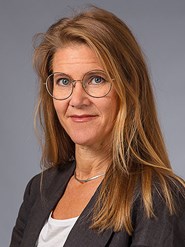
Leah Gerber is a Senior Lecturer at Monash University and a core member of the Monash Intercultural Lab (MIL). She holds a PhD in German Studies from Monash University (2008), supported by DAAD funding for research at Humboldt University, Berlin. Her work focuses on literary translation, Australian literature in global contexts, and multilingual communication strategies for culturally diverse communities. Gerber’s research intersects with UN SDGs 4 (Quality Education) and 10 (Reduced Inequalities), emphasizing equitable access to language services and cultural understanding. Education: Bachelor’s in German Studies, Monash University (2002) DAAD Scholarship for studies at Free University, Berlin (2001) PhD in German Studies, Monash University (2008), with DAAD-funded research in Berlin Research Interests: Literary and creative translation methodologies Children’s literature translation dynamics Cross-cultural mediation in multilingual contexts Technology-enhanced translator training (e.g., VR for family violence interpreters) Key Projects: Primary Investigator in initiatives like Building Mental Health Capacity of the Auslan Workforce (2024–2026) and Best Practice Guidelines for Co-designing Community Translations (2024). Her work bridges academic research with practical applications, including training bilingual workers and enhancing healthcare communication for CALD populations. Awards: Recipient of DAAD scholarships for undergraduate and PhD studies, recognizing her contributions to intercultural research. Labs/Teams: Leads the Monash Intercultural Lab, fostering collaborative research on translation, migration, and community engagement.
Martin Herdegen is a Reader in Financial Mathematics at the Department of Statistics, University of Warwick. He previously served as a postdoc at ETH Zürich under Johannes Muhle-Karbe and holds a PhD in Mathematics from ETH Zürich (2014) under Martin Schweizer. His research focuses on equilibrium theory, utility maximization, stochastic processes, and risk measures, with applications to financial bubbles and market microstructure. Herdegen’s academic career includes supervising multiple PhD students (e.g., Florian Gutekunst, Andreea Popescu) and postdocs (e.g., Nazem Khan). His research group explores topics like ρ-arbitrage, recursive utility, and liquidity provision under adverse conditions. He has contributed to foundational work on strict local martingales and their implications for financial markets. Publications span leading journals such as Finance and Stochastics , Mathematical Finance , and Annals of Applied Probability , addressing equilibrium models with transaction costs, optimal investment strategies, and risk measurement techniques. His work frequently integrates stochastic analysis and control theory to solve practical finance problems. Herdegen’s research also intersects with reinforcement learning applications in trading, as seen in the Mbt-gym framework for limit order book simulations. His contributions emphasize rigorous mathematical foundations while addressing real-world market frictions and liquidity dynamics.
Zina Ward is an Assistant Professor in the Department of Philosophy at Florida State University (FSU). Her research focuses on philosophy of science, philosophy of cognitive science, and moral psychology. She holds a PhD in History and Philosophy of Science from the University of Pittsburgh (2020). Ward’s work addresses topics such as natural kinds, neural representation, scientific explanation, and values in science. Her current book project defends a cluster theory of natural kinds. She is also engaged in interdisciplinary projects analyzing cognitive variation and methodological challenges in neuroscience. Education: Ph.D., University of Pittsburgh (History and Philosophy of Science, 2020). Research Interests : Ward’s expertise includes the philosophy of science, philosophy of cognitive science, and the historical development of scientific concepts. Her recent work explores themes like the epistemology of machine learning, data ethics, and the role of representation in neuroscience. She critically examines how scientific claims are communicated to the public, particularly through hedging strategies, and their ethical implications. Publications : Ward has published widely in journals like Philosophy of Science , Studies in History and Philosophy of Science , and Journal of the History of Biology . Her articles address topics ranging from William Whewell’s cluster theory of kinds to debates over neural representation in 19th-century neurology. She also contributes to methodological discussions in neuroscience, such as data aggregation across individual brains. Grants & Labs : While no specific grants are mentioned, her research aligns with interdisciplinary initiatives at FSU. She maintains an active online presence through her personal site and PhilPapers profile.
Kristen Rost is an Associate Professor in the Department of Applied Behavior Analysis at The Chicago School. With over a decade of experience in higher education, she has held faculty roles at Troy University and Virginia Military Institute, alongside a research scientist position at the Centers for Disease Control and Prevention (CDC) and the National Institute for Occupational Safety and Health (NIOSH). Ph.D. in Psychology, The Graduate Center, City University of New York (2012) M.S. in Applied Behavior Analysis, Florida Institute of Technology (2006) B.S. in Psychology and English, Western Michigan University (2004) Dr. Rost's research bridges basic and applied behavior analysis. Her foundational work investigates how humans value choice and the variables shaping choice-making preferences. In organizational behavior management, she focuses on workplace safety and health systems, emphasizing participatory approaches and behavioral interventions. Her teaching employs behavior-analytic strategies to enhance student engagement and collaborative learning in online asynchronous environments. Key trends in her publications include interteaching methodologies in education, analysis of safety systems in high-risk industries, and experimental studies on choice preferences. Her work frequently intersects behavioral science with practical applications in occupational safety, organizational psychology, and pedagogical innovation.
Professor Verena Wagner is a Full Professor in the Department of Philosophy at Humboldt University of Berlin and serves as the Executive Academic Director of the Berlin School of Mind and Brain. She leads the Philosophy of Mind research group and holds multiple leadership positions within the university, including membership on the Managing Committee and Steering Committee of the Berlin School of Mind and Brain. As of October 2025, she will also serve as a Fellow at the Max Planck School of Cognition. Additionally, she is a Member of the Akademie-Kolleg at the Heidelberg Academy of Sciences and Humanities. Professor Wagner's research focuses on the intersection of epistemology and philosophy of mind, with particular emphasis on cognitive neutrality, suspension of judgment, and related mental states. Her work explores how mental attitudes and activities relate to inquiry and deliberation (the "zetetic turn" in epistemology), advocating for a pluralist view on cognitive neutrality. She examines the nature of mental states before considering their normative profiles, noting that some forms of cognitive neutrality have agential components with implications for rationality. Her research also extends to deception (both self and other) and disinformation, with a specific focus on bullshitting as the provision of fake answers to questions under discussion. She has developed outreach projects to make philosophical work on fake answers accessible to broader audiences. Previously, she worked on free will debates, proposing a theory of freedom of action compatible with both determinism and indeterminism, and later applying compatibilist frameworks to the doxastic realm. Professor Wagner leads several significant research projects, including the DFG-Priority Programme "Rethinking Disinformation (Re:DIS)," the Heidelberg Academy-funded project "Neutral by Choice: Cognitive Neuroscience meets Philosophy of Mind," and the DFG-funded "Thinking about Suspension" research network. Her work demonstrates a consistent trajectory toward understanding cognitive states that exist between belief and disbelief, with increasing attention to practical applications in the context of disinformation and AI systems. She collaborates extensively with cognitive neuroscientists, psychologists, and philosophers across multiple German institutions. Konstanz University Science Prize 2023 (Messmer Foundation) for her work on "Heiße Luft und leeres Gerede: Wie Sprache zu Bullshit wird. Interventionsversuche an Schule und Universität" (Hot Air and Empty Talk: How Language Becomes Bullshit. Intervention Attempts at School and University) Professor Wagner actively mentors doctoral candidates and has supervised PhD projects such as Daniela Schuster's "Suspension of Judgment in Artificial Intelligence: Uncovering Uncertainty in Data-Based and Logic-Based Systems." She leads a research group comprising student assistants and collaborates with international scholars including Christoph Korn (Cognitive Neuroscience, Heidelberg), Hansjörg Neth (Social Psychology, Konstanz), Yulia Oganian (Cognitive Neuroscience, Tübingen), and Alexandra Zinke (Philosophy, Frankfurt). Her research is supported by substantial grants from the German Research Foundation (DFG), the Heidelberg Academy of Sciences and Humanities, and the Baden-Württemberg Foundation. Professor Wagner directs the Philosophy of Mind research group at Humboldt University, which includes student research assistants and an office manager. Her research environment fosters interdisciplinary collaboration between philosophy, cognitive neuroscience, and psychology, creating a unique space where theoretical philosophical work directly informs empirical research and vice versa. The group's work on cognitive neutrality and disinformation has particular relevance in today's information landscape, addressing fundamental questions about how we should navigate uncertainty and deception in both personal cognition and artificial systems.
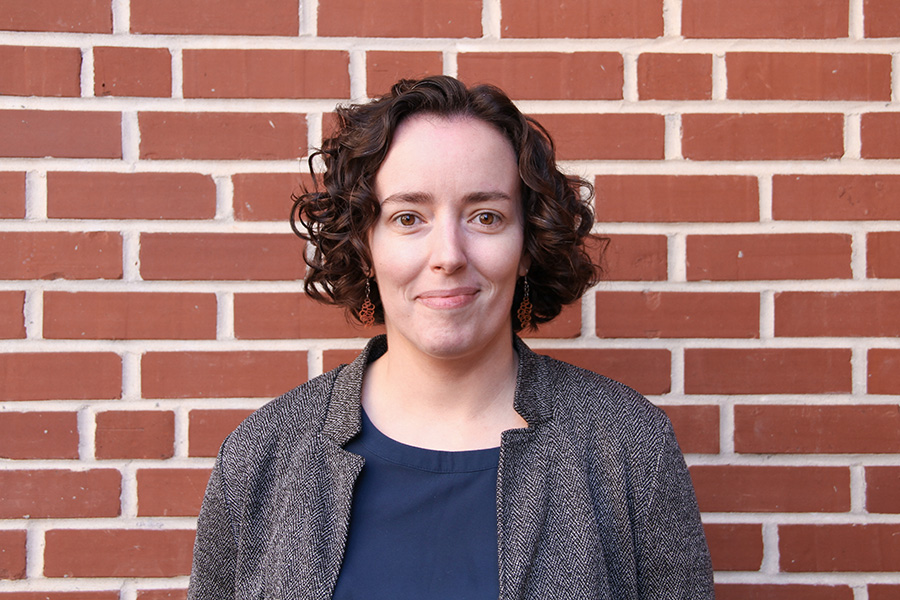
Meenakshi Rishi is a Professor of Economics at Seattle University's Albers School of Business & Economics and the College of Arts & Sciences, holding the Howard J. Bosanko Chair for International Economics and Finance (2023–2026). She earned her PhD in Economics from the University of Massachusetts, Amherst. Her research focuses on emerging markets, global political economy, and environmental sustainability, with a strong emphasis on energy policy, climate finance, and development economics. She has published over 46 peer-reviewed articles in journals like Journal of Development Studies and Energy Economics . Dr. Rishi's work addresses critical issues such as SDG7 implementation in Sub-Saharan Africa, the role of carbon pricing in reducing emissions, and consumer preferences for green energy programs. Her research often integrates empirical analysis with policy implications, particularly in South Korea, India, and post-Soviet economies. She has also explored gendered entrepreneurship in India and institutional factors influencing foreign direct investment. Key Research Themes: Sustainable development, climate finance, energy transition, environmental valuation, and global economic equity. Recent Contributions: Analysis of voluntary carbon markets, willingness-to-pay methodologies, and the interplay between ESG factors and FDI. Her endowed chair reflects recognition of her scholarly impact, and she actively contributes to curriculum development and service-learning initiatives in higher education.
Bing Qin is a Researcher specializing in computational linguistics, artificial intelligence, and multimodal learning. Their work focuses on enhancing large language models' capabilities in temporal knowledge graph forecasting, cross-lingual alignment, and safety mechanisms. Core Research Areas: Knowledge graphs, multimodal systems, reasoning frameworks Technical Innovations: Analogical replay, gain signal estimation, cross-modal attention intervention Recent Trends: 2025 publications emphasize training-free methods and preference alignment in LLMs
Petra Ryden is an Associate Professor at the Department of Food, Nutrition and Culinary Science, Faculty of Social Sciences, Umeå University. She serves as Deputy Head of Department, Director of Studies, and Directory Coordinator, focusing on education management and curriculum development. Her research explores: Digital health technology for dietetic treatment (Dietitian Online/DiOn project) Impact of food pricing on dietary choices Innovative teaching methods in higher education Long-term dietary adaptation in special populations She supervises doctoral student Sarah Persson and leads the ongoing Dietitian Online project. Selected publications reveal expertise in digital healthcare delivery, nutritional economics, and dietary behavior change. Scientific recognition includes the Faculty of Social Sciences' Pedagogical Prize (2018). Contact: petra.ryden@umu.se
Steven M. Suranovic is an Associate Professor of Economics and International Affairs at the George Washington University’s Elliott School of International Affairs. He currently serves as Director of the GW Global Bachelor’s program in Shanghai and previously directed the Masters in International Economic Policy. His academic work spans international trade, ethics in economics, behavioral models of addiction, and climate policy. Education: B.S. in Mathematics, University of Illinois at Urbana-Champaign M.S. and Ph.D. in Economics, Cornell University Professor Suranovic’s research emphasizes the integration of ethical principles into economic models and policy. He argues that free-market capitalism functions optimally only when ethical behaviors—such as honesty, respect for property, and fair competition—are upheld. His work critiques the separation of ethics from economics in traditional curricula and offers pedagogical tools to reintegrate moral reasoning into economic education. He has developed innovative teaching models that connect theoretical frameworks to real-world policy debates, especially in trade and environmental policy. His recent publications and working papers reflect a consistent focus on fairness in trade, climate change policy, behavioral responses to addiction, and the ethical foundations of capitalism. These works span journals, books, and educational materials, showing a trajectory toward both scholarly contribution and public intellectual engagement. He has also authored multiple widely used textbooks in international economics. Scientific Awards and Recognition: Fulbright Lecturer, Sichuan University, Chengdu, China (Fall 2002) Professor Suranovic has advised numerous graduate and undergraduate students, though specific names are not listed. He has received research support enabling international teaching and speaking engagements across Asia and the Pacific. His educational outreach includes directing major online learning initiatives, and he has taught summer programs at Fudan University and Victoria University of Wellington. He maintains two major educational websites: the International Economics Study Center and the Ethical Economics Study Center , which serve as hubs for open-access textbooks, video lectures, case studies, and primers on ethical behavior in markets. These platforms function as virtual labs for economic pedagogy and ethical inquiry, reaching a global audience of students and educators.
Dr. Isabella Nyambayo serves as Senior Lecturer in Nutrition and Dietetics at Wrexham University, where she advances research at the intersection of nutrition science, food security, and sustainable food systems. Her work integrates laboratory analysis with consumer behavior studies to address global challenges in malnutrition and dietary health. Her research program spans critical domains including: Human Nutrition & Disease Prevention : Investigating food-based interventions for malnutrition and degenerative diseases Nutrigenomics : Analyzing correlations between taster receptor genes, food preferences, and disease predisposition Sustainable Food Development : Designing free-from products (salt, fat, sugar, allergens) with optimized texture and sensory profiles Alternative Proteins : Evaluating consumer acceptance of plant-based and insect-derived protein sources Food Security Systems : Addressing sustainability challenges across European and developing contexts Recent publications (2021-2025) reveal intensifying focus on consumer perception of plant-based alternatives, with 70% of her work analyzing sensory attributes and market adoption barriers for meat/dairy substitutes. Her research uniquely bridges technical food science with socio-ecological modeling, particularly evident in studies connecting contraceptive behavior patterns to nutritional outcomes in Nigeria. No scientific awards were documented in available sources. Information regarding student advisement and research grant funding remains unspecified in current records. While institutional affiliation is confirmed, details about dedicated research laboratories or collaborative teams were not disclosed in source materials.
Kumar Ankit is an Associate Professor of Materials Science and Engineering (MSE) and Graduate Program Chair in the School for Engineering of Matter, Transport and Energy at Arizona State University. His research focuses on computational materials science with emphasis on phase-field modeling of microstructural evolution in materials. He leads the 4D ICE (Laboratory for 4D Interface Control & Engineering) research group, which develops computational tools for discovering efficient processing routes for advanced materials synthesis. Education: Ph.D. (Dr.-Ing.) Summa Cum Laude, Mechanical Engineering, Karlsruhe Institute of Technology, Germany (2015) Integrated Dual Degree (B.Tech/M.Tech) Metallurgical Engineering, Indian Institute of Technology-BHU (2010) Dr. Ankit's research spans multiple domains of computational materials science, with particular expertise in quantitative phase-field modeling. His work integrates computational approaches with machine learning to address fundamental challenges in microstructure science and engineering. His group investigates phenomena including solidification, solid-state transformations, grain coarsening in multicomponent alloys, electromigration-induced damage, and self-organization in polymers and vapor-deposited films. A growing emphasis in his recent work involves developing data-driven emulators that can predict complex microstructural evolution more efficiently than traditional simulation methods. Analysis of Dr. Ankit's recent publications reveals a strong trend toward integrating machine learning with traditional computational materials science methods. His work increasingly focuses on developing data-driven approaches to model complex microstructural evolution, particularly in electromigration and phase separation phenomena. The research spans multiple disciplines including materials science, computational physics, and machine learning, with applications in semiconductor manufacturing, microelectronics reliability, and advanced materials processing. Scientific Awards: 2024 Wenner-Gren Fellow (Sweden) 2022 NSF Early Career Award (CAREER) 2022 Editors' choice award, Journal of Phase Equilibria and Diffusion 2018 Robert W. Cahn prize of Springer Nature and the Journal of Materials Science 2016 Early Career Investigator Award of the German Research Foundation (DFG) Dr. Ankit has successfully secured significant research funding including a $560,000 NSF CAREER award for studying pearlite discontinuities in eutectoid microstructures, a $5 million DOE Earthshots grant as co-PI for carbon-free steelmaking technology, and multiple NSF grants focused on electromigration and materials characterization. He mentors several PhD students who work on diverse research projects spanning computational modeling of electromigration, nanostructural self-assembly, and capillary-mediated interface phenomena. Dr. Ankit co-founded the MateriAlZ Seminar series with collaborators at ASU and the University of Arizona to promote student engagement and increase the visibility of Arizona universities in Materials Science and Engineering. Dr. Ankit directs the 4D ICE research laboratory, which focuses on developing computational tools for rapid discovery of time-, energy-, and cost-efficient processing routes for materials with tailored functionality. The lab's work lies at the intersection of phase-field modeling, machine learning, and high-performance computing. Current projects include investigating capillary-mediated solid-liquid interface energy fields (funded by NASA), electromigration-induced defects in electronic materials (funded by NSF), and nanostructural self-assembly in vapor-deposited films (funded by ASU College of Engineering). The lab maintains strong collaborations with researchers at national laboratories and in industry.
K. Douglas Hoffman is a Professor of Marketing and University Distinguished Teaching Scholar at Colorado State University's College of Business, Department of Marketing. With over 30 years of teaching experience, he has held tenure track positions at Colorado State University, the University of North Carolina at Wilmington, and Mississippi State University, and served as Visiting Professor internationally in Finland, South Korea, Thailand, Singapore, and Vietnam. His educational background includes: B.S.B.A. in Marketing from Ohio State University M.B.A. from the University of Kentucky D.B.A. from the University of Kentucky Professor Hoffman specializes in services marketing with research focusing on sales/service interface, customer service/satisfaction, service failure and recovery, and services marketing education. His work extensively explores consumer behavior in Thailand across diverse sectors including food, retail, tourism, and digital platforms, often addressing practical business challenges in emerging markets. Analysis of his recent publications reveals consistent emphasis on cross-cultural consumer behavior, sustainable practices, and service recovery strategies, with significant contributions to understanding Thai market dynamics and international business contexts. His scientific recognition includes: CSU Board of Governors Excellence in Undergraduate Teaching Award University Distinguished Teaching Scholar designation (2007) Professor Hoffman founded Colorado State University's Master Teacher Initiative (MTI) to enhance teaching quality and visibility across the university. He has mentored numerous students through innovative pedagogical approaches and co-authored the widely used textbook 'Services Marketing: Concepts, Strategies & Cases.' His leadership extends to curriculum development and teaching excellence initiatives within the College of Business. He actively contributes to marketing education through the MTI program and maintains strong industry connections for practical application of his research in service management and consumer behavior.
Gilles Savard is a Full Professor in the Department of Mathematics and Industrial Engineering at Polytechnique Montréal. He serves as Director General of the Institute for Data Valorization (IVADO), a position he held until July 2021 when Luc Vinet succeeded him. He is also a member of the Research Group in Decision Analysis (GERAD) and the Interuniversity Research Center on Enterprise Networks, Logistics and Transportation (CIRRELT). In October 2021, he was appointed Acting President of Polytechnique Montréal. His research spans operations research, revenue management, and mathematical optimization with applications in transportation networks, energy systems, and logistics. He has made significant contributions to bilevel programming, network pricing, demand forecasting, and combinatorial optimization. His work bridges theoretical advances in mathematical programming with practical applications in revenue management systems across transportation and energy sectors. Analysis of his recent publications reveals a strong focus on integrating machine learning techniques with traditional optimization methods for revenue management problems. His work increasingly addresses smart grid optimization and energy market applications while maintaining core expertise in transportation revenue systems. The publications demonstrate sophisticated use of bilevel programming frameworks to model complex decision hierarchies in pricing problems. Order of Academic Palms from the French Ministry of National Education (2018) Innovation Personality Award from ADRIQ (2017) Professor Savard has supervised 23 PhD students and 28 Master's students throughout his career, with research spanning revenue management, transportation optimization, bilevel programming, and energy systems. His students have addressed problems in airline revenue management, railway demand forecasting, media placement optimization, and inventory management. He has participated in numerous research projects related to transportation networks, smart grid systems, and revenue optimization frameworks. Professor Savard has been instrumental in establishing Montreal as a hub for artificial intelligence research through his leadership at IVADO.
Alejandro Francetich is an Associate Professor with tenure at the University of Washington Bothell School of Business, where he has served since 2015. He currently holds the position of Economics Area Coordinator and teaches undergraduate and graduate courses in Microeconomics, Econometrics, and Game Theory. His educational background includes: Ph.D. in Economic Analysis and Policy, Stanford GSB, Stanford University (2013) M.A. in Economics (Highest Distinction), Universidad Torcuato Di Tella B.A. in Economics (Magna Cum Laude), Universidad de Buenos Aires, Argentina Dr. Francetich's research focuses on Microeconomic Theory, Mechanism Design, and Choice Theory. His work spans game theory, decision theory, and behavioral economics, examining how individuals and organizations make strategic decisions under uncertainty. He has made significant contributions to understanding partnership dynamics, toolkit selection heuristics, learning biases, and auction mechanisms. His publication record shows a consistent focus on theoretical economic models with practical implications for business strategy and organizational design. Recent work explores unawareness in contracting, statistical versus managerial spillover in business strategy, and partnership dissolution timing. Dr. Francetich actively mentors undergraduate research and independent studies. He serves on various university committees including the Global Initiatives Advisory Board and has been involved in diversity, equity, and community engagement initiatives since 2016, including founding the School of Business Diversity, Equity, and Community Engagement Council. As an active researcher, he regularly presents at major economics conferences including the Econometric Society Summer Meetings and International Game Theory Conferences. He also serves as a peer reviewer for top economics journals including American Economic Review, Econometrica, and Journal of Economic Theory.
Rebecca Bennett is a Professor of Bioethics at the University of Manchester , affiliated with the School of Law . She currently serves as Associate Dean for Teaching and Learning (Distance Learning) in the Faculty of Humanities. Her academic career spans over three decades, specializing in bioethics and medical law, with a focus on reproductive ethics, genetic screening, and disability rights. Professor Bennett pioneered the LLM/MA/PGCert/PGDiploma in Healthcare Ethics and Law as one of the first fully online distance learning programs in the university. She also leads a CPD course in Medical Decision-Making: Ethics and Law , accredited by the Royal College of Physicians. Her teaching excellence was recognized with a 2022 award for Educational Leadership and Digital Delivery. Research Interests include the ethics of prenatal testing (e.g., NIPT for Down’s syndrome), newborn bloodspot screening, transgender healthcare ethics, and critiques of Procreative Beneficence. She advocates for ethical terminology reform to reduce stigma around disability and opposes eugenic interpretations of genetic screening. Her recent work includes a 2025 book The Welfare of Future Children: Reproductive Ethics and Disability Screening and articles challenging bioethical language ( Cambridge Quarterly ) and supporting gene editing ( American Journal of Bioethics ). She co-led a project on antenatal information for newborn screening (2013–2016) and advises media on ethical issues, including the BBC documentary A World Without Down’s Syndrome? She chairs a healthcare ethics discussion group on Facebook and contributes to free MOOCs on disability screening ethics. Her work aligns with UN Sustainable Development Goals addressing health equity and ethical governance.




/0x53:1368x1657/prod01/channel_34/media/seattle-university/directory/faculty-amp-staff-directory/images/albers/Meena_Rishi.jpg)