Richard Townsendمشاهده پروفایل
عضو هیئت علمی
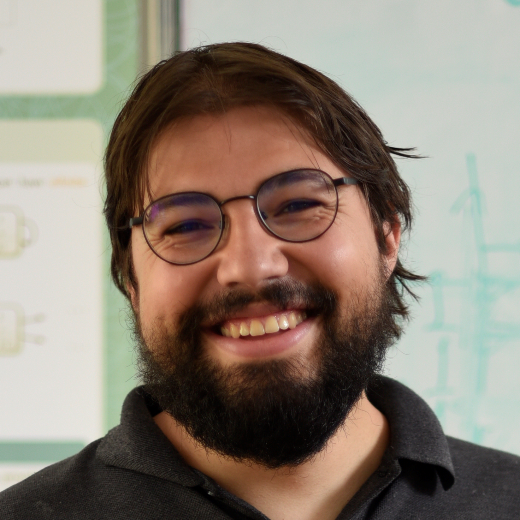
Richard Townsend serves as an Assistant Teaching Professor in the Department of Computer Science within the School of Engineering at Tufts University. He joined the institution in September 2019 after completing his Ph.D. at Columbia University, making a transition from research to teaching. Townsend is also the Founding Director of the Emerging Scholars Program in the Computer Science Department at Tufts University. His educational background includes a Doctor of Philosophy (2019), Master of Philosophy (2016), and Master of Science (2015) from Columbia University, along with a Bachelor of Arts in Computer Science from Oberlin College (2013). Townsend's research focuses on the application of functional programming languages to hardware design, specifically developing techniques to translate recursive algorithms with irregular memory access patterns into efficient hardware implementations. His work centers around an optimizing Haskell-to-SystemVerilog compiler project, exploring the semantic connections between functional languages and hardware specifications. He specializes in compilers for embedded systems, program analysis and optimization, and embedded domain-specific languages. His publication record demonstrates consistent contributions to the intersection of functional programming and hardware design, with multiple papers on compositional dataflow circuits, hardware synthesis from functional languages, and resource allocation for hardware implementations. His work shows a clear trajectory from theoretical foundations to practical implementations in hardware compilation. Senior Survey 2022 Significant Impact and Best Course (2022) Significant Impact Award (2021) Significant Impact Award (2020) Townsend actively mentors junior faculty through the Teaching Track Faculty Mentoring program and serves on various committees including the Teaching Track Search Committee and Computer Science Curriculum Committee. He teaches a range of courses including Programming Languages, Introduction to Computer Science, and specialized topics like Algorithmic Music Composition. His teaching approach incorporates evidence-based STEM teaching practices, as evidenced by his participation in multiple teaching development programs.