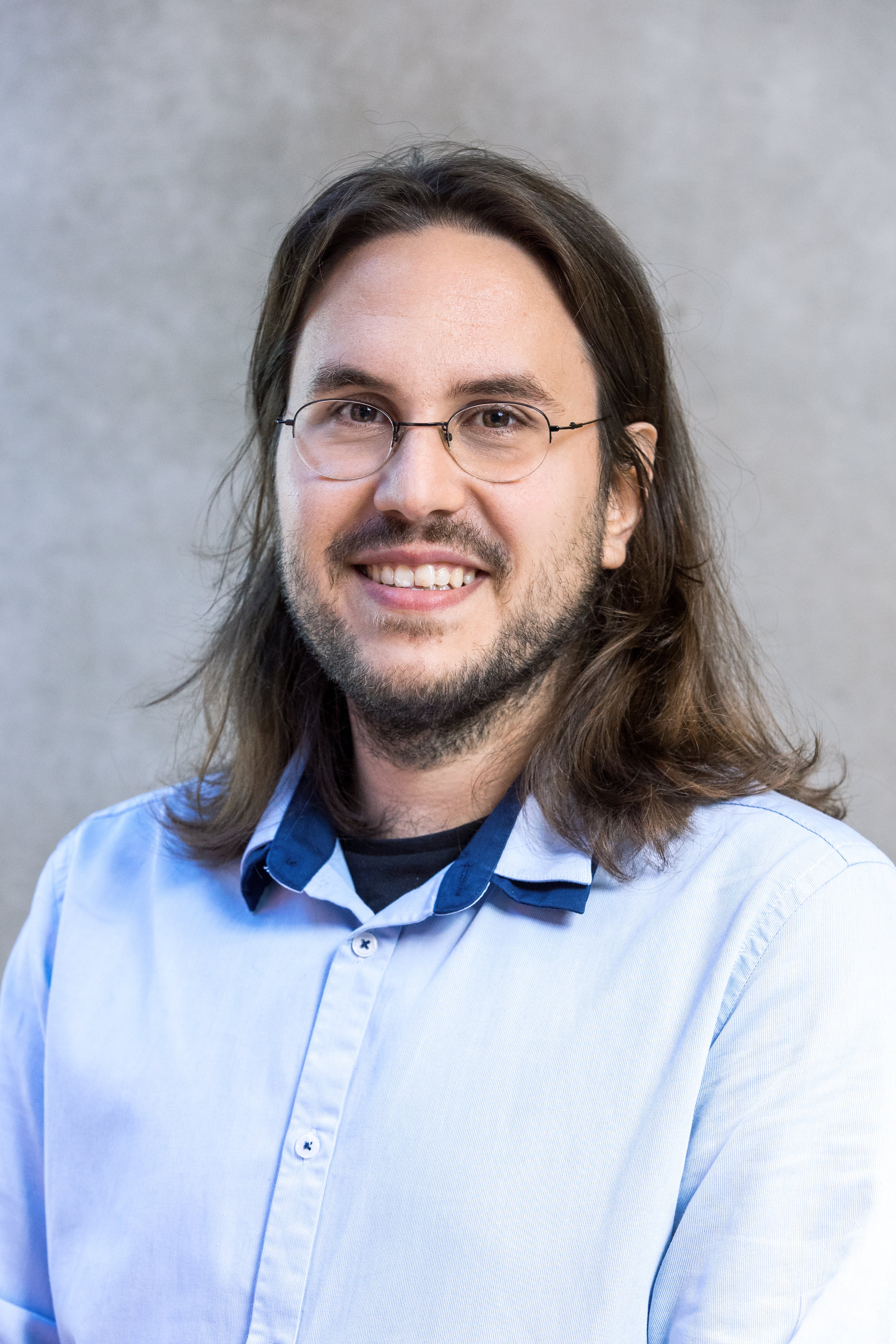
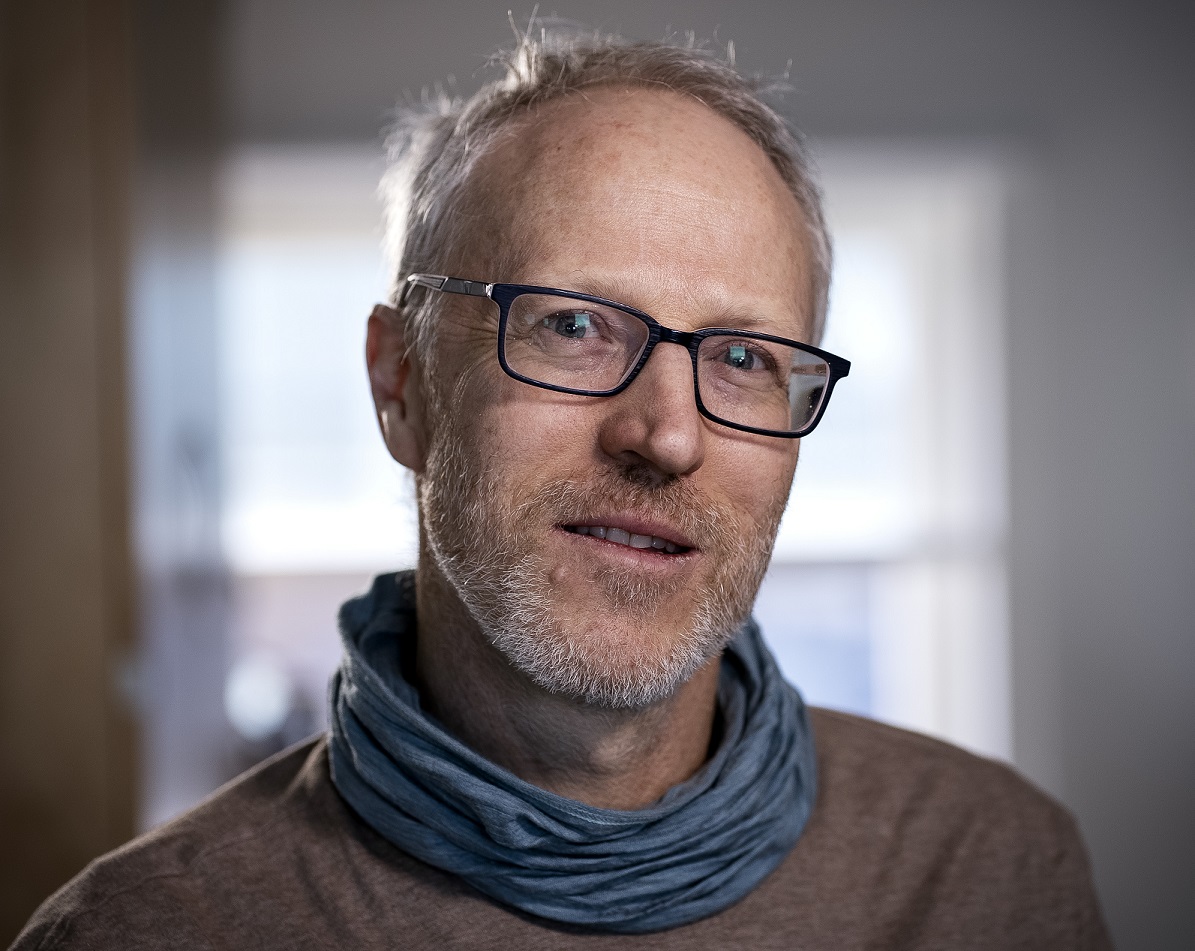
Professor David Thomas holds the position of Professor in Computer Engineering at the University of Southampton's Electronics and Computer Science Department. His research focuses on the intersection of software and hardware, particularly leveraging FPGAs for novel digital architectures and event-driven computing. He has a notable academic trajectory, having previously served as a Lecturer and Senior Lecturer at Imperial College London before joining Southampton in 2021. Dr. Thomas is actively involved in supervising PhD students and contributes to interdisciplinary research projects funded by the EPSRC, such as the SONNETS initiative exploring scalable event-triggered systems. Education: BSc in Computer Science (Imperial College London), PhD in Digital Architectures (Imperial College London). Postdoctoral roles included Research Associate and Research Fellow at Imperial's Department of Computing. Research Interests: Event-driven computing, FPGA-based systems, high-level synthesis, and high-performance computing. His work emphasizes practical implementations of theoretical models, such as custom processors and application-specific accelerators. Current projects include optimizing random number generation for FPGAs and exploring meta-programming techniques for hardware design. Advising and Grants: Supervises multiple PhD students in areas like neuromorphic computing and algorithm optimization. Active in securing funding for distributed system architectures and FPGA-based solutions. Labs/Teams: Member of the Cyber Physical Systems research group. Collaborates with interdisciplinary teams on projects like POETS (Partially Ordered Event-Triggered Systems) for large-scale parallel computing.
Dr. Todd D. Murphey is a Professor of Mechanical Engineering at Northwestern University's Robert R. McCormick School of Engineering and Applied Science. He serves as Director of Transformative Research and Director of the Master of Science in Robotics Program at Northwestern, leading initiatives in computational dynamics, control systems, and robotics. His work bridges engineering, neuroscience, and biomedical applications, with a focus on developing systems that interact effectively with humans and their environments. Dr. Murphey received his Ph.D. in Control and Dynamical Systems from the California Institute of Technology in 2002, with a thesis titled "Control of Multiple Model Systems." Prior to that, he earned a B.S. in Mathematics, summa cum laude, from the University of Arizona in 1997. Dr. Murphey's research centers on computational methods in dynamics and control, with applications spanning neuroscience, health science, robotics, and automation. His work in the Interactive & Emergent Autonomy Lab focuses on computational models of embedded control, biomechanical simulation, dynamic exploration, and hybrid control. The group develops mathematical approaches that lead to orders of magnitude improvement in computational efficiency for real-time implementation. Key application areas include assistive exoskeleton control, stabilization of energy networks, bio-inspired active sensing, entertainment robots, robotic exploration, and software-enabled stroke rehabilitation. Analysis of Dr. Murphey's recent publications reveals a strong emphasis on human-swarm interaction, algorithmic matter, and control of cyber-physical systems in uncertain environments. His work increasingly integrates information theory with physical systems, exploring how both autonomous and biological systems interact with environments to learn and improve behaviors. Recent trends show growing applications in rehabilitation technology, with particular focus on human-machine interaction in biomedical devices and embodied intelligence. Dr. Murphey has received numerous honors and awards for his contributions to robotics and engineering: Named Director of Transformative Research at Northwestern University (2025) Appointed IEEE Robotics and Automation Society Vice President of Publication Activities (2022) Co-recipient of Best Paper Award for IEEE Transactions on Robotics (2020) Appointed to Air Force Scientific Advisory Board (2019) Recipient of ABB Best Student Paper Award for CPL-SLAM research (2019) Cole-Higgins Award from Northwestern Engineering (2015) Dr. Murphey has supervised numerous graduate students including Taosha Fan, Giorgos Mamakoukas, and Ian Abraham, with research spanning robotic exploration using electrosense and mechanical contact, human-in-the-loop control, and shared control for rehabilitation devices. His lab has secured significant funding from the National Science Foundation, DARPA, and industry partners including Siemens and Ekso Bionics, supporting research in algorithmic matter, emergent behavior, and human-swarm collaboration. The Interactive & Emergent Autonomy Lab, led by Dr. Murphey, investigates how both autonomous systems and biological systems interact with their environments to learn and improve behaviors. Current projects include active learning and data-driven control, active perception in human-swarm collaboration, algorithmic matter and emergent computation, control for nonlinear and hybrid systems, cyber physical systems in uncertain environments, harmonious navigation in human crowds, information maximizing clinical diagnostics, reactive learning in underwater exploration, robot-assisted rehabilitation, and software-enabled biomedical devices. The lab collaborates with researchers across Northwestern and institutions including Georgia Tech, MIT, and industry partners.
Professor Andrew Klevan is a leading scholar in film aesthetics and close cinematic analysis, holding a professorial position at the University of Oxford's Faculty of English and serving as a Non-tutorial Fellow at St Anne's College. His work focuses on film form, performance, critical methodology, and pedagogy, advocating for detailed close analysis as a core practice in film studies. Research interests include the interplay between film medium and narrative structure, particularly exploring 'undramatic' forms that capture mundane experiences. He has authored monographs on film performance (e.g., Barbara Stanwyck studies), aesthetic evaluation frameworks, and the philosophy of film criticism. Recent work critiques theoretical approaches in film studies and develops 'ordinary language film studies' to emphasize practical criticism over abstract theory. Publications span over two decades, with notable contributions to journals like Movie , Film-Philosophy , and Aesthetic Investigations . His edited collection The Language and Style of Film Criticism (with Alex Clayton) remains influential in critical discourse. Teaching focuses on advanced film analysis and methodology. No formal academic awards are listed, though his contributions to film scholarship are widely recognized. He supervises Master’s and DPhil students in film studies, emphasizing close textual analysis and critical writing. His academic affiliations include the St Anne's College community and the broader Oxford film studies network.
Bernhard Rumpe is a Professor and Chair of Software Engineering at the Department of Computer Science 3, RWTH Aachen University, Germany. He leads a research group focused on model-based software engineering, domain-specific languages, and digital twins, with strong industrial collaborations and applications in embedded systems, AI, IoT, and autonomous vehicles. His research centers on improving software development through model-driven engineering, generative techniques, and formal modeling using UML, SysML, and the MontiCore language workbench. Key interests include digital twins, variability modeling, model composition, and the integration of cyber-physical systems with information systems. The recent publications highlight a consistent focus on model-driven digitalization, language workbenches, and system integration. Trends show increasing emphasis on digital twins in manufacturing and societal systems, formal verification of model transformations, and educational applications of model-driven low-code platforms. His work bridges theoretical foundations with industrial applicability. Keynote Speaker, OOPSLE 2025 General Chair, GPCE 2023 Session Chair, MODELS 2020 Program Committee Member, SLE, GPCE, ICSE, ECMFA He advises master’s and doctoral students and leads a vibrant research team that has successfully executed over 100 research projects. His group develops foundational tools like MontiCore and applies them in industrial contexts, contributing to software quality and developer efficiency. No formal grants are listed, but sustained project funding is evident. He is involved in several research labs and teams centered around the Software Engineering Chair at RWTH Aachen, focusing on language workbenches, model-driven development, and digital twin systems. The team actively contributes to open research through publications, tools, and industrial partnerships.
Sebastijan Dumancic is an Assistant Professor at Delft University of Technology, focusing on neuro-symbolic AI through program synthesis and probabilistic programming. He leads the RAIL lab and collaborates with institutions like Harvard, MIT, and CNRS. His research bridges symbolic AI and machine learning, applying program synthesis to scientific discovery, transportation, and robotics. He holds an FWO-funded PhD from KU Leuven and has participated in initiatives like ELLIS and the Symbolic Computation and Machine Learning Initiative. Program synthesis Probabilistic programming Neuro-symbolic AI Constraint-based learning His recent articles highlight advancements in program synthesis, neuro-symbolic integration, and constraint satisfaction. Projects like Find2Fix and Intelligent Greenhouse Horticulture (funded by NWO) demonstrate practical applications. ELLIS Membership University Teaching Qualification He supervises numerous MSc and PhD students in projects involving logic programming, program synthesis, and probabilistic modeling. Active in workshops and symposia, he contributes to neuro-symbolic AI and scientific discovery.
Loris D'Antoni is an Associate Professor in the Department of Computer Science and Engineering at the University of California at San Diego (UCSD) . He is also a Visiting Academic at Amazon Web Services (AWS) . His research focuses on helping people write trustworthy software through techniques in program synthesis, formal verification, and machine learning robustness. Bachelor and Master in Computer Science from University of Torino (2008, 2010) PhD in Computer Science from University of Pennsylvania (2015) His research integrates programming languages , automata theory , and formal methods to ensure software reliability. Recent work explores semantics-guided synthesis and specification-aligned LLMs , with applications in network security, machine learning fairness, and automated code repair. Key trends in his publications include program synthesis , formal verification , and trustworthy AI systems . He has contributed to tools like AutomataTutor and SemGuS , a framework for customizable synthesis problems using constrained Horn clauses. Phillip R. Certain-Gary D. Sandefur Distinguished Faculty Award NSF CAREER Award Microsoft Research Faculty Fellowship Google and Facebook Faculty Awards Best Paper Award at ICDCN 2023 Distinguished Paper Award at SBES 2021 D'Antoni actively contributes to academic community service as a committee member in PLDI , OOPSLA , POPL , and CAV . He leads the Programming Systems Group at UCSD and collaborates with SemGuS research team on synthesis frameworks.
Pooja Khatija serves as an Adjunct Professor in the Department of Organizational Behavior at the Weatherhead School of Management , Case Western Reserve University , where she is also a doctoral candidate. Blending scholarship and practice, she focuses her research on Asian American leadership, holistic and inclusive leadership, and implicit biases tied to gender, geography, and social class in recruitment and career advancement. Education Bachelor of Science in Biotechnology Post Graduate degree in Management Doctoral candidate, Department of Organizational Behavior, Weatherhead School of Management Research Interests Dr. Khatija’s scholarly agenda is anchored in advancing equity within organizations. She investigates how Asian American leaders navigate and transform predominantly white institutions, and she develops integrative models of holistic leadership development that emphasize identity, well-being, and social justice. A second stream of inquiry examines implicit biases in hiring and promotion systems, with particular attention to gendered racism and intersectional invisibility experienced by women of color. Her work bridges theory and practice by translating findings into trauma-informed and healing-centered organizational interventions. She leverages coaching methodologies to cultivate inclusive climates and has co-authored critical reviews on reimagining leadership standards that historically center whiteness. Scientific Awards Graduate Dean’s Instructional Excellence Award (2022) Teaching, Coaching & Grants As an educator, Pooja has instructed graduate students in Applied Multivariate Data Analysis (MGMT573) and undergraduates in Leadership in Diversity and Inclusion (ORBH391) across 2020-2022. For over a decade she has coached Management and Engineering graduate students on career and placement strategies, and she is a certified executive coach through Weatherhead’s coaching program. While specific grant details are not enumerated, her sustained engagement in curriculum development and coaching initiatives reflects ongoing institutional investment in her inclusive-leadership agenda. Labs & Teams While no formal lab is named, Pooja collaborates closely with faculty and doctoral peers within the Department of Organizational Behavior and draws on Weatherhead’s broader ecosystem of leadership development and diversity research initiatives.
Nir Piterman is a Professor in Computer Science at the University of Gothenburg's Department of Computer Science and Engineering. Previously, he was a Lecturer and later Reader (Associate Professor) at the University of Leicester (2010-2019), following postdoctoral research at EPFL (2005-2007) and a Research Fellowship at Imperial College London (2007-2010). PhD from Weizmann Institute of Science (2005), supervised by Amir Pnueli Postdoc at EPFL with Tom Henzinger (2005-2007) Research Fellow at Imperial College London (2007-2010) Lecturer at University of Leicester (2010-2019), promoted to Reader in 2012 Universitets Lektor (Associate Professor) at University of Gothenburg (2019-2021), promoted to Professor in 2021 His research focuses on formal verification, automata theory, and synthesis from temporal specifications. Current work under the ERC Consolidator Project dSynMA extends reactive synthesis to multi-agent systems, exploring frameworks combining message passing and variable sharing, algorithmic analysis of games with partial information, and logic extensions for agent interaction. He has supervised eight PhD students, including Prabhat Kumar Jha (path planning in game solving), David Lidell (automata constructions for LTL with past), and Claudia Cauli (cloud infrastructure security reasoning, 2022), with theses covering program verification, temporal logic, and game algorithms. ERC Consolidator Grant (2021-?, dSynMA) Editor-in-Chief, Formal Methods in System Design Editor, Acta Informatica Nir has taught courses such as Principles of Concurrent Programming (Chalmers, 2019-2025), Advanced C++ Programming (University of Leicester, 2012-2017), and Synthesis from Temporal Specifications (University of Buenos Aires, 2010). He actively recruits PhD candidates and has hosted postdoctoral researchers at multiple institutions.
Wolfgang Mayer is a Professor for Performative Practice at the State Academy of Fine Arts Stuttgart , teaching collaborative artistic processes. He co-founded the art group Discoteca Flaming Star (DFS) in 1998 with Cristina Gómez Barrio, focusing on performative works that challenge memory and institutional frameworks. 1990–1995: Studied at Academy of Fine Arts Munich 1996–1997: DAAD scholarship at School of Visual Arts NYC 2005–2006: Whitney ISP participant Mayer’s research integrates performative practice , body theory , and collaborative art . His works interrogate memory , feminist narratives , and public space dynamics through sculptures , performances , and experimental music . Recent projects like Momentum:synthesize.r (2024) and Love Any Out of (90 Seconds) End (2023) explore temporal structures and emotional labor . Scientific honors include: 2013 Fundacion Estrenos Grant 2006–2007 Pollock-Krasner Scholarship 1993 Salzburg Summer Academy scholarship He emphasizes non-formalized artistic development through Sound & Body modules, public space interventions , and critical response protocols . Mayer’s DFS collective has shown globally at institutions like The Kitchen , Whitney Museum , and Tate Modern , often collaborating with figures like Rita McBride and Jeremiah Day.
Cristina Nita-Rotaru is a tenured Professor of Computer Science at Northeastern University's Khoury College of Computer Sciences , where she leads the Network and Distributed Systems Security Laboratory (NDS2) and is a founding member of the Cybersecurity and Privacy Institute . Previously, she was a faculty member at Purdue University from 2003 to 2015. Education: Ph.D. in Computer Science from Johns Hopkins University M.S. in Computer Science from Politehnica University of Bucharest , Romania Research Focus: Her research lies at the intersection of cybersecurity , distributed systems , and computer networks . She designs and builds resilient distributed systems and network protocols that maintain security, availability, and performance despite faults, misconfigurations, and attacks. Her work integrates formal methods , adversarial testing , blockchain security , and trustworthy AI . Funding & Impact: Her research has been supported by NSF , DARPA , ONR , Google , Ethereum Foundation , and others. She has received numerous awards, including the NSF CAREER Award (2006) and multiple best paper awards at top venues like NDSS , ACM CCS , and IEEE S&P . Scientific Awards: NSF CAREER Award (2006) NETYS 2023 Best Paper Award ACM SACMAT 2022 Best Paper & Test-of-Time Awards IEEE SafeThings 2019 Best Paper Award NDSS 2018 Best Paper Award ISSRE 2017 Best Paper Award DSN 2015 Best Paper Award IETF/IRTF Applied Networking Research Prize (2016, 2018, 2025) Purdue College of Science Research Award (2013) Purdue Excellence in Research Award (2012) Purdue College of Science Leadership Award (2012) Purdue College of Science Undergraduate Advising Award (2008) Purdue Teaching for Tomorrow Award (2007) Advising & Students: She has advised over 30 PhD and MS students at Northeastern and Purdue. Notable former students include Reza Curtmola (NJIT Professor) , Endadul Hoque (Syracuse University Assistant Professor) , and Max von Hippel (Bencify founding partner) . Labs & Teams: She directs the NDS2 Lab , focusing on network and distributed systems security, with projects spanning blockchain protocols , SDN security , IoT and connected cars , and formal verification of protocols .
Daniel J. Sorin is a Professor of Electrical and Computer Engineering at Duke University's Pratt School of Engineering, where he also serves as Associate Chair of Education. He holds joint appointments in both the Electrical and Computer Engineering department and Computer Science department, and is recognized as a Bass Fellow for his contributions to education and research. His research focuses on computer architecture with specific expertise in memory systems, cache coherence protocols, fault tolerance, and verification-aware design. Dr. Sorin's work bridges theoretical computer architecture with practical implementations, often incorporating coding theory to solve architectural challenges. His research group has made significant contributions to automated protocol generation, hardware acceleration, and robot motion planning systems. Dr. Sorin's publications reveal a consistent focus on memory consistency models, cache coherence protocols, and verification techniques. His recent work has expanded into robot motion planning acceleration, FPGA resource management, and novel error correction techniques for emerging memory technologies. The trend shows increasing interdisciplinary work connecting computer architecture with robotics and machine learning applications. Program Chair of HiPEAC 2017 Co-chair of IEEE Micro's Top Picks selection committee (2016) Lois and John L. Imhoff Distinguished Teaching Award (2011) NSF CAREER Award recipient IEEE Micro Top Pick awards (2011, 2015) ACM Senior Member As an advisor, Dr. Sorin has mentored numerous PhD students who have gone on to successful careers at leading technology companies including Google, Microsoft, Oracle, and Nvidia. His research group maintains strong industry connections and has produced influential work in cache coherence protocols, memory systems, and fault-tolerant architectures. He has also authored the widely-used textbook 'A Primer on Memory Consistency and Cache Coherence' (2nd edition). Dr. Sorin leads an active research laboratory focused on next-generation computer architecture challenges, with ongoing projects in hardware acceleration, memory systems, and robot motion planning. His group collaborates with researchers across multiple disciplines including robotics, coding theory, and semiconductor design.
Dr. John Wickerson is an Associate Professor in the Circuits and Systems group at the Department of Electrical and Electronic Engineering, Imperial College London. His research focuses on improving the reliability of high-performance computing through formal methods, with contributions to high-level synthesis, memory models, and concurrency verification. He holds leadership roles including Course Director for the Electrical and Information Engineering degree and Deputy Tutor for PhD students. Research Interests: Formal Verification of Hardware/Software Systems High-Level Synthesis (HLS) and FPGA Compilation Weak Memory Models and Concurrency Semantics Fuzz Testing for Hardware Tools Compiler Optimization and Correctness Digit Elision and Arbitrary-Precision Arithmetic Notable Achievements: Best Paper Award at EuroSys 2024 (database isolation validation) Pioneered formal methods for HLS tools (e.g., QuteFuzz, C4) Co-developed the C4 C compiler concurrency checker Published over 60 peer-reviewed papers across top venues (ASPLOS, PLDI, FPGA) Lab/Team: Part of the Circuits and Systems group at Imperial College, collaborating with industry partners like Kaihong Yann and ARM.
Yeonghyeon Gu serves as Assistant Professor in the Department of Artificial Intelligence Data Science at Sejong University, South Korea, a position held since 2022 after progressing from Principal Researcher (2014-2019) to Acting Professor (2019-2022). He maintains active affiliation with the university's AI Convergence Research Center and has produced 84 research outputs with 795 Scopus citations and an h-index of 14. His academic credentials include: B.A. from Sejong University (2004) M.A. from Sejong University (2006) Ph.D. from Sejong University (2014) Dr. Gu's research centers on Artificial Intelligence with specialization in Meta Learning, Transfer Learning, and Deep Learning methodologies. His work demonstrates strong interdisciplinary application across robotics, agricultural technology, energy systems, and meteorology. Key contributions include district heater load forecasting using parallel CNN-LSTM attention, image-based hot pepper disease diagnosis, and potato late blight prediction models. Analysis of his 2024-2025 publications reveals concentrated innovation in hybrid AI architectures, particularly combining graph networks with reinforcement learning for blockchain security and integrating physical models with deep learning for weather prediction. His work consistently addresses real-world engineering challenges through novel neural network applications while maintaining strong theoretical foundations in transfer learning frameworks. No scientific awards were documented in the source materials. While specific student advisees and grant details weren't listed, his extensive publication record (29 outputs in 2025 alone) and international collaborations suggest active mentorship and research funding. His work shows particular strength in cross-institutional projects with researchers from Turkey, Nigeria, Saudi Arabia, and South Korea. As a core member of Sejong University's AI Convergence Research Center, Dr. Gu contributes to institutional initiatives bridging AI theory with practical implementation across multiple sectors. The center's structure facilitates his interdisciplinary approach, connecting computer science with engineering, agriculture, and environmental science domains through shared computational infrastructure and collaborative research frameworks.
Rodrigo Otoni is an Assistant Professor at the University of Groningen's Faculty of Science and Engineering, affiliated with the Bernoulli Institute for Mathematics, Computer Science, and Artificial Intelligence. His research focuses on automated reasoning for verification, synthesis, and certification in computer science. He leads initiatives in formal methods for distributed systems and maintains active profiles on GitHub and LinkedIn. Research Interests: Specializes in theoretical computer science foundations with applied work in model checking and formal verification. Key areas include: Automated theorem proving for system certification Formal specification of distributed protocols Rigorous verification methodologies for concurrent systems
Chang Xu is a Professor and Ph.D. supervisor at Nanjing University, affiliated with the State Key Laboratory for Novel Software Technology, School of Computer Science, and Institute of Computer Software (ICS). He has been a full-time faculty member since 2010, when he joined as an associate professor and was later promoted to full professor in 2015. Education: Ph.D. from The Hong Kong University of Science and Technology (HKUST) in 2008 (advisor: Prof. S.C. Cheung) M.Eng. from Institute of Software, Chinese Academy of Sciences (ISCAS) in 2003 B.Eng. from University of Science and Technology of China (USTC) in 2000 Research Interests: Professor Xu's research focuses on big data software engineering, intelligent software testing and analysis, and adaptive and autonomous software systems. His recent work centers on constructing and providing runtime support for intelligent software in open environments, with emphasis on inconsistency detection and resolution for environments, and quality assurance for adaptive, concurrent, learning-based, smartphone-based, and spreadsheet-based applications. His work bridges theoretical foundations with practical applications in software engineering, particularly in program analysis, software testing, and self-adaptive systems. Scientific Awards: ACM SIGSOFT Distinguished Paper Award from ICSE 2025 Best Student Paper Award from EUROSYS 2025 ACM Distinguished Member in 2024 Best Paper Award from SOSP 2023 Best Paper Candidate from ISSRE 2022 Yangtze River Scholar by the Ministry of Education in 2021 Multiple ACM SIGSOFT Distinguished Paper Awards from conferences including ASE, ICSE National Science and Technology Progress Award (Second Class) in 2011 Academic Service and Advising: Professor Xu has served on numerous program committees for top software engineering conferences including ICSE, ASE, ESEC/FSE, and ISSTA. He is an editorial board member for several journals including Journal of Computer Science and Technology and Frontiers of Computer Science. He has supervised numerous Ph.D. and MSc students, with research topics spanning program analysis, software testing, self-adaptive systems, and more. His students have gone on to successful careers in both academia and industry. Research Groups: Professor Xu is associated with the SPAR research group at Nanjing University and the CASTLE research group at HKUST, focusing on software analysis, reliability, and testing.