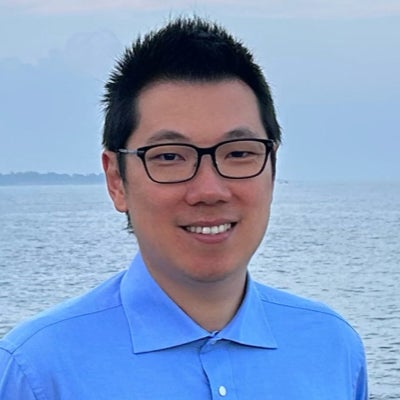
Aji Mathew is a Professor at the Department of Materials and Environmental Chemistry, Stockholm University. He holds a PhD in polymer chemistry from Mahatma Gandhi University (2001) and conducted postdoctoral research at CERMAV (Grenoble, France) and NTNU (Trondheim, Norway). His academic career includes roles as an assistant professor (2007–2011) and associate professor (2011–2015) at Luleå University of Technology before becoming an associate professor (2015) and subsequently a professor (2017) at Stockholm University. His research focuses on bio-based nanocomposites and sustainable materials, particularly nanocellulose and its applications in environmental remediation, advanced materials, and circular economy solutions. His group, the Aji Mathew Group , specializes in designing bio-based materials for diverse applications, including water treatment, 3D printing, and biomedical uses. Key projects involve upcycling textile waste, developing eco-friendly composites, and creating functional hydrogels. His work bridges fundamental polymer chemistry with practical sustainability challenges. Publications highlight innovations like nanocellulose-based foams, zeolitic frameworks for water purification, and bio-based coatings. While no awards are explicitly mentioned, his extensive peer-reviewed contributions reflect significant scholarly impact. His research emphasizes scalability and real-world applicability, addressing global environmental and material science challenges.
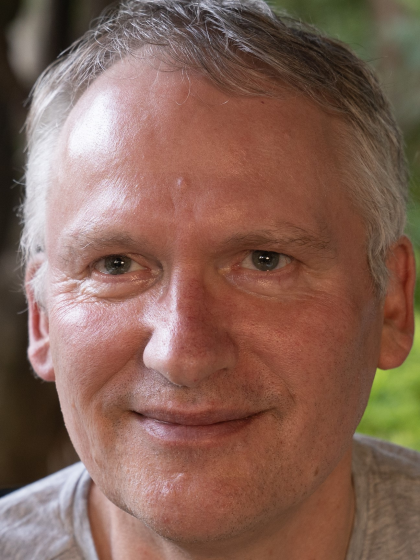
Robert Fletcher is a Researcher at the University of Cambridge, affiliated with the Department of Zoology and the C-CLEAR Doctoral Training Partnership . His work focuses on applied ecology and conservation science, utilizing landscape and population ecology to address biodiversity challenges globally. Research Areas : Conservation biology, population ecology, landscape ecology, environmental informatics Collaborations : Partners in North America, Europe, Africa, and Southeast Asia Key Themes : Species extinction prevention, landscape conservation prioritization, and rapid biodiversity data delivery Email : rf497@cam.ac.uk Fletcher's interdisciplinary approach integrates fieldwork (e.g., Everglades endangered species, African elephants) with advanced modeling of habitat loss, fragmentation, invasive species, and climate change impacts. His recent work emphasizes: Drivers of species decline and recovery strategies Landscape management and restoration techniques Interdisciplinary collaborations with engineers, social scientists, and computer scientists His publications span topics like savanna ecosystem dynamics, community science applications, and conservation forecasting, reflecting a commitment to actionable science for global biodiversity preservation.
Paige West is The Claire Tow Professor of Anthropology at Barnard College and a faculty member at Columbia University. She directs Columbia's Climate School Transdisciplinary Research Lab. Her work focuses on environmental conservation, Indigenous sovereignty in Melanesia, and climate change adaptation. She earned her Ph.D. in cultural and environmental anthropology from Rutgers University, with earlier degrees from Wofford College and the University of Georgia. Dr. West has conducted over 100 months of fieldwork in Papua New Guinea, collaborating with Indigenous communities to revitalize socio-ecological systems. Her research bridges anthropology with political ecology, examining linkages between environmental policy and international development. Key interests include Indigenous knowledge systems, conservation inequities, and commodity cultures. Director: Columbia University Climate School Transdisciplinary Research Lab Co-founder: PNG Institute of Biological Research and Roviana Solwara Skul Anthropological Director: Ailan Awareness NGO Award-winning author of three books, she founded the journal *Environment and Society: Advances in Research*. Her 2016 book *Dispossession and the Environment* won the Columbia University Distinguished Book Award. Current projects include a Guggenheim-funded book on climate change and kinship. Notable recognitions include Guggenheim Fellowship, Phi Beta Kappa Lecturer (2017-2018), and designation as one of 2021's 50 people changing the world by The Explorers Club. Her work integrates academic research with applied conservation initiatives, emphasizing Indigenous-led methodologies.
Scott L. Stephens is a Professor in the Department of Environmental Science, Policy, and Management (ESPM) at the University of California, Berkeley. He holds a Ph.D. in Wildland Resource Science from UC Berkeley (1995) and a B.S. in Electrical Engineering from Sacramento State University (1985). His research focuses on wildland fire science, fire ecology, and forest management, with an emphasis on how climate change and policy influence fire regimes. He leads the Stephens Lab, which conducts interdisciplinary studies on fire behavior, ecosystem resilience, and policy reform. Key contributions include advocating for prescribed burning and Indigenous stewardship practices to mitigate wildfire risks. Stephens has testified before congressional committees on forest health and has been recognized as a Clarivate Highly Cited Researcher (2024). His work integrates ecological, policy, and management perspectives to address contemporary fire challenges. Education: Ph.D., Wildland Resource Science, UC Berkeley, 1995 B.S., Electrical Engineering, Sacramento State University, 1985 Research Interests: Wildland fire behavior and effects Fire ecology and ecosystem interactions Climate change impacts on fire regimes Policy and management of fire-adapted landscapes Scientific Contributions: Stephens has authored or co-authored over 150 peer-reviewed articles, including seminal works on prescribed fire efficacy, forest restoration, and policy reform. His lab’s research has been featured in BioScience , Ecological Applications , and policy briefs for federal agencies. Lab and Collaborations: The Stephens Lab collaborates with Indigenous communities, federal agencies, and international researchers to advance fire science. Notable projects include the Fire and Fire Surrogate Study (FFS) and the Stewardship Project, which advocate for integrating Indigenous burning practices into federal policies.
Joseph Holden holds the Chair of Physical Geography at the School of Geography, University of Leeds , and serves as Director of water@leeds and the Yorkshire Integrated Catchment Solutions Programme (iCASP) . His expertise spans peatlands , hydrology , soil dynamics , and carbon cycling under environmental change. Education: MA Geography (Cambridge), PhD Peatland Hydrology (Durham) Key Roles: Pro-Dean for Research (2013-2019), NERC Freshwater Quality Programme Champion (2022-2027) Research focuses on peatland hydrology , agricultural impacts on water quality , and hazard cascades like flooding and pollution. He leads major projects including: EU-funded WaterLANDS (wetland restoration, 2021-2026) West Yorkshire Flood Innovation Programme (£300k+ UKSPF, 2022-2025) Environmentally Sensitive Hydropower (Nature Water, 2022) Scientific awards include: 2007 Philip Leverhulme Prize (outstanding research contribution) 2011 Gordon Warwick Medal (British Society for Geomorphology) Fellowships: Royal Geographical Society, Royal Meteorological Society He supervises 13 PhD students globally and leads £30M+ in active grants, including the £6M iCASP and £8.4M NERC Freshwater Quality Programme. His work combines field research, modeling, and policy engagement across Southeast Asia, Europe, and Africa.
Marco Heurich serves as the head of the 'Monitoring and Open-Air Wildlife Enclosures' department at the Bavarian Forest National Park. He is also a Professor of Wildlife Ecology and Wildlife Management at the University of Freiburg and the Inland Norway University of Applied Sciences. Research Focus: Combines modern technologies (e.g., telemetry, remote sensing, automated image processing) with classical ecological methods to study near-natural ecosystems and enhance their conservation. Expertise: Recognized as one of Europe's leading authorities in wildlife and forest ecology, contributing to large-scale nature conservation and wildlife monitoring advancements. Academic Contributions: Authored or edited over 350 peer-reviewed articles and six books, emphasizing ecological research and conservation strategies. Actively promotes knowledge transfer into practice through co-founding national and international networks in wildlife management and nature conservation.
Professor Jason Hall-Spencer is a globally recognized marine biologist at the University of Plymouth and a full professor at the University of Tsukuba (Japan), with an adjunct role at Xiamen University. His research focuses on ocean acidification, invasive species (e.g., lionfish), and climate change impacts on marine ecosystems. He pioneered the use of underwater CO2 seeps as natural analogues for climate change studies, a methodology now adopted globally. His work has influenced policies to protect deep-water corals and Arctic reefs, and he leads projects like RELIONMED to combat lionfish invasions in the Mediterranean. Education: Studied Applied Marine Biology at Heriot-Watt University, completed a PhD on coralline algae at Millport Marine Station, and conducted fieldwork across Europe, Asia, and the Pacific. His career includes discovering UK deep-water coral reefs and Arctic reefs, leading to their legal protection. Research Interests: Ocean acidification effects on marine organisms, invasive species management, CO2 seep dynamics, coral reef ecology, and marine conservation. His work combines field experiments, policy advocacy, and community engagement to address global marine challenges. Grants and Collaborations: Secured €1.7M from the EU Life Programme for lionfish control and a $400K grant on plankton dynamics. Collaborates with organizations like the Marine Biological Association and international researchers on projects such as the Ocean Organ to visualize CO2 impacts. Labs/Teams: Leads the Marine Conservation Research Group at Plymouth, coordinating initiatives like RELIONMED and influencing global marine policies through partnerships with governments and NGOs.
Janina Grabs is Professor of Sustainability Research at the University of Basel, where she heads the subject area of Sustainability Research within the Department of Social Sciences at the Faculty of Humanities and Social Sciences. She is responsible for social science teaching in the Master's program in Sustainable Development and leads a research group investigating sustainability governance in global value chains, particularly in tropical agricultural commodities. Her academic background includes a PhD in Political Science from Westfälische Wilhelms-Universität Münster (2018), with research stays at Carleton University in Ottawa and Yale University in New Haven. Prior to her current position since June 1, 2024, she worked as an assistant professor at ESADE Business School in Barcelona (2021-2024) and as a postdoc at ETH Zurich (2019-2021). Professor Grabs' research focuses on transnational sustainability governance in global value chains, examining how states, firms, NGOs and other actors can improve environmental and social sustainability in commodity production. Her interdisciplinary work bridges political economy, regulatory governance, and business in society scholarship to investigate who defines sustainability in the marketplace, what rule-making mechanisms exist, their effectiveness, and potential unintended consequences on smallholders' livelihoods. She places special emphasis on coffee, palm oil, and cocoa sectors, exploring how global production and consumption processes can be steered toward more sustainable directions within market frameworks. Analysis of her recent publications reveals a strong focus on zero-deforestation initiatives, supply chain due diligence legislation (particularly the EU Deforestation Regulation), jurisdictional approaches to sustainable commodity governance, and the evolving role of various actors in sustainability governance. Her work spans multiple commodities but shows particular depth in coffee and palm oil sectors, examining both environmental and social dimensions of sustainability through field research in Colombia, Honduras, Costa Rica and Indonesia. Her significant contributions to the field have been recognized with prestigious awards: 2021 Organizations and the Natural Environment Book Award from the Academy of Management 2022 Lynton Keith Caldwell Award for the best book in the field of science, technology and environmental politics from the American Political Science Association Professor Grabs actively mentors doctoral students and postdoctoral researchers including Alexandra Bögner, Charline Depoorter, Lucia Casalegno, Lesly Nassila, and Philipp Dunker. Her research is supported by multiple third-party funded projects such as EXPECT-AGRI (investigating political economy of expectations in agri-food sustainability transformations), PACSMAC (examining paradoxes of climate-smart coffee production), and research on zero-deforestation commitments in the palm oil sector. She also serves as book review editor for the journal Regulation & Governance and participates in professional associations including the ECPR Standing Group on Regulatory Governance and the International Studies Association. She leads the Sustainability Research Group at the University of Basel, which conducts interdisciplinary research on sustainability governance and transformations toward more sustainable socio-economic systems, with particular focus on agri-food, energy, and mobility sectors while addressing critical questions of justice, equity, and inclusivity in sustainability transitions.
Kunhee (KC) Choi is a Professor in the Department of Construction Science at Texas A&M University, holding the History Maker Homes Endowed Professorship and serving as a Chancellor EDGES Fellow. His research focuses on enhancing transportation systems through cyber-enabled solutions, including digital twinning, artificial intelligence, and data-driven modeling. B.E. in Architectural Engineering, Korea University (1999) M.S. in Construction Science, Texas A&M University (2002) Ph.D. in Civil and Environmental Engineering, University of California, Berkeley (2008) Dr. Choi’s work addresses four key areas: (1) AI-powered mobility and safety solutions for highway projects, (2) cost-time-risk tradeoff analyses under alternative contracting methods, (3) infrastructure sustainability through life-cycle assessment, and (4) stochastic modeling for civil planning and management. His research has been funded by NSF, USDOT, NCHRP, and TxDOT. Recent publications highlight his emphasis on predictive analytics, flood resilience, pavement engineering, and AI-driven disaster recovery frameworks. The i²dEAS Lab, which he directs, has produced 130+ peer-reviewed publications and secured $500k+ in annual research funding. Chancellor EDGES Fellow (2022) NSF Grant Recipient for Road Safety Research Texas Sea Grant Program Award (NOAA Funding) for AI-based evacuation route modeling Dr. Choi’s teaching philosophy emphasizes integrative learning and interdisciplinary critical thinking in construction management. His lab collaborates with academia, government, and industry to optimize transportation infrastructure performance through safer, more efficient management strategies.
Prof. Douglas Sheil is a Chairholder in Forest Ecology and Forest Management at Wageningen University & Research. He holds a MA in Natural Sciences from Cambridge and an MSc in Forestry from Oxford. His career includes roles at the University of Oxford, CIFOR (Indonesia), the Institute for Tropical Forest Conservation in Uganda, and the Norwegian University of Life Sciences (NMBU). His research focuses on tropical forest ecology, biodiversity conservation, and human-forest interactions, with over 200 publications. He co-authored the influential textbook Tropical Rain Forests: Ecology, Diversity, and Conservation (2010). Awards include the Biotropica Prize (2004) and the Queen’s Award for Forestry (2015). Education: MA (Natural Sciences, Cambridge), MSc (Forestry, Oxford) Key Roles: Director of Institute for Tropical Forest Conservation (2008–2012), Professor at NMBU (2013–2020) Research Interests: Tropical forest dynamics, climate change impacts, conservation strategies, and the socio-ecological dimensions of forest management. His work spans field studies in Africa, Southeast Asia, and Oceania, emphasizing interdisciplinary approaches to address deforestation, biodiversity loss, and sustainable land use. Recent Trends in Articles: Focus on mycorrhizal networks, oil palm impacts, lightning disturbance, and mammal population responses to human activity. He explores mechanisms linking forest structure to ecosystem services, such as carbon sequestration and water regulation, often integrating remote sensing and global datasets. Awards: Biotropica Prize, Queen’s Award for Forestry Grants/Projects: Studies on lightning effects in African forests, camera trap mammal surveys, and policy analyses for vegetable oil sustainability. Labs/Teams: Leads interdisciplinary groups at Wageningen, collaborating with CIFOR and international networks. Active in IUCN committees to translate science into conservation policy.
Che-Wei Chang is an Assistant Professor in the Department of Ocean Engineering at the University of Rhode Island (URI) , where he joined in August 2023. Prior to URI, he was an Assistant Professor at the Disaster Prevention Research Institute of Kyoto University in Japan. He earned his Ph.D. in Civil and Environmental Engineering from Cornell University in 2017, along with an M.S. in Civil Engineering from National Taiwan University (2008) and a B.S. in Soil and Water Conservation from National Chung Hsing University (2006). Ph.D., Civil and Environmental Engineering, Cornell University, 2017 M.S., Civil Engineering, National Taiwan University, 2008 B.S., Soil and Water Conservation, National Chung Hsing University, 2006 Dr. Chang specializes in coastal engineering , coastal resilience , and nature-based solutions for mitigating coastal hazards. His research focuses on water waves and nearshore hydrodynamics , particularly how mangroves and other natural features reduce wave impacts from tsunamis, storm surges, and rising sea levels. He integrates numerical modeling , laboratory flume experiments , and field observations to advance understanding of coastal morphodynamics under climate change. His recent work, including 2025 publications on SPH simulations and field studies , emphasizes mangrove resilience against breaking wave forces and critical wave conditions leading to mangrove failure. Earlier studies (2015–2022) explore Boussinesq modeling , wave-vegetation interactions , and coastal forest functional evaluation . These articles highlight his commitment to sustainable shoreline management and science-based coastal design. Dr. Chang received the Coastal Engineering Journal (CEJ) Citation Award 2024 for his impactful review paper and was appointed a Senior Fellow of the Coastal Institute (URI) in 2025 . He actively mentors graduate students like Felipe Espinoza and Ramin Safari , who investigate wave-mangrove dynamics and vegetation impacts on coastal systems . His lab at URI, the Chang Coastal Lab , collaborates on conferences (e.g., ICCE 2024) and NSF-funded projects like NHERI RAPID Facility workshops.
Prof. Han Olff is a Professor of Community and Conservation Ecology at the University of Groningen's Faculty of Science and Engineering, within the Groningen Institute for Evolutionary Life Sciences. He leads research on ecosystem structure, species interactions, and theoretical ecology, with fieldwork in savannas, salt marshes, and coastal systems. His work bridges theory and conservation, advising organizations like WWF and ARK Nature. Education: PhD (Cum Laude) in Biology from the University of Groningen (1992), MSc in Biology (1988). Research Interests: Focuses on plant-herbivore-predator interactions, ecosystem engineering, and the impact of human activities on biodiversity. Key themes include savanna ecology, food web dynamics, and restoration ecology. Awards: Gold Medal from Teyler Museum (2006) and PIONIER Award (2002). Active in grants like the EU Horizon 2020 AfricanBioServices project. Teaching: Coordinates courses in Conservation Biology, Ecological Research Skills, and Advanced Population Ecology. Leadership: Directed the Centre for Ecological and Evolutionary Studies (2011–2015) and chairs the National Research Agenda's 'Green Route'. Fieldwork: Organizes expeditions to the Serengeti-Mara, Banc d'Arguin, and Bijagos Archipelago to study human-wildlife interactions and ecosystem dynamics.
Hens Runhaar is Professor of Policy and Governance for Sustainable Food Systems at Utrecht University's Copernicus Institute of Sustainable Development. He holds positions as Chair of the Examination Committee for Sustainable Development and is a member of the Core Team of Future Food Utrecht. Additionally, he serves on the Editorial Board of Earth System Governance Journal and as Associate Editor of Frontiers in Sustainable Food Systems journal. His research focuses on sustainable food systems, policy and governance for biodiversity conservation, and nature-inclusive agriculture. Runhaar's research interests center on understanding the connectivity issues in Western food systems that lead to sustainability challenges including biodiversity loss, climate change, and food-related diseases. He investigates the decoupling of food production from environmental conditions, disconnects between feed production and livestock farming, and the separation between food production and consumption areas. His work emphasizes biodiversity as a key indicator of sustainable food systems, with special interest in scaling up agroecology, regenerative agriculture, and nature-inclusive agriculture. He delivered his inaugural lecture on January 17, 2025, titled 'Governing towards sustainable food systems: new connections for more diversity'. His recent publications demonstrate a strong focus on biodiversity policy integration, nature-based solutions, and transformative food system changes. Runhaar has been instrumental in special issues on biodiversity governance and environmental policy integration. His research projects include COMBINED (2025-2031), REWIRE, DivGrass, and work on the Water Framework Directive after 2027. Editorial Board Member of Earth System Governance Journal Associate editor of Frontiers in Sustainable Food Systems journal Member of the Scientific Advisory Committee of Dutch Bird Protection Association Senior Research Fellow of Earth System Governance research network Fellow of Wageningen School of Social Sciences Runhaar actively supervises numerous PhD students and postdoctoral researchers, with a focus on sustainable food systems, biodiversity conservation, and nature-inclusive agriculture. He has contributed significantly to societal debates through media appearances in NRC, De Volkskrant, and EenVandaag, addressing topics like nitrogen policy, nature restoration, and the role of farmers in sustainability transitions. Beyond academia, he volunteers with the Badger Working Group Utrecht and 't Gooi Foundation, monitoring badgers since 2012 and contributing to nature conservation efforts.
Claudia Palestrini is a Professor at the Department of Life Sciences and Systems Biology , University of Turin. Her work focuses on dung beetles , ground beetles , and Alpine biodiversity conservation , with a strong emphasis on geometric morphometrics , zoogeography , and entomology . Her research integrates ecology , systematics , and phylogeny to study insect communities in Alpine and Mediterranean environments. Key themes include habitat use , species differentiation , and sustainable land management . She has contributed to over 400 publications, with recent work analyzing equine feeding devices and insect acoustic signals . Her teaching includes courses on Entomology for Cultural Heritage , Biological Sciences , and Environmental Education . She serves on academic committees like the Department Council and Interdisciplinary Sport Sciences program. Her work bridges entomology and sustainable sports practices , highlighting the importance of biodiversity in human-impacted ecosystems.
Professor James Watson is a leading conservation scientist and biogeographer at The University of Queensland , affiliated with the Centre for Marine Science and Centre for Biodiversity and Conservation Science. As a Professor of Conservation Science, he specializes in biodiversity policy, climate change impacts, and species recovery strategies. PhD from University of Oxford (Rhodes Scholar) Co-leader of Green Fire Science and RARES research groups Over 400 peer-reviewed publications His research focuses on ecosystem integrity , protected area effectiveness , and conservation economics , with recent work addressing mining impacts on biodiversity, climate change adaptation, and the global 30x30 initiative. He advocates for evidence-based strategies to save Australia’s rarest species. 2025-2024 research trends show expertise in tropical forest regeneration, climate-species interactions, and policy implementation gaps. Collaborative projects span scientific modeling , GIS analysis , and international conservation frameworks . International Panel on Biodiversity and Ecosystem Services (IPBES) Task Force member Research Fellow, United Nations Environment Program Senior Technical Expert, UNDP’s Nature for Development Program Founding Chair, IUCN Climate Change Specialist Group Supervision includes 12 current PhD candidates working on topics such as night parrot conservation , ecological corridors , and urban biodiversity . Completed students have addressed threatened species recovery and climate adaptation planning . He leads lab teams at Green Fire Science (www.greenfirescience.com) and RARES (https://raresgroup.com.au), focusing on applied conservation solutions.