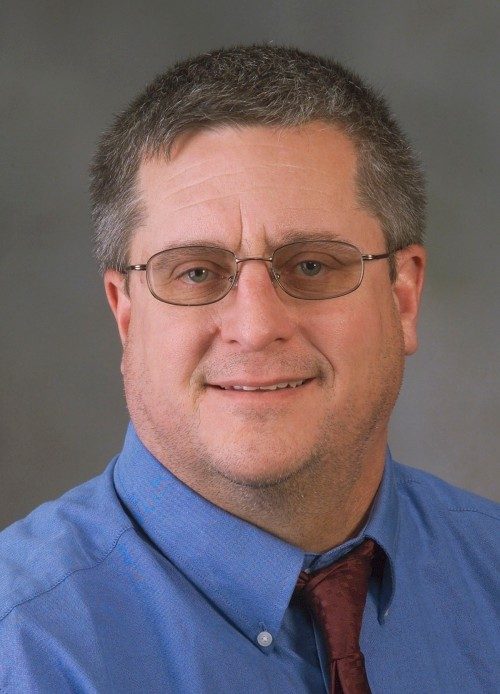
Chongxiao (Sean) Chen is an Assistant Professor and Extension Specialist in the Department of Poultry Science at the University of Georgia's College of Agricultural & Environmental Sciences. His research focuses on poultry nutrition, feed additives, and stress-related health challenges, with a particular emphasis on gut health, mycotoxin mitigation, and bone development in poultry species. Ph.D. in Poultry Science from the University of Georgia DVM in Veterinary Medicine from China Agricultural University Dr. Chen develops educational and research programs to support poultry producers, while also mentoring undergraduate and graduate students. His work combines traditional poultry science with modern data processing techniques, including machine learning applications for animal activity monitoring. Recent publications highlight his expertise in vitamin D metabolism in avian species, feed formulation optimization, and the impact of environmental stressors on poultry health. Key research themes include: Bone structural development in laying hens Feed additive efficacy Stress-related performance metrics Egg quality optimization AI applications in poultry monitoring Mycotoxin contamination mitigation Contact: sean.chen@uga.edu | Phone: 706-542-6622
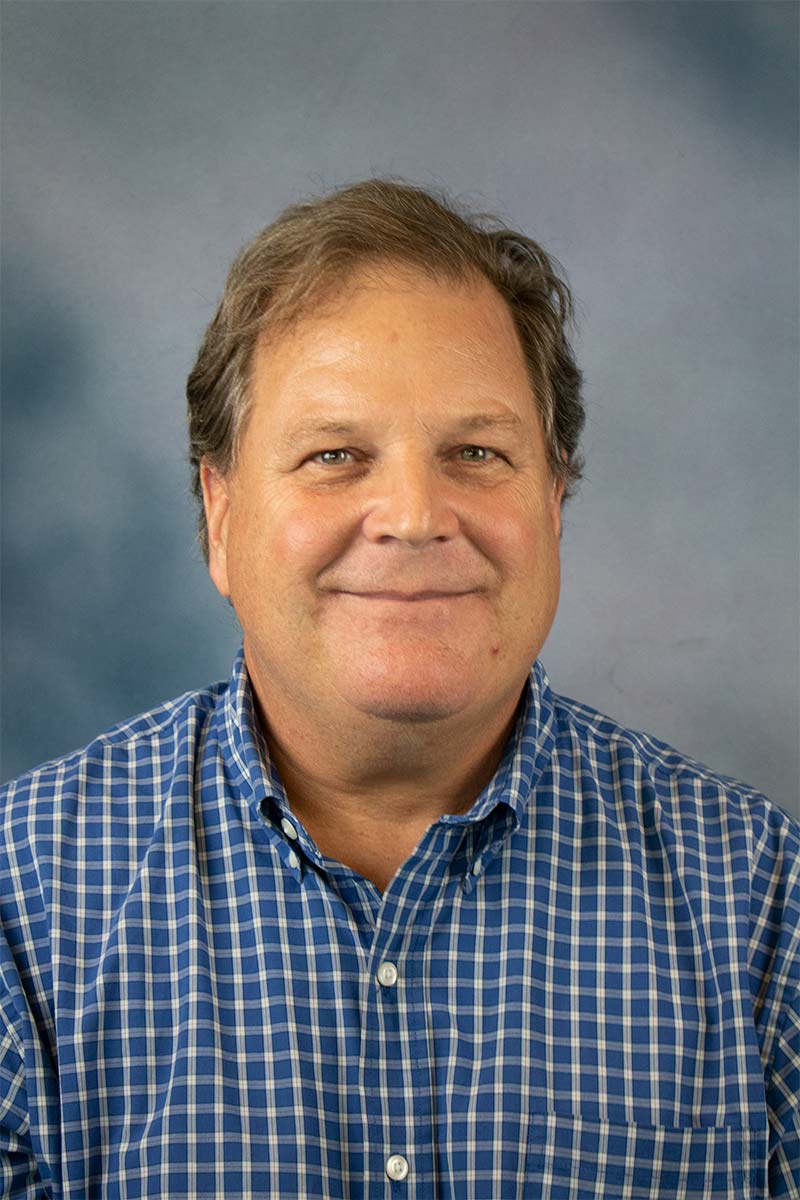
W. Cully Hession is a Professor and Graduate Program Director in the Biological Systems Engineering (BSE) department at Virginia Tech , where he has served since 2012. He directs the StREAM Lab , focusing on ecological engineering , stream restoration , and human-natural system interactions . His career spans roles at the University of Vermont and the Academy of Natural Sciences of Philadelphia. Education : PhD in Biosystems Engineering (Oklahoma State), MS & BS in Agricultural Engineering (Virginia Tech) Licensure : Professional Engineer (VA), Certified Ecological Designer (AEES) Research Interests center on stream channel processes , floodplain connectivity , UAV applications , and climate resilience . Current projects include Beaver Dam Analogs for stream restoration, drone-based LiDAR for floodplain mapping, and virtual watershed exhibits to bridge community-scientist dialogue. His work integrates hydrology , ecological design , and interdisciplinary education . Scientific Contributions include 15 recent articles on topics like UAV monitoring , streambank erosion , and antibiotic resistance in soils . He has secured over $278,911 in USDA funding for undergraduate research training and leads NSF-REU initiatives involving 14 faculty across 5 colleges. Awards : Fellow of the American Ecological Engineering Society (2024), UCOWR Education & Public Service Award (2021), and VT-BSE Faculty of the Year (2006, 2019). Teaching & Outreach includes directing BSE design projects and co-developing Virtual Watershed exhibits. As Graduate Program Director, he expanded BSE enrollment from 40 to 70 students and secured $50k+ for graduate recruitment. The StREAM Lab engages 14+ classes across 4 colleges with real-time monitoring data.
Professor Aydin Nassehi is Head of the School of Electrical, Electronic and Mechanical Engineering at the University of Bristol, UK. He holds the academic rank of Professor of Production Systems and actively contributes to research in smart manufacturing, agent-based modeling, and digital twins. Research interests include AI integration in manufacturing, generative design, and systems optimization. He has collaborated extensively with Dr. Ben Hicks on projects like ProtoTwinning and Designing the Future , focusing on digital twin applications and transdisciplinary engineering. His scholarly output spans over 150 publications, with recent work emphasizing explainable AI, sustainability in food supply chains, and biomedical manufacturing innovations. Publications demonstrate expertise in machine learning, digital twin cost modeling, and additive manufacturing optimization. His projects have received funding from EPSRC and other academic institutions. Current research explores Industry 5.0 challenges, balancing automation with human-centric approaches, and advancing interoperability in cloud manufacturing environments.
Dr. Christian Troost is a Senior Researcher and Lecturer at the Department of Land Use Economics at the University of Hohenheim . His work combines agent-based modeling and bioeconomic simulation to analyze agricultural adaptation to climate variability and resource use decisions across diverse farming systems in Germany, Chile, and Ethiopia . Education : BSc in Geography (Bochum, 2006), MSc in Agricultural Economics (Hohenheim/Wageningen, 2009), PhD in Agricultural Sciences (Hohenheim, 2014) Methodology : Specializes in uncertainty analysis , high-performance computing , and model validation protocols for complex agricultural systems Troost's research advances the MPMAS software package for integrated land system modeling. His 2025-2024 work focuses on pesticide reduction policies , hybrid intelligence systems for biodiversity-productivity tradeoffs, and agroforestry as climate adaptation in Ethiopia. Scientific Recognition : Gerhard-Fürst Prize (2015) Südwestbankpreis (2015) As an educator, he teaches farm system modeling and environmental economics at PhD, MSc, and BSc levels. His collaborative projects span DFG-funded climate change research , BMBF biodiversity initiatives , and German-Ethiopian CLIFOOD graduate programs .
Dr. Yining Hu is a Lecturer at the School of Computer Science , University of Technology Sydney since January 2024. Her research and teaching focus on Artificial Intelligence , Blockchain , Cloud Computing , and Wearable Technology . She holds a PhD from the University of New South Wales and has collaborated with industry partners on blockchain applications for IoT security and sustainability. PhD: University of New South Wales Current role: Lecturer at UTS School of Computer Science Key research areas: Wearables, Blockchain, Cloud Computing Dr. Hu's publications demonstrate her technical expertise in blockchain-IoT integration, with notable works on secure transaction frameworks and carbon offset management. Her recent 2025 paper in Electronics explores blockchain-DNN synergy for IoT security. Earlier works cover wearables' security protocols and adaptive fitness tracking frameworks. She contributes to academic service as a member of the Editorial Board for the International Journal on Data Science and Technology (2024-2027). Her teaching portfolio includes advanced cloud computing and software development courses, with availability for Masters/PhD supervision . Current funded research includes blockchain for food traceability and a 2025-2028 LLM-driven text-to-SQL grant with Hampton Capital.
Mariana Belgiu is an Associate Professor at the Department of Earth Observation Science (EOS) within the Faculty of Geo-Information Science and Earth Observation (ITC) at the University of Twente. Her work bridges Earth Observation (EO), data-centric artificial intelligence (AI), and food security, with a focus on addressing environmental and societal challenges through innovative geospatial solutions. PhD in Remote Sensing, University of Salzburg MSc in Applied Geoinformatics, University of Salzburg Her research develops AI methods for analyzing multi-temporal EO data, particularly in hidden hunger (micronutrient deficiencies) and slum mapping. Key themes include: Data-centric AI in scarce-label environments Transferability of EO-driven models Imaging spectroscopy for crop nutrient estimation Citizen science integration for climate vulnerability assessments The 69 research outputs span EO applications for: Global crop nutrient prediction Urban poverty mapping Climate resilience in Sub-Saharan Africa AI fairness and explainability in geospatial contexts Earth observation education frameworks Scientific Recognition Copernicus Masters 2015, T-Systems Big Data Challenge Esri Young Scholar Award (2013) Best Master Thesis in Geoinformatics (2010) As a supervisor of 7 PhD students , she mentors work on deep learning for cloud removal, global crop monitoring, and transferable slum mapping. She also leads the EO4all working group, promoting gender equity in EO science, and serves as Associate Editor for the ISPRS Journal (Impact Factor 12.7). Major grants include the SPACE4ALL project (NWO, 2023–2027) and EO4Nutri (ESA, 2023–2025), alongside contributions to Horizon Europe's ASTRAIOS initiative.
Maria De Angelis is a Full Professor at the University of Bari Aldo Moro (UniBA) and serves as Director of the Department of Soil, Plant and Food Sciences (Di.SSPA) . Her research focuses on food microbiology, gut microbiota interactions, and nutritional enhancement of fermented products. Department: Soil, Plant and Food Sciences (Di.SSPA) Email: maria.deangelis@uniba.it Contact: +39 0805442949 (office), +39 3485894077 (mobile) Research Interests include: Microbial ecology of fermented foods Probiotic and prebiotic development Food waste valorization through fermentation Gut microbiota modulation in health and disease Traditional food processing optimization Functional food design Recent Publications demonstrate expertise in sourdough fermentation, probiotic delivery systems, and microbiome interactions with dietary interventions. She maintains active teaching responsibilities including Microbiology of Fermented Foods in the Food Science and Technology degree program.
James Lindner serves as an Alumni Professor of Agriscience Education within the Department of Curriculum and Teaching at Auburn University's College of Education. He has held this position since 2019, following his prior service as a Professor at Auburn University from 2015 to 2019. His academic work centers on advancing agricultural education through rigorous research and innovative pedagogical approaches. Dr. Lindner's research focuses on agricultural literacy development, multilingual education in agricultural contexts, and methodological advancements in educational assessment. His work emphasizes culturally responsive teaching practices and the integration of technology to enhance student learning outcomes. Key areas include survey instrumentation, reliability coefficient analysis, and the application of AI-driven solutions to address educational challenges in agricultural settings. Analysis of his 2023-2025 publications reveals a strong trend toward AI integration in agricultural education, particularly for improving literacy and supporting multilingual learners. His methodological contributions to survey research and scale development have significantly strengthened empirical rigor in agricultural education scholarship, while his recent work on peer review processes and journal reporting demonstrates leadership in academic publishing standards.
Dianna Bourassa is Associate Professor and Extension Specialist in the Department of Poultry Science at Auburn University’s College of Agriculture, with statewide responsibility for poultry extension programming. Her expertise integrates poultry processing, food-safety microbiology, and animal welfare, translating research into practical interventions for Alabama’s broiler industry. Education: PhD in Biochemistry and Molecular Biology MS in Poultry Science BS in Poultry Science Research & Extension Focus: Dr. Bourassa’s scholarship targets the control of Salmonella and Campylobacter throughout the broiler production chain, from breeder flocks to processed carcasses. She evaluates novel non-thermal decontamination technologies, antimicrobial alternatives, and the microbiological impact of no-antibiotics-ever (NAE) systems. A parallel stream investigates sustainable reuse of poultry processing wastewater through integrated aquaponic/poultryponic systems and the upcycling of slaughterhouse solids via black-soldier-fly bioconversion. Her welfare portfolio includes evaluating on-farm euthanasia methods and early-life behavior of broiler chicks. Across 150+ peer-reviewed works since 2004, her output clusters into four dominant themes: (1) pathogen prevalence and genomic epidemiology in integrated broiler complexes, (2) intervention validation (chemical, physical, nutritional, probiotic), (3) pre-harvest food-safety ecology (litter, dust, egg cuticle, transport flooring), and (4) circular-economy approaches to nutrient and water stewardship. The 2025 crop of papers illustrates accelerated adoption of whole-genome sequencing and meta-analytical techniques to benchmark interventions. While specific grant titles and dollar amounts are not listed, the depth and continuity of her applied program—spanning multi-year longitudinal trials, pilot-scale poultryponic systems, and statewide extension short-courses—signal sustained extramural support from USDA-NIFA, industry consortia, and Alabama Agricultural Experiment Station capacity funds.
Assoc. Prof. Dr. Songül KESEN is a leading academic in Food Chemistry and Plant Oil Technology at Gaziantep University 's Naci Topçuoğlu Vocational School. With a doctorate in Food Engineering from Çukurova University (2014), she has published extensively on olive oil composition, aroma profiling, and food adulteration detection. PhD in Food Engineering (2014), Çukurova University MSc in Food Engineering (2001), Gaziantep University Her research focuses on food authenticity , chromatographic analysis , and bioactive compounds in plant oils . She pioneered studies on aroma-active molecules in Turkish olive oils and microencapsulation of olive oil . Key articles (2025–2014) explore fatty acid variation , GC-MS olfactometry , and nutritional impacts of processing . She has received 8 TÜBİTAK Publication Incentive Awards (2013–2018) for her contributions. Scientific Awards TÜBİTAK UBYT Award 2018 (x2) TÜBİTAK UBYT Award 2017 (x2) TÜBİTAK UBYT Award 2014 (x3) TÜBİTAK UBYT Award 2013 Advising PhD Student: Saad Ibrahim Yousif (2018) Master's Student: Keveser Batmanlı (2022)
Dr. David Fox is an Associate Professor in the Department of Chemistry at the University of Warwick. His research focuses on synthetic organic and medicinal chemistry, drug discovery and development, asymmetric and catalytic reactions, and synthetic route design for lead molecules. Current projects include medicinal chemistry for enzyme inhibitors, synthetic methodology for heterocycles, and collaborations with RxCelerate Ltd. He teaches undergraduate modules CH222 Speclab, CH271, CH3E9, and CH408. Research Interests: Specializing in small molecule and asymmetric synthesis, with applications in medicinal chemistry/drug discovery and GMP process development. Key areas include drug molecule design, fast synthesis methods, and synthetic route optimization. Publications & Patents: His work spans synthetic methods for autophagy inducers, anti-inflammatory agents, ligands for GPCRs, and molecular imaging of reactive intermediates. Collaborations with IBM Zurich on NC-AFM/STM have enabled structural analysis of otherwise unisolable molecules. Education: BA and DPhil from the University of Oxford, followed by postdoctoral research at Cambridge. Students: Supervises PhD/MSc students Matthew Clayton, Matthew Taylor, and Emma Scott.
Bekzod Khakimov is an Associate Professor in the Department of Food Science at the University of Copenhagen, specializing in Food Analytics and Biotechnology. He has held this position since 2017, following his postdoctoral work (2013-2017) and PhD fellowship (2010-2013) at the same institution. His research group focuses on advanced analytical techniques for food quality assessment and nutritional value determination. His educational background includes: PhD in Plant Metabolomics, Department of Food Science, University of Copenhagen (2013) MSc in Chemical Research, Queen Mary, University of London, UK (2009) BSc in Chemistry, Faculty of Chemistry, National University of Uzbekistan (2006) Dr. Khakimov's research centers on food molecular composition (foodomics) and its health impacts through untargeted molecular screening of bio-fluids (metabolomics). His team works on optimizing standard operating procedures, developing efficient algorithms for processing raw instrumental data, and extracting information from complex omics data using multivariate data analysis (chemometrics). His analytical expertise spans high resolution liquid state NMR spectroscopy, GC-Tof-MS and LC-QTof-MS techniques, with applications ranging from plant foods to dairy products and human health studies. His publication record demonstrates consistent advancement in foodomics methodology and applications, with recent work focusing on metabolomics approaches to understand food quality, nutritional value, and health impacts across diverse food matrices including grapes, potatoes, dairy products, and botanical resources. His research increasingly incorporates advanced statistical modeling and deep learning approaches to overcome analytical challenges like the 'cage of covariance' in metabolomics data. His notable scientific achievements include: Nils Foss Talent Prize (2016) - International Award for ground-breaking science in advanced technologies for improved food quality and safety Best Young Investigator Award in Plant Metabolomics (2015) - 10th International Conference of the Metabolomics Society Dr. Khakimov currently serves as main supervisor for three postdocs, one PhD student, and two MSc students. He has successfully secured multiple competitive research grants as PI or Co-PI from sources including the Independent Research Fund Denmark, UCPH Funding, Danish Dairy Research Foundation, and the European Union. His laboratory maintains state-of-the-art analytical capabilities with responsibility for multiple GC-MS systems, LC-QTof-MS, and co-responsibility for NMR spectrometers. His research infrastructure includes four high-throughput GC-MS systems (Agilent GC-singleQ-MS, LECO Pegasus HT GC-TOF-MS and Bruker EVOQ QQQ systems), one LC-QTof-MS (Bruker Impact II), one LC-UV/Vis-FC system (Thermo Ultimate 3000), and co-responsibility for three NMR spectrometers (600, 500, and 400 MHz) from Bruker.
German Camilo Quintana Marin serves as a Research Professor at Pontifical Bolivarian University's School of Engineering, Department of Materials Engineering. His work centers on sustainable materials development within the Pulp and Paper Group, with significant contributions to lignocellulosic biomass valorization and nanocellulose applications. Affiliated with the Medellín Campus, he actively contributes to United Nations Sustainable Development Goals through environmentally focused research. His research spans multiple high-impact areas including Lignin Material Science (100% fingerprint match), Bagasse Material Science (70%), Activated Carbon (53%), and Nanocellulose development. Key specialties involve heavy metal adsorption systems, sustainable paper production from agricultural residues, and biomedical applications of bacterial nanocellulose. His work demonstrates strong interdisciplinary connections between materials engineering, environmental science, and biomedical technology. Analysis of his 15 most recent publications reveals consistent focus on sustainable material solutions, with 60% addressing lignocellulosic biomass valorization, 40% covering nanocellulose applications, and growing emphasis on biomedical uses. His research shows increasing industrial collaboration, particularly with Colombian agricultural and manufacturing sectors seeking eco-friendly material solutions. Professor Quintana Marin actively mentors students across academic levels, with documented supervision of undergraduate, master's, and doctoral researchers. His current projects secure significant research funding, including multi-institutional collaborations addressing regional development challenges in Antioquia. He leads the Pulp and Paper Group laboratory facilities, specializing in lignocellulosic material processing and characterization. Recent expansions include nanocellulose production capabilities and sustainable packaging development infrastructure, supporting both academic research and industrial partnerships.
Prof. Jannis Angelis is a Visiting Professor at ISM and a Docent/Reader in Operations Strategy at Indek. Previously, he held roles at Cambridge Judge Business School, Warwick, and Stockholm, and served as a country champion for teaching excellence at Oxford University’s education society. His academic journey includes a PhD in operations management from Cambridge, MPhil in political economy (Cambridge), MA in China studies from SOAS, and an MSc in international relations from Stockholm. His research focuses on the intersection of technology and management, exploring areas such as blockchain applications in supply chains, circular economy strategies for EV batteries, and digital transformation in manufacturing. Notable contributions include studies on blockchain in food supply chains, DLT ecosystems, and lean operational excellence, as evidenced by his receipt of the Shingo Prize and Skinner/Voss best paper awards. Angelis has supervised 9 PhDs and 400 student projects, secured €1.4m in grants, and led major research initiatives. His professional experience spans roles at the ILO, venture capital firms, and international consultancies like ITC (WTO/UNCTAD). He currently leads research at the Gunilla Bradley Centre and IFN Research Institute, focusing on digitalization and operational excellence. Teaching Awards: Four teaching awards, including recognition for pedagogical innovation. Research Grants: Over €1.4m secured, with leadership in three major projects. Labs/Teams: Active in the Gunilla Bradley Centre (Digitalisation) and IFN Research Institute (Industrial Economics).
Professor Parisa A. Bahri is the Pro Vice Chancellor for the College of Science, Technology, Engineering and Mathematics at Murdoch University . She holds a PhD in Chemical Engineering from Sydney University and serves as a Professor of Engineering. Her research focuses on systems engineering, sustainability, and algal systems, with applications in energy, waste treatment, and techno-economic modeling. Research Interests : Microalgal bioremediation of industrial effluents Decarbonization strategies for energy and transport systems Techno-economic analysis of bioprocesses Integration of renewable energy with water systems Education : Doctor of Philosophy in Chemical Engineering, Sydney University Recent Publications highlight advancements in microalgal cultivation techniques, critical mineral supply chains, and sustainable energy-transport nexus. Key tools include computational fluid dynamics, scenario planning, and life cycle assessments.