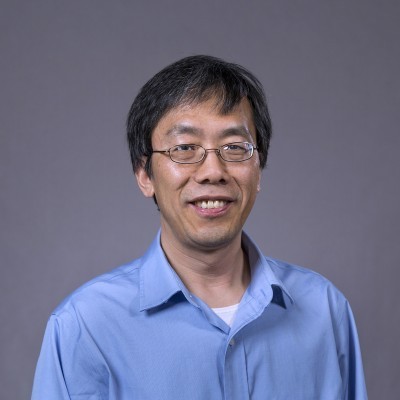
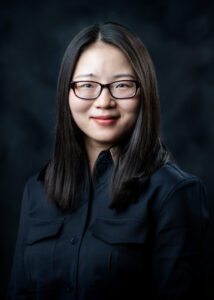
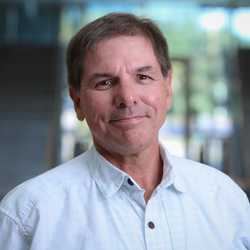
Nima Ekhtari is a Research Professor in the Department of Civil and Environmental Engineering at the University of Houston's Cullen College of Engineering. His office is located in UH NCALM at 5000 Gulf Freeway, Bldg. 4, Rm 216, Houston, TX 77204-5059. Current Research Focus Hydrodynamic flood modeling with deep learning LiDAR terrain uncertainty analysis Earthquake rupture dynamics Environmental remote sensing His work leverages advanced geospatial technologies for disaster management applications, integrating multispectral LiDAR data and satellite imagery for environmental monitoring. Recent publications demonstrate expertise in near-real-time flood forecasting and terrain analysis through deep learning surrogates. Contact: nekhtari@uh.edu
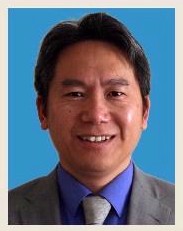
Dr. Siraj Ul Islam is an Assistant Professor in the Department of Geography, Earth, and Environmental Sciences at the University of Northern British Columbia. His research focuses on hydroclimatology, examining climate dynamics, snow hydrology, and environmental modeling across northern British Columbia. Dr. Islam utilizes numerical models and field data collection to analyze climate impacts on hydrological systems. His primary research interests include: Climate change variability and forecasting Hydrological modeling in complex terrains Data analysis techniques for environmental systems Machine learning applications in hydroclimatology Regional climate impacts on indigenous territories Dr. Islam's publications demonstrate consistent focus on climate-hydrology interactions, with recent work emphasizing machine learning integration and regional climate impacts. His research employs advanced modeling techniques including hybrid coupled models and IoT-based field monitoring. He currently advises graduate students in the MSc NRES program, specializing in Environmental Science and Geography research projects.
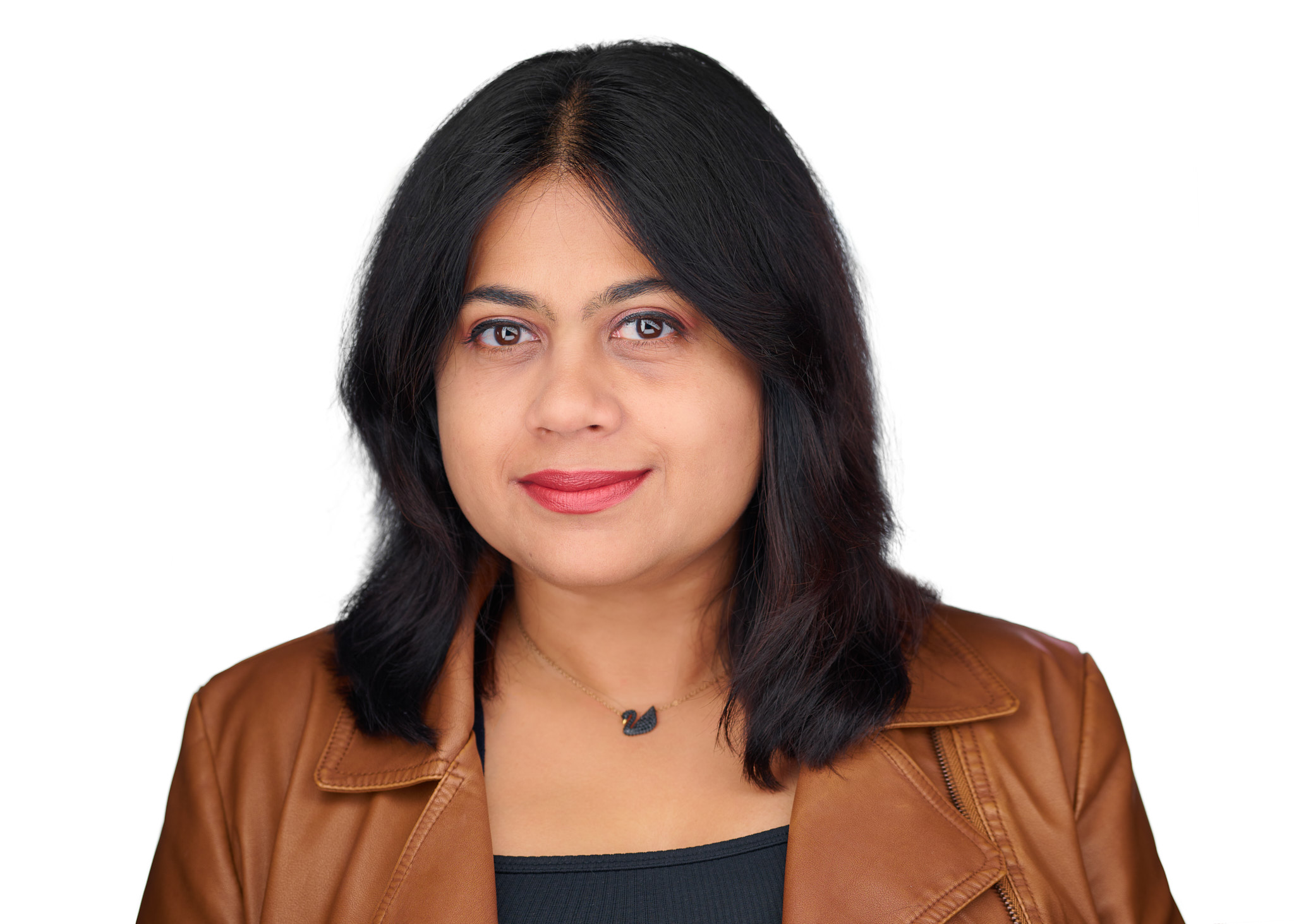
Pauline Collon is Professor at the University of Lorraine's GeoRessources Laboratory, teaching Geomodeling, Hydrogeology, and Geostatistics at the Nancy School of Geology (ENSG). She holds an Engineering degree and PhD from ENSG (2003), receiving regional recognition for her doctoral work on post-mining water quality. Education: PhD, Nancy School of Geology (2003) Engineering Degree, Nancy School of Geology Collon develops novel methodologies for modeling geometrically complex reservoirs including karst systems, flooded mines, and channelized formations. Her research integrates field data with computational approaches to simulate natural processes and structures, addressing uncertainty through stochastic techniques. Recent publications focus on karst network simulation algorithms, fault-controlled fluid dynamics, and reservoir connectivity metrics, reflecting cross-disciplinary applications in hydrogeology and petroleum geology. Collon chaired the Smith College Department of Dance for 15 years (non-related administrative role) and leads the RING research team. She contributes to geomodeling software development and applied projects in geothermal energy and mineral exploration.
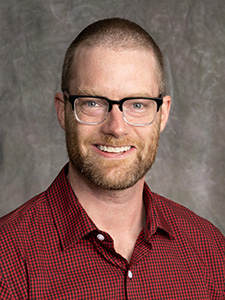
Richard Smith is a Professor and Associate Dean for Research at Wayne State University's School of Social Work. His work focuses on sustainable community development, spatial inequality, and migration, with a particular emphasis on urban policy and social justice. Smith actively collaborates with community-based organizations in Detroit's East Side and serves on committees like the Hope Village Steering Committee. Education: PhD in Social Welfare, University of California, Berkeley MSW, University of Michigan, Ann Arbor MFA in Creative Writing, Western Michigan University BA in English Language and Literature, University of Michigan Research Interests include sustainable community development, ecocities, and addressing systemic inequalities through spatial analysis and policy innovation. His projects, such as REFURB (Recovering from Expected Flooding Under Residential Buildings) and DSTOPP (Dismantling the School-to-Prison Pipeline), integrate technology and interdisciplinary collaboration to tackle urban challenges like flooding and educational equity. Recent Publications highlight trends in disaster recovery, racial justice in education, urban infrastructure resilience, and immigrant-friendly policies, reflecting his commitment to applied, community-driven research. Smith’s work spans journals like the Journal of Urban Affairs and Social Work , with a focus on scalability and sustainability in crisis management. Scientific Awards: Wayne State University Postdoctoral Mentor of the Year Society for Social Work and Research Excellence in Research Award Council on Social Work Education/SAGE Award Honorable Mention Urban Affairs Association Best Conference Paper ACOSA Emerging Scholar Award Teaching includes courses on data analysis, community building, and international social work. He has received grants such as the Civic Innovation Challenge and the National Science Foundation planning grant for climate-resilient urban development.
Liming Zhou is a Professor in the Department of Atmospheric & Environmental Sciences at the University at Albany, State University of New York. His expertise spans physical geography and meteorology, with a focus on interdisciplinary research in land-human-climate interactions. He utilizes remote sensing, weather, and climate data to investigate how land surface changes affect climate and hydrology across diurnal, seasonal, and decadal time scales. His educational background includes: PhD in Geography from Boston University (2002) MSc in Meteorology from Nanjing Institute of Meteorology, China (1994) BSc in Meteorology from Nanjing Institute of Meteorology, China (1991) Professor Zhou's research centers on land-atmosphere interface processes, combining satellite observations, GIS data, and Earth system modeling. Key contributions include discoveries of warming-enhanced greening in northern latitudes, drought-induced vegetation browning in the Congo rainforests, turbine-induced nighttime warming over U.S. wind farms, and urbanization-driven climate effects in China. His methodologies integrate time series analysis, statistical techniques, and regional climate models like WRF to examine desert amplification, diurnal temperature asymmetries, and vegetation-climate feedbacks. Analysis of his recent publications (2022-2025) reveals concentrated research on regional climate dynamics in Africa (Congo Basin, Sahara), Asia (China, India), and the Americas. His work demonstrates consistent emphasis on land use impacts—urbanization, deforestation, wind farms—on temperature, precipitation, and vegetation patterns, while leveraging satellite data and climate models to address model deficiencies and improve predictive capabilities. Scientific awards: No specific awards were documented in the provided materials. Advising and grants: While his profile indicates active research leadership, no student names or grant details were explicitly referenced in the source text. Labs and teams: No specific laboratory facilities or research teams were identified in the available documentation.
Angela Candela is an Associate Professor of Engineering at the University of Palermo, specializing in Hydraulic Engineering within the Department of Civil, Environmental and Materials Engineering (DICAM). She holds regular office hours on Mondays and Thursdays from 11:00 to 13:00 at the DICAM Hydraulic Section on the 2nd floor. Her academic journey began with honors in Civil Engineering with a focus on Hydraulics from the University of Palermo in 1998, followed by a PhD in Hydraulic Engineering from a consortium program involving the Universities of Naples, Palermo, and Rome "La Sapienza" in 2002, where she was a visiting scientist at the University of Lancaster in 2000-2001 collaborating with Professor Keith Beven's research group. Dr. Candela's research primarily focuses on hydrological modeling and flood risk management , with specific interests in: Assessment and mitigation of hydraulic risk Mapping of hydraulic risk Analysis of model uncertainty Study of hydrological response in natural basins Frequency analysis of flood discharges Surface water quality assessment Her work combines theoretical modeling with practical applications to address water management challenges, particularly in Mediterranean environments, resulting in approximately 60 national and international scientific publications. Analysis of Dr. Candela's recent publication trends reveals a strong evolution from theoretical hydrological modeling toward practical urban flood management solutions. Her research increasingly incorporates advanced statistical methods like copula-based bivariate analysis, with growing emphasis on sustainable urban drainage solutions, microplastic pollution detection, cost-benefit analysis of flood mitigation measures, and integration of climate change considerations into hydrological modeling - particularly relevant to the Sicilian context. Dr. Candela has directed and participated in numerous significant research initiatives: Scientific Director of Research Project funded by Research Fund (FFR) 2012/13 "Definition of flood scenarios through innovative methodologies for hydrometric monitoring" Participant in COST Action ES0901 - EUROPEAN PROCEDURES FOR FLOOD FREQUENCY ESTIMATION (FLOODFREQ) – 2009-2013 Participant in regional projects "HYDROENERGY" and "SESAMO Integrated information system" – 2011-2013 Participant in MIUR-funded project "MITO - Multimedia Information for Territorial Objects" – 2013-2015 She has supervised numerous undergraduate, graduate, and doctoral theses while teaching the Land Hydraulic Protection course, serving as a reviewer for several ISI journals in hydrology and land management fields. Dr. Candela maintains an active research profile with continued publication output through 2024, demonstrating sustained engagement with evolving challenges in water resources management and flood risk assessment in Mediterranean environments.
Dr. Birol Dindoruk is the American Association of Drilling Engineers Endowed Professor at the University of Houston's Cullen College of Engineering, holding dual roles in the Department of Petroleum Engineering and Chemical and Biomolecular Engineering. He specializes in enhanced oil recovery (EOR), CO2 sequestration, and reservoir fluid thermodynamics, with significant contributions to data science integration in energy systems. His research bridges traditional petroleum engineering with emerging areas like geothermal energy and machine learning. Education: Ph.D. (Petroleum Engineering, Stanford University), M.S. (Petroleum Engineering, University of Alabama), MBA (University of Houston), and B.S. (Petroleum Engineering, Technical University of Istanbul). Research focuses on phase behavior, fluid dynamics in porous media, and the application of AI to energy challenges. Notable achievements include membership in the National Academy of Engineering (2017), SPE Lester C. Uren Award (2014), and leadership roles as Editor-in-Chief of SPE Journals and Elsevier’s Journal of Natural Gas Science and Engineering. Current advising includes postdoctoral fellows and Ph.D./MSc students working on CO2 utilization, geothermal systems, and machine learning. His lab, the Interaction of Phase Behavior and Flow (IPB&F) Consortium, addresses complex fluid systems and energy transitions.
Lin Liu is Professor and Graduate Director in the Department of Geography at the University of Cincinnati's College of Arts and Science. He serves as Co-Director of the Joint Center for GIS and Spatial Analysis, overseeing research initiatives and graduate education. His research spans spatial interaction modeling, crime pattern analysis, geographic visualization, and environmental applications of GIS. Dr. Liu has secured over $1.5 million in research funding from agencies including the NSF and EPA, supporting projects on urban crime patterns, land use classification, and environmental health impacts. Recent publications demonstrate methodological innovations in spatial analysis, including machine learning approaches to land cover classification and crime prediction. Articles frequently appear in journals such as Remote Sensing, ISPRS Journal, and Applied Geography. Best Service Award, International Association of Chinese Professionals in GIS (2010) Guest Professorship at Sun Yat-sen University (2006-2009) Dr. Liu has advised over 20 MA and PhD students and maintains international collaborations across Asia and Europe.
Dr. Debjani Ghatak is a Lecturer at Loyola University Chicago's School of Environmental Sustainability, specializing in hydro-climatology and Arctic climate change. She holds a PhD in Earth and Environmental Sciences from CUNY and has extensive postdoctoral experience at Rutgers University and Johns Hopkins University. Her research focuses on cryospheric processes, high elevation warming, and environmental challenges in South Asia. Dr. Ghatak currently mentors Loyola undergraduates in Arctic hydro-climatology studies and maintains an experimental field site at the Loyola Ecology Campus. Her education includes a PhD and MS from CUNY's Graduate Center and an M.Sc. in Geography from the University of Calcutta. She completed teaching certifications through Johns Hopkins University's HEART fellowship and Teaching Institute. Professional roles include Visiting Assistant Professor at Texas A&M, Clinical Data Analyst at Abbvie, and postdoctoral research at Rutgers and Johns Hopkins. Research interests span soil moisture dynamics, Chicago hydro-climatology, and teleconnections between snow cover and Arctic sea ice. She has contributed to NASA's South Asia Land Data Assimilation System and served on NSF and NASA proposal review panels. Her work bridges climatology, geophysics, and environmental policy, with affiliations to AGU, AMS, and the Permafrost Young Researchers Network. Dr. Ghatak has received multiple awards including a 2022 grant for undergraduate research engagement and the 2011 World Climate Research Program Best Poster Award. Her publications address topics like snow-albedo feedback mechanisms, elevation-dependent warming, and the impacts of forest degradation on disease outbreaks.
Brent Ward is a Professor in the Department of Earth Sciences at Simon Fraser University and serves as Co-director of the Centre for Natural Hazards Research. His academic career is deeply rooted in Quaternary geology with a focus on understanding glacial history and paleoenvironmental changes in western North America. Ward received his B.Sc. (Hons.) in 1986 and Ph.D. in 1993, both from the University of Alberta. His educational background provided the foundation for his specialization in field-based Quaternary geology. Dr. Ward is a classical, field-based Quaternary geologist whose research interests span sedimentology, stratigraphy, paleoenvironmental reconstructions, surficial mapping, drift prospecting, and landslides. His current research primarily focuses on resolving aspects of the stratigraphy of the Cordilleran Ice Sheet and associated paleoenvironmental reconstructions. This interdisciplinary work requires collaborations with researchers across various fields and combines stratigraphic studies with plant and insect macrofossil and palynological analysis to reconstruct paleoenvironments and paleoclimate. A particularly innovative aspect of his research involves work on raised sea caves—the only such work being done in North America—which provides direct information to solve questions of glacial history and past fauna and climate. His research has significant implications for understanding potential human coastal migrations during the Late Wisconsinan period. Analysis of Ward's recent publications reveals a strong focus on Cordilleran Ice Sheet history, landslide mechanics, and glacial sedimentology. His work bridges traditional field geology with modern analytical techniques including cosmogenic nuclide dating, LiDAR analysis, and geospatial modeling. The research spans multiple geographic areas including British Columbia, Yukon, and the Canadian Arctic, addressing both fundamental scientific questions and practical applications in mineral exploration and hazard assessment. The Westerman Award for Outstanding Achievement in Geoscience EGBC (2023) APEG Fellowship APEGBC (2013) Engineers Canada Fellowship Engineers Canada (2009) Victor Milligan Paper Award Canadian Geotechnical Society (2010) Barlow Memorial Medal Canadian Institute for Mining, Metallurgy and Petroleum (2009) Ward actively supervises graduate students, with recent projects examining the glacial history of the Ruby Range in southwest Yukon and the effects of deglacial meltwater processes on kimberlite indicator mineral concentrations. His research has secured significant funding for field investigations and laboratory analyses, supporting both fundamental research and practical applications in natural hazard assessment and mineral exploration. He has developed strong collaborative relationships with government geological surveys, industry partners, and international research teams. As Co-director of the Centre for Natural Hazards Research, Ward leads interdisciplinary teams investigating geological hazards including landslides, glacial lake outburst floods, and seismic risks. His work integrates field observations with numerical modeling to improve hazard assessment and risk management in mountainous terrain. The Centre maintains strong connections with emergency management agencies and industry partners to ensure research findings translate into practical risk reduction strategies.
Dr. Linda Hirons is a Research Fellow at the University of Leeds' School of Earth and Environment, specializing in climate science and meteorology with a focus on tropical weather systems, sub-seasonal forecasting, and climate impacts. Her work emphasizes improving forecast accuracy for regions like East Africa and enhancing climate services for agricultural and public health applications. Key research areas include the Madden-Julian Oscillation's influence on East African rainfall, systematic biases in climate models affecting seasonal forecasts, and the application of sub-seasonal forecasts to mitigate droughts and meningitis outbreaks. She leads projects such as the African SWIFT initiative, fostering collaborative climate prediction advancements across Africa. Dr. Hirons co-produces forecast products with stakeholders in Kenya, Ghana, and Nigeria, ensuring forecasts align with user needs for agriculture and disaster preparedness. Her contributions span over 35 peer-reviewed articles and reports, addressing both fundamental climate dynamics and applied forecasting challenges. Her recent work evaluates ECMWF forecast performance during extreme rainfall events in Eastern Africa and strengthens weather forecast dissemination in Central Africa, highlighting her commitment to bridging scientific research with real-world impact.
Michael M. Bell is a Professor in the Department of Atmospheric Science at Colorado State University (CSU), affiliated with the Walter Scott, Jr. College of Engineering. He joined the CSU faculty in 2016 after roles as Assistant Professor at the University of Hawaii and Research Assistant Professor at the Naval Postgraduate School. His research focuses on tropical, mesoscale, and radar meteorology, particularly tropical cyclone structure and intensification. He leads the TC-RAMS team, advancing extreme weather prediction and software tools. Education: Ph.D. Meteorology, Naval Postgraduate School (2010) M.S. Atmospheric Science, Colorado State University (2006) B.S. Applied Mathematics & Minor in Meteorology, Metropolitan State College of Denver (2001) B.A. Religion, University of Florida (1996) Research Interests: Bell studies tropical cyclone lifecycle dynamics, mesoscale processes, radar analysis techniques, and open-source software development. His work uses aircraft and radar observations alongside high-resolution models to improve forecasting accuracy. Awards: PECASE (2017) NSF CAREER Award (2014) ONR Young Investigator Award (2015) Herbert Riehl Memorial Award (2006) Team & Labs: As TC-RAMS team lead, Bell oversees projects like the SEA-POL radar deployment in Steamboat Springs (2024-2025) and the PICCOLO field campaign. His group collaborates on NOAA, NSF, and ONR-funded initiatives to advance weather radar technology and tropical cyclone understanding.
Patrick W. Keys is an Assistant Professor in the Department of Atmospheric Science at Colorado State University (CSU), affiliated with the Walter Scott, Jr. College of Engineering. His research bridges climate science, societal systems, and policy, focusing on climate futures, moisture recycling, and sustainable development. He holds a Ph.D. in Sustainability Science from Stockholm University (2016), an M.S. in Civil and Environmental Engineering from the University of Washington (2010), and a B.A. in Biology from Willamette University (2005). Research interests include climate-society interactions, Anthropocene futures, and the human dimensions of atmospheric water processes. His work is funded by NASA, NSF, DARPA, and the Colorado Water Center. Notable roles include serving on the UN General Assembly’s 2nd committee as a keynote speaker (2019), leading CSU’s School of Global Environmental Sustainability (2019–2022), and advising on environmental justice and African futures. Prior experience includes postdoctoral research at Stockholm University’s Resilience Centre (2016–2017) and consulting with Keys Consulting Inc. (2010–2017). Recent publications emphasize climate intervention scenarios, moisture recycling governance, and interdisciplinary methods for assessing human-ecosystem interactions. His research highlights the interplay between global water cycles, land-use changes, and societal resilience, often employing machine learning and computational modeling. Awards and positions reflect his leadership in transdisciplinary environmental science: his advisory roles at CSU’s Center for Environmental Justice and the University of Witwatersrand’s African Futures Board underscore his commitment to equity-driven research. Ongoing projects explore climate extremes, agricultural trade risks, and policy frameworks for managing planetary boundaries. His lab, the Keys Research Group, investigates climate futures through innovative approaches like science fiction prototyping and agent-based modeling, aiming to bridge academic and applied knowledge for transformative sustainability outcomes.
Fangni Lei is an Assistant Research Professor in the Department of Civil and Environmental Engineering at the University of Connecticut (UConn). She holds a Ph.D. from Wuhan University (2016). Her research focuses on watershed-scale hydrologic modeling, microwave remote sensing of soil moisture, land surface water and energy balance modeling, and agricultural water management with remote sensing applications. Dr. Lei’s work bridges theoretical advancements with practical applications in environmental monitoring and climate science. Her research interests include integrating remote sensing technologies like CYGNSS and SMAP data to enhance soil moisture monitoring, improving hydrological models through data assimilation, and advancing precision agriculture practices using satellite-derived insights. Recent efforts emphasize machine learning applications in environmental data analysis, flood inundation mapping, and climate change impacts on ecosystems. Key contributions include developing blended soil moisture products, assessing vineyard water use via data assimilation systems, and evaluating global soil moisture estimates using multi-source satellite data. Dr. Lei collaborates with institutions like the Connecticut Manufacturing Simulation Center and the Connecticut Transportation Institute, contributing to interdisciplinary environmental research initiatives.
Dr. Joel Trexler is a Professor of Biological Science and Director of Florida State University’s Coastal and Marine Laboratory. He specializes in population and community ecology, with a focus on aquatic ecosystems and wetland restoration. His research emphasizes the Everglades, examining fish and invertebrate responses to environmental changes, invasive species impacts, and hydrological management. Trexler collaborates closely with government agencies to support the Comprehensive Everglades Restoration Plan (CERP) and evaluates restoration scenarios through modeling. He holds a Ph.D. from Florida State University (1986) and has over three decades of experience in ecological monitoring, life history evolution, and spatial ecology. His work integrates field studies, experimental manipulations, and simulation models to inform conservation strategies. Affiliations: Florida State University, Coastal and Marine Laboratory Educations: Ph.D. (Florida State University, 1986), MSc (Florida State University, 1983), BSc (University of South Carolina, 1979) Research interests include the interplay between biotic communities and abiotic environments, with recent focus on invasive species like Mayan cichlids and their effects on native fauna. Trexler’s grants and projects address ecosystem function in stormwater treatment areas, fish population dynamics, and restoration success metrics. His lab employs electrofishing, throw-trap sampling, and field experiments to assess ecological processes. Notable contributions include modeling fish migration patterns and quantifying nutrient cycling influenced by faunal activity.