معرفی
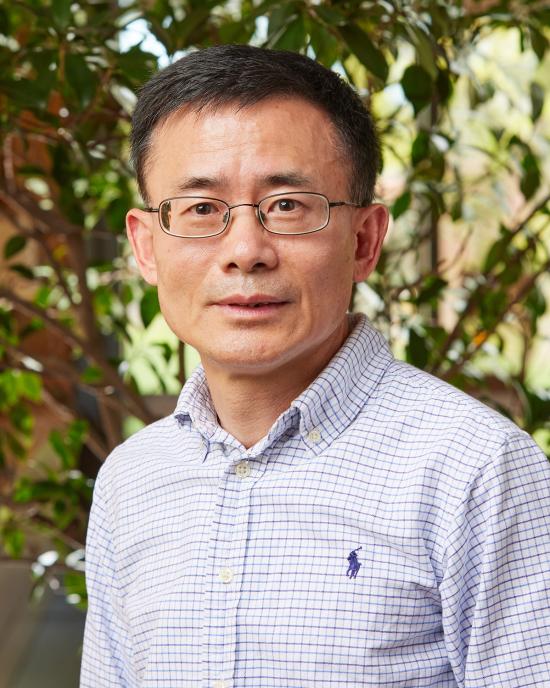
Liming Zhou is a Professor in the Department of Atmospheric & Environmental Sciences at the University at Albany, State University of New York. His expertise spans physical geography and meteorology, with a focus on interdisciplinary research in land-human-climate interactions. He utilizes remote sensing, weather, and climate data to investigate how land surface changes affect climate and hydrology across diurnal, seasonal, and decadal time scales.
His educational background includes:
- PhD in Geography from Boston University (2002)
- MSc in Meteorology from Nanjing Institute of Meteorology, China (1994)
- BSc in Meteorology from Nanjing Institute of Meteorology, China (1991)
Professor Zhou's research centers on land-atmosphere interface processes, combining satellite observations, GIS data, and Earth system modeling. Key contributions include discoveries of warming-enhanced greening in northern latitudes, drought-induced vegetation browning in the Congo rainforests, turbine-induced nighttime warming over U.S. wind farms, and urbanization-driven climate effects in China. His methodologies integrate time series analysis, statistical techniques, and regional climate models like WRF to examine desert amplification, diurnal temperature asymmetries, and vegetation-climate feedbacks.
Analysis of his recent publications (2022-2025) reveals concentrated research on regional climate dynamics in Africa (Congo Basin, Sahara), Asia (China, India), and the Americas. His work demonstrates consistent emphasis on land use impacts—urbanization, deforestation, wind farms—on temperature, precipitation, and vegetation patterns, while leveraging satellite data and climate models to address model deficiencies and improve predictive capabilities.
Scientific awards: No specific awards were documented in the provided materials.
Advising and grants: While his profile indicates active research leadership, no student names or grant details were explicitly referenced in the source text.
Labs and teams: No specific laboratory facilities or research teams were identified in the available documentation.