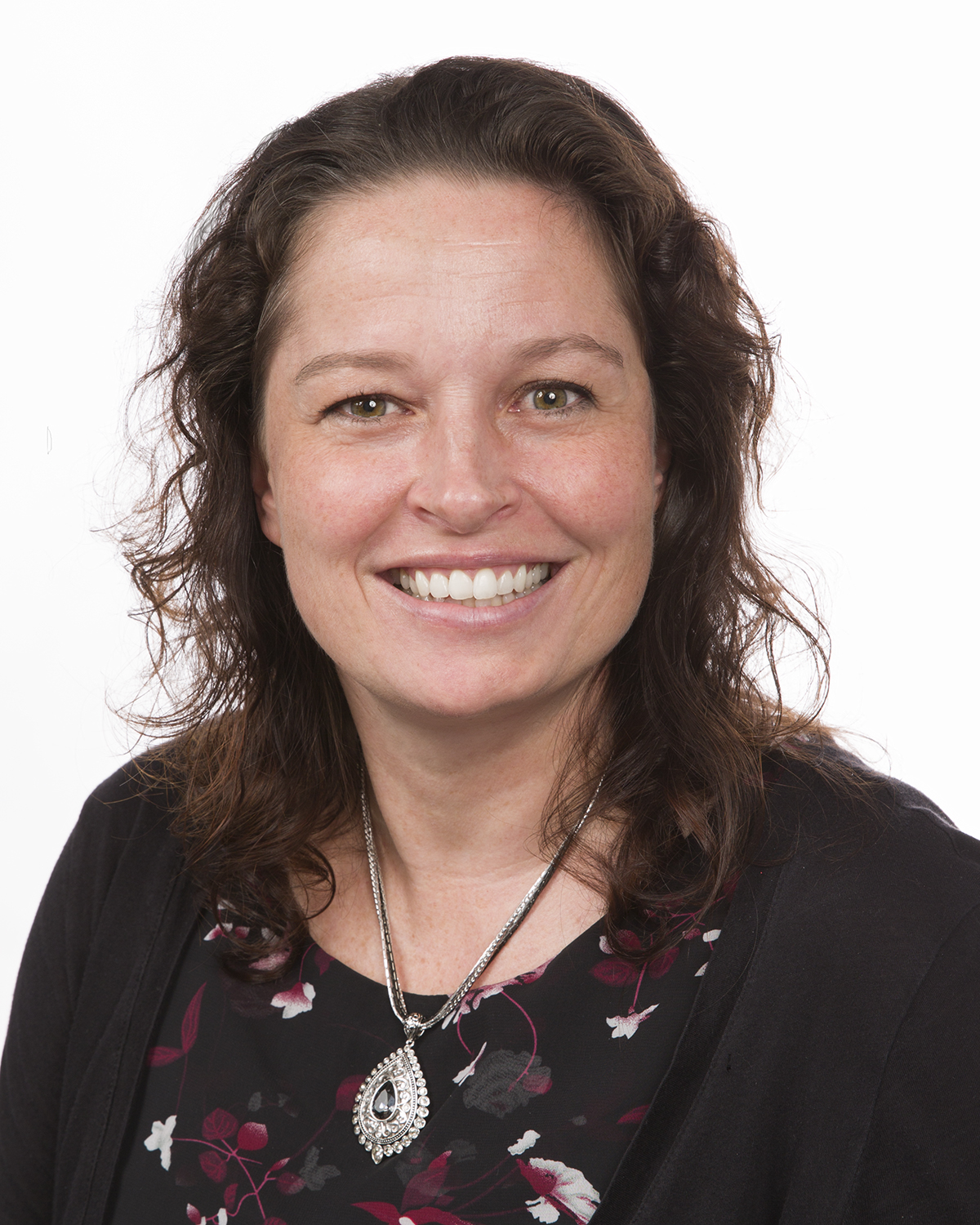
Kristy Robinson is an Associate Professor in the Department of Educational and Counselling Psychology at McGill University , where she investigates classroom teaching practices and contextual factors that enhance student motivation and wellbeing. Her research program focuses on creating theoretical and empirical frameworks to support equitable instructional strategies for students' goal achievement. SSHRC-funded researcher FQRSC grant recipient Key Research Areas Motivational climate theory Expectancy-value-cost models STEM education equity Self-determination theory Emotion dynamics in learning Awards & Recognition Canadian Psychological Society President's New Researcher Award AERA Division C Outstanding Early Career Scholar AERA Motivation SIG Wilbert C. McKeachie Early Career Award Top-Producing Educational Psychology Scholar (2024) Research Platforms Director of MILES Lab (Motivation, Instructional, and Learning Experience Study) Developer of "mFlip" flipped classroom framework
Pedro Antonio Garcia Tudela is a researcher at Universidad de Murcia specializing in Educational Technology, with a focus on Smart Learning Environments and Digital Entrepreneurship. He completed his PhD in 2023 with a thesis on intelligent learning environments supervised by Dr. María Paz Prendes Espinosa and Dr. Isabel María Solano Fernández. His educational background centers on advanced educational technology studies at Universidad de Murcia, culminating in his 2023 doctoral dissertation that established foundational frameworks for smart learning environments. This research positioned him at the forefront of educational innovation in Spanish-speaking contexts. Garcia Tudela's research explores the intersection of digital tools and pedagogical innovation, with emphasis on gamification, computational thinking development through Arduino, and digital entrepreneurship education. His work addresses critical gaps in teacher training for future classrooms and develops practical models like EmDigital for fostering entrepreneurial competencies in digital contexts. He investigates how educational escape rooms, flipped learning, and gender-inclusive technology integration transform learning experiences across K-12 and higher education. Analysis of his 15 most recent publications reveals a clear trajectory toward practical applications of educational technology: 40% focus on digital entrepreneurship frameworks, 30% on smart learning environment design, and 30% on gamification and computational thinking implementation. His research increasingly addresses cross-cultural applications, with comparative studies of future classrooms in Spain and Portugal. As an active thesis supervisor within the Educational Technology research group, Garcia Tudela mentors students in developing innovative educational methodologies. His work demonstrates strong industry-academia connections through practical frameworks for professional development and employability. The Educational Technology research group serves as his primary collaborative environment, driving projects that translate theoretical models into classroom applications while addressing contemporary challenges in digital education transformation.
Yvonne Luna is a Professor in the Department of Sociology at Northern Arizona University and serves as the Vice Provost for Academic and Workforce Alliances. Her dual role bridges academic scholarship with institutional leadership in higher education administration. Her research interests include: Welfare State Welfare Reform Popular Social Policy Charity Ideologies Welfare Social Security Benefits Luna's scholarly output reveals two distinct yet interconnected research trajectories: critical analysis of U.S. welfare systems and pedagogical innovation in sociology education. Her work consistently examines ideological frameworks within social policy while demonstrating practical applications through teaching methodologies, reflecting a commitment to both theoretical rigor and educational impact.
Aysegul Liman-Kaban serves as an Assistant Professor in ICT/Digital Learning STEM Education at Maynooth University. Her work focuses on integrating immersive technologies like augmented reality, gamification, and AI into educational practices. She actively supervises PhD students and leads international research projects such as MIXAP-EU and From AI Anxiety to Empowerment. Education: Not explicitly stated in provided text Her research interests span: Immersive learning technologies (AR/XR, digital escape games) AI in education and generative AI applications Teacher digital competencies and professional development Flipped learning and multimedia pedagogy Ethical challenges in AI research Blended learning practices Recent publications demonstrate a focus on gamification, mixed reality, and AI applications in education, with methodological expertise in structural equation modeling, mixed methods research, and task-based learning analysis. She contributes to journals like Smart Learning Environments and Higher Education Quarterly . Key activities include: Organizing international conferences on STEAM education Leading EU-funded research on immersive learning tools Developing open-source educational technologies Pioneering generative AI integration frameworks
Benjamin Garner serves as Associate Professor of Marketing in the College of Business at the University of Central Arkansas (UCA), maintaining an active research program from his office in COB 312I. His contact information includes email bgarner3@uca.edu and phone (501) 450-5329, reflecting ongoing institutional affiliation. Dr. Garner's research centers on consumer behavior in experiential marketing contexts with three primary thrusts: Social media engagement dynamics in wine tourism and farmers' markets Authenticity construction through scarcity and sustainability messaging Innovative business education pedagogy including flipped classroom methodologies Analysis of his 2021-2025 publications reveals consistent methodological emphasis on ethnographic observation and text-mining of user-generated content across platforms like Facebook, Instagram, and Twitter. His work uniquely bridges agricultural marketing contexts with digital communication strategies, particularly examining how language structures influence consumer perceptions of authenticity. No scientific awards or student advising information appears in available records. Similarly, grant funding details and laboratory affiliations remain undocumented in the provided materials, though his publication output indicates sustained research activity across multiple scholarly domains.
Morgane Chevalier is an Associate Professor at Vaud Teacher Training College (HEP Vaud) working within the Media, Digital Uses and Computer Science Teaching unit (UER MI). She specializes in multimedia pedagogical engineering, combining project management with e-learning scripting. Her work bridges educational theory and practical implementation of digital technologies in classroom settings, with particular focus on primary education. With prior experience teaching in primary schools in Seine-Saint-Denis (France), working in human resources in Montreal (Canada), and teaching in the Canton of Vaud, Chevalier brings diverse perspectives to her academic work. She holds a Master's degree in e-learning from IPM, Lille 1 and is currently pursuing a MAS in 'Theories, practices and training devices for teachers' to refine her understanding of institutional and social contexts of teacher training in French-speaking Switzerland. Her research interests focus on three complementary areas: online homework implementation in blended learning environments and fostering teacher communities of practice; how e-learning supports teacher professionalization; and robotics as a medium for knowledge, specifically examining how classroom robot integration impacts student learning and teaching practices. She is particularly interested in emerging communities of practice around educational technology. Analysis of her recent publications reveals a strong emphasis on educational robotics as a vehicle for developing computational thinking in primary education. Her work consistently explores scaffolded learning approaches, intervention methods, and teacher perspectives on implementing robotics in classrooms. A recurring theme is the development of models to help teachers identify relevant computational thinking concepts during different phases of educational robotics activities. Chevalier serves in several organizational roles including as an Associate HEP Professor, delegate of the intermediate body to the HEP Council, delegate of the Specialized Pedagogy Study Commission, and scientific collaborator at EPFL's LSRO. She is also a member of the educanet2 Community. Her teaching spans Bachelor primary programs, MASPE education, and continuing education courses covering image creation and processing, media education, Thymio II robotics, and flipped classroom methodologies. She collaborates extensively with EPFL researchers, particularly on projects involving the Thymio educational robot, and has developed frameworks for creative computational problem solving through robotics. Her work demonstrates a commitment to translating research into practical classroom applications while supporting teacher development in the digital age.
Silvia Jiménez Fernández is an Associate Professor in the Department of Signal Theory and Communications at Universidad Autónoma de Madrid. Her research focuses on optimization algorithms, smart grids, renewable energy systems, telemedicine, and machine learning applications. She holds a Ph.D. from Universidad Politécnica de Madrid (2009), supervised by Dr. Francisco del Pozo Guerrero and Dr. Paula de Toledo Heras. Her work integrates interdisciplinary approaches, such as combining evolutionary algorithms with engineering challenges in energy systems and healthcare. Key contributions include advancements in coral reefs optimization algorithms for energy management, machine learning for battery health estimation, and telemedicine systems for chronic disease monitoring. Recent research trends emphasize hybrid learning models in education, multi-objective optimization in renewable energy systems, and risk analysis in smart grids with electric vehicles. She is affiliated with the GHEODE Research Group (Modern Heuristics and Network Design).
Dr. Kristen Jones-Bonofiglio is an Associate Professor and Director of the School of Nursing at Lakehead University. She also serves as Director of the Centre for Health Care Ethics within the Faculty of Health & Behavioural Sciences. Her work bridges nursing practice with ethical frameworks, focusing on moral distress and compassionate care. Academic Background: PhD in Educational Studies (Cognition & Learning Stream), Lakehead University MPH in Nursing Specialization, Lakehead University BScN, Lakehead University Research Focus: Dr. Jones-Bonofiglio's research addresses ethical decision-making in health care, moral distress, teaching compassion in nursing, substance use in inpatient settings, and digital storytelling. She integrates theory with practical applications, such as patient care planning using computer-aided design. Publication Trends: Recent works include pandemic ethics, rural health care frameworks, nurse practitioner retention, and patient-oriented research. Many publications analyze moral distress in acute and community settings, while others explore digital storytelling and educational innovations. Scientific Contributions: AMS Phoenix Fellow Co-editor of Health Care Ethics through the Lens of Moral Distress (2020) Editorial Board, Global Bioethics Enquiry Leadership & Collaboration: She leads the Centre for Health Care Ethics and contributes to EPID@Work Research Institute. Her affiliations include the Centre for Research on Aging & Health. She supervises student theses and emphasizes interdisciplinary collaboration.
Kati Tonkin is an active Associate Professor of German Studies and History in the Discipline of European Languages and Cultures at The University of Western Australia's School of Humanities. She holds a PhD in German and European Studies from UWA and studied previously in Germany and Austria. Her academic leadership includes serving as Associate Chair of the Academic Board and Chair of the Board of Studies (Society and Culture). Her educational background includes significant study in Germany and Austria, culminating in a PhD from UWA. She is a Senior Fellow of the Higher Education Academy (2020), demonstrating her commitment to teaching excellence. Tonkin's research spans two primary domains: literary studies focused on Jewish Austrian writer Joseph Roth and pedagogical innovation centered on flipped and online learning. Her work on Roth examines themes of Habsburg identity, Jewish experience, and cultural memory in interwar Austrian literature. In educational research, she explores cognitive load management, adaptive learning platforms, and student engagement in language education. She co-founded a university-wide Community of Practice dedicated to active learning and the flipped classroom in 2019. Her publication record shows a clear evolution from literary scholarship on Joseph Roth and Austrian-Jewish writers toward increasingly innovative educational research. While her early work focused on Austrian literature and cultural history, her more recent publications emphasize educational technology, flipped classroom methodologies, and intercultural learning. This trajectory reflects her dual expertise in German studies and educational innovation. AAUT Citation for Outstanding Contributions to Student Learning (2023) UWA Award for Excellence in Teaching (2022) School of Humanities Excellence in Teaching Award (2021) Senior Fellow of the Higher Education Academy (2020) UWA Guild's Student Choice Award (2019) Tonkin actively supervises students, currently mentoring four PhD candidates working on European history and literature topics. Her grant history demonstrates sustained research support, including a World Universities Network Grant (2020) on University Students in the Time of Corona, Centre for Education Futures Grant (2016), UWA Teaching Fellowship (2012), and multiple early career research awards. She has coordinated the Bachelor of Modern Languages and Minor in German programs, and serves as Academic Coordinator for the Stuttgart Exchange Program. As an educational innovator, Tonkin has piloted adaptive e-learning platforms like Smart Sparrow and Cadmus assessment platform. Her community engagement extends beyond campus through her service as Chair of the School Board at North Perth Primary School (2014-2019) and as Community Representative on Mount Lawley Senior High School's Board (2020-2023).
Maureen Garvey is an Associate Professor and Coordinator of Reference Services at the College of Staten Island (CUNY). She holds Master's degrees in political philosophy from the National University of Ireland and Library Science from City University London. Her career includes roles at institutions like Bank Street College of Education, the Library Council of Ireland, and John Jay College. Her research focuses on library services innovation, particularly in virtual reference systems, public policy impacts on libraries, and resource-sharing practices in resource-constrained environments like Cuba. She advocates for student information literacy to improve retention and success. Key publications include studies on pandemic-era library adaptations, neoliberal policies in Irish libraries, and collaborative teaching methods. Garvey emphasizes libraries' societal role through scholarly contributions and practical initiatives.
Ramón Luis Rizo Aldeguer is a University Professor in the Department of Computer Science and Artificial Intelligence at the Higher Polytechnic School of the University of Alicante. He has held this position since 1996 and continues to be actively involved in teaching and research as recently as 2025. He previously served in various leadership roles including Director of the Department of Computer Science and Artificial Intelligence (1997-2004) and Deputy Director of the Institutional Projects Area at the University of Alicante (2012-2020). His educational background includes a PhD in Computer Science from the Polytechnic University of Valencia (1992) and a degree in Mathematics from the University of Valencia (1977). He has been a member of the Spanish Association for Artificial Intelligence since 1990 and has held leadership positions within the organization. Rizo Aldeguer's research focuses on artificial intelligence with particular emphasis on swarm robotics, UAV deployment, and deep reinforcement learning. His work bridges theoretical foundations with practical applications in robotics and autonomous systems. He has made significant contributions to educational methodologies, particularly in integrating computational tools into engineering education. His publication record shows a consistent trajectory in swarm intelligence and robotics, with recent publications (2018-2023) demonstrating increasing sophistication in applying deep reinforcement learning to complex multi-agent systems. His research spans both theoretical advancements and practical implementations in robotics and autonomous systems. Fifteen five-year research periods (trienios) Six teaching merit periods Five six-year research periods (sexenios) President of Organizing Committee of VI Conference of Spanish Association for Artificial Intelligence (1995) President of Scientific Committee of CAEPIA (1999) Rizo Aldeguer has supervised 14 doctoral theses, with many receiving the highest honors (SOBRESALIENTE CUM-LAUDE). He has participated as a researcher in over 30 competitive public research projects, serving as principal investigator in 12 of them. His educational projects include innovative teaching methods and the development of computational tools for engineering education. He has been instrumental in the design and implementation of computer science programs at both the University of Alicante and the Polytechnic University of Valencia. He is a founding member of the University Institute for Computer Research and directed the Industrial Computing and Artificial Intelligence research group from 1992 to 2004. His current research continues to focus on swarm robotics and intelligent systems, with active participation in the Valencian Graduate School and Research Network of Artificial Intelligence since 2021.
Dr. Diane Tepylo is an Associate Teaching Professor at the Faculty of Education, Ontario Tech University. She is located at Charles Hall, Room 336 in the Downtown Oshawa campus. Her contact information includes the email diane.tepylo@ontariotechu.ca and phone number 905.721.8668 ext. 3768. Dr. Tepylo holds a PhD in Applied Psychology and Human Development from the Ontario Institute for Studies in Education (OISE), focusing on mathematics teaching and learning within STEM fields. Her research interests include Coding and K-12 education, Inclusive mathematics education (particularly for at-risk students, English language learners, and culturally responsive pedagogy), Learning through technology, Spatial reasoning in STEAM education, and STEAM teacher development for both pre-service and in-service educators. She emphasizes innovative pedagogical approaches, such as flipped classrooms and problem-solving challenges to enhance student engagement and learning outcomes. Dr. Tepylo teaches a diverse range of courses across multiple programs, including: Bachelor of Commerce: BUSI 1915U (Business Mathematics I) Bachelor of Education: EDUC 1311U and EDUC 2408U (Coding and Communication), CURS 4140U and CURS 4141U (Mathematics Curriculum Studies) Bachelor of Arts, Educational Studies: EDST 1000U (Foundations of Learning), EDST 1100U (Problem and Inquiry-Based Learning), EDST 3170U (Developing Numeracy), EDST 4000U (Inquiry and Professional Practice), EDST 4120U (Games and Simulations for Learning), EDST 4610U (Coding and Maker Pedagogies for Young Children) No scientific awards or grants are explicitly mentioned in the provided information. Her work focuses on bridging educational theory and practice, with a strong emphasis on student-centered learning and technology integration.
Emanuel V. Towfigh is a Professor specializing in legal education research, actively contributing to scholarly discussions on legal didactics and empirical approaches to teaching law. His work examines the evolving landscape of legal education, particularly focusing on digitalization, individualization of teaching methods, and empirical assessment of educational effectiveness. Professor Towfigh's research interests center on the intersection of legal scholarship and educational methodology. His work investigates: The impact of digital tools and blended learning approaches on legal education Empirical assessment methods for evaluating teaching effectiveness in law The "empirical turn" in legal scholarship and its implications for legal education Innovative teaching formats including flipped classrooms and e-learning platforms The tension between academic penetration of legal education research and practical reform debates Implementation of evidence-based teaching approaches within traditional legal education frameworks His recent publications demonstrate a consistent focus on how empirical research can inform and improve legal education practices. Towfigh examines both theoretical foundations and practical applications of teaching methodologies, with particular attention to how digital transformation is reshaping legal pedagogy. His work frequently addresses the challenges of implementing evidence-based approaches within traditional legal education structures and analyzes large-scale initiatives like the iurreform survey with 12,000 participants. Professor Towfigh has been actively involved in organizing and contributing to online symposiums that bring together scholars at all career levels to discuss innovations in legal education. These symposiums have addressed critical questions about which didactic innovations prove most effective and where potential for improvement exists in legal pedagogy, emphasizing the importance of reliable empirical findings for meaningful educational reform.
Itahisa Pérez Pérez is a Spanish education researcher who served as a faculty member in the Department of Education and Social Psychology at Universidad Pablo de Olavide (Seville, Spain) between 2009 and 2022. Affiliated with the research groups GIAS (Grupo de Investigación en Acción Socioeducativa) and GEDUPO , she has produced an extensive scholarly record spanning HIV-prevention education, community development, socio-cultural animation, and innovative pedagogies aligned with the United Nations Sustainable Development Goals. Education PhD in Education, Universidad Pablo de Olavide, 2013 – Thesis: "Conocimientos y prácticas de riesgo en VIH-SIDA: una estrategia de Cooperación en Educación para el Desarrollo en Nicaragua" (Supervised by Dr. Juan Agustín Morón Marchena). Research Interests Her scholarly agenda has evolved from early work on HIV-risk behaviours and Nicaraguan youth to a current focus on innovative higher-education methodologies (mind-mapping, flipped classroom, cooperative learning) and the integration of the 2030 Agenda into university curricula. She explores how University Social Responsibility can drive holistic, value-centred educational innovation, and she has become a leading voice in mapping university resources against SDG indicators. Publication Trends Between 2020 and 2023 she authored or co-authored more than twenty peer-reviewed articles, all clustered around three dominant themes: (1) pedagogical innovation (mind maps, flipped classroom, jigsaw techniques), (2) sustainability in higher education (SDGs, social curriculum, best-practice guides), and (3) community-oriented socio-educational action (socio-cultural animation, diversity attention, HIV education). This recent surge reflects a strategic pivot toward institutional transformation and policy-oriented research. Scientific Awards & Recognition No competitive awards or fellowships are explicitly mentioned in the supplied documents. Advising & Grants No doctoral or master’s students are listed, and grant details are absent from the provided sources. Labs, Teams & Networks She has collaborated within GIAS and GEDUPO at Universidad Pablo de Olavide, and her recent publications indicate ongoing cooperation with colleagues at the University of La Laguna , suggesting a cross-institutional network focused on SDG-aligned educational innovation.
Prof. Gabriele Kaiser is a Full Professor of Mathematics Education at the University of Hamburg’s Faculty of Education. She holds a part-time professorship at the Norwegian University of Science and Technology and an honorary professorship at the Australian Catholic University (ACU). Her research focuses on mathematical modeling, teacher professional competence, and comparative studies in education (East-West). She led the ICME-13 conference in 2016 and serves as former Editor-in-Chief of ZDM Mathematics Education. Key contributions include the TEDS research program on teacher education and the development of video-based assessment tools for teacher noticing. Awards include top Springer downloads for her edited volumes and leadership in international educational initiatives. Roles: Chair of ICME-13, Editor of ZDM, ICMI Representative, ICTMA President Affiliations: University of Hamburg, ACU Brisbane, University of Macau collaborations Research Interests: Mathematical modeling, teacher education, inclusive mathematics, flipped classrooms, and cross-cultural studies Her work emphasizes innovation in teacher training, classroom observation methodologies, and addressing diversity in mathematics education. Recent projects include studies on Chinese and German teachers’ competencies and the use of AR/VR in STEM education. Awards: Honorary professorships in Australia and Hong Kong, board member of Hamburg Scientific Foundation, and recognition for impactful publications.