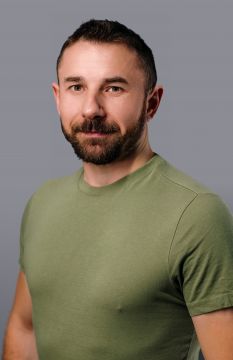
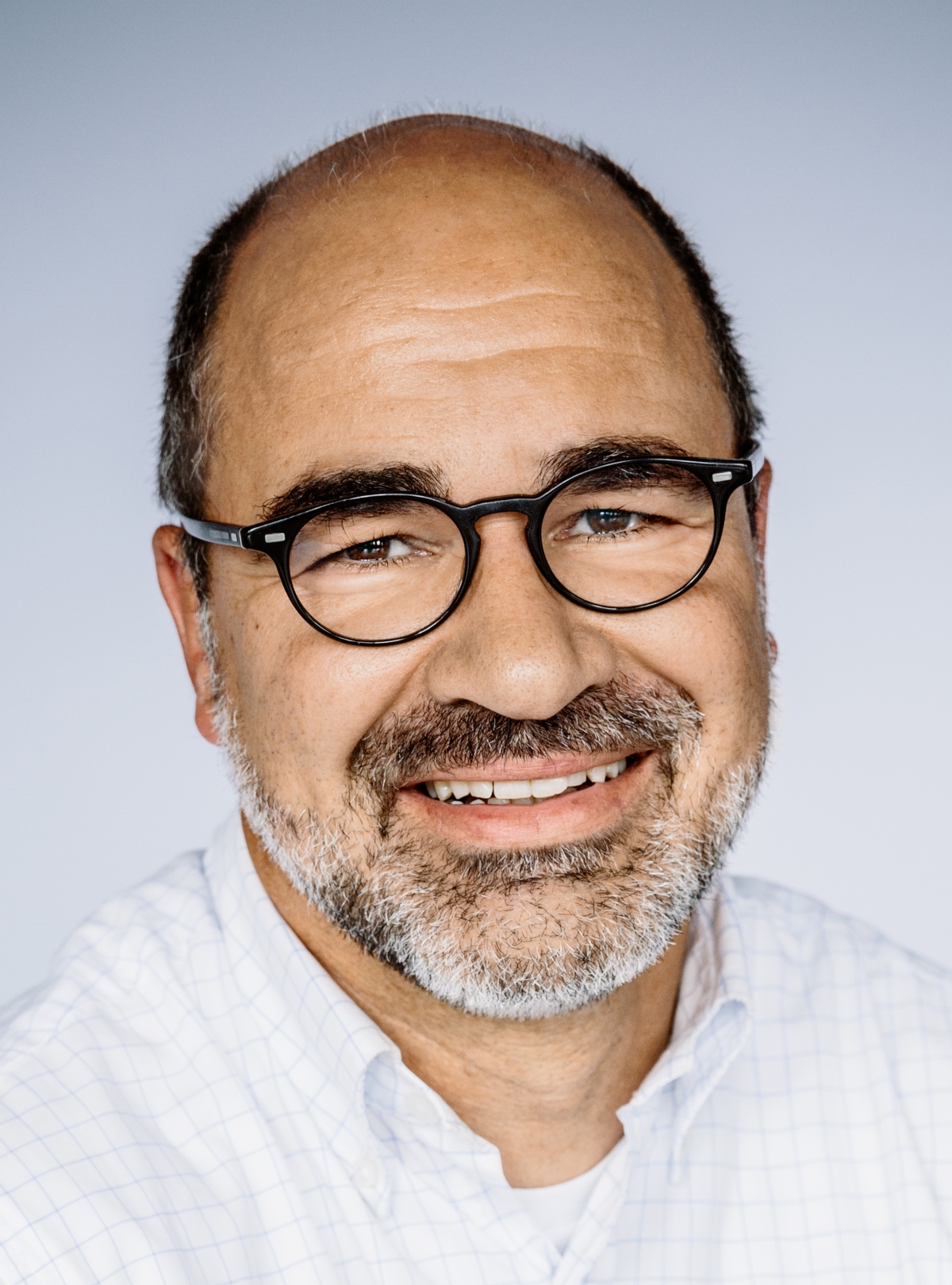
Kristinn B. Gylfason is a Professor in the Division of Micro and Nanosystems at KTH Royal Institute of Technology. His work focuses on nanophotonics, environmental monitoring, and optical communication systems. He leads research on photonic micro- and nanosystems, including gas sensors and energy-efficient photonic circuits. Education: PhD in Electrical Engineering (KTH, 2010), Docent in Micro- and Nanosystems (KTH, 2015), MSc and BSc from the University of Iceland (2003, 2001). Visiting scholar at Ghent University (2013). Research interests include miniaturized optical sensors for greenhouse gas detection and low-energy photonic circuits. Awards: Göran Gustafsson Young Researcher Prize (2011) and a major Young Researcher Grant from the Swedish Research Council. Teaching roles include examiner and course responsible for advanced degree projects in Electrical Engineering and Engineering Physics, as well as courses in Measurement Technology and Microsystem Technology.
Daniele Jahier Pagliari is an Associate Professor in the Department of Control and Computer Science (DAUIN) at Politecnico di Torino, where he is also a member of the Interdepartmental Center PEIC - Power Electronics Innovation Center. He is actively involved in teaching and research, focusing on embedded systems, electronic design automation, and machine learning for edge computing. He teaches courses such as Optimized Execution of Neural Networks at the Edge, Machine Learning for IoT, and Hardware/Software Codesign of Flexible Computing Systems for Edge AI across various engineering programs including Computer Science and Systems Engineering, Data Science, and Automotive Engineering. His research interests span electronic design automation, embedded systems, energy-efficient computing, low-power design, and machine learning. He is particularly engaged in applying machine learning techniques to improve the design and performance of digital and analog circuits, with a focus on edge AI applications. His work aligns with key scientific areas including computer architecture, cyber-physical systems, and scientific computing. The recent publications highlight a strong trend in optimizing deep learning models for resource-constrained environments, accelerating neural network inference on ultra-low-power devices, and integrating physics-based models with AI for battery state estimation. There is also significant focus on using machine learning to enhance electronic design automation, particularly for analog and mixed-signal circuits, reflecting a convergence of AI and hardware design. He leads and participates in several high-impact research projects, including EU-funded initiatives like HAL4SDV, ISOLDE, TRISTAN, and AMBEATion, as well as commercial projects such as MASAI and software platform development for production support. He serves as the Scientific Responsible or Director in multiple projects, demonstrating leadership in both academic and industrial research contexts. He supervises multiple PhD students in the Computer and Systems Engineering program, including Luca Benfenati, Mohamed Amine Hamdi, Beatrice Alessandra Motetti, Giovanni Pollo, and Matteo Risso, whose research topics include latency-optimized inference, compiler optimization for edge devices, and hardware-aware deep learning design. He is also involved in patent development, notably for an instrumentation method to dynamically modify circuit precision. He is a member of the College of Computer, Film and Mechatronics Engineering and contributes to various degree programs. His work supports UN Sustainable Development Goals related to good health, affordable and clean energy, industry innovation, and sustainable cities.
Professor Vincent DeLuca holds a faculty position at UiT The Arctic University of Norway , specifically in the Department of Language and Culture within the Faculty of Humanities, Social Sciences and Education . He serves as Leader of the C-LaBL Brain Domain , leading interdisciplinary research initiatives. His academic rank is Professor of English Language . His research focuses on understanding how bilingual and multilingual experiences shape brain structure, function, and cognitive processes across the lifespan. Key areas include: Neuroplasticity mechanisms underlying language acquisition and control Effects of multilingualism on aging-related cognitive decline Individual differences in bilingual experience and their neural correlates He is affiliated with the C-LaBL and AcqVA Aurora research groups, and leads projects such as the MIND-MAP Project exploring multilingualism and cognitive aging. His work integrates neuroimaging, behavioral studies, and computational models. Key contributions include redefining bilingualism as a spectrum of experiences influencing brain adaptations, and demonstrating how multilingual engagement modulates resting-state neural activity. Recently, his team has investigated third language (L3) development using artificial grammar paradigms and EEG. He collaborates globally with institutions like the University of Reading (Christos Pliatsikas) and the University of Trento (Jubin Abutalebi). His research has been published in journals like NeuroImage , Cerebral Cortex , and PNAS .
Alexia Toskos Dils is an Associate Professor of Psychology at Purchase College , State University of New York (SUNY), affiliated with the School of Natural and Social Sciences . Her research investigates individual differences in how perceptual and motoric mechanisms influence higher-level cognitive functions, particularly focusing on language comprehension and cultural structuring of mental representations. Key areas of study include: Cognitive Psychology Psycholinguistics Cultural Cognition Perceptual-Motor Integration Social Perception Visual Motion Processing Alexia earned her PhD from Stanford University and previously worked as a postdoctoral researcher there. She has published extensively on topics such as motion aftereffects from language, folk economic beliefs, and temporal context effects in attractiveness judgments. Her work appears in journals like Proceedings of the Cognitive Science Society , Group Processes and Intergroup Relations , and Psychonomic Bulletin & Review .
Mariia Zhuldybina is a Professor in the Department of Electrical Engineering at École de technologie supérieure (ÉTS), Montreal. She leads research in metamaterials, terahertz technology, printed electronics, and smart textiles. Her work focuses on sustainable manufacturing, non-destructive testing, and eco-design principles. Education: M.Sc.A. in Physics from Moscow Institute of Physics and Technology, Ph.D. in Electrical Engineering from ÉTS. She directs the LACIME laboratory’s research on functional materials and microsystem fabrication. Research interests include terahertz spectroscopy for quality control, environmental impact assessment of electronic materials, and wearable sensor integration. Her recent projects address 6G communication surfaces, circular economy practices in IoT, and bio-based conductive inks. Advising: Supervises 10+ graduate students across PhD, M.Sc. and project courses. Notable supervisees include Niranjan Namdev Jadhav (6G intelligent surfaces), André-Louis Morneau (6G frequency selectors), and Marie-Jade Lucier (smart textile integration). Labs/Teams: Core member of LACIME – Communications and Microelectronic Integration Laboratory. Collaborates on interdisciplinary projects combining photonics, materials science, and environmental engineering.
Dr. Rosanna Olsen is an Associate Professor (Status Only) at the University of Toronto and a Scientist at the Rotman Research Institute (RRI), Baycrest. She leads the Olsen Lab, which investigates the neural organization of human memory systems using advanced neuroimaging techniques (fMRI, MEG), eye-tracking, and studies of amnesia patients. Her research focuses on medial temporal lobe function, memory formation across lifespan, eye-movement patterns in memory, thalamo-cortical interactions, and early biomarkers of cognitive decline in aging. Education: • PhD in Psychology (Cognitive Neuroscience) from Stanford University • Postdoctoral fellowship at Rotman Research Institute Research Focus: The Olsen Lab specializes in: 1) Structural and functional characterization of medial temporal lobe subregions in memory-impaired populations; 2) Neural oscillations and short-delay memory maintenance; 3) Eye-movement patterns as indirect memory measures; 4) Roles of thalamic nuclei in associative memory; 5) Promoting diversity in neuroscience. Methodologies include high-resolution MRI, fMRI, MEG, and behavioral paradigms. Article Trends: Recent publications (2020-2024) predominantly explore hippocampal subfield volumetry, aging-related memory decline, eye-movement patterns, thalamic contributions to memory, and inclusive academic practices. Over 70% involve neuroimaging analyses, with consistent focus on preclinical Alzheimer's biomarkers and hormonal influences on cognition. Advising: Actively mentors graduate students (Psychology, University of Toronto) and oversees postdoctoral fellows. Current trainees include 4 PhD candidates and 2 postdocs researching thalamic memory pathways, oscillatory dynamics, and visual discrimination in aging. The lab employs 5 research assistants. Lab & Collaborations: Directs the Olsen Lab at Baycrest with 11 active members. Collaborates with Drs. Jennifer Ryan (Baycrest), Brad Buchsbaum (Baycrest/UofT), Morris Moscovitch (UofT), and international consortia including the Hippocampal Subfields Group. Research has been featured in Science Daily and Neuroscience News .
Therese Eskilsson is an Associate Professor at Umeå University and Head of the Department of Community Medicine and Rehabilitation's Physiotherapy section. She holds a PhD in Public Health (2009) and has clinical employment in physiotherapy. Associate Professor, Physiotherapy (2022) PhD in Public Health (2009) Clinical researcher and practitioner Her research focuses on preventing work-related ill health and rehabilitating stress-related illnesses through: Randomized controlled trials with mixed methods Workplace interventions and dialogue Physical activity prescription Cognitive training programs Gender-sensitive rehabilitation Long-term recovery strategies Key publications address: Outdoor activity in preschool design (2025) Digital workplace health tools (2025) Brain correlates in exhaustion disorder (2024) Longitudinal rehab outcomes (2024) Activity-based office impacts (2024) She teaches in work environment health , stress management , and motivational interviewing at undergraduate and postgraduate levels.
Dr. Damian Nieckarz is a Lecturer at the Department of Theoretical Chemistry , Institute of Chemical Sciences , Faculty of Chemistry , Maria Curie-Skłodowska University in Lublin, Poland. He earned his PhD in Chemical Sciences with distinction in 2016. His research focuses on computational methods like Monte Carlo simulations and scanning tunneling microscopy (STM) to study molecular self-assembly on surfaces. Education : PhD in Chemical Sciences (2016, Maria Curie-Skłodowska University) Dr. Nieckarz's work explores the formation of nanomaterials , supramolecular tessellations , and exotic molecular fractals stabilized by directional bonds (coordination, halogen, hydrogen, covalent). He investigates chirality , relativistic effects , and hierarchical organization of organic molecules on flat surfaces. The articles listed highlight his contributions to two-dimensional molecular networks , including fractal structures and order-disorder transitions . His simulations bridge mathematical chemistry and applied physics , with applications in metal-organic frameworks and adsorption dynamics .
Dr. Lucheng Peng is a Research Fellow at the Institute of Photonic Sciences (ICFO) , working within the Functional Optoelectronic Nanomaterials department. His research focuses on advanced nanomaterials for optoelectronic applications. PhD in Chemistry from Jilin University (CN) Research spans nanomaterials , quantum dots , and solar cells , with a strong emphasis on infrared detection and semiconductor engineering . Recent work highlights heavy-metal-free quantum dots and AgBiS2 nanocrystals for sustainable optoelectronics. Key publication trends include core-shell heterostructures , vacancy-driven material optimization , and anisotropic growth techniques for nanocrystals. His work bridges materials science and applied photonics .
Hartmut Wiggers is an Adjunct Professor at the University of Duisburg-Essen , leading the Nanoparticle Synthesis group within the Institute for Energy and Material Processes - Reactive Fluids . His career spans over three decades, focusing on gas-phase synthesis and functionalization of nanoparticles for energy and environmental applications. Research Interests : Hartmut’s work centers on gas-phase synthesis of nanoparticles using flame, plasma, and laser reactors, enabling precise control over material properties. His research extends to kinetics, in-situ diagnostics, and device engineering, including sensors and battery anodes. Key areas include catalysis , energy storage , and nanomaterials for water remediation . Publications : His recent work (2024-2025) explores advanced nanomaterials for energy conversion, such as perovskite catalysts for oxygen evolution reactions, silicon-carbon composites for lithium-ion batteries, and graphene-based hybrids. The articles highlight scalable synthesis methods and performance optimization through structural engineering. Affiliations & Roles : He is affiliated with the DECHEMA Center for Nanointegration Duisburg-Essen , Materials Research Society , and serves as a scientific advisor at the Institute of Energy and Environmental Technology e.V. (IUTA) .
Muthu B Wijesundara is a Research Professor in the Bioengineering department at The University of Texas at Arlington . He has held various positions including Principal Research Scientist at UTARI and Faculty Associate at the Automation and Robotics Research Institute. His work focuses on biomedical devices , soft robotics , and sensor arrays for rehabilitation and trauma prevention. His research involves soft robotic gloves for hand therapy, pressure modulation systems to prevent ulcers, and impact-mitigating materials . Publications span biomechanics , neural stimulation , and wearable technology . Grants include federal funding from NIH, NSF, and CDMRP for projects like ReHeal Glove and AFIRMII Bioreactor . $498,968 NIH grant for Clinical Trial of ReHeal Glove $741,767 CDMRP grant for Automated Seat for Pressure Ulcer Prevention $1.3M NSF grant for Multi-Modal Skin and Garments He holds patents for fluid-driven actuators , interconnected cell arrays , and variable stiffness insoles . Awards include Founding Fellow of SaferCare Texas Patient Safety Institute. Service roles include Institutional Lab Safety Board membership and Task Force on Faculty Diversity.
Dr. Ye Sun is an Associate Professor in the Department of Mechanical and Aerospace Engineering and Electrical and Computer Engineering at the University of Virginia, with a concurrent appointment as Adjunct Associate Professor at Michigan Technological University. She earned her PhD in Electrical Engineering from Case Western Reserve University in 2014. Her research integrates engineering innovation with human health and behavior, focusing on wearable sensors, IoT, and cyber-physical systems for healthcare and transportation safety. Her interdisciplinary work spans: Human-centered monitoring technologies Wearable robotics and sensor networks Human-machine interaction in critical domains Data-driven solutions for healthcare and transportation Analysis of her 15 most recent publications (2022-2025) reveals dominant themes: AI-driven wearable systems (68% of articles), rehabilitation robotics (33%), biomedical signal processing (27%), and IoT-enabled health monitoring (20%). Emerging trends include physics-guided machine learning, soft robotics, and non-invasive neural interfaces. Dr. Sun has secured significant NSF funding including: NSF-CAREER-CPS (2018-2023): $500,000 for 'System-on-Cloth: Cloud Manufacturing Framework for Embroidered Wearable Electronics' NSF-TTP Supplement (2019-2023): $99,986 for commercialization of embroidered electronics NSF-ECCS (2017-2020): $330,504 for mitigating triboelectric artifacts in wearables
Dr Juan Baena Vargas is a Post-Doctoral Research Fellow in the Department of Mechanical and Manufacturing Engineering at the University of New South Wales (UNSW), Faculty of Engineering. His research focuses on advanced materials for acoustic and fire safety applications, as well as tribological properties of polymers for biomedical use. His primary research interests encompass the development of metamaterials for underwater sound absorption, fire-retardant coatings and composites for bushfire protection, and the mechanical and tribological behavior of ultra-high-molecular-weight polyethylene (UHMWPE) composites in artificial joints. He employs nanomaterials such as carbon nanotubes and graphene to enhance material properties through innovative fabrication methods including 3D printing and visible light polymerization. Analysis of his recent publications (2023-2015) indicates a strategic shift toward fire safety and acoustic materials since 2020, with 12 of 15 recent articles addressing flame retardancy or sound absorption. His work demonstrates expertise in optimizing nanocomposite formulations (PDMS/MWCNT, silicone rubber/graphene) and bio-inspired coatings (chitosan-expandable graphite), while his foundational research on UHMWPE tribology remains influential in biomedical engineering.
Joe K. Kearney is a Professor in the Department of Computer Science at the University of Iowa and the University of Minnesota. His career spans over three decades, focusing on virtual reality, computer vision, and human-computer interaction research. Key affiliations: University of Iowa (Iowa City, IA, USA), University of Minnesota (Minneapolis, MN, USA) Research domains: Virtual environments, perception-action coupling, motion capture systems, pedestrian behavior simulation Research trends show sustained contributions to immersive visualization , autonomous navigation , and human factors in virtual reality . His 2014-2025 work explores AR-based pedestrian safety systems, while earlier studies (1986-2006) established foundational frameworks for virtual environment simulation and optical flow analysis. Long-term collaborations with Jodie M. Plumert (1986-2021), James F. Cremer (1986-2009), and Pooya Rahimian (2015-2017) demonstrate consistent team research in VR cognition and autonomous systems.
Dr. Michael Reynolds is the Department Chair and Associate Professor in the Department of Mechanical Engineering at the University of West Florida, part of the Hal Marcus College of Science and Engineering. He has played a pivotal role in establishing the mechanical engineering program since its inception in 2016, leading curriculum design, lab development, and accreditation efforts. He is based in Building 4, Room 327, and can be reached at mreynolds2@uwf.edu. Education: Ph.D. in Mechanical Engineering, Purdue University, West Lafayette M.S. in Mechanical Engineering, Purdue University, West Lafayette B.S. in Mechanical Engineering, Marquette University Dr. Reynolds' research centers on vibration and control systems, with significant work in time-optimal tracking control of flexible systems. He has also contributed to interdisciplinary areas including biomechanics, acoustic metamaterials, and engineering education—especially online pedagogy. His research is supported by NASA grants focused on high-altitude balloons, microgravity exercise, and structural health monitoring using metamaterials. The recent publications reflect a strong trend in control theory applied to mechanical and aerospace systems, with growing emphasis on metamaterials for vibration suppression and innovative methods in engineering education. His work bridges theoretical control design with practical applications in aerospace, biomechanics, and education technology. Scientific Awards: No specific awards are mentioned in the text. Dr. Reynolds leads research funded by NASA and serves as Editor-in-Chief of the Journal of Online Engineering Education , the leading journal in online pedagogy for engineering. He has advised curriculum development and accreditation processes, though no named students are listed. His leadership extends to both academic administration and research innovation. His lab and research team focus on dynamic systems, with projects involving command shaping, acoustic metamaterials, and structural health monitoring. These efforts are integrated into student projects and collaborations with agencies like NASA.