Maximilian Kastinger is a researcher at the Institute of Hydraulic Engineering and River Research, part of the Department of Landscape, Water and Infrastructure at the University of Natural Resources and Life Sciences, Vienna (BOKU). His work focuses on hydraulic engineering, river research, and fluid dynamics, with specific applications in desanding facilities and fish guidance systems. University: BOKU School: Department of Landscape, Water and Infrastructure Department: Institute of Hydraulic Engineering and River Research Email: maximilian.kastinger@boku.ac.at Kastinger’s research explores flow field improvements in hydraulic structures, such as tranquilizing racks and bypass systems for fish migration. His publications highlight interdisciplinary approaches combining fluid dynamics and environmental engineering to address water management challenges. Recent work includes studies on Tranquilizing Racks in Desanding Facilities (2024) and fish passage optimization (2023). Earlier contributions (2022, 2020) investigate bypass layouts for aquatic species and wave dynamics on steep slopes.
Professor Iain Fraser is a faculty member at the University of Kent's School of Economics, holding the position of Professor of Agri-Environmental Economics. He obtained his PhD from the University of Manchester in 1992 and has held roles at institutions including the University of Manchester, Manchester Metropolitan University, Imperial College, and La Trobe University in Australia. His research focuses on agri-environmental economics, biodiversity conservation, and applied econometrics. Current research projects include UKRI-funded initiatives on sustainable food systems and healthy diets. Fraser’s academic contributions span over 100 publications, with recent work addressing topics like wildlife trade dynamics, consumer preferences for food labeling, and pollinator deficit impacts. He leads the Professional Economics Degree Apprenticeship and serves as Editor-in-Chief of Q Open . His affiliations include the Durrell Institute of Conservation and Ecology (DICE) and DEFRA's Economic Advisory Panel. Notable projects include BEESPOKE (pollination management) and studies on country-of-origin labeling. Fraser supervises PhD students researching topics such as elephant-human conflict and wine waste valuation. He has advised on DEFRA and FSA projects and contributed to policy analysis in environmental economics and agricultural policy. Fraser’s work integrates econometric methods with conservation challenges, emphasizing practical applications in policy and market design. His lab affiliations and editorial roles highlight his leadership in advancing interdisciplinary research at the intersection of economics and environmental science.
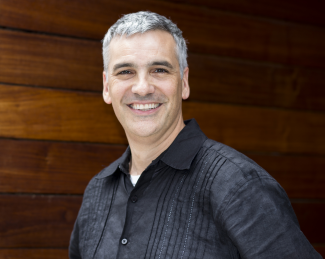
James Tweedley is a Senior Lecturer at Murdoch University, affiliated with the School of Environmental and Conservation Sciences within the College of Environmental and Life Sciences. He is also part of the Centre for Sustainable Aquatic Ecosystems and Harry Butler Institute. His research focuses on aquatic ecosystem health, fisheries management, and restoration strategies, with particular expertise in estuarine ecology and benthic macroinvertebrates. Education: Tweedley holds a BSc (Marine Biology) from the University of Portsmouth (2005), an MRes in Marine Biology from the University of Plymouth (2006), and a PhD in Marine Science from Murdoch University (2011). Research Interests His work spans two core areas: (1) understanding ecological linkages between fish/invertebrate communities and environmental drivers to develop estuarine health indices, and (2) fisheries management including aquaculture-based enhancement, artificial reefs, and socio-economic dimensions of fishing. Recent projects address eutrophication mitigation via mussel habitat restoration, barrier impacts on fish migration, and invasive species effects on ecosystems. Key Contributions Tweedley has pioneered methods for assessing fish communities in hypersaline environments and evaluated artificial reef effectiveness in temperate waters. His work on mass mortality events and tidal exclusion barriers provides critical insights for conservation planning. Awards - Young Tall Poppy and West Australian Young Tall Poppy of the Year (2021) - Recognizing outstanding research and science communication. Grants & Collaboration Funded projects include shellfish reef restoration studies and small-scale fisheries management in Indonesia. Collaborates with institutions like the Australian Institute of Policy and Science and local Indigenous communities for culturally significant estuary monitoring. Labs/Teams Leads the Sustainable Aquatic Ecosystems research group and contributes to the Harry Butler Institute’s coastal resilience initiatives.
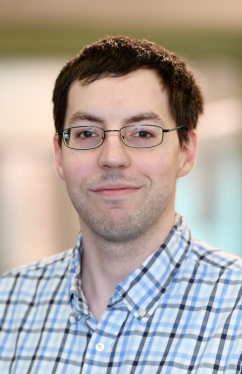
Chris Whidden is an Assistant Professor in the Faculty of Computer Science at Dalhousie University, where he leads research in algorithms and bioinformatics. His work bridges theoretical computer science with practical applications in computational biology and ocean data analytics. Whidden's research interests include approximation and fixed-parameter algorithms, computational biology, evolutionary trees and networks, graph theory, hybridization and lateral gene transfer, NP-hardness, and ocean data analytics. He develops efficient algorithms and software to solve NP-hard problems, particularly in the context of phylogenetics and large-scale biological data. His work applies both theoretical algorithm design and practical software engineering to create novel solutions for understanding biodiversity, bacterial and viral evolution, and oceanographic systems. His recent publications reflect a strong trend toward interdisciplinary research, combining deep learning and machine learning with oceanographic data analysis, fish detection and classification, echosounder data processing, and environmental monitoring. Many of his algorithmic contributions focus on phylogenetic tree comparison, including SPR distances, maximum agreement forests, and supertree construction. He has developed several widely used software tools such as rspr, SPR Supertrees, uspr, and phylogenetic topographer. NSERC Killam Trusts Tula Foundation NSF Simons Foundation (via Life Sciences Research Foundation) DeepSense (industry-academic collaboration) He is actively involved in mentoring and has funding available for PhD and MCS students in computer science, particularly in algorithms, bioinformatics, and data analytics. He teaches courses such as Algorithm Engineering (CSCI 4118/6105), Software Development (CSCI 2134), and Design and Analysis of Algorithms (CSCI 3110). Whidden has collaborated extensively with industry through DeepSense, working on projects that apply data analytics and machine learning to the ocean sector, including predictive modeling for ocean buoys, automated fish detection, and tidal energy monitoring.
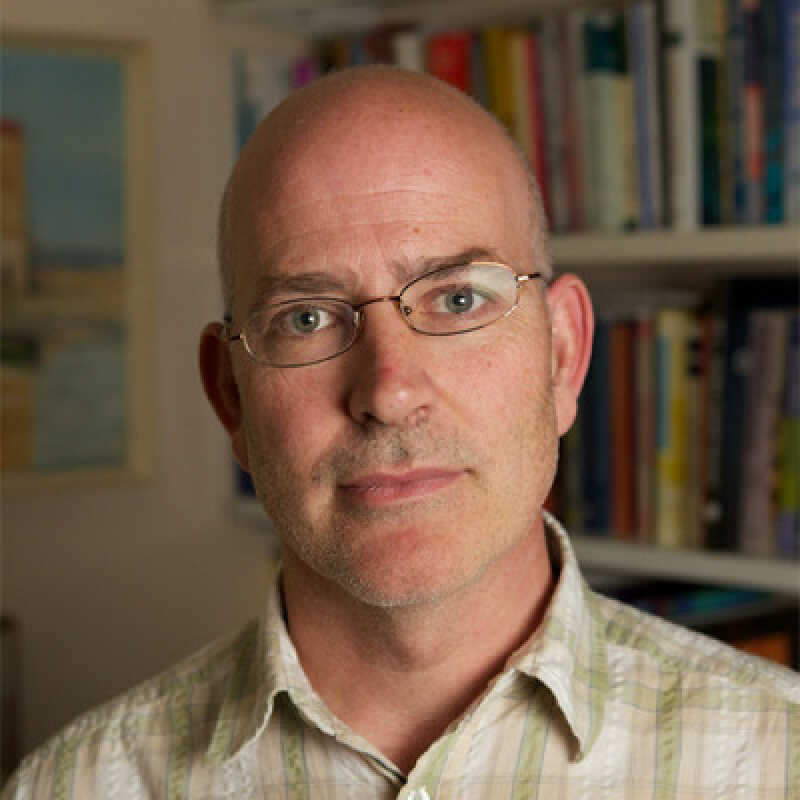
Professor Iain Suthers is a Professor at the University of New South Wales in the School of Biological, Earth & Environmental Sciences . He is based at the Sydney Institute of Marine Science , a collaborative hub involving Sydney-based universities and government agencies. His career spans 34 years at UNSW since 1991, following a PhD in Canada and postdoctoral work in Norway and Australia. Key Research Themes Marine ecosystem dynamics influenced by the East Australian Current Larval fish ecology and connectivity Zooplankton size spectra and carbon transport Artificial reef ecology and fish passage solutions Climate change impacts on marine and estuarine systems Leadership Inaugural Chair of NSW-IMOS (2007–2012) Currently leads the IMOS Larval Fish Monitoring subfacility Methodology Oceanographic field campaigns Long-term biodiversity databases Ecological modelling Collaborative research with 6 PhD students and colleagues Recent Publications emphasize biophysical interactions in western boundary currents, larval fish recruitment, and innovative fish passage designs like the Tube Fishway. His team contributes to global databases (e.g., BioTIME 2.0) and conservation-focused studies on fish migration fragmentation and crab ecology.
Gertrud Haidvogl serves as Associate Professor at the University of Natural Resources and Life Sciences, Vienna (BOKU), affiliated with the Institute of Hydrobiology and Water Management (IHYAM) and Institute of Social Ecology (iISEC). Her research bridges environmental history and aquatic ecology to examine long-term socio-ecological transformations in river systems, with special focus on the Danube River Basin. She holds teaching authorization in Historical Aquatic Ecology and Environmental History and maintains active scholarly output through 2025. Her research interests encompass historical ecology of rivers, socio-ecological river dynamics, and human-river coevolution. She investigates how industrialization, urbanization, and infrastructure projects have altered river connectivity, fish migration, and floodplain ecosystems over centuries. Her interdisciplinary methodology integrates archival research, archaeological data, ecological modeling, and policy analysis to reconstruct historical baselines and inform contemporary river restoration. Key themes include longitudinal connectivity disruption, biodiversity loss in freshwater systems, and the evolution of flood control paradigms. Analysis of her 2022-2025 publications reveals increasing emphasis on policy-relevant research, particularly regarding EU Nature Restoration Law implementation and transboundary river management. Her work consistently applies historical perspectives to establish ecological reference conditions while addressing contemporary challenges like climate change adaptation and free-flowing river restoration. The interdisciplinary nature of her scholarship is evident in collaborations spanning environmental history, ecology, hydrology, and social sciences. Dr. Haidvogl actively participates in the FWF Doctoral Program "Industrialized River Landscapes" under the HR21 Doctoral School, indicating her role in supervising doctoral candidates and securing competitive research funding. Her collaborations with the International Association for Danube Research (IAD) demonstrate engagement in transnational research networks addressing basin-scale challenges. While specific grant details aren't provided, her leadership in major interdisciplinary programs reflects substantial research funding. Embedded within BOKU's Hydrobiology and Water Management group, she contributes to interdisciplinary teams developing tools like the River Network Toolkit (RivTool) and iPODfish framework for historical fish occurrence reconstruction. Her work frequently involves partnerships with historians, ecologists, and policymakers to address complex river management challenges in urbanizing landscapes.
Christine Sindelar serves as Associate Professor and Head of the Hydraulics Laboratory at the Institute of Hydraulic Engineering and River Research, Department of Landscape, Water and Infrastructure, University of Natural Resources and Life Sciences, Vienna (BOKU). Her academic leadership spans experimental river research, fluid mechanics, and hydraulic engineering with a strong emphasis on practical applications for river management and restoration. Her educational trajectory includes a habilitation in Experimental River Research and Fluid Mechanics (2022), a PhD-equivalent doctorate in Civil Engineering from Graz University of Technology (2011), a degree in Technical Mathematics from the University of Linz (2000), and teacher certification in mathematics, psychology, and philosophy (1997). Habilitation: Experimental River Research and Fluid Mechanics (2022) PhD: Civil Engineering, Graz University of Technology (2011) M.Sc.: Technical Mathematics, University of Linz (2000) B.Ed.: Teaching Certification, University of Linz/Salzburg (1997) Dr. Sindelar's research integrates experimental and computational methodologies to address critical challenges in river systems. Her work focuses on sediment transport dynamics, fish passage engineering, scale modeling of hydraulic structures, and nature-based river restoration solutions. She pioneers innovative techniques such as 1:1 physical modeling and Lagrangian particle tracking to investigate complex fluid-particle interactions and river morphodynamics. Her leadership in the Responsible River Modeling Center (RRMC) drives advancements in sustainable river management practices across European waterways. Analysis of her 15 most recent publications reveals a dominant focus on sediment pulse dynamics (33%), fluid-particle interactions (27%), and scale modeling techniques (20%). Her work consistently bridges fundamental fluid mechanics with practical engineering applications, particularly in regulated river systems and hydropower infrastructure. Key emerging trends include the application of nature-based solutions for ecological restoration and advanced measurement techniques for turbulent flow structures. Her scientific recognition includes: Manfred Schwanninger Preis - BOKU Teaching Award (2021) ÖAW Stipendium 'For Women in Science' (2011) Dr. Sindelar has mentored 20 graduate students through thesis supervision, with research spanning hydraulic structure design, sediment transport modeling, and river restoration techniques. Her externally funded research portfolio includes 14 active projects totaling over €2.5 million in grants from diverse sources: Competitive Grants: Austrian Science Fund (FWF): PiCASSO XL (€480,000), Particle Collision Model (€320,000) European Commission: Mura-Drava-Danube Corridor (€1.2M) Industry Partnerships: Multiple hydropower-related physical modeling projects (€650,000) Municipal Projects: City of Vienna: Wienfluss restoration (€180,000) As Head of the Hydraulics Laboratory, she directs a multidisciplinary team conducting cutting-edge experimental research using advanced facilities including 1:1 scale river modeling systems, high-resolution particle tracking velocimetry, and specialized sediment transport measurement apparatus. The laboratory serves as a national hub for river engineering research and collaborates extensively with European water management authorities on transboundary river projects.
Mostafa Bakhoday Paskyabi is an Associate Professor at the Geophysical Institute , University of Bergen. His research focuses on offshore wind energy , environmental impacts of turbines , wind-wave-turbulence interaction , and climate change effects on wind parks . He employs Large Eddy Simulation (LES) and data assimilation for digital twin development. Teaching: Course responsible for ENERGI322 and ENERGI101; lecturer for ENERGI321 and ENERGI360. Supervision: Advises PhD candidates like Maria Krutova, Xu Ning, and Øystein Husevåg Døskeland, alongside master’s students including Fahim Masud Ahmed and Tord Nylan Malmei. His research explores physical oceanography (ocean mixing, Lagrangian particle tracking), air-sea interaction , and reduced-order modeling for offshore energy systems. Recent work examines swell wave impacts on turbulence and LiDAR-based data assimilation for transient event forecasting. Projects include LESWIND , WindSys , HIPERWIND , and Wind3D , addressing offshore wind design, ecosystem impacts, and climate operability. Collaborations span institutions like NTNU, NORCE, and IMR.
Alexander Haro serves as an Adjunct Assistant Professor in the Department of Environmental Conservation within the School of Earth and Sustainability at the University of Massachusetts Amherst, with research operations tied to the U.S. Geological Survey (USGS) as evidenced by his institutional email address. His work bridges academic research and practical conservation applications for migratory fish populations. His academic credentials include: B.Sc. in Biology from the University of Michigan (1981) M.Sc. in Zoology from the University of Rhode Island (1985) Ph.D. from the University of Maine (1989) focused on American eel migration and behavior Dr. Haro's research integrates applied engineering solutions with fundamental biological science to address fish migration challenges. His primary focus areas include designing and evaluating fish passage structures, analyzing biotic and abiotic influences on migration, and studying the behavior of diadromous fishes like American eels. His work combines fish locomotion energetics with hydraulic engineering principles to support sustainable population management across the northeastern United States and internationally. He maintains active collaborations with state and federal agencies, international organizations, NGOs, and private sector partners to advance fish passage technology and river restoration practices through evidence-based engineering solutions.
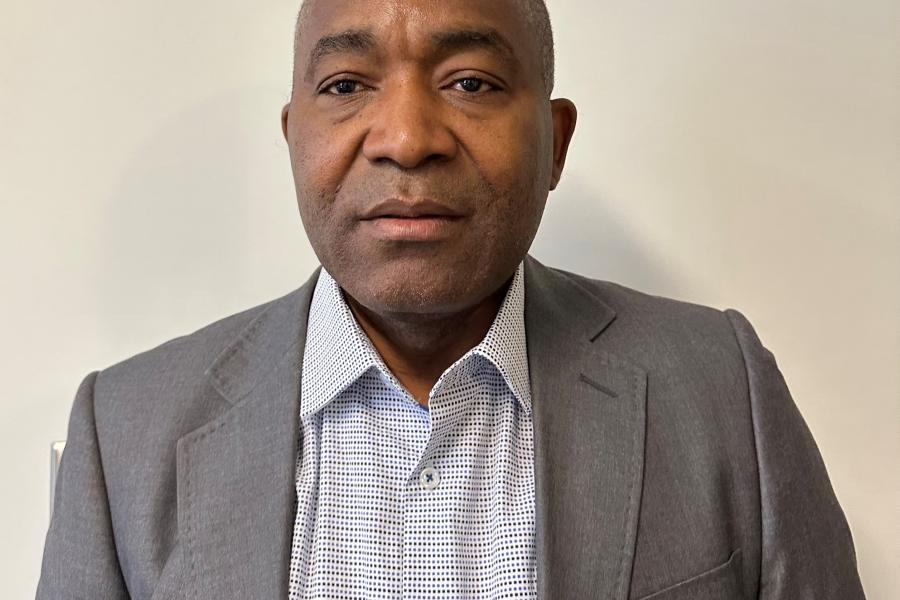
Dr. Mark Tachie is a Full Professor in the Department of Mechanical Engineering at the University of Manitoba's Price Faculty of Engineering. He holds a B.Sc. from Kwame Nkrumah University of Science and Technology (1993), M.Sc. (1998), and Ph.D. (2001) from the University of Saskatchewan. His research focuses on experimental fluid dynamics, particularly turbulent shear flows, boundary layers, and bluff body hydrodynamics. He operates a state-of-the-art lab with stereoscopic PIV and tomographic PIV systems. Notable awards include the 2010 Rh Award and Governor General's Gold Medal for academic excellence. Research interests include turbulent boundary layers, free surface flows, and flow separation phenomena. His work addresses industrial and environmental challenges like fish migration hydraulics and ice-jam dynamics. He has over 300 peer-reviewed publications and served as Associate Editor of the ASME Journal of Fluid Engineering (2010–2017) and Associate Head of the Mechanical Engineering Department (2011–2019). Key contributions include studies on wake dynamics of submerged cylinders, twin jets, and flow interactions with complex geometries. His lab's advanced PIV systems enable detailed turbulence visualization and analysis. Current projects explore turbulence modification in spillways and ice-covered flows, aiming to improve fish passage and environmental flow management.
Matthew Booker is a Professor of History at North Carolina State University, specializing in environmental, agricultural, and food history. He previously served as Vice President for Scholarly Programs at the National Humanities Center (2020-2024). His research explores human-environment interactions in urban and coastal spaces, including projects on transpacific oyster migration and urban food production in the late 19th century. Education: Ph.D. History (Stanford University, 2005), M.S. Environmental Studies (University of Oregon, 1997), B.A. Latin American History (University of California at Berkeley, 1991). Teaching focuses on U.S. environmental history, digital humanities, and interdisciplinary courses like 'Humans and the Environment.' Research interests span global aquaculture, urban ecology, and public history. Notable projects include collaborations with the Rachel Carson Center, San Francisco Exploratorium, and the National Humanities Center. Recent work includes co-editing Food Fights: How the Past Matters to Contemporary Food Debates (2019) and a public science initiative on sourdough microbiology. Awards include the Lonnie and Carol Poole Award for Excellence in Teaching (2009) and the University Faculty Scholar designation (2018). He advises graduate students across disciplines, emphasizing environmental policy, historical methods, and community engagement. Active in professional organizations such as the American Society for Environmental History and the Forest History Society. Advising highlights include guiding over 25 graduate theses/dissertations on topics ranging from agricultural justice to climate adaptation. Collaborative efforts include landscape restoration projects in San Francisco Bay and historical analyses informing climate resilience strategies.
Günther Unfer is a Researcher at the Institute of Hydrobiology and Aquatic Ecosystem Management (University of Natural Resources and Life Sciences, Vienna). With a 2002 Dipl.Ing. in Applied Freshwater Ecology, his work focuses on riverine ecosystem dynamics, fish migration, and climate change impacts on aquatic species. Affiliation: Department of Ecosystem Management, Climate and Biodiversity Key Research Areas: Hydropeaking effects on fish, ecological connectivity restoration, climate-driven stressors in rivers His BOKU projects include: ClimateTrout (2019), aquaZoom (2020), and Christian Doppler Laboratory for Meta Ecosystem dynamics (2021-2028). He has led 19 projects since 2005, including EU-funded Mura-Drava-Danube connectivity (2020-2022) and Salmonid stocking experiments in Austria. Scientific Contributions: 139+ publications (2000-2025) in journals like Limnologica , Global Ecology and Conservation , and Science of the Total Environment Presented at major conferences: IAHR Europe Congress (2024), ASLO Aquatic Sciences (2023), and International Symposium on River Science (2019) Awards: Dissertation mit Auszeichnung (2012) and Studienabschluss mit Auszeichnung (2002). His work integrates field surveys, numerical modeling, and socioecological frameworks to address challenges in sustainable river management and fish conservation.
Nigel Waltho is an Associate Professor in the Department of Biology at Carleton University, Faculty of Science. His academic background includes a B.Sc. and Ph.D. from McMaster University. He specializes in ecology, conservation biology, and marine biology, with a focus on wildlife movement across transportation corridors, coral reef dynamics, and stochastic processes in ecosystems. His research addresses critical issues in habitat connectivity, infrastructure design for wildlife, and ecological modeling. Waltho's work spans terrestrial and marine environments. He has conducted long-term studies on wildlife crossing structures in national parks, evaluated culvert designs for small mammals, and explored isotopic signatures in corals. His ecological research integrates hierarchical theories and stochastic modeling to understand community organization and species interactions. He has published extensively on road ecology, including the effectiveness of underpasses and vegetated medians for mammal movement, as well as coral reef fish assemblages and light-isotope relationships. His contributions highlight the importance of spatial and temporal variability in ecological studies, particularly in conservation planning and infrastructure development. While no awards or grants are explicitly listed, his academic profile reflects a strong commitment to teaching and applied ecological research. His office is located in CTTC 4645, and he can be contacted via email .
Wayne Robinson is a Wildlife Ecologist and researcher at the Dr Gulbali Research Institute, Charles Sturt University, specializing in inland fisheries and ecological monitoring. He is actively involved in research projects related to fish passage, river health, and sustainable fisheries management in Australia and the Mekong River Basin. Education: Doctor of Philosophy, Charles Sturt University, 2012 Master of Applied Science, University of Canberra, 1996 Bachelor of Applied Science, University of Canberra, 1983 His research interests focus on fish passage , large-scale ecosystem monitoring , river health assessment , and sustainable Mekong River fisheries . With expertise in experimental design and long-term ecological data analysis, he contributes significantly to environmentally and socially sustainable natural resource management. His work aligns with UN Sustainable Development Goals, particularly those related to clean water and life below water. His recent publications show a strong trend in freshwater ecology , fish migration , bioassessment , and ecosystem monitoring , with applications in both Australian and Southeast Asian river systems. Techniques such as acoustic telemetry , DNA barcoding , and environmental DNA (eDNA) are frequently employed in his studies. Scientific Awards and Recognitions: Vice-Chancellor's Awards for Excellence (Research Excellence), 2015 CSU Excellence Award for the ACIAR fishway project, 2018 Distinguished Project Award, International Conference on River Connectivity, 2018 Successful grant recipient for Snowy Hydro and redfin risk assessment projects (2021–2022) Wayne Robinson is a registered supervisor and has co-supervised HDR students, including on projects related to Mekong fish migration ecology. He has secured competitive grants and contributed to policy and procedures. His research has significant environmental and economic impact , particularly through the Murray Darling Basin PIT data analysis project. He is actively engaged in collaborative research networks across Australia, Laos, and other Southeast Asian regions. He is involved in laboratory and field-based research teams focused on fish passage and river connectivity, contributing to both national and international conservation and management efforts.
Scott Jackson is Extension Professor in the Department of Environmental Conservation at the University of Massachusetts Amherst. He is actively engaged in research, teaching, and extension work focused on wetlands ecology, amphibian and reptile conservation, wildlife connectivity, and climate adaptation. He leads key initiatives including the North Atlantic Aquatic Connectivity Collaborative (NAACC), the Massachusetts Wildlife Climate Action Tool, and the Conservation Assessment and Prioritization System (CAPS). He is affiliated with the Landscape Ecology Lab, the Northeast Climate Science Center, the UMass Transportation Center, and is a Fellow of UMass Air. Research Interests: His work centers on the ecology and breeding biology of amphibians, vernal pool dynamics, wetland assessment, and the impacts of roads and highways on wildlife. He develops landscape-based tools for ecological integrity and connectivity, with a strong emphasis on practical applications for conservation decision-making. His research integrates field surveys with modeling to support policy and on-the-ground management. The recent publications reflect a strong focus on transportation ecology, wetland monitoring, climate adaptation, and conservation planning. Key themes include improving aquatic organism passage through better culvert and bridge design, developing assessment protocols, and creating decision-support tools for practitioners. The work spans both non-tidal and tidal systems and emphasizes regional collaboration and data standardization. Scientific Awards and Affiliations: Fellow, UMass Air (Unmanned Aerial Systems Research Program) Affiliate, Northeast Climate Science Center Affiliate, UMass Transportation Center Chair, Whately Conservation Commission Advising and Grants: While no formal students are listed, Scott Jackson leads and collaborates on multiple federally and state-funded projects, including those supported by the EPA, USGS, US Fish and Wildlife Service, and Massachusetts state agencies. He has secured grants for wetlands monitoring, climate adaptation tools, and wildlife passage research. His extension role emphasizes collaboration with stakeholders such as conservation commissions, transportation departments, and non-profits. Labs and Teams: He is a principal member of the Landscape Ecology Lab at UMass Amherst and leads the NAACC, a multi-state network involving universities, NGOs, and government agencies. He co-developed CAPS and Critical Linkages, which involve interdisciplinary teams using GIS, modeling, and field data to support conservation prioritization and connectivity planning.