معرفی
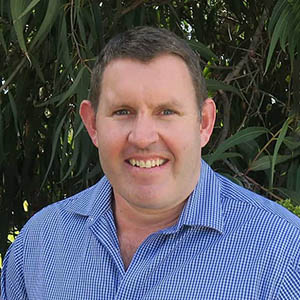
Wayne Robinson is a Wildlife Ecologist and researcher at the Dr Gulbali Research Institute, Charles Sturt University, specializing in inland fisheries and ecological monitoring. He is actively involved in research projects related to fish passage, river health, and sustainable fisheries management in Australia and the Mekong River Basin.
Education:
- Doctor of Philosophy, Charles Sturt University, 2012
- Master of Applied Science, University of Canberra, 1996
- Bachelor of Applied Science, University of Canberra, 1983
His research interests focus on fish passage, large-scale ecosystem monitoring, river health assessment, and sustainable Mekong River fisheries. With expertise in experimental design and long-term ecological data analysis, he contributes significantly to environmentally and socially sustainable natural resource management. His work aligns with UN Sustainable Development Goals, particularly those related to clean water and life below water.
His recent publications show a strong trend in freshwater ecology, fish migration, bioassessment, and ecosystem monitoring, with applications in both Australian and Southeast Asian river systems. Techniques such as acoustic telemetry, DNA barcoding, and environmental DNA (eDNA) are frequently employed in his studies.
Scientific Awards and Recognitions:
- Vice-Chancellor's Awards for Excellence (Research Excellence), 2015
- CSU Excellence Award for the ACIAR fishway project, 2018
- Distinguished Project Award, International Conference on River Connectivity, 2018
- Successful grant recipient for Snowy Hydro and redfin risk assessment projects (2021–2022)
Wayne Robinson is a registered supervisor and has co-supervised HDR students, including on projects related to Mekong fish migration ecology. He has secured competitive grants and contributed to policy and procedures. His research has significant environmental and economic impact, particularly through the Murray Darling Basin PIT data analysis project. He is actively engaged in collaborative research networks across Australia, Laos, and other Southeast Asian regions.
He is involved in laboratory and field-based research teams focused on fish passage and river connectivity, contributing to both national and international conservation and management efforts.