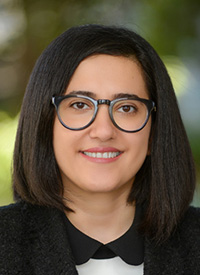
Laurianne SCHMITT is an Assistant Professor at the IÉSEG School of Management's Department of Marketing. She holds a Ph.D. in Sales and Marketing from EM Strasbourg, France. Her research focuses on AI in sales, social media strategies in B2B contexts, key account management, and salesperson behavior. She teaches courses such as Advanced Sales Management, Survey Design and Analysis, and Sales and Business Management within the Bachelor in International Business and Grande École programs. Her work emphasizes the institutionalization of social selling practices and explores the impact of technology like AI coaching on sales performance. Collaborating with 12 partners, her research bridges theory and practice in marketing ecosystems and multinational firm dynamics. Publications span journals like Industrial Marketing Management, Journal of Business Research, and European Journal of Marketing, highlighting her contributions to sales management systems, stakeholder knowledge management, and cross-cultural social media use in sales contexts.
Tor Helge Aas is a Professor at the Department of Management and Innovation, School of Business and Law, University of Agder, and holds a part-time position as Professor II at Kristiania University College. He is the Director of the Executive MBA program at UiA and actively contributes to research and teaching in innovation management. His affiliations include the Research Centre for Studies of Innovation for Sustainable Transition (RIST) and the ISPIM Scientific Panel. His research interests focus on innovation management , particularly in digital servitization, service innovation, innovation processes, collaboration for innovation, and management control. He examines how organizations in manufacturing and service sectors transition to service-oriented business models through digital platforms and ecosystem collaboration. The recent publications highlight a strong trend in digital servitization , platform-based innovation , and human-technology interaction in Industry 5.0. His work spans business model innovation, legitimacy in smart services, and coopetition in R&D projects, with a consistent focus on organizational transformation and sustainable innovation. Scientific Awards and Recognitions: No explicit awards mentioned in the text. Advising and Grants: He has supervised Master’s and PhD students (implied through academic roles). Actively involved in Horizon 2020 projects: OpenInnoTrain (Work Package Manager) and REDI program. Research funded by EU frameworks, indicating competitive grant acquisition. Labs and Research Teams: Member of RIST – Research Centre for Studies of Innovation for Sustainable Transition . Active in ISPIM (International Society for Professional Innovation Management) Scientific Panel. Collaborates extensively with researchers like Anne-Laure Mention, Katja Maria Hydle, and Karl Joachim Breunig.
Jacob Haislip is an Associate Professor of Accounting at the Rawls College of Business, Texas Tech University. He specializes in Accounting Information Systems and teaches undergraduate and advanced courses in data analytics in accounting. His research focuses on corporate governance dynamics, particularly intersections between information technology governance and organizational outcomes. Dr. Haislip holds a PhD in Business Administration (Accounting emphasis) from the University of Arkansas (2014), and MS and BBA degrees in Accounting from Texas Tech University. His research explores how executive IT expertise and board-level technology committees influence cybersecurity disclosures, audit processes, and corporate governance outcomes. Key areas include audit committee effectiveness, data breach reporting practices, and the economic consequences of IT material weaknesses. His work has been published in top journals like Contemporary Accounting Research and Information Systems Research. Haislip currently serves as associate editor for the Journal of Information Systems and editorial board member for the International Journal of Accounting Information Systems. He will assume the role of Treasurer for the American Accounting Association's AIS Section in 2024. His research trends emphasize understanding how technology governance structures impact financial reporting quality, regulatory compliance, and organizational resilience. Recent work highlights executive accountability mechanisms following cybersecurity incidents and the role of audit committees in mitigating earnings management risks.
Richard Payne is a Professor of Finance at Bayes Business School, City University London. His research focuses on empirical market microstructure and asset pricing, with emphasis on exchange rate determination, algorithmic trading, and liquidity dynamics. He holds a PhD in Economics from the London School of Economics and has held academic roles at leading institutions including LSE, University of Bristol, and Warwick Business School. Payne has extensive industry experience, consulting for financial regulators and institutions. His work explores topics like short selling impacts, high-frequency trading, and cross-market linkages between equities and forex markets. Education: PhD in Economics, London School of Economics and Political Science MSc in Econometrics and Mathematical Economics, LSE BSc in Economics, University of Bristol Research Interests: Equity and FX market microstructure Algorithmic trading effects Regulatory policy impacts (e.g., Dodd-Frank, short sale bans) Liquidity measurement and provision High-frequency trading dynamics Publications Trends: His work spans over 31 journal articles and 2 books, with recent focus on long-horizon market skewness, centralized trading transparency, and ultra-fast trading impacts. Key themes include liquidity analysis across asset classes and regulatory interventions' empirical effects. Professional Activities: Directed MSc in Finance programs Organized EMG microstructure conferences Consulted for UK regulators and financial firms Media commentator on market manipulation and high-frequency trading Labs/Teams: Active in cross-disciplinary research groups exploring algorithmic trading, financial regulation, and market quality metrics.
Professor Aris Syntetos is a Distinguished Research Professor and DSV Chair of Logistics and Manufacturing at Cardiff Business School, Cardiff University. He is the founder and Director of the PARC Institute of Manufacturing, Logistics and Inventory, which includes the RemakerSpace, and leads the university’s strategic partnership with DSV. Previously, he held faculty positions at the University of Salford and Copenhagen Business School. His research focuses on the integration of forecasting and inventory optimization, particularly in the context of intermittent demand, spare parts, closed-loop supply chains, and additive manufacturing. He is renowned for the Syntetos-Boylan Approximation and the Syntetos-Boylan-Croston classification method. His work is driven by sustainability and social impact, aiming to reduce inventory obsolescence and support circular economies. The 15 most recent publications highlight a strong trend toward integrating forecasting with inventory and maintenance decisions, with increasing emphasis on sustainability, social good, and advanced analytics. His work spans healthcare, automotive, retail, and humanitarian logistics, often employing machine learning and empirical validation. 2024 Goodeve Medal (Operational Research Society) 2016 Cardiff University Outstanding Doctoral Supervisor Award 2016 & 2019 Cardiff University Innovation and Impact Awards He has secured over £5 million in research funding as Principal Investigator from EPSRC, Innovate UK, and the Welsh Government, leading projects on remanufacturing, 3D printing, and sustainable supply chains. He advises major firms like Ocado, BT, and DSV, and his methods are used in commercial software. He supervises PhD students and actively promotes knowledge transfer. He is Editor-in-Chief of the IMA Journal of Management Mathematics and serves as Vice-President of the International Society for Inventory Research (ISIR). He has taught in the UK, China, Colombia, Denmark, France, Greece, Italy, and Latvia, primarily in Operations Management and Applied Statistics.
Jennifer Shang is a Professor of Business Administration and Area Director for Business Analytics and Operations at the Katz Graduate School of Business , University of Pittsburgh. With a focus on healthcare analytics, operations management, and e-commerce, she applies data-driven methodologies to enhance patient care, hospital efficiency, and business productivity. Education: PhD in Operations Management, University of Texas at Austin MBA, University of Iowa Bachelor of International Business, National Taiwan University Her research integrates multi-criteria decision-making techniques (e.g., AHP/ANP, DEA) and combines human judgment with quantitative data to improve organizational outcomes. She has published over 140 papers, with recent trends emphasizing healthcare analytics, big data applications, and supply chain optimization in service industries. Scientific Awards: Distinguished Professor for EMBA class 32 (2004-2005) Excellence in Teaching Award for MBA program (2002-2004, 2009-2010) Excellence in Research Awards (2013-2015, 2017-2020, 2021-2022) Best Paper Award (2010) in Information Systems Research Professor Shang teaches courses in operations management, supply chain, statistical analysis, and multivariate data analysis at undergraduate, MBA, EMBA, DBA, and PhD levels. She serves on editorial boards for journals including International Journal of Revenue Management and International Journal of Productivity and Quality Management .
Chad Syverson is the George C. Tiao Distinguished Service Professor of Economics at the University of Chicago Booth School of Business. His research focuses on the interactions between firm structure, market structure, and productivity, with publications appearing in top economics journals. He serves as a research associate at the National Bureau of Economic Research and has contributed to National Academies committees. Dr. Syverson earned bachelor's degrees in economics and mechanical engineering from the University of North Dakota in 1996, followed by a PhD in economics from the University of Maryland in 2001. Prior to joining Chicago Booth in 2008, he worked as a mechanical engineer for Loral Defense Systems and Unisys Corporation, an experience that informed his research interest in productivity measurement and analysis. His research spans industrial organization, productivity analysis, and microeconomics, with particular attention to how firms organize production, how market structure affects productivity, and measurement issues in economic analysis. His work often combines theoretical frameworks with detailed empirical analysis of firm-level data. He has co-authored the widely used intermediate microeconomics textbook with Austan Goolsbee and Steve Levitt. Analysis of his recent publications reveals a strong focus on productivity measurement across sectors including healthcare, construction, and retail. His work increasingly examines the relationship between market power and productivity, with several papers analyzing markups, monopsony power, and competitive dynamics. He frequently employs detailed microdata to investigate how firms respond to market conditions and regulatory changes. National Science Foundation Awards Syverson serves as chair of the Chicago Census Research Data Center Board and has contributed to policy discussions through National Academies committees. His research has been funded by multiple National Science Foundation awards, reflecting the significance of his contributions to understanding productivity dynamics and market structure. He has also collaborated extensively with leading economists including Austan Goolsbee, Steve Levitt, and Martin Gaynor.
Michael Knaus is a Junior Professor (Assistant Professor) in the Department of Economics within the Faculty of Economics and Social Sciences at the University of Tübingen, Germany. His office is located at Mohlstraße 36, 4th floor, room 415. He teaches graduate-level courses on causal inference and causal machine learning. Dr. Knaus specializes in the intersection of causal inference and machine learning, with particular expertise in Double Machine Learning methods. His research focuses on developing advanced statistical techniques to estimate treatment effects across various economic contexts including labor markets, finance, education, and health economics. His work bridges theoretical econometrics with practical applications, emphasizing methodological rigor and real-world relevance. His recent publications demonstrate a clear progression toward increasingly sophisticated methods for handling heterogeneous treatment effects and complex causal structures. His research shows strong integration of machine learning algorithms with causal inference frameworks to address challenging policy questions across multiple domains. Double Machine Learning based Program Evaluation under Unconfoundedness (The Econometrics Journal, 2022) Heterogeneous Employment Effects of Job Search Programmes: A Machine Learning Approach (Journal of Human Resources, 2022) How Does Post-Earnings Announcement Sentiment Affect Firms' Dynamics? (Journal of Financial Econometrics, 2024) Effect or Treatment Heterogeneity? Policy Evaluation with Aggregated and Disaggregated Treatments (2021) Dr. Knaus has made significant methodological contributions through his development of the causalDML R package, which implements Double Machine Learning methods for binary and multiple treatment effect estimation. His work has been published in top econometrics and economics journals and has gained recognition in the research community, with his GitHub repository accumulating 36 stars. He frequently collaborates with Michael Lechner, a leading researcher in causal inference and program evaluation. His teaching includes E464 Causal Inference and E463 Causal Machine Learning, both graduate courses that combine theoretical foundations with practical implementation using R. These courses prepare students for advanced research and data science roles requiring sophisticated causal reasoning skills, emphasizing hands-on application of methods to real-world problems.
Thomas Lemieux is a Professor at the Vancouver School of Economics within the Faculty of Arts at the University of British Columbia , where he has been affiliated since 1999. Previously, he taught at MIT and the Université de Montréal. Born in Quebec City, he earned his Ph.D. from Princeton University. Research Interests: His work focuses on labor economics and econometric methods , particularly analyzing earnings inequality , unionization effects , regression discontinuity designs , and educational returns . He employs advanced decomposition techniques to study wage dynamics across gender, immigration status, and sectoral divides. Scientific Awards: Fellow, Royal Society of Canada Fellow, Society of Labor Economists Research Fellow, Institute for the Study of Labor (IZA) Research Associate, National Bureau of Economic Research (NBER) Publications: He has published extensively in top journals like the Quarterly Journal of Economics , Econometrica , and Journal of Labor Economics , with recent work examining: Union wage premiums using matched employer-employee data Spillover effects of minimum wage policies Changes in task prices and occupational wages Top income dynamics in Canada Immigrant wage gaps across education sources Regression discontinuity identification challenges Canadian labor market responses to the Great Recession
Roland N. Horne is the Thomas Davies Barrow Professor of Earth Sciences at Stanford University and Senior Fellow at the Precourt Institute for Energy. He holds positions in the Department of Energy Science & Engineering and is an Affiliate at the Stanford Woods Institute for the Environment. With degrees from the University of Auckland (BE, PhD, DSc), Horne has established himself as a leading expert in geothermal reservoir engineering and energy production optimization. His research focuses on inverse problems in reservoir modeling, including tracer analysis of fractures, computer-aided well test analysis, production schedule optimization, and automated history matching. Horne has made significant contributions to understanding geothermal reservoir engineering and multiphase flow of boiling fluids through porous materials and fractures. The analysis of his recent publications (2023-2025) reveals a strong emphasis on enhanced geothermal systems (EGS), with particular focus on flexible operations, economic modeling, and advanced characterization techniques. His work increasingly incorporates machine learning approaches for reservoir analysis and has expanded into microbial tracing methods for interwell connectivity assessment. There's also significant attention to US geothermal resource potential and integration into the broader energy transition. Honorary Member of the Society of Petroleum Engineers Member of the US National Academy of Engineering Multiple SPE Distinguished Lecturer appointments (1998, 2009, 2020) John Franklin Carl Award recipient Five Best Paper awards from Geothermal Resources Council Patricius Medal from German Geothermal Society Core Values Award from Women in Geothermal (2023) Horne has supervised 60 PhD and 135 MS students throughout his career. His current teaching includes undergraduate and graduate courses in Fundamentals of Energy Processes, Geothermal Reservoir Engineering, Mass and Energy Transport in Porous Media, and Well Test Analysis. He previously served as President of the International Geothermal Association (2010-2013) and Technical Program Chair for multiple World Geothermal Congress events. Horne maintains active research collaborations worldwide, including with the University of Tokyo (where he was a Fellow of the School of Engineering in 2016) and China University of Petroleum. His current research group focuses on advancing EGS technologies and developing more accurate reservoir characterization methods for geothermal applications.
Maria Ioannidou is a Reader in Competition Law (equivalent to Associate Professor) at Queen Mary University of London's School of Law, where she serves as Deputy Director of the Institute for Competition and Consumers. Previously, she held significant public enforcement roles as Commissioner Rapporteur and Board Member of the Hellenic Competition Commission (2019-2022), complementing her private practice experience at leading law firms in Athens and Brussels. Education: BA and LLM in Law, University of Athens MJur, MPhil, and DPhil in Law, University of Oxford (Corpus Christi College) Her research centers on EU/UK competition law with specialized focus on digital markets, examining how AI, big data, and digital platforms reshape consumer choice and competition enforcement. She investigates the competition-regulation dichotomy, consumer-law intersections, and effective remedy design in digital contexts, addressing both theoretical frameworks and practical enforcement challenges. Her recent publications (2018-2023) reveal a concentrated evolution toward digital competition law, with increasing emphasis on AI-driven market dynamics, multi-level governance, and consumer vulnerability in platform economies. Key thematic clusters include digital market remedies, energy sector regulation, and private enforcement mechanisms, reflecting her dual expertise in theoretical scholarship and policy engagement. Dr Ioannidou actively supervises PhD candidates while leading the Institute for Competition and Consumers. She serves as managing editor of the Journal of Antitrust Enforcement and provides expert testimony to UK parliamentary committees on AI regulation, demonstrating significant policy influence beyond academic contributions. She coordinates the Journal of Antitrust Enforcement Agency Effectiveness Study and maintains active affiliations with Oxford University's Centre for Competition Law and Policy, driving collaborative research on global competition governance and digital market challenges.
Hanieh Sardashti is an Assistant Professor at Adelphi University's Robert B. Willumstad School of Business, specializing in the Decision Sciences and Marketing Department. Her research bridges marketing strategy with financial outcomes, focusing on areas like marketing analytics and digital marketing. Ph.D. in Marketing, Michigan State University (2018) MBA in Finance and International Business, University of Toledo, Ohio (2013) Research Interests: Marketing Strategy Marketing Analytics Digital Marketing Quantitative Marketing Her publications analyze the intersection of marketing and financial risk, including studies on CSR during recessions, equity-based compensation effects on branding, and corporate risk mitigation through marketing capabilities. Articles often employ quantitative methodologies and emphasize strategic decision-making. Contact: Email: hsardashti@adelphi.edu LinkedIn: Profile
Prof. Dr. Kai Hoberg is a Professor of Supply Chain and Operations Strategy at Kühne Logistics University (KLU) since 2017, where he also served as Department Head of the Operations and Technology Department from 2017 to 2023. Prior to joining KLU as an Associate Professor in 2012, he was an Assistant Professor at the University of Cologne (2010–2012) and a strategy consultant at Booz & Company (2006–2010). His research interests span supply chain analytics and technology integration inventory modeling for intermittent demand digital transformation in operations management additive manufacturing in after-sales services human-machine interaction in forecasting pharmaceutical supply chain challenges IoT-enabled vendor-managed inventory behavioral aspects of operations . Recent publications highlight empirical studies leveraging machine learning for semiconductor order fulfillment, typologies for additive manufacturing adoption, and process mining applications in SCM. His work frequently combines theoretical modeling with real-world validation, including partnerships with firms in food manufacturing, postal services, and medical devices. He earned a PhD in Supply Chain Management from Münster University (2006) and a Diplom in Industrial Engineering from Paderborn University and Monash University. He has held visiting scholar roles at institutions like Cornell, NUS, Oxford, and Stellenbosch.
Professor Massimiliano Tani Bertuol is a distinguished academic specializing in economics at UNSW Canberra's School of Business, where he has served as Professor since 2015. His professional affiliations extend beyond UNSW as he is an Associate Investigator/Member at CEPAR; Ageing Futures; uDASH; AI Institute; and Cyber security (IFCYBER). Additionally, he maintains international connections as a Research Fellow at the Institute for the Future of Labor (IZA) in Germany since 2005, an Associate Member at Macquarie University's Centre for Workforce Futures since 2018, and a Research Fellow at the Global Labor Organization (GLO) in Maastricht since 2016. His educational background reflects a strong foundation in economics and business, having earned a PhD in Economics from the Australian National University (2003), a Master of Science in Economics from the London School of Economics (1992), and a Bachelor's degree in Business/Economics from Bocconi University in Milan, Italy (1989). His academic journey has positioned him as a leading researcher in human capital economics with international recognition. Professor Tani Bertuol's research centers on human capital development and its economic implications. His work examines how human capital can be fostered, efficiently transferred internationally through migration, and how it affects productivity, innovation, and economic growth at both firm and national levels. His research spans multiple regions including Australia, Europe, the US, Africa, and China, with particular focus on migration economics, labor market outcomes, and the economic impacts of education and skills. His current research agenda includes non-pecuniary incentives, behavioral/financial decisions in China, occupational licensing, language skills and economic assimilation, AI-human interactions in health contexts, and labor mobility and productivity. Analysis of his recent publications reveals significant interdisciplinary trends bridging economics with public health, environmental science, and technology. His work connects migration dynamics with economic outcomes, examines household financial behaviors through gender lenses, and investigates the complex relationships between environmental factors like air pollution and economic activities including education investment and entrepreneurship. More recent work explores AI applications in health and the economic implications of pandemic responses, demonstrating his ability to address contemporary challenges through rigorous economic analysis. 2023: UNSW ARC Postgraduate Council (Arc PGC) award for excellence in research supervision 2011: Vice-Chancellor Award for Teaching Excellence 2011: Faculty Award for Teaching Excellence for teaching economics Professor Tani Bertuol has successfully supervised 4 PhD students to completion, with 1 submitted dissertation and 5 currently under supervision. His active research program is supported by significant grant funding including an ARC Linkage Project (2023-27) on regional Australia's skills shortages and high-skill refugees' employment ($354,811), an ARC Discovery Project (2019-23) on migrant aging and wellbeing ($478,000), and a NUW Alliance grant (2021-23) on hearing screening and academic outcomes ($73,367). He serves as Associate Editor for Social Indicators Research and Higher Education Research & Development, contributing to scholarly discourse in his fields of expertise. His teaching portfolio includes courses in data analytics, finance, and professional executive education focused on cost-benefit analysis and data communication. He teaches ZBUS2333 Data Analytics and Visualisation, ZBUS8105 Finance and Investment Appraisal, and ZBUS8149 Introduction to Finance, demonstrating his commitment to developing the next generation of economics professionals with both theoretical knowledge and practical skills.
James Tybout is a Professor of Economics at the Department of Economics, Pennsylvania State University. He holds a Ph.D. from the University of Wisconsin-Madison (1980). His research focuses on international trade dynamics, development economics, and industrial organization, with a particular emphasis on firm-level analysis in developing economies. Key themes include export behavior, trade policy impacts, and structural transformation in industries such as textiles, manufacturing, and retail sectors. His work explores topics like export market entry costs, learning effects in international trade, and the effects of multinational corporations such as Walmart on local suppliers. Notable studies include analyses of Colombian exporters, Mexican soap and detergent producers, and Bangladeshi apparel firms. His research also addresses credit constraints, fuel substitution in manufacturing, and the consistency of customs records across countries. Publications span over three decades, reflecting a sustained engagement with global trade patterns and firm-level responses to policy and market changes. Despite his prolific output, no specific awards or grants are listed in the provided text. His advisory roles and lab affiliations remain unspecified.