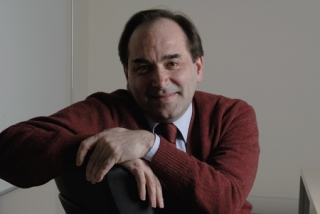
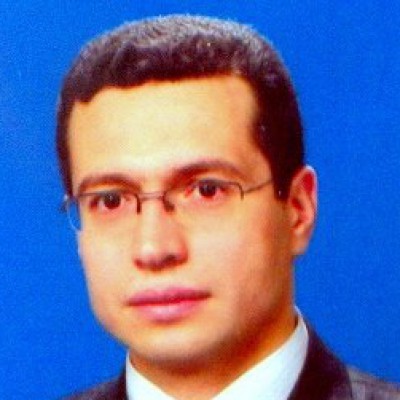
Dr. Yousef Daneshbod is an Associate Professor of Mathematics at the University of La Verne, affiliated with the College of Arts and Sciences. His research interests span computational mathematics, numerical analysis, machine learning, and parallel computing. He holds a PhD and M.S. in Mathematics from Claremont Graduate University and M.S. and B.S. in Engineering from Shiraz University, Iran. His work focuses on numerical algorithms, Hessian-based methods, and computational techniques for scientific problems. Key areas include high-accuracy Hessian approximation in chemical dynamics, domain decomposition methods, and parallel computing scalability. He has also contributed to educational approaches in deep learning and computational science pedagogy. Recent publications explore topics such as power load forecasting with recurrent neural networks, efficient parabolic solvers, and vibration analysis using fundamental solutions. His research combines theoretical rigor with practical applications in fields like fluid dynamics, energy systems, and microfluidics.
Dr. Florentina Tone is a Professor in the Department of Mathematics and Statistics at the University of West Florida, part of the Hal Marcus College of Science and Engineering. She has been a faculty member since 2006, contributing to both undergraduate and graduate education through classroom and online instruction. Her academic background includes a Ph.D. in Mathematics from Indiana University and both a Master’s and Bachelor’s degree in Mathematics from the University of Bucharest, Romania. Dr. Tone's research is centered on numerical analysis of partial differential equations , with a focus on convergence, stability, and error estimation of numerical schemes. Her work applies to fluid dynamics, phase field models, and coupled physical systems. She has published in leading journals such as SIAM Journal on Numerical Analysis and Numerische Mathematik , and has presented at numerous national and international conferences. The analysis of her recent publications reveals a consistent focus on rigorous mathematical validation of numerical methods, particularly finite element and finite difference schemes for time-dependent PDEs. Her work spans applications in fluid mechanics, heat transfer, chemotaxis, and electromagnetics, demonstrating strong interdisciplinary reach within applied mathematics. She has been recognized for her contributions with the Distinguished Research and Creative Activities Award from UWF. This honor reflects her sustained excellence in scholarly output. Dr. Tone actively supervises student research projects and teaches courses such as Complex Analysis, Numerical Analysis, Linear Algebra, and Calculus. While specific grant details are not listed, her sustained publication record and award suggest active research funding. She has mentored students through research advising, contributing to academic development within the department. She is affiliated with the Department of Mathematics and Statistics, which supports research through seminars, colloquia, and student associations such as the Math Association. The department also hosts technical reports and research labs, including the CSDA Lab, which may support data-intensive computational work.
Dr. Jia Liu is a Professor and Chair of the Department of Mathematics and Statistics at the University of West Florida, within the Hal Marcus College of Science and Engineering. She has been a key academic figure at UWF since 2006, leading both research and departmental initiatives in computational and applied mathematics. Her educational background includes a Ph.D. in Mathematics from Emory University, funded by the National Science Foundation, focusing on preconditioned Krylov subspace methods for incompressible flow problems. She earned her M.S. and B.A. in Mathematics from Central China Normal University, where her bachelor's thesis received the highest honor. Dr. Liu's research lies at the intersection of numerical linear algebra, scientific computing, and interdisciplinary applications. Her primary interests include: Numerical solvers for large sparse linear systems Krylov subspace iterative methods Preconditioning techniques Applications to Navier-Stokes and optimization problems Geometric and topological analysis of ellipsoids Complex networks and community detection via spectral clustering Machine learning for disease prediction and biological modeling The trends in her publications reflect a consistent focus on robust numerical algorithms with applications across fluid dynamics, network science, and biomedical modeling. Her work emphasizes both theoretical development and practical implementation in high-performance computing environments. Dr. Liu has served as an editor and editorial board member for several peer-reviewed journals and regularly reviews submissions. While specific awards are not listed, her sustained publication record in prestigious venues such as SIAM Journal on Scientific Computing and Journal of Biological Dynamics underscores her scholarly impact. As department chair and professor, she plays a central role in academic advising, curriculum development, and research mentorship. She teaches core courses including Differential Equations, Numerical Analysis, and Real Analysis, contributing significantly to both undergraduate and graduate education. Her leadership extends to managing research grants and fostering collaborations across disciplines. Though no formal lab name is mentioned, her research activities suggest involvement with computational modeling groups, likely associated with applied mathematics and data science initiatives at UWF. Her ongoing work continues to advance numerical methods for complex systems in science and engineering.
Ahmet Kırış is a Professor in the Department of Mathematics Engineering at Istanbul Technical University, Turkey, with active research output through 2025. His work bridges applied mathematics and engineering, focusing on fractional calculus applications in vibration analysis, image processing, and thermoelasticity. He maintains an h-index of 8 (Scopus) with 26 publications and leads a current research project on image denoising. His research emphasizes fractional differential equations and computational modeling for complex physical systems. Key contributions include vibration analysis of rectangular plates using Chebyshev finite difference methods, fractional image denoising techniques, and electrohydrodynamic flow modeling. He frequently develops numerical strategies like wavelet collocation and fractional total variation to solve nonlinear boundary value problems in multi-dimensional domains. Analysis of his 2024-2025 publications reveals a cohesive trajectory in extending fractional calculus to real-world engineering challenges. Recent work demonstrates innovation in space-time fractional operators for image denoising, coupled thermoelastic plate dynamics, and adiabatic reactor modeling—showcasing how non-local mathematical frameworks solve problems where classical methods fail. Scientific recognition includes: Three instances of TOP 25 Hottest Articles award (2005) TUMTMK 13th National Congress Best Presentation Award (2003) TUMTMK 14th National Congress Best Work Award (2005) TUMTMK 15th National Congress Best Doctoral Second Prize (2007) Professor Kırış has supervised 4 students and currently directs the SRP-funded project "TVFF yöntemi ile gürültülü görüntülerin temizlenmesi" (Cleaning Noisy Images with TVFF Method) from May 2024-February 2025. His collaborative network spans international co-authors from Poland and India, reflecting strong cross-institutional partnerships in computational mathematics.
Douglas Christensen is a Professor in both the Department of Electrical and Computer Engineering and the Department of Biomedical Engineering at the University of Utah. His academic career spans over five decades, beginning with a Ph.D. in Electrical Engineering from the University of Utah in 1967. He has authored or co-authored multiple books, including Ultrasonic Bioinstrumentation and Basic Introduction to Bioelectromagnetics . Education: BS, Electrical Engineering, Brigham Young University (1962) MS, Electrical Engineering, Stanford University (1963) PhD, Electrical Engineering, University of Utah (1967) Postdoctoral Fellowship, University of Washington (1972-1974) Research Interests: Therapeutic ultrasound Optical biosensors Acoustic radiation force Phase aberration correction 3D MR thermometry Medical imaging systems Ultrasound wave propagation Scientific Awards: Fellow, American Institute for Medical and Biological Engineering (2001) Distinguished Teaching Award, University of Utah (2004) Lifetime Achievement Award, ECE Department (2020) ECE Chair's Award (2022) His recent publications focus on improving transcranial ultrasound simulations through skull geometry modeling, optimizing phase aberration correction for breast MRgFUS, and enhancing MR thermometry accuracy via model predictive filtering. He has secured significant NIH grants for HIFU bioengineering and transcranial MRgFUS innovations. Christensen teaches foundational courses in biomedical engineering and electrical circuits, with active roles in 2023-2024 academic terms.
Dr. Eric Hall is a Baxter Fellow and Lecturer in Applied Mathematics at the University of Dundee's School of Science and Engineering. He holds a PhD in Mathematics from the University of Edinburgh (2013) and a B.A. in Mathematics from the University of Pennsylvania. Prior to joining Dundee in 2020, he held postdoctoral positions at KTH Royal Institute of Technology, University of Massachusetts Amherst, and RWTH Aachen University. His research focuses on the mathematical foundations of data science, specializing in uncertainty quantification , stochastic simulation , and predictive modeling for complex systems. Current work develops domain-aware surrogate models and sensitivity analysis techniques for scientific machine learning, with applications spanning materials science, finance, geophysics, and solar physics. Publications demonstrate a strong focus on multi-scale systems and scientific machine learning , with recent work expanding into astrophysical applications. Research consistently integrates mathematical rigor with practical applications across physics and engineering domains. Awards and Honors Dundee Difference Awards 2025 - Innovation of the Year Fellow of the Institute of Mathematics and its Applications (2022) Science and Engineering Staff Awards - Innovation in Teaching (2022) Dr. Hall actively supervises PhD students in uncertainty quantification and scientific machine learning, and serves as second supervisor for doctoral projects on chaotic differential equations. He has secured research grants including STFC PhD funding for Solar Physics applications and Heilbronn Focused Research Group funding. He maintains memberships in the Edinburgh Mathematical Society (Trustee), Institute of Mathematics and its Applications, Society for Industrial and Applied Mathematics, and American Mathematical Society. Dr. Hall leads research in uncertainty quantification within the Mathematics division and collaborates internationally on multi-scale modeling projects.
Per-Olof Persson is a Professor in the Department of Mathematics at the University of California, Berkeley . He is also a Senior Scientist at the Lawrence Berkeley National Laboratory , where he contributes to applied mathematics and computational physics research. Research Interests: Applied Mathematics Numerical Methods Computational Fluid and Solid Mechanics Discontinuous Galerkin Methods High-Order Discretizations Mesh Generation Recent Publications (2023-2025) demonstrate expertise in geometric multigrid, shock capturing, solution transfer between curved meshes, and optimization techniques. Key trends include advancements in high-order accuracy for fluid dynamics, implicit-explicit time-stepping, and interdisciplinary applications in aerospace and biomedical engineering. Advising: Supervised multiple PhD and Master’s students in topics spanning shock tracking, fluid-structure interaction, and computational solvers. Collaborates with institutions like MIT, KTH Royal Institute of Technology, and Lawrence Berkeley National Lab.
Hans van Dommelen is Associate Professor of Micromechanics at Eindhoven University of Technology (TU/e), Department of Mechanical Engineering, where he leads the Group Van Dommelen . His research couples microstructure to mechanical and functional behaviour of materials spanning nuclear fusion, additive manufacturing, polymers, and biomechanics. Education PhD in Mechanical Engineering, TU/e (2003) – Micromechanics of particle-modified semicrystalline polymers Visiting researcher, MIT (1999–2000), University of Virginia (2003–2004), and Cambridge University (2010–2012) Research Interests Van Dommelen’s work focuses on multi-scale mechanics and structure–property relationships . Using microstructural modelling and homogenization techniques, he links phenomena at the microscale to macroscopic response in: Crystalline and heterogeneous materials Nuclear fusion reactor materials (tungsten, liquid-metal shields) Additive manufacturing (wire-arc, selective laser sintering, vat photopolymerization) Semi-crystalline polymers and short-fiber composites Traumatic brain injury biomechanics Scientific Output He has authored over 230 peer-reviewed publications (h-index > 40) in leading journals such as Journal of the Mechanics and Physics of Solids , Biomechanics and Modeling in Mechanobiology , Nuclear Fusion , and Additive Manufacturing . Recent trends include viscoelastic-viscoplastic metamaterials, anisotropic food printing, recrystallization kinetics of tungsten under fusion loads, and multiscale fracture of additively manufactured metals. Teaching & Supervision Van Dommelen coordinates and lectures in: Structure and Properties of Materials Computational and Experimental Micro-mechanics Fusion Reactor Materials and Plasma-Wall Interaction He has supervised >85 MSc and PhD theses to date. Laboratory & Collaborations He heads the Group Van Dommelen within the Mechanics of Materials section, maintaining strong collaborations with DIFFER, ITER, and international partners on liquid-metal technologies for fusion blankets and advanced additive manufacturing processes.
Dr. Vrushali A. Bokil is a Professor of Mathematics and currently serves as Executive Associate Dean of the College of Science at Oregon State University (October 2024 - Present). Previously, she served as Interim Dean of the College of Science (August 1, 2022 - October 30, 2023) and Associate Dean for Research & Graduate Studies (October 2020 - July 2022; November 2023 - September 2024). She earned her Ph.D. in Mathematics from the University of Houston in 2003 under Professor Roland Glowinski and completed postdoctoral research at North Carolina State University under Professor H.T. Banks. Her research spans applied mathematics with focus on numerical methods for wave propagation problems, particularly Maxwell's equations using finite difference and finite element methods, and mathematical ecology involving deterministic and stochastic models for population dynamics, epidemiology, and spatial ecology. She has secured significant funding including NSF grants for computational mathematics and mathematical biology projects. Dr. Bokil's recent publications demonstrate expertise in virtual element methods for magnetohydrodynamics, convergence analysis of numerical schemes for Maxwell's equations, and optimal control of plant disease epidemics. Her work bridges computational mathematics with biological applications, particularly in plant virus modeling and control strategies. Scientific Awards: Champion of Science award (2022) Inclusive Excellence Award (2019) ELATES Fellow (2021-2022) ADVANCE Faculty Fellowship Thomas Jefferson Fund award recipient As an advisor, Dr. Bokil has mentored several Ph.D. students including Sebastian Naranjo Alvarez, Brady Bowen, and Puttha Sakkaplangkul. She has served as PI or co-PI on multiple major grants including NSF DMS #1720116 (Collaborative Research: Compatible Discretizations for Maxwell Models in Nonlinear Optics), NSF DMS #2012882 (Computational and Multi-Scale Methods for Nonlinear Electromagnetic Models), and FACE Foundation funding for mathematical epidemiology of plant viruses. Dr. Bokil leads initiatives in diversity, equity, and inclusion as Chair of the SIAM Career Opportunities Committee, member of the AMS-MAA-SIAM Committee on Employment Opportunities, and past member of OSU's President's Commission on the Status of Women. She co-organized the AWM Aligning Actions at Crossroads Workshop to improve culture in mathematical sciences.
Dr. Andrius Čiginas is a Senior Researcher at the Interdisciplinary Statistical Research Group , part of the Institute of Data Science and Digital Technologies (VU DMSTI) at Vilnius University . His work focuses on advancing survey statistics, small area estimation, and the integration of non-probability samples into official statistics. Research Focus Dr. Čiginas specializes in developing statistical methodologies for improving the accuracy and efficiency of population estimates, especially in small domains. His research includes: Composite estimation techniques Non-probability sample integration Real-time prediction using social media and administrative data Bootstrap and Edgeworth approximations for finite populations Doctoral Supervision He currently supervises two doctoral students: Akvilė Vitkauskaitė – Informatics (2024–2028): Parameter estimation and forecasting in population domains using non-probability samples. Ieva Burakauskaitė – Mathematics (2022–2026): Use of additional information in estimating parameters in population domains. Scientific Contributions Dr. Čiginas has published extensively in top-tier journals such as Journal of Official Statistics , Statistics , and Nonlinear Analysis: Modelling and Control . His recent work explores the integration of non-probability data sources into official statistics, consumer confidence estimation, and small area estimation techniques.
Arti Agrawal is an Adjunct Associate Professor in the School of Electrical and Data Engineering at the University of Technology Sydney (UTS). She has been associated with UTS since 2018, initially joining with time split between her academic role and as Director of the Women in Engineering and IT programme. She is also the CEO of Vividhata Pty Ltd, a startup focused on diversity and inclusion. Dr. Agrawal earned her PhD in Physics from the Indian Institute of Technology Delhi in 2005, following an MSc (1999) and BSc Physics (Hons) (1997) from the same institution. Prior to UTS, she worked at City, University of London from 2005-2017, progressing from Research Fellow to Senior Lecturer in the Department of Electrical Engineering. Her primary research focuses on optics and photonics, specifically modeling photonic components such as solar cells, optical fibers, sensors, and lasers using numerical methods like the Finite Element Method (FEM). She is an expert in computational photonics, having authored a book on FEM and edited a book on trends in computational photonics. She serves as an Associate Editor for the IEEE Photonics Journal. Dr. Agrawal's recent publications demonstrate a strong focus on nanophotonics, particularly involving graphene and silicon carbide materials for mid-infrared applications, as well as research on diversity and inclusion in engineering education. Her work spans both fundamental photonics research and practical applications in sensor technology and optical devices. Chartered Engineer (Institution of Engineering and Technology, 2013-present) Chartered Physicist (Institute of Physics) Senior Member IEEE Senior Member Optical Society of America Board of Directors, Optical Society of America (2018) Dr. Agrawal has received research funding including a scholarship from the Defence Science and Technology Group of the Department of Defence for 'Graphene based Nanophotonics for Polarization and Photodetection Filter Design' (2019-2022). She is passionate about mentoring students and has supervised PhD and Master's students in photonics research. Her teaching interests include electromagnetics, optics, and numerical methods, and she has taught first-year undergraduate Physics, Signal Processing, and Biomedical Optics. She leads significant initiatives in diversity and inclusion in STEM, using virtual reality for training and developing evidence-based approaches for managing diverse teams. She has organized workshops including the first Pride in Photonics workshop at CLEO for LGBTQI+ scientists and allies.
Dr. Ji Chen is a Professor and Chair at the Department of Electrical & Computer Engineering, University of Houston, where he also serves as Director of the NSF I/UCRC Center for EMC Research. His career bridges academic research with industry experience, including prior roles as a staff engineer at Motorola Personal Communication Research Labs (1998-2001). He holds a PhD in Electrical Engineering from the University of Illinois, Urbana-Champaign, with prior degrees from McMaster University and Huazhong University of Science and Technology. IEEE Fellow Fellow AIMBE NSF Career Award Winner Dr. Chen's research focuses on computational electromagnetics , particularly in biomedical applications. Key areas include electromagnetic safety of medical implants in MRI systems , multi-channel transcranial magnetic stimulation (TMS) devices , coupled EM-neuro modulation simulations , and RF field interactions with the human body . He has developed novel solutions for MRI-induced heating mitigation in implants and pioneered wireless power transfer applications for industrial systems. His publication record demonstrates expertise in FDTD modeling for periodic structures, electromagnetic dosimetry, and medical device safety evaluation. Collaborations with Wolfgang Kainz and others have produced significant contributions to MRI safety standards and virtual human modeling for dosimetric simulations. Scientific Awards IEEE EMC Society Technical Achievement Award (2011) IEEE EMC Society Distinguished Lecturer (2009-2010) IEEE APMC Best Paper Award (2008) IEEE Senior Member (2008) ORISE Fellowship (2006) Motorola Engineering Award (2000) Dr. Chen's research group has explored electromagnetic tracking systems for radiotherapy, developed advanced simulation techniques for periodic structures, and investigated safety protocols for pregnant women in metal detector exposure scenarios. His work combines theoretical advancements with practical applications in both medical and industrial electromagnetics.
Paul Dellar is a Governing Body Fellow and Tutor in Applied Mathematics at Corpus Christi College, University of Oxford, where he also serves as a University Lecturer in Applied Mathematics. He returned to Oxford in 2007 after previous academic positions including a lectureship at Imperial College London and a Junior Research Fellowship at Corpus Christi College (2001–2004). His educational background includes undergraduate and graduate studies at the University of Cambridge, supplemented by participation in the Woods Hole Summer Study Programme in Geophysical Fluid Dynamics. Dr. Dellar's research spans several interconnected domains: Lattice Boltzmann methods : Developing computational frameworks for fluid dynamics, electromagnetic systems, and quantum applications, with industrial uses in automotive and nuclear engineering. Geophysical fluid dynamics : Deriving improved shallow water equations to model ocean currents (e.g., Antarctic Bottom Water crossing the equator) and atmospheric phenomena on planets like Jupiter. Multiscale modeling : Bridging kinetic theory, magnetohydrodynamics, and active matter systems through novel algorithms. His publications predominantly explore computational innovations in fluid dynamics and plasma physics, with recurring themes of lattice Boltzmann optimizations, conservation properties in geophysical models, and turbulence mechanisms in exotic systems. Recent work shows increasing focus on quantum lattice algorithms and high-precision magnetohydrodynamics solvers. Notable scientific recognition includes: Glasstone Research Fellowship (University of Oxford) He has supervised doctoral candidates such as Andrew Stewart, with whom he co-authored research on Coriolis force modeling in oceanography. Industrial collaborations include study groups addressing challenges like blood flow simulation for surgical stents and wave energy conversion systems.
Alberto De Santis is an Associate Professor in the Department of Computer, Automatic and Management Engineering A. Ruberti at the University of Rome La Sapienza, Faculty of Information Engineering, Computer Science and Statistics. He has maintained this position since 1998 in the sector ING-INF04 - Automatica, following his progression from researcher positions at both the National Research Council and the university's Department of Computer and System Engineering. His educational background includes a degree in Electronic Engineering from University of Rome La Sapienza (1984, with honors) and a Specialization in Control Systems and Automatic Computing Engineering (1985-86). His academic journey included a visiting scholar position at UCLA's School of Engineering and Applied Mathematics (1990-91) and research fellowships at the Institute of Systems Analysis and Informatics. Professor De Santis teaches Fundamentals of Automatic Control for Management Engineering undergraduate programs and Modeling and Identification for Master's degree students. His research spans theoretical and applied domains with particular emphasis on filtering and control theory, signal processing, and system identification. He's also a member of Continuous Optimization research group and since 2011 has been associated with the university spin-off ACTOR SRL focused on Analytics, Control Technologies and Operations Research. His recent publications (2022-2024) demonstrate remarkable interdisciplinary reach, connecting traditional control engineering with aerospace systems, nutrition science, healthcare optimization, and sports medicine. This reflects a research trajectory that has evolved from core control theory to practical applications across diverse fields including aircraft formation, sustainable diet planning, emergency department operations, and dietary supplement usage patterns. He maintains active academic engagement through regular teaching (with documented 2024/25 course schedules), ongoing research collaborations, and participation in university spin-off initiatives. His office is located in room A204 at the university's Department of Computer, Automatic and Management Engineering.
Assoc. Prof. Dr. Mustafa Tosun is a faculty member at Simav Faculty of Technology, Dumlupinar University, where he serves in the Department of Electrical-Electronic Engineering. With a PhD in Electrical and Electronic Engineering from Sakarya University, he has established himself as a researcher specializing in the application of artificial intelligence to biomedical signal processing. His educational background includes a Bachelor's degree in Electrical-Electronic Engineering from Selcuk University (1988-1992), followed by a Master's degree from Dumlupinar University (1994-1997), and ultimately his doctorate from Sakarya University (1998-2004). Prior to his current academic position, he gained valuable industry experience working at Turk Telekom Inc. from 1999-2006 in the Information Networks Directorate. Professor Tosun's research primarily focuses on Artificial Intelligence applications in biomedical engineering , with special emphasis on EEG signal processing using deep learning techniques. His work spans multiple domains including Brain Computer Interfaces, cognitive workload measurement, pain threshold estimation, and neurological disorder classification. He has published extensively in these areas, with a notable increase in publications during 2020-2022. His recent publications demonstrate a strong trend toward applying advanced machine learning techniques to solve complex biomedical problems, particularly in EEG signal analysis and classification. The research shows consistent focus on improving signal processing methods, artifact removal, and developing more accurate classification systems for various medical applications. As an educator, Professor Tosun teaches a wide range of courses including: Fundamentals of Biomedical Engineering Fuzzy Logic Introduction to Electrical and Electronics Engineering Electronics I & II Artificial Neural Networks Neural Networks and Deep Learning He actively supervises graduate students, with numerous ongoing and completed theses in areas such as EEG-based psychiatric disease investigation, brain-computer interfaces, and pain classification systems. His research group appears well-established with multiple concurrent projects addressing different aspects of AI applications in biomedical engineering.