معرفی
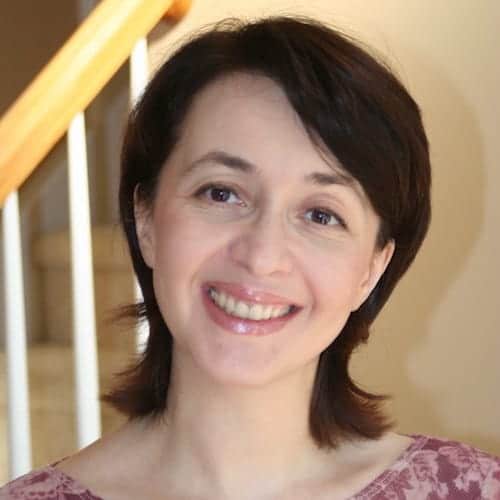
Dr. Florentina Tone is a Professor in the Department of Mathematics and Statistics at the University of West Florida, part of the Hal Marcus College of Science and Engineering. She has been a faculty member since 2006, contributing to both undergraduate and graduate education through classroom and online instruction.
Her academic background includes a Ph.D. in Mathematics from Indiana University and both a Master’s and Bachelor’s degree in Mathematics from the University of Bucharest, Romania.
Dr. Tone's research is centered on numerical analysis of partial differential equations, with a focus on convergence, stability, and error estimation of numerical schemes. Her work applies to fluid dynamics, phase field models, and coupled physical systems. She has published in leading journals such as SIAM Journal on Numerical Analysis and Numerische Mathematik, and has presented at numerous national and international conferences.
The analysis of her recent publications reveals a consistent focus on rigorous mathematical validation of numerical methods, particularly finite element and finite difference schemes for time-dependent PDEs. Her work spans applications in fluid mechanics, heat transfer, chemotaxis, and electromagnetics, demonstrating strong interdisciplinary reach within applied mathematics.
She has been recognized for her contributions with the Distinguished Research and Creative Activities Award from UWF. This honor reflects her sustained excellence in scholarly output.
Dr. Tone actively supervises student research projects and teaches courses such as Complex Analysis, Numerical Analysis, Linear Algebra, and Calculus. While specific grant details are not listed, her sustained publication record and award suggest active research funding. She has mentored students through research advising, contributing to academic development within the department.
She is affiliated with the Department of Mathematics and Statistics, which supports research through seminars, colloquia, and student associations such as the Math Association. The department also hosts technical reports and research labs, including the CSDA Lab, which may support data-intensive computational work.