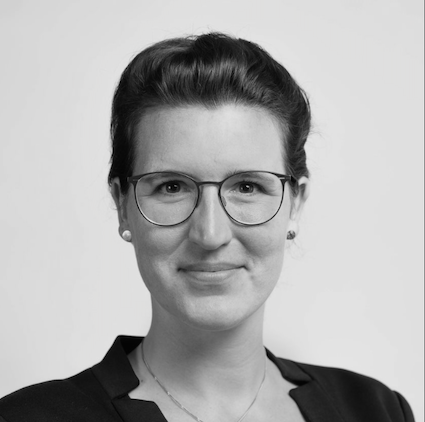
Christine Eckert is a Professor of Marketing Analytics at the TUM School of Management (Technische Universität München). She holds a doctorate in economics from Goethe University Frankfurt am Main and has previously held academic positions at University of Technology Sydney and EBS University of Business and Law. Education: Mathematics (Johannes Gutenberg University Mainz, Christian-Albrechts University Kiel); Economics (Goethe University Frankfurt am Main) Her research focuses on quantitative modeling of market participants' decisions, spanning consumer financial behavior, strategic innovation decisions, and corporate social responsibility. She also explores methodological advancements in management research, particularly causal inference techniques. Notable contributions include serving as co-editor for Big Data and Business Analytics (Journal of Business Research) and receiving an Australian Research Council Discovery Grant (2019-2021). Her work has been recognized with the Center for Financial Planning's Best Paper Award (2021). Key journals: Journal of the Academy of Marketing Science, Journal of Management, Journal of Marketing Research She contributes to academic governance through roles like Panel Member for New Zealand's Performance Based Research Fund (2018) and advisory board membership with Super Consumers Australia (since 2022).
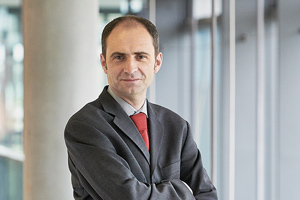
Prof. Dr. Bernd Lucke is a full professor at the University of Hamburg , affiliated with the Faculty of Business, Economics and Social Sciences and Department of Economics . He holds the Chair for Economic Growth and Business Cycles and has been active in research, teaching, and public policy discourse. Research Interests : Macroeconomics, Monetary Policy, European Economic Policy, Business Cycles, Econometrics, Development Policy, and Public Finance. Publications : His recent work (2025–2020) focuses on synthetic control methods for EU monetary analysis, ECB policy critiques, debt sustainability, digital currency legislation, and expropriation impacts on FDI. Earlier works span econometric testing of Ricardian equivalence, productivity shocks, and growth modeling. Media Contributions : Regular political commentary in outlets like Cicero and Frankfurter Allgemeine Zeitung , often critiquing ECB decisions, EU fiscal integration, and inflation dynamics. Contact : bernd.lucke@uni-hamburg.de
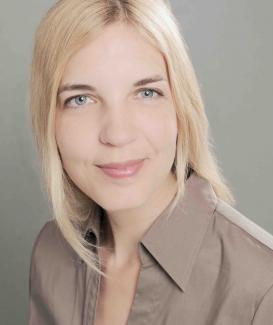
Özüm Asirim is a Researcher at the Technical University of Munich (TUM) under the Associate Professorship of Computational Photonics led by Prof. Christian Jirauschek. Her work focuses on computational photonics , quantum optics , and nonlinear optical phenomena , particularly in micro-resonators and semiconductor devices. Education: Ph.D. in Electrical Engineering from Middle East Technical University (Ankara, Turkey). Research spans optical parametric amplification , Fourier domain mode-locked lasers , self-phase modulation , and machine learning applications in photonics . Her studies include optimizing gain factors, enhancing harmonic generation, and modeling supercontinuum sources via carrier injection. Recent publications (2019–2023) highlight interdisciplinary approaches, merging photonics with computational finance and nonlinear dynamics . She contributes to EU Project QOMBS and teaches courses like Python for Engineering Data Analysis and Quantum Engineering and Machine Learning seminars. Collaborations include Prof. Christian Jirauschek (TUM), Prof. Mustafa Kuzuoğlu (Middle East Technical University), and teams in computational photonics and quantum optics. Her work impacts semiconductor physics , laser technology , and adaptive optical systems .
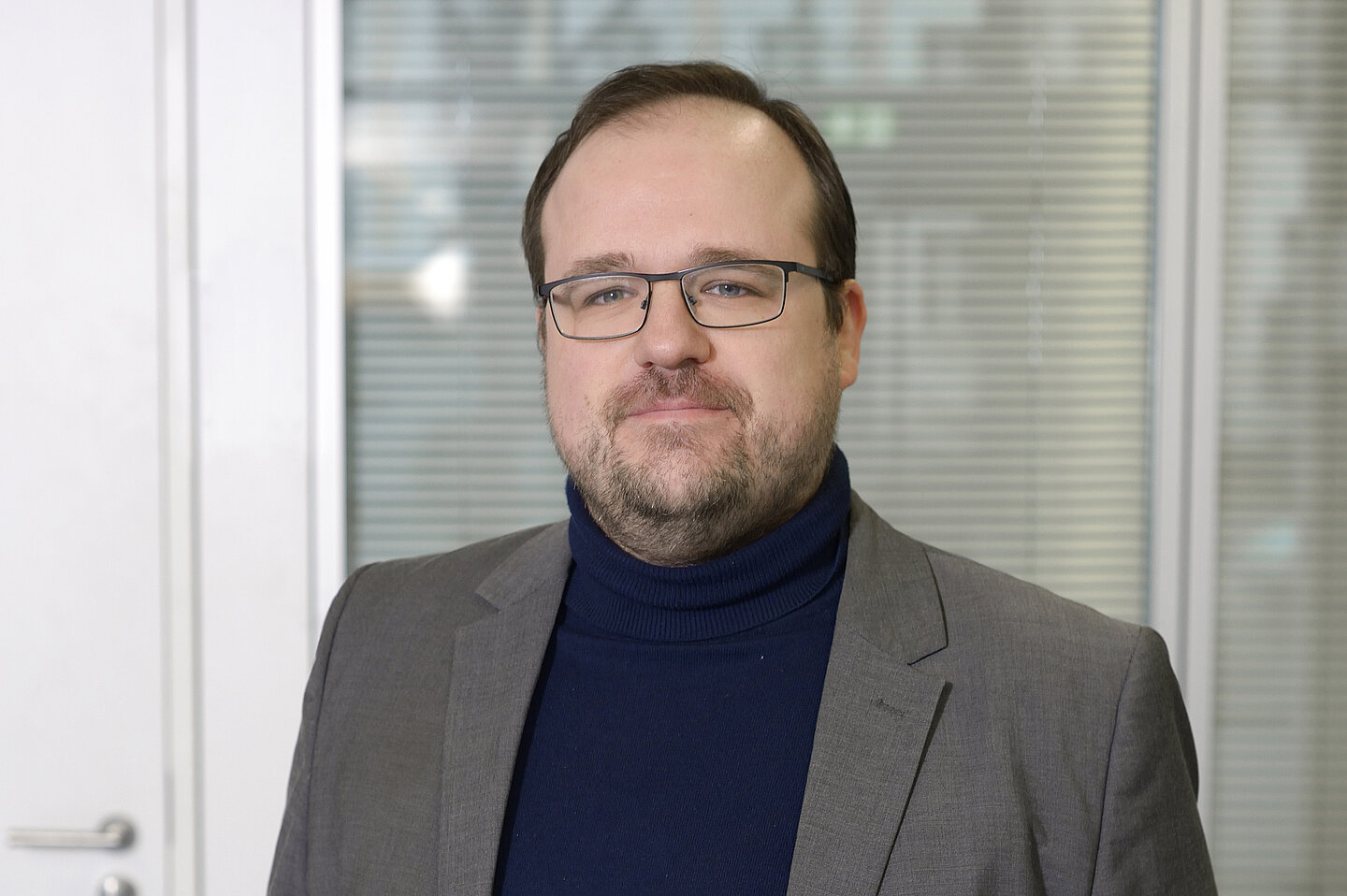
Prof. Dr. Yanjun Ren is a Professor at the College of Economics and Management, Northwest A&F University (NWAFU), China, and has been an IAMO Visiting Research Fellow since May 2024. Prior to his IAMO role, he conducted research at Christian-Albrechts-Universität in Kiel, Germany, from 2012 to 2019. PhD in Agricultural Economics focusing on Food Consumption, Income Inequality, and Health-related Issues in China Former Research Assistant/Associate at Kiel University’s Chair of Agricultural Market Analysis (2012–2019) Dr. Ren’s research spans food chains, consumer behavior, and applied econometrics. His work explores how socioeconomic factors, digital transformation, and policy interventions shape food consumption, nutritional outcomes, and environmental sustainability in China and Central Asia. Key themes include food waste reduction, carbon labeling, internet use in rural economies, and intergenerational health behaviors. His 15 most recent articles (2023–2025) emphasize digital agriculture, sustainable consumption, and health economics. Topics include carbon-labeled products, television/media’s role in nutrition, contract farming sustainability, and the socioeconomic determinants of dietary choices. His methodology integrates econometric modeling, eye-tracking experiments, and spatiotemporal analysis. Email: ren@iamo.de
Prof. Dr. Peter Gomber is a Professor of e-Finance at the Faculty of Economics and Business Administration , Goethe University Frankfurt, since 2004. He co-chairs the Data Science Institute (efl) and holds adjunct professorships at the University of Bamberg (2004), Mannheim (2009), and Luxembourg (2018). His roles include board memberships at the Frankfurt Stock Exchange, Clearstream Banking AG, and advisory positions for European regulatory bodies. Education : Diplom-Kaufmann in Economics, University of Gießen (1999), PhD in Business Informatics. Research Interests focus on market microstructure , FinTech , electronic trading , and regulatory impacts on financial markets. His work explores algorithmic trading , liquidity dynamics , and AI-driven compliance . Publication Trends (15 most recent) emphasize digital finance , market fragmentation , regulatory analysis , and AI applications in trading and compliance. Key subfields include blockchain , high-frequency trading , and news-driven liquidity shocks . Scientific Awards : Reuters Innovation Award (2000) Hochschulpreis des Deutschen Aktieninstituts (1999) IBM SUR Grant (2007) Best Paper Awards (multiple conferences) Best Information Systems Publications Award (2020) Advising & Grants : Teaches in executive programs (Goethe Business School, Amsterdam Institute of Finance). Secured grants from public/private institutions, including a U.S. patent for market model innovation. Labs & Teams : Leads the e-Finance professorship and contributes to the Data Science Institute (efl) , fostering industry-academia collaborations with Deutsche Börse, Capveriant, and others.
Anna Maria Oberländer is Assistant Professor for Information Systems and Digital Transformation at the University of Bayreuth's Faculty of Law and Economics. She also serves as Deputy Academic Director of the Research Center Finance & Information Management and holds a leading position at Fraunhofer FIT's Branch Business & Information Systems Engineering, where she co-heads a research group and manages the Digital Innovation Lab as one of its co-founders. Dr. Oberländer earned her Master of Science with honors from the Elite Graduate Program Finance & Information Management at the University of Technology Munich and the University of Augsburg in 2015, including a research visit at Queensland University of Technology. She was accepted into the 16th class of the Bavarian EliteAcademy, receiving leadership training across Germany, Belgium, China, and Vietnam. Prior to academia, she worked as a strategy consultant at McKinsey & Company from 2015 to 2018, supporting clients in Advanced Industries and Financial Services with digital transformations. She completed her dissertation at the University of Bayreuth's Law and Economics Faculty in 2020. Her research focuses on understanding and designing digital transformation and innovation from established companies' perspectives. She examines digital transformation processes and patterns, the relationship between organizational digital transformation and digital ecosystems, organizational ambidexterity, resource-based digital opportunities for incumbents, and the socio-technical and economic impacts of IoT and AI technologies. Her work spans theoretical frameworks like the OCO (Orientation, Cooperation, Orchestration) Theory for understanding digital ecosystems' influence on transformation. Dr. Oberländer's recent publications reveal a strong trend toward integrated digital-sustainability research (twin transformation), AI strategy and implementation, digital ecosystem dynamics, and industry-specific digital innovation. Her work bridges theoretical frameworks with practical applications across diverse sectors including public administration, manufacturing, and smart cities. She has developed capability maturity models for twin transformation and explored semantic search adoption in SMEs. Science Award 2020 from Universitätsverein Bayreuth e.V. With extensive industry experience at Siemens, Siemens Financial Services, Allianz, and McKinsey & Company, Dr. Oberländer brings practical insights to her academic work. Her Fraunhofer FIT role connects her research to real-world applications through the Digital Innovation Lab. She has led collaborative research projects across multiple industries, including the print industry's sustainability potential with AI, dairy industry digital innovation, and public administration digitalization. Dr. Oberländer co-heads a research group at Fraunhofer FIT and manages the Digital Innovation Lab, which serves as a hub for collaborative research between academia and industry. Her work with the Research Center Finance & Information Management facilitates interdisciplinary collaboration across finance and information systems domains.
Thomas Gunther is a Professor of Managerial Accounting and Control at the Department of Economics, Technical University of Dresden. His research focuses on business accounting, controlling of non-profit organisations, value-based management, and the evaluation of intangible resources. University: Technical University of Dresden Department: Department of Economics Academic Rank: Professor Gunther's work explores performance measurement systems, brand valuation, and time-oriented cost accounting, with empirical studies across German companies and the public education sector. He has led research groups on value-oriented leadership in SMEs and intangible assets in accounting. As a consultant, he works with medium-sized businesses and public institutions on implementing controlling systems, including AOK Saxony, Dresden Transport Company, and the Saxon State Ministry of Education. He serves as Managing Editor for the Journal of Management Control (JoMaC) and is a founding member of PRISMA (Centre for Sustainability Assessment and Policy) at TU Dresden.
Prof. Dr. Harald Tauchmann is a Professor of Health Economics at Friedrich-Alexander University Erlangen-Nuremberg (FAU), where he has held a faculty position since 2013. He is affiliated with the School of Business, Economics and Social Sciences, specifically within the Department of Economics. Prof. Tauchmann also participates in multiple research focus areas at FAU, including 'Insurance and Risk' and 'Work in Transition,' demonstrating his interdisciplinary approach to health economics. Prof. Tauchmann received his education at Heidelberg University and the University of Manchester, UK, where he studied economics, political science, and sociology. He graduated in 1998 and completed his doctorate at the Interdisciplinary Institute for Environmental Economics (University of Heidelberg) in 2003. Prior to joining FAU, he worked as a research associate at the Rhineland-Westphalian Institute for Economic Research (RWI) in Essen from 2003 to 2012 and headed a junior research group at the health economics research center CINCH at the University of Duisburg-Essen. His research expertise lies in empirical health economics, with a particular emphasis on health insurance choice and competition, as well as individual health behavior. He has made significant contributions to understanding obesity, health shocks, mental health care payment systems, and thyroid diagnostics through his extensive publication record. His methodological work includes developing specialized Stata modules for econometric analysis, which have been widely adopted by researchers in the field. Prof. Tauchmann's scholarly work demonstrates a consistent focus on applying rigorous econometric methods to pressing health policy questions. His research portfolio shows particular strength in causal analysis of health behavior, especially regarding obesity interventions, health insurance market dynamics, and the economic consequences of health shocks. His recent publications (including several forthcoming in 2025) indicate continued scholarly productivity and relevance to current health policy debates. From March 2021 to April 2022, Prof. Tauchmann served as chairman of the German Society for Health Economics, highlighting his leadership and recognition within the national health economics community. His email contact is harald.tauchmann@fau.de for professional inquiries.
Stephanie Christmann-Budian is a researcher at the Max Planck Institute for the History of Science, working within the 'China in the Global System of Science' Research Group. She holds a PhD in Sinology and Cultural Studies from Free University Berlin, with research focusing on modern and contemporary Chinese science, technology and innovation policies. Her expertise spans globalization impacts, innovation system analysis, and comparative policy studies. Christmann-Budian investigates China's evolving position in global science through multi-method approaches combining sociology of science, innovation research, and political science. Current projects examine reforms in China's national science system within broader political and global contexts. Her work analyzes strategic developments in areas including artificial intelligence and green technologies. Publications demonstrate consistent focus on China's scientific transformation, particularly examining shifts from Western knowledge transfer to autonomous innovation systems. Recent articles explore private sector roles in R&D funding and transitions toward cashless societies. With over 12 years' practical experience in science policy analysis, Christmann-Budian has held positions at DFG, Fraunhofer ISI, Chinese Academy of Science, and other research organizations. She regularly contributes to science-policy dialogues through workshops and lectures on Sino-German scientific cooperation.
Prof. Dr. Wolfgang Nejdl is a Professor at the Institute for Data Science within the Faculty of Electrical Engineering and Computer Science at Leibniz University Hannover. He serves as Executive Director of the L3S Research Centre and Leibniz Forschungszentrum Inclusive Citizenship. Web Science Information Retrieval Artificial Intelligence Deep Learning His recent research focuses on AI applications in medicine , multimodal data fusion , and ethical AI systems . Projects include CAIMed (AI in Causal Medicine) and DAISEC (AI & Cybersecurity). His publications span conferences like AAMAS, WWW, and SIGIR. Notable awards include membership in the National Academy of Science and Engineering (acatech) . Former students hold positions at institutions like Stanford, TU Dresden, and ETH Zürich. Current projects involve climate resilience AI , federated learning for healthcare , and quantum-inspired data science .
Prof. Dr. Oliver Crönertz serves as Dean and Professor of Business Administration and IT-Supported Business Processes at the Faculty of Digital Transformation , HTWK Leipzig. His work bridges digital transformation with business management, focusing on interdisciplinary project management, digital business models, and sustainability. Current roles: Dean, supervising professor for HTWK Robots/nao Team Research areas: Digital Transformation, Business Analytics, Industry 4.0, Stoffstrommanagement Research Trends : Recent publications emphasize digital solutions for environmental management, business process optimization, and smart urban logistics. His work connects Industry 4.0 with financial sustainability and societal impacts of digitalization. Projects : Leads Mittelstand-Digital Zentrum Leipzig-Halle, involved in EXIST-Potentiale, Future Parking, and FAssMII (Feedback-based E-Assessment in STEM).
Klaus Schmidt is a Professor of Economics at Ludwig Maximilian University of Munich, holding the chair in the Department of Economics within the Faculty of Economics. His research focuses on theoretical and applied aspects of contract theory, game theory, and industrial organization, with significant contributions to understanding venture capital finance, privatization, and fairness in economic behavior. His educational background includes a Ph.D. in Economics from the University of Bonn (1991) with the dissertation "Commitment in Games with Asymmetric Information" and Habilitation (1994) with "Contracts, Competition, and the Theory of Reputation". Early academic support included scholarships from Studienstiftung des Deutschen Volkes (1982-87) and a German Academic Exchange Service grant (1988/89). Professor Schmidt's research centers on contract theory applications across diverse domains. His work on fairness and reciprocity (notably with Ernst Fehr) revolutionized behavioral contract theory, while contributions to venture capital finance and privatization established foundational frameworks for analyzing incomplete contracts in real-world settings. He employs rigorous game-theoretic modeling to address incentive problems in procurement, privatization, and organizational design. His publication record since 1991 reveals consistent focus on contract-theoretic problems, with increasing emphasis on behavioral aspects after 1999. Key thematic clusters include venture capital finance (2002-2003), fairness/reciprocity (1999-2000), and privatization/incomplete contracts (1995-1996), demonstrating evolution from pure theory to policy-relevant applications. Gossen Prize of the German Economic Association (2001) Commerzbank Prize of the Berlin-Brandenburg Academy of Sciences (2001) Teaching Prize of the Bavarian ministry of science (2000) Walter-Adolf-Jörn Prize (1993) German Academic Exchange Service Grant (1988/89) Studienstiftung des Deutschen Volkes Scholarship (1982-87) Professor Schmidt has secured major research funding including German Science Foundation grants for "Incomplete Contracts" (1999-present) and "Venture Capital Finance" (1998-present). His teaching excellence was recognized with Bavaria's highest teaching award (2000), and he maintains active collaboration with leading economists including Ernst Fehr and Monika Schnitzer. While specific student mentorship details aren't documented, his extensive publication record and seminar leadership indicate significant academic supervision.
Thomas Berger is a Professor at the University of Hohenheim , affiliated with the Faculty of Agricultural Sciences and leading the Department of Economics of Land Use . He also contributes to the Computational Science Hub and Hohenheim Tropics initiatives. Focus Areas: Climate change adaptation, land-use modeling, biodiversity-productivity trade-offs, agent-based simulation, and machine learning in agricultural systems. Key Projects: Simulation frameworks for smallholder resilience in Ethiopia, bioeconomic modeling in the Amazon, and hybrid intelligence applications in European agricultural policy. Recent Publications: 2025 study on climate change effects on insecticide reduction in Germany, 2024 work on reconciling biodiversity with productivity via hybrid models, and 2023 methodological contributions to surrogate modeling and seasonal forecast integration. Research Trends: Interdisciplinary integration of climate science, agricultural economics, and computational modeling, with increasing emphasis on AI-assisted decision support systems and sustainability policy validation. Teaching & Outreach: Offers Agricultural Economics seminars and Hohenheim Tropics discussions, requiring advance email registration for office hours.
Julian Berger is a postdoctoral researcher at the Max Planck Institute for Human Development in the Center for Adaptive Rationality , where he explores how to enhance decision-making through hybrid human-AI systems. He is also a fellow of the Joachim Herz Foundation and has received funding from the Foundation of German Business and the Danish Data Science Academy. Education: M.A. Psychology in Business and Economics, Universidade Catolica Portuguesa (2021) B.A. Politics, Administration and International Relations, Zeppelin Universität (2018) His research spans human-AI collaboration , collective intelligence , and interpretable machine learning . A recurring theme in his work is developing methods to combine human expertise with AI capabilities for accuracy in domains like medical diagnostics , credit scoring , and football analytics . He has authored publications in high-impact venues such as PNAS , Nature Human Behavior , and Science and Medicine in Football . Scientific awards and funding include: Fellowship for interdisciplinary economics, Joachim Herz Foundation (2024) PhD funding from the Foundation of German Business (Stiftung der deutschen Wirtschaft) Research grant from the Danish Data Science Academy His recent article trends emphasize ensembling techniques that leverage complementary human and AI errors, algorithmic fairness, and practical heuristics like Hybrid Confirmation Trees. These works demonstrate significant improvements in diagnostic accuracy and decision cost-efficiency. Beyond academia, Berger works as a consultant and ML engineer with Simply Rational , focusing on interpretable models for financial and sports analytics. His work bridges theoretical research with real-world applications, prioritizing fairness, transparency, and human accountability in AI systems.
Professor Christian Deutscher is a prominent sports economist at Bielefeld University's Faculty of Psychology and Sport Science, specializing in the Department of Sport Science within Division V - Sport and Business. As both Research Officer and Internationalization Officer, he leads significant work in sports economics, particularly focusing on betting markets, match-fixing detection, and sports integrity. His research has attracted funding from major institutions including the German Research Foundation. Deutscher's research interests span sports economics, betting market efficiency, match-fixing detection, sports management, and the business aspects of professional sports. His work combines advanced statistical modeling with practical applications in sports integrity monitoring. He has extensively analyzed live betting markets, Bundesliga economics, and the impact of technological innovations like VAR in football. His research often examines the intersection of sports performance, economic incentives, and market behavior. Analysis of his recent publications reveals a strong focus on empirical studies of sports betting markets, particularly live and in-play betting dynamics. His work demonstrates sophisticated use of state-space models and other advanced statistical techniques to detect market inefficiencies and potential integrity issues. Deutscher frequently collaborates with statisticians and economists to develop warning systems for match-fixing, with particular attention to German football leagues. His research bridges theoretical economics with practical applications in sports governance. Professor Deutscher actively contributes to the European Sport Economics Association (ESEA), having edited special issues of conference proceedings and serving in editorial capacities. His work has been published in leading journals including Journal of Sports Economics, Economic Inquiry, and Applied Stochastic Models in Business and Industry. As Research Officer for the Faculty of Psychology and Sport Science, Deutscher oversees research initiatives and international collaborations. His current projects include data-based fraud detection in live betting markets, funded by the German Research Foundation across multiple phases. He also serves on various university committees including the Quality Improvement Commission and Examination Board for the Department of Sport Science. Deutscher maintains strong connections with sports organizations and betting industry stakeholders, ensuring his research has practical relevance for sports integrity monitoring. His work on betting market inefficiencies has direct applications for regulatory bodies seeking to protect the integrity of sporting competitions.