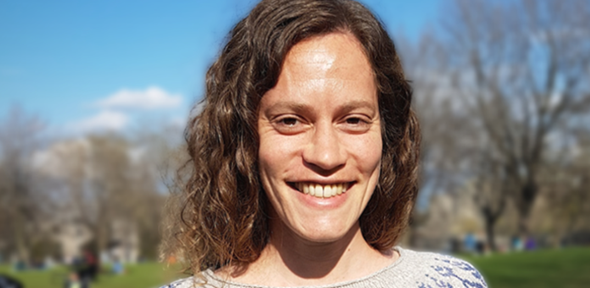
Matthew Potolsky is Professor of English at the University of Utah, specializing in nineteenth-century literature and literary theory. His career spans from 1998 Lecturer at Harvard University to current University Professorship. He earned a BA in Comparative Literature and Philosophy (1990), followed by MA and PhD in Comparative Literature (1992, 1997) from UC Irvine. Chair of English Department (2013-2016) University Professor (2014-2016) Research focuses on Decadence , Mimesis , Finance-Aesthetics intersections , and Government Secrecy . His work traces connections between financialization and decadent aesthetics, revealing how economic cycles influence artistic production. Key themes include: Decadent anti-realist literary movements Finance capital's cultural impact Decadent counterpublic formations Victorian aesthetic education debates Sublime aesthetics in national security Cosmopolitanism in literary communities Recent publications analyze: Decadent style as financialization rhetoric Reintroduction of verisimilitude theory Decadent responses to financial crises Mimetic labor in artistic production Decadent cosmopolitan counterpublics Historical parallels between financialization and literary decadence
David Bamman is an Associate Professor in the School of Information at UC Berkeley, specializing in applying Natural Language Processing (NLP) and machine learning to cultural and social science questions. He leads research in born-literary NLP, computational humanities, and cultural analytics, with affiliated roles in EECS, Linguistics, and Computational Precision Health. Bamman holds degrees from Carnegie Mellon (Ph.D., 2015), Boston University (M.A., 2006), and University of Wisconsin-Madison (B.A., 1998). His work is supported by NEH, NSF, and industry grants. Educations: Ph.D. in Computer Science (2015), Carnegie Mellon University M.A. in Applied Linguistics (2006), Boston University B.A. in Classics (1998), University of Wisconsin-Madison Research Interests: NLP for underserved domains (e.g., literature, social media), coreference resolution, cultural analytics, and computational methods for studying literature and culture. Projects include LitBank and BookNLP datasets. Grants & Awards: Hellman Fellow (2019), Amazon Research Award (2017), NSF CAREER Award, and NEH funding. Teaching: Courses include Natural Language Processing (Info 159/259), Computational Humanities (INFO 190), and Applied NLP (INFO 256). His research group explores topics like racial representation in high school literature, Hollywood diversity metrics, and the sociocultural implications of LLMs. Bamman advises multiple PhD students and collaborates on datasets like CMU Book Summaries and 11K Latin Books.
Christopher G. Atkeson is a Professor at the Robotics Institute at Carnegie Mellon University (CMU), where he has been since 2000 after previously holding positions at MIT and Georgia Institute of Technology. His research focuses on fulfilling the science fiction vision of machines achieving human levels of competence in perception, cognition, and action, with particular emphasis on understanding how to get machines to generate and perceive human behavior. Atkeson's work spans two complementary approaches: humanoid robotics and human aware environments. His research interests include nonparametric learning, memory-based learning, reinforcement learning, learning from demonstration, and modeling human behavior. He is particularly known for his work on robot learning of challenging dynamic tasks such as juggling, trajectory-based optimization, and soft robotics (including his contributions to the Baymax character in Disney's Big Hero 6). His recent publications demonstrate a strong focus on tactile sensing (FingerVision), human-in-the-loop optimization for exoskeletons, deep learning for locomotion control, and trajectory-based optimization methods. His work consistently bridges theoretical foundations in machine learning with practical implementations on physical robots. Among his scientific recognitions are an NSF Presidential Young Investigator Award, a Sloan Research Fellowship, and a Teaching Award from the MIT Graduate Student Council. Atkeson has advised numerous students who have gone on to successful careers in academia and industry, including notable researchers like Andrew Moore and Stefan Schaal. His teaching includes courses on dynamic optimization, humanoids, kinematics, dynamics, and control.
Kate Holland is an Associate Professor and Acting Associate Chair (Graduate) at the University of Toronto, specializing in 19th-century Russian literature and its cultural contexts. Her work focuses on the history of the novel, Russian literary theory, and the interplay between Russian and European literary traditions. She teaches courses such as 'The Golden Age of Russian Literature' and 'Dostoevsky in Literary Criticism and Theory.' Dr. Holland earned her PhD from Yale University (2004) and a BA/MA from the University of Cambridge (1998). Her research explores themes like genre evolution in Dostoevsky’s works, the publication culture of 19th-century Russian periodicals, and the theoretical frameworks of Historical Poetics. Her recent publications include A Dostoevskii Companion: Texts and Contexts (2018) and The Novel in the Age of Disintegration (2013), analyzing Dostoevsky’s engagement with genre and modernity. Her scholarship frequently examines narrative form, cultural history, and the intersection of literature with philosophical and religious thought.
William Kennedy is a Professor in the English Department at the University at Albany, State University of New York. For over 40 years, he has crafted a body of literature centered on Albany, New York, creating what is known as the "Albany Cycle" of novels. His work has established Albany as a significant place in American literature, comparable to Joyce's Dublin and Bellow's Chicago. His educational background includes a BA from Siena College, following attendance at Public School 20 and Christian Brother's Academy. Professor Kennedy's creative work focuses on American fiction, particularly historical and urban narratives rooted in Albany's cultural and political landscape. His writing explores machine politics, family sagas, and the interplay between individual lives and historical events, rendering Albany's "outcasts and machine politicians, lowlifes and swells" with profound humanity. His narratives transform the city into a mythic capital of national memory. His publications consistently draw from Albany's history, with recurring themes of political corruption, redemption, and the resilience of marginalized communities. The "Albany Cycle" demonstrates his mastery in blending local history with universal human struggles across multiple literary forms. William Kennedy's distinguished honors include: John D. and Catherine T. MacArthur Foundation Fellowship Election to the American Academy of Arts and Letters National Endowment for the Arts Fellowship Regents Medal of Excellence from SUNY Governor's Arts Award Commander of the Order of Arts and Letters in France Election to the American Academy of Arts and Sciences As an educator, Kennedy taught creative writing and journalism at the University at Albany from 1974-1982 and Cornell University in 1982-83. His MacArthur Fellowship directly funded the creation of the New York State Writers Institute at Albany, with matching funds from the university and legislative support from Governor Cuomo. He has served on the New York State Council for the Humanities board and the Academy of Motion Picture Arts and Sciences. William Kennedy co-founded the New York State Writers Institute in 1984, which has grown into a major literary hub conducting statewide cultural and educational activities. The Institute remains central to his legacy, fostering literary arts through readings, workshops, and educational programs across New York.
David Means is a Visiting Associate Professor of English at Vassar College, where he has taught since 2001. He holds a BA from The College of Wooster and an MFA in poetry from Columbia University. His academic work centers on creative writing, modern and contemporary fiction and poetry, and American culture. Education: BA, The College of Wooster MFA, Columbia University in the City of New York Means is a celebrated author of short fiction and novels, known for his lyrical prose, experimental narrative structures, and deep exploration of trauma, memory, and redemption. His work frequently appears in The New Yorker , Harper’s , The Paris Review , and other prestigious literary journals. His writing often returns to themes of violence, loss, and the quiet grace that emerges in their aftermath, drawing comparisons to Flannery O’Connor and Denis Johnson. His stories are marked by a nonlinear sense of time and a profound empathy for marginalized or broken characters. His recent publications include the story collection Instructions for a Funeral (2019) and Two Nurses, Smoking , with his novel Hystopia longlisted for the Man Booker Prize. His forthcoming non-fiction book, Pivot: Ruminations in the Shadow of Death , reflects on mortality and personal reflection. Selected Awards and Honors: Guggenheim Fellowship (2013) Three O. Henry Prizes Three Pushcart Prizes Los Angeles Book Prize for Fiction Finalist, National Book Critics Circle Award Finalist, Frank O’Connor International Short Story Prize Longlisted, Man Booker Prize Means has advised and influenced many emerging writers through his teaching and public readings. While specific students are not named in the sources, his role as a mentor is evident in his sustained presence in creative writing programs. He has no known research grants or lab affiliations, as his work is primarily literary and individual. He continues to publish and engage in public discourse on the nature of storytelling, including critiques of AI-generated fiction.
José Eduardo Villalobos Graillet is an Assistant Professor of Spanish at Idaho State University , specializing in Modern Peninsular Literature and Culture with a focus on visual culture (film and television) . He previously held a position as Spanish Instructor at Wilfrid Laurier University in the Department of Languages and Literatures. Research Areas : Spanish Film Studies, Spanish Medieval Literature, Latin American and Caribbean Studies, Teaching Spanish as a Foreign Language, Visual Culture, and Critical Pedagogy. His scholarly work examines film and television adaptations of 'La Celestina' , analyzing censorship dynamics across Francoist Spain, the Democratic Transition, and contemporary Spain. He also contributes to Spanish pedagogy , developing technological tools like Lang-8 for written expression and culturally immersive teaching units on topics such as winter festivals and Caribbean music. His publications span both critical academic analysis and methodological innovations for language instruction. Key Themes in Publications : Adaptation fidelity, political censorship, intercultural pedagogy, and the role of digital platforms in language learning.
Elizabeth Blake is an Associate Professor of Russian and Division Coordinator in the Department of Languages, Literatures and Cultures at Saint Louis University's College of Arts and Sciences. Her research focuses on 19th-century Russian literature, particularly Dostoevsky and Tolstoy, with emphases on empire studies, exile cultures, and religious dialogues between Russian Orthodoxy and Polish/French Catholicism. She has published two major books: *Dostoevsky and the Catholic Underground* (2014) and *Travels from Dostoevsky’s Siberia* (2019). Her work bridges literary analysis with historical context, examining themes like human rights, cultural mobility, and gender roles. Blake teaches courses ranging from language proficiency to advanced topics in Russian literature and cinema, including *Russian and Soviet Cinema* and *Dostoevsky Through the Centuries*. She has received numerous grants including Mellon and Fulbright-Hays awards for research in Russia and Poland. Her academic career includes extensive reviews for journals like *Slavic Review* and *Canadian Slavonic Papers*, alongside professional involvement with organizations such as the North American Dostoevsky Society. Blake’s teaching excellence is recognized through awards like the Spirit of the Billiken Award (2016), reflecting her impact on both scholarship and student mentorship.
Ksana Blank is a Senior Lecturer at Princeton University’s Department of Slavic Languages and Literatures. She coordinates the Russian Language Program and directs the Princeton-in-Petersburg Program, fostering academic exchange and interdisciplinary research. With a PhD in Russian Literature (Columbia University, 1997) and a BA in French Philology (St. Petersburg State University, 1979), her academic career spans over two decades at Princeton, preceded by teaching roles at Hunter College and Middlebury College Russian Summer School. Education: PhD, Russian Literature, Columbia University (1997) BA, French Philology, St. Petersburg State University (1979) Her research centers on Russian literature, emphasizing stylistic analysis and interdisciplinary connections with music, visual arts, folklore, and religious philosophy. Notable works include studies on Dostoevsky’s dialectics, Gogol’s The Nose , and the interplay between Russian modernism and Western art movements. She has authored multiple books and articles, many translated into Russian, and has published in academic journals across Russia, Europe, and China. Recent publications explore Dostoevsky’s paradoxes, Gogol’s linguistic innovation, and the intersection of Russian literature with music (Shostakovich), art (Malevich), and philosophy. Her 2023 book Парадоксы классики expands traditional interpretations of classic works through interdisciplinary lenses, while her 2021 The Nose guide deciphers Gogol’s wordplay and its narrative function. Earlier works address Tolstoy’s spiritual crisis and Bakhtinian dialogism in Russian literary theory. While no scientific awards are listed, her contributions to pedagogy include advanced Russian language courses and graduate-level Tolstoy studies. She currently works on Leo Tolstoy’s The Prisoner of the Caucasus and teaches courses on Russian literature, spirituality, and translation.
William Boyd is an Honorary Fellow of Jesus College, Oxford, and an alumnus who earned a DPhil in English Literature there in 1975. Formerly a Lecturer in English Literature at St. Hilda’s College, Oxford (1980–83), he is renowned as an award-winning author and screenwriter. His works include novels like A Good Man in Africa and Any Human Heart , which have garnered accolades such as the Whitbread Award and BAFTA. Boyd’s screenwriting spans films like Chaplin and adaptations of his own novels, including the BAFTA-winning Any Human Heart (2010). Education : DPhil in English Literature, Jesus College, Oxford (1975). Boyd’s research interests center on creative writing, novel adaptation, and narrative techniques, blending literary excellence with cinematic storytelling. His screen credits include original films and adaptations of literary works, showcasing versatility across mediums. Awards span literature and film, including honorary doctorates from four Scottish universities and the CBE. Literary and cinematic themes in his work explore human psychology, historical contexts, and social dynamics, often with satirical or existential undertones. His contributions to both page and screen have solidified his international reputation.
Tom van Laer is an Associate Professor of Marketing and Deputy Head of Discipline, Research at The University of Sydney Business School. He is globally recognized as the leading expert in storytelling and narrative persuasion, currently occupying the top position on Elsevier's SciVal top 100 list for the most-cited researchers in this domain. His academic journey includes a BA and MA from Nijmegen and a PhD from Maastricht University. Dr. van Laer's research explores storytelling, persuasion, and messaging through an interdisciplinary approach that bridges behavioral experiments, quantitative modeling, and interpretive research. His work spans narrative transportation theory, consumer reviews analysis, digital storytelling, and the psychological mechanisms behind how stories influence consumer behavior. He has developed influential frameworks including the Extended Transportation-Imagery Model and narrative agency theory, with particular expertise in analyzing how stories shape responses to climate change communications and social conflict narratives. His publication record features articles in the most prestigious academic journals including the Journal of Consumer Research (where he serves as Area Editor), Journal of the Academy of Marketing Science, Journal of Business Ethics, Journal of Management Information Systems, and International Journal of Research in Marketing. His recent work shows a strong trend toward meta-analyses of narrative effects, climate change communication, and the psychological mechanisms of 'bleed' between fictional experiences and real-world behavior. Dr. van Laer is an active media commentator whose research has garnered extensive global coverage across Australia, France, Germany, the Netherlands, the UK, and the US, including national television and radio interviews. His media engagement focuses on storytelling in political campaigns, social media marketing, and the psychological impact of narratives in consumer contexts. He teaches MKTG3121 Advertising: Persuasive Principles and MKTG6006 Persuasive Advertising: Illuminating Dark Art, and has received recognition for both research and teaching excellence. His professional affiliations include the Association for Consumer Research, Australian Marketing Institute, Australian & New Zealand Marketing Academy, and International Society for the Study of Narrative. Dr. van Laer is a member of several university research centers including the Sydney Centre for Healthy Societies, Sydney Environment Institute, and Charles Perkins Centre, where he contributes his expertise in narrative persuasion to interdisciplinary research on societal challenges.
Dr. Anna A. Berman serves as Associate Professor of Nineteenth-Century Russian Literature and Culture within the Slavonic Studies section of the Faculty of Modern and Medieval Languages and Linguistics at the University of Cambridge, where she is also a Fellow of Clare College. Previously, she held an Associate Professorship at McGill University's Department of Languages, Literatures, and Cultures in Montreal, Canada. Her academic credentials include: B.A. from Brown University M.Phil. from the University of Cambridge Ph.D. from Princeton University Dr. Berman's research centers on nineteenth-century Russian and English novels, with specialized focus on family structures, kinship dynamics, love, and marriage. She extensively examines the intersection of scientific thought (particularly Darwinism and Mechnikov's phagocyte theory) with literary production, alongside operatic adaptations of Russian classics. Her current scholarly mission prioritizes recovering the legacy of marginalized nineteenth-century Russian women novelists, especially Nadezhda Khvoshchinskaya and Evgenia Tur. Her publication trajectory reveals sustained investigation into familial relationships within nineteenth-century literature, with sibling dynamics constituting a dominant theme across both Russian and English novels. She has pioneered critical analysis of science-literature dialogues in Russian contexts while recently shifting toward feminist recovery projects that challenge canonical exclusions in Russian literary history. Dr. Berman actively supervises postgraduate research, welcoming MPhil and PhD candidates pursuing topics aligned with her expertise in nineteenth-century Russian literature, comparative family narratives, and science-literature intersections. Within Cambridge's academic ecosystem, she contributes to the Slavonic Studies research community and participates in the Cambridge Centre for Central and East European Studies (CamCCEEES), advancing collaborative scholarship on Eastern European cultural production.
Barbara Gowdy is an esteemed Adjunct Professor and a prolific novelist and short-story writer , renowned for her contributions to fiction across multiple genres. She has achieved international recognition with publications in 24 countries and received prestigious accolades such as the Trillium Book Award and a Guggenheim Fellowship . Her work has been shortlisted for major literary prizes, including the Booker Prize and the Governor General’s Award .
Catholic University of Eichstätt-IngolstadtGermany
Prof. Dr. Isabelle Stauffer holds the Professorship for Modern German Literature at the Catholic University of Eichstätt-Ingolstadt , where she also serves as Vice Dean of the Faculty of Languages and Literature and Deputy Director of the Center for Religion, Church, and Society in Change (ZRKG) . She co-leads the ZRKG Research Field III on "Religiosity in Contemporary Transformation Processes" and examines intersections of literature with gender/queer studies , postcolonial theory , and cultural history of gallantry . Studied at University of Zurich and Humboldt University Berlin Doctorate (2006) and Habilitation (2015) from Johannes Gutenberg University Mainz Previously held positions at Goethe University Frankfurt, Philipps University Marburg, and Saarland University Her research spans early modern to contemporary German literature , with specializations in intermediality (film, digital media), epistolary culture , and dandyism/fashion history . Current projects include organizing the 2025 IVG congress panel "Figures of Crisis – Crisis of the Figure" and editing the complete works of Aurora von Königsmarck. She has published extensively on topics including: Postcolonial transformations in early modern texts Religious discourse in contemporary literature Intermedia reflexivity in digital age narratives Queer performativity in historical and modern contexts Translation as cultural transfer mechanism Surface aesthetics in cinema and art
Professor Kecia Ali is a scholar of Religion and Islamic Studies at Boston University, with a PhD from Duke University. Her research focuses on Islamic law, gender studies, ethics, and biography, emphasizing feminist critiques of religious texts and institutions. She has authored influential books like Sexual Ethics and Islam and The Lives of Muhammad , exploring intersections of gender, law, and culture in Islamic traditions. Ali has held fellowships at Brandeis University and Harvard Divinity School before joining BU in 2006. She actively contributes to organizations like the American Academy of Religion and served as President of the Society for the Study of Muslim Ethics (2014–2016). Her work bridges religious studies with popular culture, analyzing themes in J.D. Robb's fiction and critiquing academic sexism. Courses taught include Islamic law, Quranic studies, and representations of Muhammad.