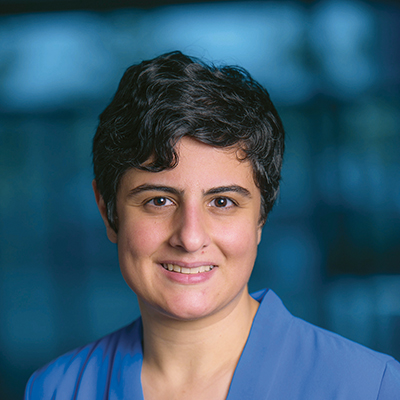
Dr. Chengmo Yang is a Professor in the Department of Electrical and Computer Engineering at the University of Delaware, with a joint appointment. She received her PhD and MSc in Computer Science from the University of California, San Diego, and a BSc in Microelectronics from Peking University, China. PhD, University of California, San Diego MSc, University of California, San Diego BSc, Peking University, China Her research focuses on enhancing security, reliability, non-volatility, and energy efficiency in embedded systems, cyber-physical systems (CPS), and Internet-of-Things (IoT). She leads the Computer Architecture, Reliability, and Security (CARES) group and has authored over 70 peer-reviewed publications. Recent publications emphasize neural network accelerators, non-volatile memory (NVM) optimization, and security frameworks for embedded systems. Her work explores fault tolerance, wear leveling, and side-channel attack mitigation in NVM-based FPGAs, STT-RAM, and SSDs. National Science Foundation Career Award (2013) University of Delaware Mid-Career Faculty Excellence in Scholarship Award (2020) Best paper award at ICESS (2019) Three best paper nominations at DAC, DATE, and GLSVLSI (2019) Dr. Yang serves as Associate Editor for IEEE TCAD and ACM TODAES. She is the Diversity & Inclusion Representative for IEEE CEDA and has organized numerous conferences including Technical Program Chair for CODES-ISSS 2022. Her lab has hosted current and former students like Fanruo Meng (PhD candidate), Fateme Hosseini (Qualcomm), and Patrick Cronin (Intel), focusing on graduate-level research in hardware security and reliability.
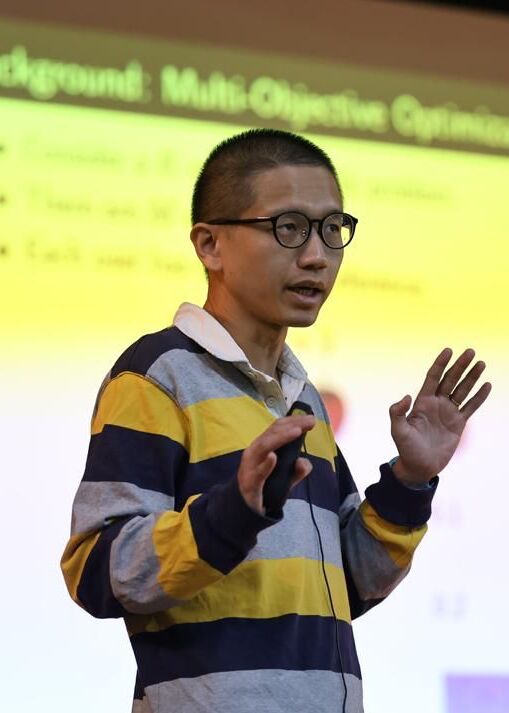
Jan Østergaard is a Full Professor in Information Theory and Signal Processing at Aalborg University's Department of Electronic Systems. He leads the AI and Sound research section and directs the CASPR center. His expertise spans AI-driven acoustic signal processing, information theory, and EEG signal analysis. Østergaard holds a M.Sc. from Aalborg University and a PhD (cum laude) from Delft University of Technology. Major awards include the Danish Young Researcher’s Award and a EURASIP Best Thesis honor. His work focuses on speech enhancement, sound zone technologies, and neural tracking of auditory attention. Recent research emphasizes low-latency speech transmission, deep learning for sound field control, and robust voice activity detection. He serves on editorial boards and national committees, advancing Denmark’s sound technology initiatives. Education: M.Sc. (Aalborg, 1999), PhD (Delft, 2007) Research interests emphasize practical AI applications in sound systems, including hearing aid improvements, data-efficient acoustic modeling, and feedback control in networked systems. Over 210 publications and 17 active projects reflect his interdisciplinary impact across academia and industry.
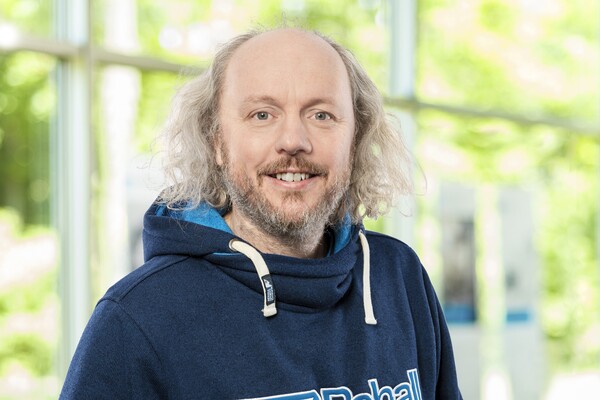
Dr. Amin Sakzad is an Associate Professor in the Department of Software Systems & Cybersecurity at Monash University's Faculty of Information Technology. His research focuses on lattice-based cryptography, wireless communications, and post-quantum security protocols. He holds a PhD in Applied Mathematics from Amirkabir University of Technology (2011) and has held academic roles at Carleton University and Monash since 2012. Dr. Sakzad’s expertise spans lattice coding theory, MIMO systems, and privacy-preserving technologies for genomic databases and blockchain applications. He leads multiple ARC-funded projects, including work on secure databases (SRDBMS) and post-quantum cryptographic primitives for FinTech and energy sectors. His research has been recognized through awards such as the FIT Dean’s Award for Teaching Excellence (2021). Key collaborations include projects on blockchain security (CollinStar Lab), genomic data privacy, and energy market cybersecurity. His work addresses UN SDGs through contributions to quality education (SDG 4) and industry innovation (SDG 9). Recent publications highlight advancements in lattice-based cryptography (e.g., CRYSTALS-Kyber variants), privacy-preserving energy trading, and secure blockchain protocols like FPPW watchtower systems. His research bridges theoretical cryptography with practical implementations in embedded systems and 5G telecommunications. Grants: 16 active/completed projects including $1.2M in ARC funding Advising: Supervising PhD projects on lattice applications in post-quantum crypto and blockchain Labs: Core member of Monash’s Software Defined Telecommunications (SDT) Lab and CollinStar Lab
Professor Peter F. Driessen is a faculty member in the Department of Electrical and Computer Engineering at the University of Victoria, with a cross-appointment in the School of Music. He holds a BSc and PhD from the University of Victoria and is a Professional Engineer (PEng). His research focuses on communication systems, signal processing, control, and interdisciplinary projects in computer music and wireless technologies. Key areas include audio/video signal processing, radio propagation, sound recording, and multimedia systems. He leads the University of Victoria Propagation Laboratory, which explores radio wave propagation and Amateur radio integration with engineering education. His work spans theoretical research and applied projects like ECOSat satellite systems, software-defined radio (SDR), and innovative musical instruments such as the Radio Drum. He supervises undergraduate and graduate projects in these domains through ELEC 499 courses. Notable contributions include the APEGBC Editorial Board Award for Best Paper (2002) and patents in wireless networking and signal processing. His teaching includes courses in signal analysis and electromagnetics, and he collaborates on interdisciplinary programs like the Music/Computer Science degree. Education: BSc in Electrical Engineering, University of Victoria PhD in Electrical Engineering, University of Victoria Research Interests: Audio and video signal processing for music and media Software-defined radio and Amateur radio technologies Satellite communication and ground station development Gesture-based interfaces and musical instrument design Error mitigation in streaming audio/video Optical and microwave-photonic systems Labs & Collaborations: Propagation Laboratory (radio wave research) UVic Experimental Radio Group (Amateur radio club) UVic Satellite Design Team (ECOSat projects) UVic Centre for Aerospace Research Grants & Awards: APEGBC Editorial Board Award (2002) Multiple US patents in wireless systems and signal processing
Moritz Wiese is a Researcher at the Chair of Theoretical Information Technology within the Department of Electrical and Computer Engineering at Technische Universität München (TUM) . His work focuses on information-theoretic security, quantum communication, and wireless networks, with significant contributions to interference modeling and secure coding schemes. Research Interests : Information-Theoretic Security, Quantum Wiretap Channels, MIMO Systems, 5G/6G Technologies, Physical Layer Security, and Network Coding. Key Grants : Involved in DFG-funded projects (Gottfried Wilhelm Leibniz Prize, UKoloS) and BMBF initiatives (6G-life, QuaDiQua). Collaborations : Worked with Prof. Holger Boche, Christian Deppe, and Rami Ezzine on secure communication and randomness generation. Labs : Active in the ACES Lab and 6G-life research hub, focusing on joint communication/sensing and neuromorphic computing. Publications : Over 20 papers on secure estimation, wiretap channels, and quantum secrecy, including top-tier journals like IEEE Transactions on Information Theory and Journal of Mathematical Physics .
Prof. Xiaojing Huang is a Professor of Information and Communications Technology at the University of Technology Sydney (UTS), serving as Head of Discipline for SEDE Communications and Electronics within the School of Electrical and Data Engineering. He leads the Mobile Sensing and Communications program at the Global Big Data Technologies Centre. With over 30 years of experience, he has authored over 300 publications and 31 patents, focusing on wireless communications, signal processing, and antenna technologies. Education: PhD (Electrical Engineering, Shanghai Jiao Tong University, 1989). Previous roles include Principal Research Scientist at CSIRO (2009-2014), Associate Professor at University of Wollongong (2004-2009), and key industry roles at Motorola and Shanghai Yang Tian Science and Technology Corporation. Research interests include full-duplex wireless systems, millimeter-wave and terahertz communications, massive antenna arrays, and mixed-signal processing platforms. His work on the CSIRO Ngara backhaul system earned multiple awards, including the 2012 CSIRO Chairman's Medal and Australian Engineering Innovation Award. Recent grants include $4.2M (AUD) for projects like 'Radio Frequency Camera for Radar Imaging' (ARC DP220101158) and 'Terabit mm-Wave Backbones for Integrated Space Networks' (ARC DP200101532). He has supervised numerous students in high-speed communication systems and full-duplex technologies. Awards include: 2013 CSIRO Leadership Achievement Award, 2012 Australian Engineering Innovation Award, and IEEE Sumner Award (nominee). Active in IEEE standards (802.11/802.15) and collaborations with institutions like Tsinghua University.
Mathias Payer is an Associate Professor at EPFL's School of Computer and Communication Sciences (IC), leading the HexHive Laboratory . His work focuses on software security, particularly addressing memory corruption and type violations through binary analysis and compiler-based techniques. He contributes to research in secure system design, fault isolation, and fuzzing methodologies. Current PhD students : Di Bartolomeo Luca, Feng Zhiyao, Hofhammer Florian, Lyu Tao, Mao Philipp Yuxiang, Zhang Chibin, Zheng Han Past EPFL PhD students: Badoux Nicolas Daniel, Bhattacharyya Atri, Hazimeh Ahmad His research explores software security in areas like: Protecting applications from vulnerabilities Binary exploitation and mitigation Compiler-driven security hardening Strong sanitization and privilege separation Memory corruption detection The HexHive group develops tools and frameworks for: Automated fuzz driver generation Gradual compartmentalization State inference for feedback optimization Secure cell architectures Recent publications highlight advancements in: Fuzzing hybrid approaches (e.g., DUMPLING, MendelFuzz) Memory safety validation (QMSan, Pacmem) Compiler-assisted defenses (Gradient, Type++)
Babak Hassibi is a Professor of Electrical Engineering and Computing and Mathematical Sciences at the California Institute of Technology (Caltech). He obtained his B.S. from the University of Tehran (1989), M.S. and Ph.D. from Stanford University (1993, 1996), and has held positions at Caltech since 2001, including roles as Assistant Professor, Associate Professor, Professor, and Executive Officer. Education : University of Tehran, B.S. (1989) Stanford University, M.S. and Ph.D. (1993, 1996) Academic Roles : Assistant Professor, Caltech (2001–03) Associate Professor (2003–08) Professor (2008–13) Binder/Amgen Professor (2013–16) Bohn Professor (2016–) Executive Officer for Electrical Engineering (2008–15) Associate Director for Information Science and Technology (2010–12) Research Interests : Babak Hassibi’s work spans Communications , Signal Processing , Control Theory , and Machine Learning . He has contributed to wireless networks, genomic signal processing, multi-antenna systems, robust control, and high-dimensional statistics. His mathematical interests include Random Matrices and Group Representation Theory . Recent Publications highlight his focus on Adaptive Control , Stochastic Optimization , and Quantum Detection . Notable trends include Regret-Optimal Control , Stochastic Mirror Descent , and DNA Microarray Applications . Scientific Awards : Highly Cited Researcher Advising and Grants : He has advised numerous graduate students and postdocs, many of whom now hold prominent positions at institutions like MIT, USC, and Stanford. His research includes collaborations on patents and projects related to Wireless Communications and Genomic Technologies . Labs and Teams : Leads the Hassibi Group at Caltech, which explores nonlinear photonic systems, ultrafast optics, and quantum information processing.
Shirin Saeedi Bidokhti is an Assistant Professor at the University of Pennsylvania's School of Engineering and Applied Science with primary appointment in Electrical and Systems Engineering and secondary appointment in Computer and Information Science. She is affiliated with the Warren Center for Network and Data Sciences. She holds M.Sc. and Ph.D. degrees from EPFL and completed postdoctoral work at Stanford and Technical University of Munich. Her research focuses on information theory, networking, data compression, and machine learning. Her recent publications demonstrate strong emphasis on neural compression algorithms, network optimization during the COVID-19 pandemic, and age-of-information theory. Awards include: 2023 IEEE Communications Society & Information Theory Society Joint Paper Award 2021 NSF CAREER Award 2019 NSF-CRII Award Swiss National Science Foundation Fellowships She advises PhD students including Xingran Chen. Current research involves developing data compression algorithms for IoT applications and network strategies for pandemic response.
Venkatesan Guruswami is a Chancellor's Professor in the Department of EECS and a Senior Scientist at the Simons Institute for the Theory of Computing at UC Berkeley . He also holds a Professor position in the Department of Mathematics . His academic journey began with a B.Tech in Computer Science from the Indian Institute of Technology, Madras (1997) , followed by a Ph.D. in Computer Science from the Massachusetts Institute of Technology (2001) . After a Miller Research Fellowship at UC Berkeley (2001–02), he held faculty roles at the University of Washington and Carnegie Mellon University before returning to UC Berkeley in January 2022. Education : B.Tech, IIT Madras (1997) Ph.D., MIT (2001) Professional Affiliations : Chancellor's Professor, UC Berkeley (EECS) Senior Scientist & Interim Director, Simons Institute Professor, UC Berkeley (Mathematics) Guruswami's research spans multiple domains within Theoretical Computer Science , focusing on Error-Correcting Codes , Approximation Algorithms , Randomness in Computing , Probabilistically Checkable Proofs , and Computational Complexity . His groundbreaking work in List Decoding has enabled codes with minimal redundancy for correcting worst-case errors, while recent advancements include Polar Codes , Deletion-Correcting Codes , and Constraint Satisfaction Problems . He has also contributed to Quantum Coding Theory , Locally Recoverable Codes , and Approximation Hardness in various computational contexts. His publications reflect a deep engagement with interdisciplinary topics. Key trends include: Quantum Information Theory : Quantum LDPC codes, transversal gates, and quantum storage. Algebraic Coding : Reed-Solomon codes, AG codes, and polynomial-based constructions. Computational Complexity : Hardness of approximation, CSPs, and parameterized intractability. Data Transmission : Polar codes, deletion channels, and feedback mechanisms. Algorithmic Techniques : Spectral methods, semirandom models, and Lasserre hierarchy applications. Guruswami has received numerous accolades, including the Simons Investigator Award , Presburger Award , Packard Fellowship , Sloan Research Fellowship , ACM Doctoral Dissertation Award , and the IEEE Information Theory Society Paper Award . He is an ACM Fellow (2017) and IEEE Fellow (2019) , with recent honors like the Guggenheim Fellowship (2023) and AMS Fellow (2023) . As an advisor, he has mentored over 25 PhD and postdoctoral researchers , including Atri Rudra , Prasad Raghavendra , and Peter Manohar , whose work has won awards like the Edmund M. Clarke Doctoral Dissertation Award and CRA Outstanding Undergraduate Researcher Award . His research is supported by grants from the National Science Foundation , Packard Foundation , and Sloan Foundation . He also serves as Editor-in-Chief of the Journal of the ACM and holds leadership roles in IEEE and arXiv moderation. Guruswami is actively involved in Simons Institute programs and co-organized workshops on Coded Computation and Information Theory . His work bridges theoretical advancements with practical applications in Cloud Storage , Quantum Computing , and Group Testing , including pandemic-era contributions like AC-DC: Amplification Curve Diagnostics for SARS-CoV-2 .
Patrick Mitran is a full-time Professor at the University of Waterloo's Department of Electrical and Computer Engineering, within the Faculty of Engineering. His research focuses on advanced wireless communication systems, including 5G/6G technologies, millimeter-wave and sub-THz communication, digital predistortion techniques, MIMO systems, and beamforming architectures. He leads projects addressing challenges in transmitter linearization, network resource allocation, and hardware-efficient signal processing. Key research interests include optimizing frequency multiplier-based transmitters, mitigating inter-cell interference in massive MIMO networks, and developing algorithms for reconfigurable intelligent surfaces (RIS). His work often intersects hardware design, signal processing, and network optimization, with applications in next-generation wireless infrastructure. Recent publications highlight innovations in ultrawideband signal generation for 6G testing, practical RIS configurations, and FPGA-based real-time digital predistortion implementations. His contributions emphasize both theoretical advancements and practical system-level solutions. Dr. Mitran's research group collaborates on cutting-edge topics such as hybrid NOMA in multi-cell networks, adaptive coding modulation for Gaussian channels, and interference decoding strategies. His work has been published in top-tier journals and conferences, reflecting a sustained impact on modern wireless communication technologies.
Professor Vincent Y. F. Tan holds dual appointments in the Department of Mathematics and the Department of Electrical and Computer Engineering (ECE) at the National University of Singapore (NUS). He is also affiliated with the Institute of Operations Research and Analytics (IORA) and the Institute of Data Science (IDS). His research focuses on Online Decision Making, Multi-Armed Bandits, Reinforcement Learning, Information Theory, and Statistical Signal Processing. Notably, he has been actively publishing in top-tier conferences like NeurIPS, ICML, and IEEE journals, with recent works exploring topics such as low-rank adaptation, off-policy evaluation, and queueing control. Professor Tan has advised numerous PhD students, including Fengzhuo Zhang, Yujun Shi, and Junwen Yang. He has received recognition for his teaching, including a 4.7/5.0 rating for EE5137 Stochastic Processes. His work has led to impactful publications, such as the best paper award at the ICML 2025 workshop on World Models and an oral presentation at ICLR 2025. He currently serves as a Senior Area Chair for NeurIPS 2025 and an Area Editor for the IEEE Transactions on Information Theory. His research group focuses on advancing theoretical and applied aspects of machine learning, with projects funded by grants in areas like distributed optimization and adversarial robustness. He collaborates widely, including with institutions like IIT Delhi and HKUST Guangzhou. Open positions are available for motivated postdocs and students in his research areas.
Frank Fitzek serves as Full Professor holding the Deutsche Telekom Chair of Communication Networks at Dresden University of Technology, where he directs the Centre for Tactile Internet (CeTI) Cluster of Excellence and maintains association with the Faculty of Computer Sciences. His work is institutionally anchored within the School of Engineering Sciences and actively engages with 5G Lab Germany and 6G-life Hub initiatives, positioning him at the forefront of next-generation communication research. Fitzek's research spans communication networks, tactile internet systems, 5G/6G mobile technologies, network coding, quantum networking, virtual twinning, and haptic feedback systems. His recent publications demonstrate emphasis on resilient network architectures through quantum security protocols, cloud-native 5G implementations, theoretical communications frameworks, and human-computer interaction in mixed reality environments. This work consistently bridges theoretical innovation with practical testbed validations across multiple emerging technology domains. As Director of CeTI, Fitzek leads a major interdisciplinary research cluster focused on ultra-low latency networks enabling remote physical interaction. His affiliations with 5G Lab Germany and 6G-life Hub facilitate industry-academic collaboration on standardization and deployment of future communication infrastructures, with particular emphasis on network coding techniques and tactile internet applications that transform industrial automation and teleoperation scenarios.
Yannic Noller is a Professor at the Faculty of Computer Science at Ruhr University Bochum (RUB), leading the Software Quality group. Previously, he held positions as Assistant Professor at Singapore University of Technology and Design (SUTD) and Research Assistant Professor at National University of Singapore (NUS). His research focuses on automated software engineering, including program repair, machine learning analysis, and software testing. He earned his Ph.D. from Humboldt-Universität zu Berlin under Prof. Lars Grunske, with a thesis on hybrid differential software testing. Education: Ph.D. in Computer Science (2016-2020, Humboldt-Universität), M.Sc. (2013-2016, University of Stuttgart), B.Sc. (2010-2013, University of Stuttgart). Research interests include automated program repair techniques, machine learning model analysis, and intelligent tutoring systems for programming education. Notable contributions include HyDiff (hybrid differential analysis tool) and CPR (concolic program repair). Awards include the Distinguished Artifact Reviewer at ISSTA'2021 and multiple scholarships for academic excellence. Teaching includes courses on software engineering, requirements engineering, and automated software engineering.
Oliver Kosut is an Associate Professor at the School of Electrical, Computer and Energy Engineering at Arizona State University (ASU), where he has worked since August 2012. He was promoted to Associate Professor in 2018 and received the NSF CAREER award in 2015. His research spans information theory, machine learning, cybersecurity, and power systems, with a focus on theoretical foundations and applications to privacy, security, and smart grid resilience. Education: B.S. in Electrical Engineering and Mathematics from MIT (2004), Ph.D. in Electrical and Computer Engineering from Cornell University (2010) His recent work explores differential privacy, adversarial robustness in decentralized networks, and information-theoretic approaches to cybersecurity. He advises graduate students with strong mathematical backgrounds, particularly those interested in fundamental theory for applied problems. Scientific accolades include the IEEE Information Theory Society Distinguished Lecturer (2023–2024) and NSF CAREER award. Key research areas: Information Theory, Privacy, Machine Learning, Power System Security Students: Obai Bahwal, Atefeh Gilani, Naima Tasnim (current); Nima Bazargani, Andrea Pinceti, Jingwen Liang, Zhigang Chu, Fatemeh Hosseinigoki, Nematollah Iri, Kousha Kalantari, Roozbeh Khodadadeh (former)