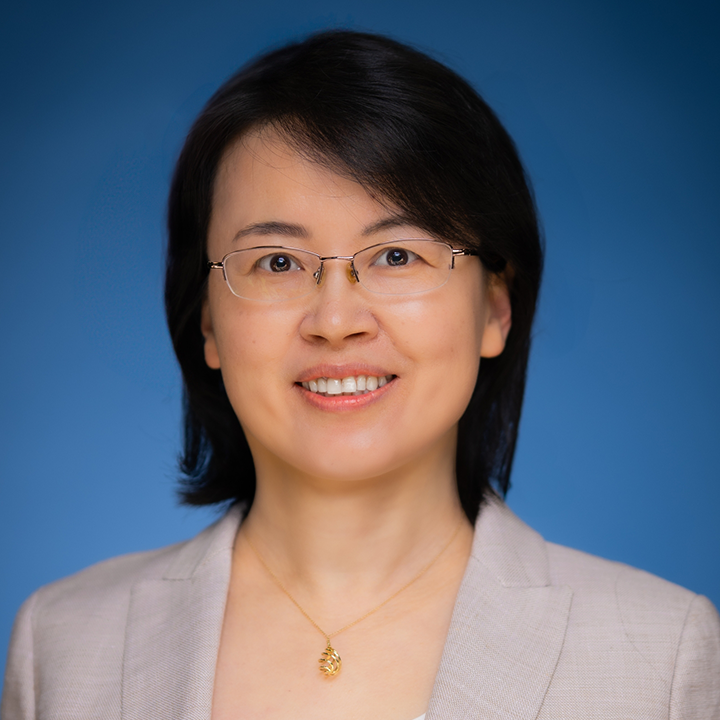
Dr. Matteo Bianchi is Associate Professor at the University of Pisa's Department of Information Engineering and Research Center E. Piaggio. His research develops wearable haptic systems, prosthetic technologies, and soft robotic manipulation inspired by human sensory-motor principles. He co-directs the RAS Technical Committee on Robot Hands and serves as Associate Editor for IEEE Transactions on Haptics. Funded projects include EU Horizon 2020's SoftPro and SOPHIA initiatives developing synergy-based prosthetics and collaborative robotics. Notable awards: IEEE Haptics Symposium Best Paper (2016, 2018) Georges Giralt PhD Award Finalist EuroHaptics Best Poster (2014) He leads the Haptic Interfaces research group, supervising PhD candidates in robotics and biomedical engineering.
Professor Paul Scott is a faculty member at the University of Huddersfield, holding the Taylor Hobson Chair in Computational Geometry within the School of Computing and Engineering. He leads the Centre for Precision Technologies as Research Director and specializes in surface texture and form metrology, precision engineering, and AI-driven manufacturing solutions. His research integrates mathematical principles with advanced instrumentation, focusing on algorithm development for surface characterization and international standardization (ISO TC/213). Scott earned a PhD in Statistics from Imperial College London and a DSc from the University of Huddersfield. His career includes 26 years at Taylor Hobson Ltd, developing metrology instruments. He has pioneered de facto standard algorithms for surface analysis and contributed to 23 ISO standards. Current research spans computational geometry, AI semantic labeling, and machine-readable standards via Category Semantic Language (CSL). His work addresses Industrie 4.0 challenges, including smart algorithms for feature recognition and digital twins modeling. Collaborations span global institutions, with projects funded by EPSRC (e.g., Future Advanced Metrology Hub). Key areas include XCT-based surface measurement, additive manufacturing metrology, and precision instrumentation. Notable contributions include decomposition theory for geometrical products, filtration techniques in surface analysis, and bridging metrology with Industry 4.0 through data-driven approaches. His h-index of 33 reflects over 3,600 citations across 193+ publications.
Robert Chang is an Associate Professor and Associate Chair for Graduate Studies in the Department of Mechanical Engineering at Stevens Institute of Technology. His research focuses on Additive Biomanufacturing, Biofabrication, and Computer-Aided Tissue Engineering, with a strong emphasis on developing advanced materials and technologies for biomedical applications. He holds affiliations at the Charles V. Schaefer, Jr. School of Engineering and Science. His work integrates engineering principles with biological systems, emphasizing the design of microscale physiological models and biomimetic tissue constructs. Notable contributions include advancements in melt electrowriting, low-cost bioprinting systems, and mechanobiology studies. Dr. Chang has secured significant funding, including an NSF CAREER Award in 2016, and has authored over 100 peer-reviewed publications and patents in biomanufacturing and materials science. Research Highlights Development of fibrous constructs via melt electrohydrodynamic processes Design of gradient biomaterials for functional engineered tissues Open-source modular bioprinting systems Microscale in vitro models for drug screening Dr. Chang’s awards include the Sigma Xi NIST Best Poster Award (2011) and Drexel’s Best Dissertation Award (2009). He serves on editorial boards for journals like Macromolecular Materials and Engineering and International Journal of Bioprinting , and actively participates in professional societies such as ASME and ASEE. His work bridges academia and industry, with patents pending in bioprinting and microfluidic technologies. Ongoing efforts focus on advancing biomanufacturing for personalized medicine and regenerative therapies.
Jian Rong is a Senior Lecturer at the Department of Agricultural Economics and Rural Sociology at Auburn University, holding positions since 2015. With a Ph.D. in Economics from Fudan University and an MBA from Iowa State University, their expertise spans agricultural economics, rural sociology, and agribusiness management. Professional experience includes visiting roles at UC Berkeley and UC Davis, focusing on agricultural economics and resource economics. Research interests center on agribusiness marketing, agricultural policy, and economic development. Courses taught include Agribusiness Marketing (AGEC 3010), Agricultural Policy and Trade (AGEC 3300), and Principles of Agribusiness Management (AGEC 4000). Professional affiliations include the Agricultural & Applied Economics Association and the American Economic Association. Recent work emphasizes oscillator design and RF technologies, with publications on multi-phase coupled oscillators and low-phase-noise VCOs. They actively engage in faculty development and diversity initiatives through the National Center for Faculty Development & Diversity.
Jaskirat Sodhi is a Senior Lecturer in the Department of Mechanical and Industrial Engineering at New Jersey Institute of Technology (NJIT). He holds a Ph.D. in Mechanical Engineering from NJIT and a B.S. in Aeronautical Engineering from Punjab University. His work focuses on innovative teaching methodologies, inclusive design in engineering education, and improving student engagement through active learning strategies. He has developed courses such as Introduction to Computer Aided Design (ME 430) and Analysis and Design of Machine Elements (MET 301) , integrating hands-on projects and technology tools like MATLAB and 3D printing. Dr. Sodhi’s research interests include curriculum development for first-year engineering students, embedding ethics into introductory courses, and addressing challenges in online education during the pandemic. He has pioneered initiatives like the GIFTS program to enhance self-development through engineering design projects, and Milestones-Based Learning frameworks to boost student performance. His work often involves collaborative projects with librarians and interdisciplinary teams to improve research and writing skills among undergraduates. He has presented extensively at workshops on topics such as competition-based drone education, cheating prevention strategies, and inclusive design modules. His earlier research in materials science includes studies on light-activated shape memory polymers, reflecting his background in mechanical engineering.
Professor Dave Lewis is a Professor of Employment Law at Middlesex University, located in London. He is affiliated with the School of Business and Law and the Department of Law and Social Sciences. His primary research focuses on whistleblowing law and practice, unfair dismissal remedies, and social security benefits disqualification. Currently, he teaches Employment Law and supervises two doctoral students, including Vandana Beessoo. Professor Lewis holds an undergraduate law degree and an MA in Industrial Relations. He has been a member of the Chartered Institute of Personnel and Development since 1972. His expertise spans international consultancy work with organizations like the European Commission, Council of Europe, OECD, and UNODC. He has provided expert testimony to the European Parliament and UK Committee on Standards in Public Life. His research emphasizes whistleblower protection mechanisms, workplace ethics, and public interest disclosure. Recent work includes analyzing compensation for whistleblowers' psycho-social harm, comparative studies of whistleblowing laws, and the role of trade unions in supporting whistleblowers. He has led significant projects, including a 2021-25 comparative study on whistleblowing and workplace management with Fafo. His publications span academic journals, edited volumes, and textbooks, such as Employment Law and Employment Law: The Essentials . Professor Lewis collaborates internationally through networks like the International Whistleblowing Research Network , contributing to policy discussions on whistleblower protection and labor rights.
Elizabeth Stobert is an Assistant Professor and Human-Computer Interaction (HCI) Program Co-Director at the School of Computer Science, Carleton University. Her research focuses on usable security systems, integrating cognitive science principles to enhance security design in healthcare and education contexts. She holds a leadership role in advancing security education and authentication practices. Her work emphasizes improving user experiences in authentication systems, cybersecurity education, and addressing cultural and contextual factors in security practices. Key projects include studies on password management, digital legacy planning, and healthcare IT security gaps in emergency departments. She leads the SPIRL lab (website: https://spirl.scs.carleton.ca ), which explores human-centered security solutions. Dr. Stobert’s research has been disseminated through top-tier venues, analyzing user behavior in IoT authentication, cross-cultural security practices, and emergency department cybersecurity challenges. She advocates for interdisciplinary approaches to bridge gaps between technical security measures and human usability needs.
Mike Howarth is an academic affiliated with Middlesex University's Education department. His primary role is as an Hourly Academic, focusing on educational technology and pedagogical innovation. His research explores hybrid learning environments, user experience (UX) design in healthcare simulations, and the adaptation of historical educational broadcast techniques for modern online teaching. He has contributed to conferences such as 'The BBC at 100 Symposium' and published works on post-Covid learning strategies, webinar production, and immersive web video engagement. Education background includes a PhD from Middlesex University (2003) on graphical user interfaces for children. His work emphasizes practical applications of technology in education, bridging historical media practices with current digital tools. Notable outputs include analyses of BBC School Radio's methods and frameworks like '45° Learning' for pandemic-era teaching. Research interests span online learning design, adaptive teaching strategies, and the integration of UX principles in medical education. He collaborates frequently with colleagues like A. Basiel and J. Hager on projects addressing student engagement and employability through innovative pedagogical tools.
Associate Teaching Professor George Fereday is the technology coordinator for materials at the School of Art, Architecture and Design, London Metropolitan University. Previously, he worked at Foster+Partners as a materials researcher, contributing to projects like the Apple Campus and Bloomberg Headquarters. He also researched at the University of Cambridge’s Centre for Natural Material Innovation, focusing on renewable materials. Recognized with a commendation in the 2017 IStructE Education Awards for his work on haptic feedback in architectural education, Fereday teaches nationally and internationally, emphasizing sustainable materials and hands-on learning. Education: Royal College of Art (undergraduate studies) Research Interests: Focused on materials innovation for sustainable construction, natural materials, and pedagogical approaches integrating making and haptic feedback. His work bridges science, engineering, and design to promote eco-friendly alternatives to traditional materials. Awards: Commended, Excellence in Structural Engineering Education Awards (IStructE) 2017 Advising & Grants: Involved in student-led projects like the coppiced sweet chestnut live-build initiative. Collaborated with industrial partners and secured a £1.75M Leverhulme grant for natural material innovation research. Labs/Teams: Affiliated with the Centre for Natural Material Innovation (University of Cambridge) and The Cass at London Met, leading material experimentation and applied learning initiatives.
Giorgos Psycharis is an Associate Professor of Mathematics Education at the Department of Mathematics, National and Kapodistrian University of Athens (since 2021). Previously, he served as a Lecturer (2011-2015) and Assistant Professor (2016-2020) at the same institution. He holds a BSc in Mathematics (1991) and a PhD in Mathematics Education (2005) from the University of Athens. His research focuses on integrating digital technologies into mathematics education, designing learning environments, and enhancing teacher education. Key areas include students’ construction of mathematical meanings, authentic task integration, and professional development for both prospective and practicing teachers. He has led over twelve STEM-related European/international projects and authored over 60 peer-reviewed publications. Psycharis emphasizes classroom innovation through digital tools and lesson study methodologies. His articles explore topics like teacher identity, collaborative resource design, and the balance between programming and mathematics in teaching. He has supervised 35+ master theses and 3 doctoral theses, fostering a new generation of educators. His work bridges theory and practice, advocating for authentic tasks and boundary-crossing between school mathematics and real-world applications (e.g., marine navigation). He collaborates with teacher educators to align curricula with workplace practices and promote inquiry-based learning.
Stephen Kwan is an Associate Professor and Associate Dean at the Lucas Graduate School of Business, San José State University. His research spans service science, artificial intelligence, and business model innovation. Position: Associate Dean of Lucas Graduate School of Business Institution: San José State University His research focuses on service systems, AI governance, and technology's role in business transformation. Key contributions include studies on omnichannel retail, multi-sided marketplaces, and standards in AI/e-commerce. Recent publications address regulatory frameworks for AI/ML, automation spectrum expansion, and workforce development roadmaps. These works emphasize ethical considerations, system design, and industry-academia alignment. No scientific awards, students, or lab details were explicitly mentioned in available texts.
Nate Lord, PhD, is an Assistant Professor at the University of Pittsburgh. He holds a PhD in Systems Biology from Harvard University. His research focuses on understanding the robustness of embryonic development, particularly how embryos maintain precise patterning and correct errors despite genetic and environmental challenges. Lord employs optogenetic manipulation, quantitative microscopy, computational modeling, and classical embryology to explore signaling dynamics and cell behavior across scales. His work bridges molecular mechanisms and tissue-level morphogenesis, aiming to uncover principles of developmental reliability. Education: PhD in Systems Biology, Harvard University Research Interests: Lord’s lab investigates how developing systems achieve robustness through multi-scale mechanisms. Key themes include Nodal signaling dynamics, optogenetic control of developmental processes, and stochastic regulation of cell fate decisions. By combining synthetic biology tools with quantitative analysis, his work addresses fundamental questions about error tolerance in embryogenesis, such as how signaling gradients stabilize patterns and how morphogenetic movements are coordinated despite perturbations. Publications: Recent work (2025–2013) highlights Lord’s focus on Nodal signaling pathways, optogenetic regulation of developmental processes, and stochastic mechanisms in microbial systems. His studies on human retinal organoids (e.g., DIO3’s role in photoreceptor development) demonstrate translational potential in modeling human tissue formation. Older studies (e.g., bacterial cell fate switching) reveal foundational insights into stochastic processes in cellular decision-making. Lab & Future Work: Lord’s lab integrates experimental and computational approaches to engineer synthetic systems that mimic developmental reliability. Ongoing projects aim to map feedback mechanisms that stabilize morphogen gradients and to design optogenetic tools for real-time embryonic signaling control.
Dr. Jennifer Brousseau is an Assistant Professor in Environmental Social Sciences at the University of New England, specializing in the human dimensions of climate change. Her work focuses on collaborative environmental planning, social justice in climate adaptation, and stakeholder engagement in decision-making processes. She holds a Ph.D. in Forest Resources and Environmental Conservation from Virginia Tech and completed a postdoctoral fellowship at Colorado State University studying wildfire governance. Her research emphasizes participatory methodologies, including place-based climate adaptation workshops and process mapping to evaluate environmental decision-making. Key areas of interest include equity considerations in municipal climate plans, factors influencing adaptation project adoption, and leveraging virtual platforms for climate action convenings. Dr. Brousseau collaborates closely with municipalities and organizations to ensure research addresses real-world needs. Recent projects analyze justice integration in U.S. climate policies over time and assess workshop effectiveness in fostering collective action. She advocates for value-driven science practices to enhance both research quality and team well-being. Her work bridges academic inquiry with practical conservation efforts, as seen in long-term Indonesian orangutan habitat studies.
Dr. Diana Parry-Cruwys is an Associate Professor in the Master of Science in Applied Behavior Analysis program at Regis College, where she also serves as the fieldwork coordinator and co-director of the Regis Autism Center. She holds a PhD from Western New England University, a master’s from Northeastern University, and a Bachelor of Arts in English and Psychology from Furman University. Her research focuses on early intensive behavioral intervention (EBI), joint attention development, and inclusive practices for children with autism spectrum disorders. Dr. Parry-Cruwys has presented widely at national conferences and serves on the editorial board of Behavioral Interventions and the Berkshire Association of Behavior Analysis and Therapy events committee. Her academic roles include teaching courses such as ABA 604 (Treatment Evaluation), ABA 608 (Behavior Intervention), and fieldwork thesis series. Her work emphasizes practical applications of behavior analysis in educational and clinical settings, with recent publications exploring compassionate care in graduate programs, APA citation training methodologies, and environmental behavioral interventions for sustainability. Dr. Parry-Cruwys’ research trends reflect a commitment to bridging academic rigor with real-world impact. Her articles address topics ranging from autism intervention efficacy to systemic racism mitigation through behavior analytic frameworks. She has contributed to textbook chapters on behavioral treatment for autism and pioneered training programs for graduate students in data management and practicum adherence. Her work consistently integrates innovative instructional methods with ethical considerations in behavioral practice. Notable collaborative efforts include co-authoring studies on observational learning mechanisms and recycling behavior modification on college campuses. While no formal grants are highlighted in the provided text, her editorial and committee roles indicate active participation in professional community-building initiatives. Dr. Parry-Cruwys’ academic leadership extends to the Regis Autism Center, where she oversees applied research and clinical training programs. Her work exemplifies the intersection of empirical research, pedagogical innovation, and societal impact within the field of applied behavior analysis.
Nathan Mitchell is the Vilas Distinguished Achievement Professor of Learning Sciences at the University of Wisconsin-Madison's School of Education. He serves as the Area Chair for Learning Sciences and Director of the MAGIC Lab. His research focuses on embodied cognition, mathematics education, and engineering learning, emphasizing how physical actions and environmental interactions influence intellectual processes. Mitchell holds a PhD in Cognitive Psychology from the University of Colorado and multiple degrees from Carnegie Mellon University, including BSE in Electrical Engineering, BS in Mathematics, and BA in History. His work spans over 200 peer-reviewed publications and grants from NSF, IES, and the James S. McDonnell Foundation. He is a Fellow of the International Society of the Learning Sciences and a Founding Officer of AERA's Engineering and Computer Science Education division. Mitchell has led initiatives such as the Teachers as Learners (TaL) grant program and co-founded EMIC, an embodied mathematics education consortium. He has also served on National Academies committees and is an inductee of UW-Madison's Teaching Academy. Mitchell's research emphasizes grounded and embodied learning principles, advocating for educational designs that integrate physical movement, gesture, and environmental interaction to enhance STEM learning. His recent work explores augmented reality, collaborative learning environments, and the role of gesture in mathematical proof construction. He has authored foundational texts like Foundations of Embodied Learning: A Paradigm for Education (2021), synthesizing theories and applications of embodied cognition. Awards: Facilitators’ Choice Award (2020), Vilas Distinguished Achievement Professorship (2018), Inductee into Teaching Academy (2014) Leadership Roles: Chair of TaL Grant Program (since 2017), Co-Chair of CSCL10 Conference (2013) Labs: Director of MAGIC Lab, exploring embodied education technologies