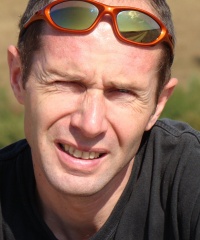
Tamás Néda serves as a Lecturer at the Environmental Science Department within the Faculty of Sciences and Arts at Sapientia Hungarian University of Transylvania, Cluj-Napoca. His academic responsibilities include teaching undergraduate courses in General Physics, Unconventional Energy, Environmental Radioactivity, and Environmental Pollution by Physical Agents, alongside Master's level instruction in Environmental Monitoring of Physical Factors. Dr. Néda's research centers on environmental physics with specialized expertise in radiation dosimetry and the effects of ionizing/non-ionizing radiations. His work extensively investigates environmental radioactivity, particularly radon and thoron dynamics in mofettes and soil gas across Romania's Carpathian region. This research directly addresses environmental health risks through field measurements of natural radiation sources, geological structure analysis, and modeling of radiation exposure pathways in both natural and built environments. Analysis of his 15 most recent publications reveals consistent focus on radon behavior in volcanic and fault zones of Eastern Europe. Key research trajectories include seasonal variation studies in mofettes, national-scale radon mapping initiatives, therapeutic applications of radon-rich emanations, and interdisciplinary connections between radiation physics, geology, and public health. His methodological approach integrates field measurements with computational modeling to assess environmental radiation risks across diverse spatial scales. Scientific Awards: No scientific awards were documented in available sources Advising and Grants: While departmental activities include student participation in conferences like the Transylvanian Scientific Students' Conference and international exchanges with Eötvös Loránd University, specific details regarding Dr. Néda's advisees, research grants, or funded projects were not provided in source materials. His educational contributions are evident through course development and publication of teaching resources including laboratory manuals. Labs and Teams: Source documentation does not specify dedicated laboratories or research teams under Dr. Néda's leadership, though his collaborative publications with institutions like the National Research and Development Institute for Physics and Nuclear Engineering suggest multi-institutional research networks focused on environmental radiation studies in Romania.