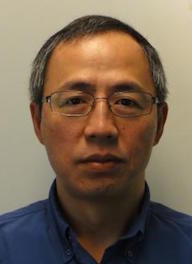
Min Tsao is a Professor in the Department of Mathematics and Statistics at the University of Victoria (UVic). He holds a PhD from Simon Fraser University. His primary research interests focus on empirical likelihood methodologies, model/variable selection techniques, and group effects in regression models with strongly correlated predictors. He has contributed to advancements in constrained minimum criterion (CMC) for model selection and group least squares regression to address multicollinearity issues. Education: PhD in Statistics, Simon Fraser University Research Interests: Development of extended empirical likelihood frameworks for improved statistical inference Model selection criteria using log-likelihood ratios (e.g., CMC as an alternative to AIC/BIC) Handling multicollinearity through group effects and group least squares regression Applications of saddlepoint approximation in statistical methods Notable Achievements: Recipient of the Canadian Journal of Statistics Award Teaching: Fall 2024: STAT 350 (Mathematical Statistics I) and STAT 353 (Applied Regression Analysis) Spring 2025: Courses to be announced Prof. Tsao’s work bridges theoretical statistics with practical applications, emphasizing robust methodologies for complex regression scenarios.
Adam Dewan is an Assistant Professor in the Department of Psychology at Florida State University, where he leads the Dewan Laboratory focused on the molecular and cellular basis of sensory perception. His research employs genetic, optogenetic, optical imaging, and behavioral techniques in mice to explore how olfactory perception is mapped and encoded within the brain. Dr. Dewan's research interests include: The contribution of individual olfactory receptors to odor perception How glomerular organization influences odor perception The contribution of individual olfactory cortical regions to odor perception How glomerular identity and location influences odor coding in the olfactory cortex His laboratory takes advantage of the genetic tractability of the olfactory system to manipulate the receptor repertoire and the organization of sensory inputs into the olfactory bulb. This approach allows for exploring fundamental questions about how sensory perception is mapped and encoded within the brain. Dr. Dewan's recent publications demonstrate a focus on odor detection thresholds, molecular mechanisms of olfaction, and the integration of olfactory information with other sensory modalities. His work spans from basic molecular mechanisms to behavioral outcomes, with particular attention to how specific receptors contribute to odor perception. Dr. Dewan is actively recruiting graduate students for Fall 2026 and undergraduate research assistants for his laboratory. He requires a minimum two-trimester commitment (two years) and enrollment for DIS credit from undergraduate researchers.
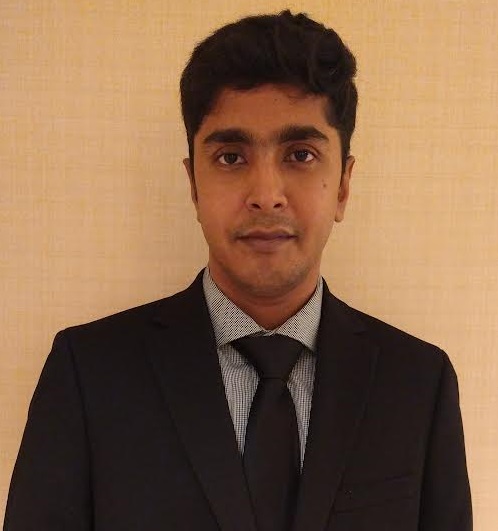
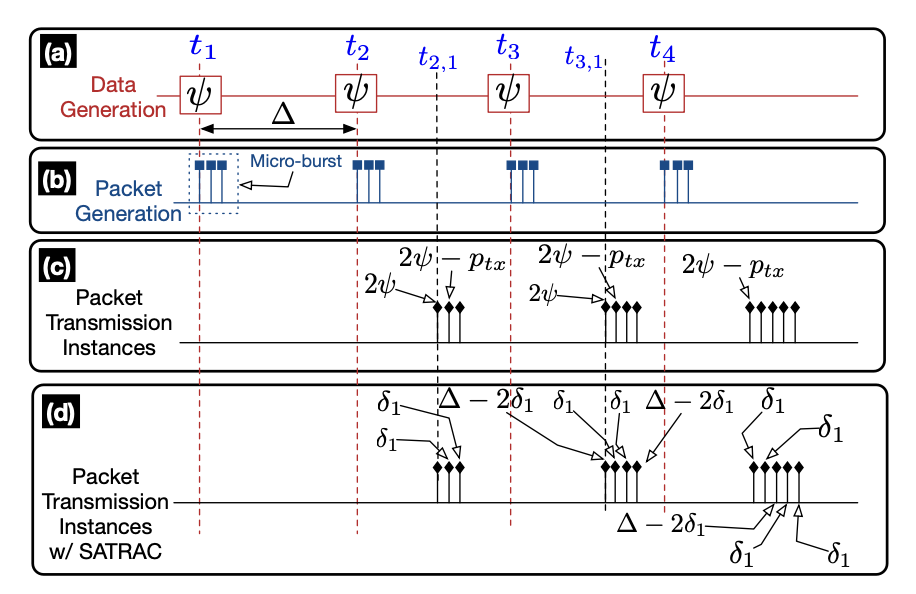
Dr. Anindya Bijoy Das is a tenure-track Assistant Professor in the Electrical and Computer Engineering department at The University of Akron's College of Engineering and Polymer Science, where he teaches courses including Wireless Communications (Spring 2025) and Digital Communication (Fall 2024). Prior to joining Akron in August 2024, he served as a Postdoctoral Researcher at Purdue University (2022-2024) following completion of his Ph.D. at Iowa State University in 2022, where he received the prestigious Karas Award for outstanding dissertation work. His educational background includes: Ph.D. in Electrical Engineering, Iowa State University (2022) M.Eng. in Electrical Engineering, Iowa State University (2018) B.Sc. in Electrical and Electronic Engineering, Bangladesh University of Engineering and Technology (2014) Dr. Das's research focuses on cutting-edge areas at the intersection of machine learning, distributed systems, and communications. His primary interests include federated learning , AI/ML applications , distributed computation , information theory , and biomedical signal processing . Recent work explores the integration of large language models with traditional signal processing techniques, particularly for healthcare applications. His research bridges theoretical foundations with practical implementations, often addressing challenges in edge computing environments where computational resources are limited. The work demonstrates strong connections between theoretical information theory and practical system design. Analysis of his publication portfolio reveals an evolving research trajectory with increasing emphasis on federated learning architectures, privacy-preserving techniques, and the application of reinforcement learning to communication optimization. His work spans wireless communications, information theory, and healthcare applications, with a consistent focus on solving computational bottlenecks in distributed environments. The interdisciplinary nature of his research is evident in publications spanning IEEE Transactions on Information Theory, IEEE Journal on Selected Areas in Communications, and IEEE Signal Processing Magazine. His notable achievements include: Karas Award for Outstanding Dissertation in Mathematical and Physical Sciences and Engineering (2022) Research Excellence Award from Iowa State University (2021) Teaching Excellence Award from Iowa State University (2020) National Champion in Bangladesh Mathematical Olympiad (2008) Multiple Best Paper Awards at international conferences Dr. Das currently leads a research group focused on three main thrusts: improving federated learning algorithms, enhancing distributed computation schemes, and developing novel AI/ML applications. He has secured a $73,000 grant from Autonomous and Connected Systems of Purdue Engineering Initiatives for research on AI tensor computations in edge networks. Actively seeking 1-2 highly motivated PhD students, he emphasizes practical implementation alongside theoretical advances, with applications spanning healthcare, wireless communications, and edge computing environments. His service as a reviewer for top-tier journals including IEEE Transactions on Pattern Analysis and Machine Intelligence and IEEE Transactions on Wireless Communications further demonstrates his standing in the research community.
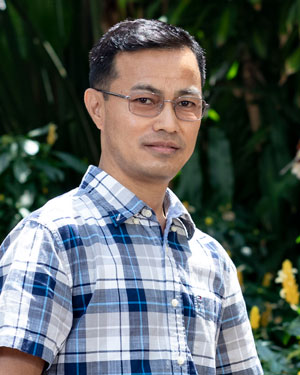
Dr. Tej Limbu is an Assistant Professor of Physics at the University of Houston-Clear Lake (UHCL), part of the College of Science and Engineering. He joined UHCL in Fall 2021 after completing postdoctoral research at North Carolina State University and North Carolina Central University. His expertise lies in experimental materials science and materials physics, with a focus on two-dimensional (2D) materials, their heterostructures, and nanocomposites for electronic, optoelectronic, and thermal applications. Dr. Limbu holds a Ph.D. in Chemical Physics from the University of Puerto Rico (2017), and bachelor’s and master’s degrees in Physics from Tribhuvan University in Nepal. His research emphasizes synthesizing 2D materials like graphene, transition metal dichalcogenides, and MXenes using methods such as chemical vapor deposition and wet chemistry. He employs advanced characterization tools—electron microscopy, Raman spectroscopy, XPS, and others—to evaluate material properties for diverse applications. His publications span topics including MXene nanosheet SERS activity, Bi2O2S photodetectors, and graphene-based nanoelectronics. He actively seeks collaborations to advance 2D material research and applications. For inquiries, contact him at limbu@uhcl.edu .
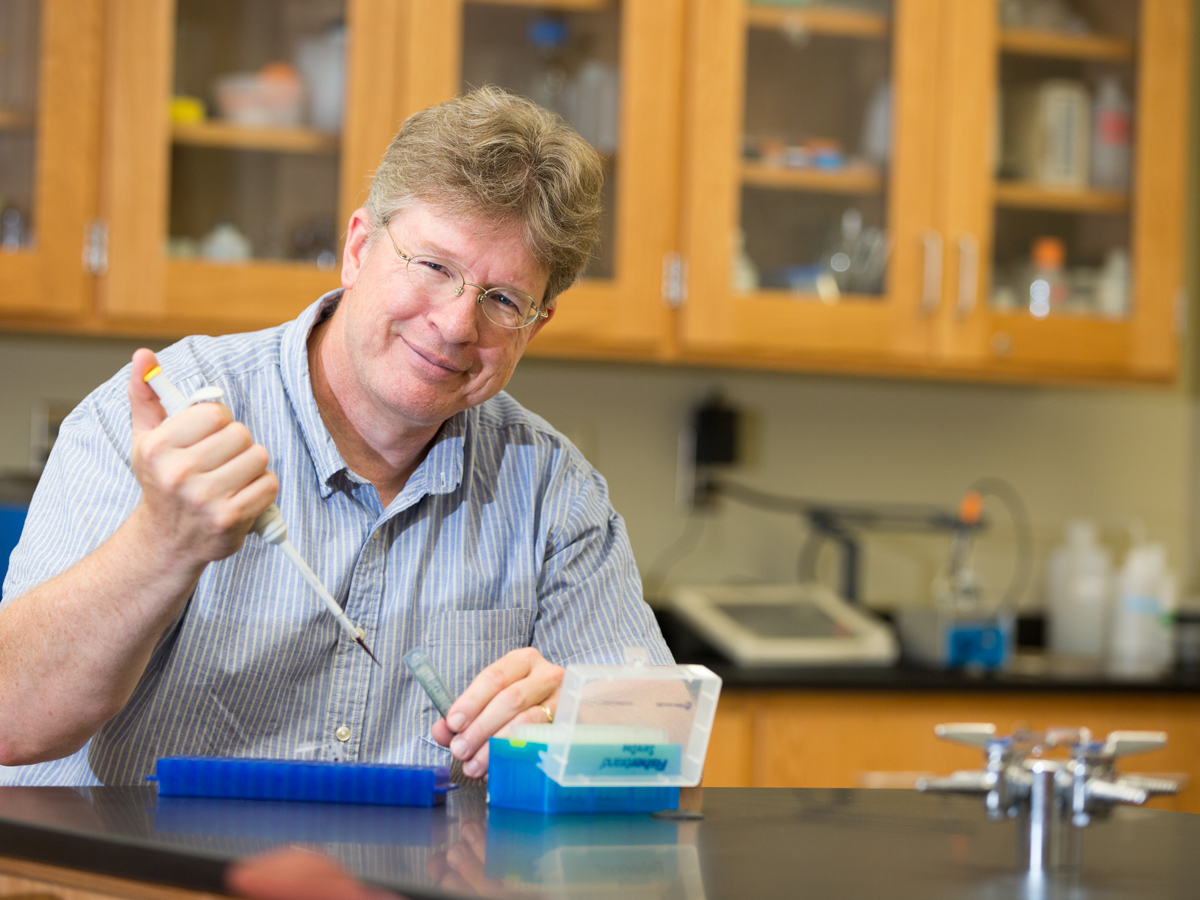
Mark Bolyard is a University Professor of Biology and Interim Dean of the College of Arts & Sciences at Union University. He holds a Ph.D. from the University of North Carolina and a B.A. from Hanover College. His research focuses on plant biotechnology, specifically secondary metabolite production in Artemisia abrotanum and plastination techniques. He has published widely on topics including plant regeneration, anatomical preservation methods, and laboratory protocols. As department chair and interim dean, he balances administrative leadership with hands-on teaching in biology labs and greenhouse settings. His work emphasizes integrating faith with scientific inquiry in undergraduate education. Recent scholarship includes studies on Southern wormwood metabolism (2023), pigment application in plastination (2020), and RFID tagging in specimen management (2019). He frequently presents at conferences like the Union University Scholarship Symposium and collaborates with students on research projects showcased at Fall Poster Sessions. Bolyard’s teaching spans undergraduate biology courses, emphasizing practical lab experiences and student mentorship.
Alison G. Hyslop is an Associate Professor in the Department of Chemistry at St. John's College of Liberal Arts and Sciences, St. John's University. She holds a Ph.D. in Chemistry from the University of Pennsylvania and a B.A. in Chemistry and Math from Macalester College. Dr. Hyslop serves as Chair of the Chemistry Department (since Fall 2012) and previously served as Assistant Chair (2006-2012). She is an active member of the American Chemical Society, currently serving as Councilor (2017-present) and previously as Chair of the New York Section (2016). Dr. Hyslop's research focuses on synthesizing and characterizing porphyrin arrays for light harvesting complexes that mimic photosynthetic processes. Her work centers on two primary systems: phosphine-porphyrins and imidazole-porphyrins. By incorporating phosphines or N-heterocyclic carbenes on porphyrin peripheries, she develops molecular systems that bind through metal centers like osmium, ruthenium, palladium, and rhodium. These compounds have potential applications in converting light into electrical energy, with electronic properties modulated by substituents or central metal atoms. Her photophysical studies examine electronic interactions between porphyrins to optimize light harvesting efficiency. Analysis of Dr. Hyslop's recent publications reveals a strong focus on porphyrin-based materials for sensing and energy applications. Her work spans fundamental synthesis of novel porphyrin arrays, characterization of their electronic properties, and development of educational resources in chemistry. The research demonstrates consistent exploration of light harvesting systems, molecular electronics, and chemical sensing applications using porphyrin chemistry. Petroleum Research Fund Summer Faculty Fellowship (2004) Faculty Research Reduction Awards from St. John's University (2000-2004) Dr. Hyslop has mentored numerous undergraduate and graduate students, with many co-authoring publications and conference presentations. Her research has been supported through internal university funding mechanisms including multiple Faculty Research Reduction awards. She has developed interlaboratory collaboration experiments for undergraduate chemistry education and contributed significantly to chemistry textbook development as co-author of "Chemistry: The Molecular Nature of Matter" (7th and 6th editions). Dr. Hyslop leads research in porphyrin array synthesis within the Chemistry Department at St. John's University. Her laboratory focuses on creating novel light harvesting complexes through strategic porphyrin functionalization and metal coordination chemistry. The research group collaborates with other institutions through interlaboratory studies and presents regularly at national and regional American Chemical Society meetings.
Behnam Dezfouli is an Associate Professor in the Department of Computer Science and Engineering at Santa Clara University, USA, and Director of the IoT Research Lab (SIOTLAB). His research focuses on IoT systems, edge/fog computing, network security, and software-defined networking. He teaches courses on IoT, computer networks, and programming. Affiliations: IEEE Senior Member, IEEE Communications Letters Associate Editor. Research: IoT protocols, energy-efficient communication, AI-driven network optimization, and humanitarian tech applications like flood monitoring (Flomosys). Publications: Over 60 papers in journals like IEEE Transactions and conferences such as INFOCOM and GLOBECOM, emphasizing IoT security, edge computing, and wireless protocols. Projects: Developed platforms like the Fog Development Kit (FDK), MonFi for network monitoring, and Sensifi for ultra-high-rate sensing. Grants & Recognition: Senior Member of IEEE, leading industry collaborations and litigation consulting.
Liat Rosenfeld is an Associate Professor of Chemical Engineering and Program Director of SPARTAN SPARK and Project Engineering Success at San José State University (SJSU). She holds a B.Sc., M.Sc., and Ph.D. in Chemical Engineering from the Technion – Israel Institute of Technology. Her research focuses on carbon capture and sequestration, microfluidics, biofuel production, and engineering education innovations such as the SJSU Coffee Lab and virtual reality (VR) integration in labs. Her academic contributions include pioneering work on surfactant effects on hydrate crystallization, droplet microfluidics for diagnostics, and fluid dynamics in biomedical systems. Rosenfeld has authored over 20 peer-reviewed articles and serves on the Physics of Fluids editorial board. She teaches courses like CHE 190 (Introduction to Transport Phenomena) and CHE 219 (Advanced Transport Phenomena), and recently developed a new general education course: CHE 001 – Design of Coffee (Fall 2025). Rosenfeld’s awards include the 2007 Wolfson Department Graduate Award and the 2006 Reznik Prize for environmental research. Her work on pandemic impacts, such as faculty and student adaptation to remote learning during the 2020 shelter-in-place, highlights her commitment to engineering education resilience. She directs research initiatives like the SJSU RET (Research Experiences for Teachers) and the ENG SUCCESS program, fostering student success in engineering disciplines.
Sarah Azinheiro is an FCT Research Fellow at the International Iberian Nanotechnology Laboratory (INL) in the Food Quality and Safety Research Group. Her work focuses on developing innovative and faster detection methods for pathogenic microorganisms and allergens using DNA analysis. Education: PhD in Food Safety and Pathogen Detection from the University of Santiago de Compostela (awarded FCT scholarship in 2018) Research Interests: Sarah's research spans Food Safety, Pathogen Detection, Molecular Biology, DNA Analysis, Microbiology, Biotechnology, Genetic Analysis, and Miniaturized Devices. She is particularly interested in creating fast, affordable, and multiplexed detection systems for foodborne pathogens on miniaturized devices to improve food safety and reduce analysis time from the current week-long processes to near-real-time solutions, addressing the WHO statistic that 1 in 10 people globally falls ill from contaminated food annually. Scientific Awards: Testing for Life Student Award from the AOAC/Eurofins Foundation Teaching and Grants: Sarah has been increasingly requested to teach in health, microbiology, and biotech areas across academic institutions. Her research was supported by an FCT scholarship in 2018 for her PhD project development at INL, focusing on miniaturized diagnostic platforms for food safety applications. Laboratory and Team: She operates within INL's Food Quality and Safety Research Group, which recently developed a fully integrated DNA analysis platform for identifying food frauds, allergenic ingredients, and pathogens as reported in May 2023 institutional news.
Jing Wang is a Senior Lecturer in the School of Computing and Digital Technologies at Sheffield Hallam University since 2017. She holds a PhD in Computing from the University of Huddersfield and a BEng in Machine and Electronic Technology from Xidian University, China. Primary Research: Computer Vision, Image Processing, Pattern Recognition Key Projects: Fall Detection Systems, Crowd Behavior Analysis, Synthetic Data Simulation Her research bridges computer science with healthcare robotics, security, and urban analytics, utilizing deep learning techniques like LSTM for human gesture recognition and crowd event detection. She has published extensively in automation, computing, and digital humanities fields, with recent work focusing on illumination-invariant fall detection algorithms and cyber-attack intrusion systems in robotic healthcare environments. Scientific awards include the ECRI Fellowship (2022-2023) supporting her fall detection research. She teaches undergraduate and postgraduate modules in Artificial Intelligence, Machine Learning, and Computer Vision.
Dr. Katerina Potika is an Associate Professor in the Department of Computer Science at San José State University (SJSU), where she has held positions since Fall 2015. Her academic journey includes roles as an Adjunct Lecturer at Santa Clara University (2013-2015) and various teaching positions at institutions in Greece and the U.S. from 2004 onwards. Education: She earned a Ph.D. in Electrical and Computer Engineering (2004) and a Diploma in Electrical and Computer Engineering (1997) from the National Technical University of Athens, Greece. Her doctoral thesis focused on approximation algorithms in optical networks under Prof. Stathis Zachos. Research Interests: Her work spans algorithm design, social network analysis, machine learning, blockchain, computer networks, and graph visualization. Recent projects include analyzing misinformation in infodemics, smart city applications, and community detection in graphs. She leads the 2022-2023 SJSU RSCA grant on network analysis for understanding COVID-19 infodemics. Professional Activities: She serves as a Guest Editor for Big Data Research , a Demo Chair for IEEE BDS 2020, and has organized workshops like the 2013 IEEE International Symposium on Mobile Cloud Computing. She reviews for journals like Algorithms and Future Generation Computer Systems . Teaching: Teaches advanced courses such as Machine Learning on Graphs (CS 276), Social Network Analysis (CS 176), and Data Structures and Algorithms (CS 146). Developed the undergraduate CS 176 course on social network analysis. Grants & Collaborations: Awarded grants including the College of Science RSCA time (2019) and a STCCS-funded project on smart city platforms (2017). Active in mentoring graduate and undergraduate researchers, with over 7 students supervised in recent semesters. Languages: Fluent in Greek (native), English, and German.
Benjamin Reed is an Assistant Professor in Computer Engineering at San José State University (SJSU) since 2018, currently on sabbatical during Fall 2024 and Spring 2025. His research spans distributed systems, cloud computing, operating systems, big data, and network storage. Research concentrations include: Distributed coordination systems (ZooKeeper) Lock-free transaction processing MapReduce optimization techniques Disconnected network services Educational tools for systems programming Recent publications focus on distributed storage consistency, educational technology for programming courses, and security protocols for disconnected networks. Earlier industry work includes contributions to ZooKeeper coordination system development at Yahoo! Research and distributed storage systems at Facebook. Significant projects: Directs the SJSU Systems Group researching wildfire storage systems and disconnected data distribution Leads the SJSU ICPC programming competition team Co-founded TECHcellence program creating CS pathways for underrepresented students Developed CodeVal educational tool for programming assignments
Betsy Sanders is a Professor of Computer Science at Rhodes College, specializing in computer graphics and virtual environments. She has held this position since Fall 2007 and teaches courses ranging from introductory programming to advanced topics in artificial intelligence and operating systems. Her research focuses on improving human interaction within virtual environments, particularly through immersive technologies like head-mounted displays and gesture-based interfaces. She leads a weekly research seminar and has contributed to projects such as the Guru tutoring system, which integrates animated agents into educational software. Dr. Sanders earned a B.S. in Mathematics and Computer Science from Millsaps College, followed by M.S. and Ph.D. degrees in Computer Science from Vanderbilt University. Her work spans desktop and immersive virtual environments, emphasizing spatial cognition, navigation techniques, and user-centered design. She has published extensively on locomotion methods in VR, including studies on walking-in-place interfaces and gesture-based interaction. Education: B.S. Millsaps College, M.S./Ph.D. Vanderbilt University Research Themes: Virtual Environments, Human-Computer Interaction, Educational Technology Lab: Active projects include Guru tutoring system and VR navigation optimization Outside academia, she resides in Midtown Memphis with her family, balancing hobbies like antique shopping and home renovation with her academic commitments.
Dr. Behnam Askarian is an Assistant Professor of Electrical Engineering at West Texas A&M University's College of Engineering, joining in Fall 2021. He holds a B.S. and first M.S. in Electrical Engineering from Shiraz University (Iran), followed by a second M.S. and Ph.D. from Texas Tech University (2020 and 2021, respectively). His research focuses on renewable energy, machine learning, biomedical engineering, IoT, and image/signal processing , with notable contributions to smartphone-based diagnostic tools for eye diseases and arrhythmia detection. He has authored two books on multimedia and learning technologies. **Education**: B.S. & M.S. in Electrical Engineering, Shiraz University, Iran M.S. & Ph.D. in Electrical Engineering, Texas Tech University **Research Highlights**: Dr. Askarian’s work bridges engineering and healthcare, particularly in developing affordable diagnostic tools. His IoT-enabled solutions address challenges in telemedicine, such as keratoconus detection via smartphones and arrhythmia monitoring. He also explores AI-driven precision agriculture and sustainable energy systems. Two patents reflect his innovations in smartphone-integrated medical sensors. **Teaching**: He teaches core electrical engineering courses, including Digital Design, Wind Energy Turbines, and Linear Integrated Circuits , emphasizing hands-on learning in electronics and renewable energy. **Labs & Collaborations**: Affiliated with the College’s engineering research groups, including the ECORE Lab and Human-Machine Teaming Laboratory, where he contributes to interdisciplinary projects in robotics and sensor networks.
Dr. Parminder Raina is a Professor in the Department of Health Research Methods, Evidence, and Impact at McMaster University, with a focus on the epidemiology of aging and geroscience. He leads the Canadian Longitudinal Study on Aging (CLSA) and directs the McMaster Evidence-based Practice Center . His work bridges biological, social, and policy aspects of aging, emphasizing interdisciplinary research from cellular mechanisms to societal impacts. B.Sc., University of Saskatchewan PhD, University of Guelph Dr. Raina’s research integrates aging biology, chronic disease prevention, and health equity. Recent projects examine: Frailty subdomains (physical, psychological, cognitive, social) Urban greenness effects on mental health Time-exercise-glycemia relationships AI-driven vertebral fracture detection His publications span machine learning applications, chronic disease algorithms, and pandemic impacts on aging populations. Key awards include the Canada Research Chair in Geroscience and the Labarge Chair . CIHR Investigator Award Ontario Premier's Research Excellence Award Dr. Raina mentors through grants and leads international collaborations, including the IRanian Longitudinal Study on Ageing and MINDMAP project. His McMaster Monitoring My Mobility Study (MacM3) explores aging-related mobility biomarkers.