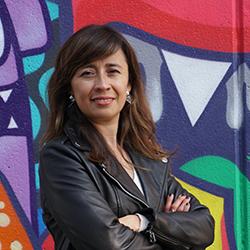
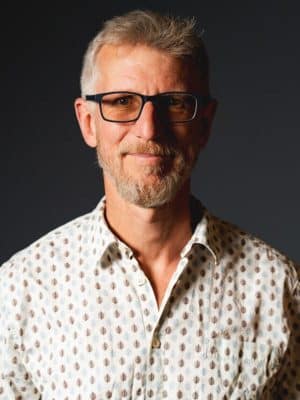
Lisa Haushofer is an Assistant Professor at the University of Amsterdam's Faculty of Humanities, Department of History. Her work bridges the histories of medicine, science, and food, focusing on the commercial, colonial, and ecological dimensions of nutritional culture. Fields of Interest: History of Medicine, History of Science, Food History, Nutrition History She authored the book Wonder Foods: The Science and Commerce of Nutrition (2022), which explores the intersection of nutritional science and global food systems in the 19th and early 20th centuries. Contact: lisa.haushofer@uva.nl . Follow her on Twitter and Bluesky for updates.
Alexander Dunlap is a Research Scientist at Boston University's Institute for Global Sustainability (IGS) and a visiting research fellow at the University of Helsinki's Global Development Studies department. He holds a PhD in Social Anthropology from Vrije Universiteit Amsterdam, an MSc in Modules from the University of Sussex (UK), an MA in Environment, Development and Policy from Sussex, and a BS in Political Science from Portland State University (USA). His work critically examines energy transitions, extractive industries, and the socioecological impacts of green capitalism. Research Interests: Political ecology of low-carbon technologies Green extractivism in global contexts Decolonial and anarchist approaches to sustainability State violence and counterinsurgency tactics Environmental justice in renewable energy projects Publications: Dunlap’s recent work focuses on solar energy injustices in California, industrial solar manufacturing in Ohio, and the militarization of nature. His articles interrogate how 'green' infrastructure reinforces colonial and capitalist systems, often through spatial dispossession and anti-Indigenous violence. Labs/Teams: Active in IGS research clusters studying infrastructural harm and energy justice. Co-editor of Human Geography , a journal promoting radical interdisciplinary scholarship. Future Work: Continuing research on solar project lifecycles, particularly mining-to-decommissioning impacts, and expanding analysis of Europe’s energy grid conflicts.
Dr. Julieta Chaparro-Buitrago is a Wellcome Trust Early Career Fellow in the Department of Sociology at the University of Cambridge, specializing in decolonial approaches to reproductive justice across Latin America. Her work bridges anthropology, gender studies, and environmental sociology through critical examinations of colonial power structures. Her educational foundation includes a PhD from the University of Massachusetts Amherst, where she received the Oriol Pi-Sunyer Dissertation Prize and multiple research awards recognizing her groundbreaking work on forced sterilization in Peru. Chaparro-Buitrago's research centers on how colonial legacies and extractive industries shape reproductive experiences of indigenous and peasant women. She develops innovative frameworks like Reproductive Extractivism to analyze connections between land exploitation, environmental contamination, and bodily sovereignty, challenging Western-centric reproductive rights paradigms through decolonial feminist methodologies. Her publication trajectory reveals expanding scope from Peru-focused ethnography to transnational comparisons (US, China) and environmental dimensions, consistently centering peasant epistemologies while critiquing state violence and repro-normative hierarchies. Her scientific recognition includes: Wellcome Trust Early Career Award (2022) Oriol Pi-Sunyer Dissertation Prize (2021) Armelagos-Swedlund Graduate Research Award (2018) Richard B. Woodbury Award (2015) Pre-Dissertation Research Award (2013) Her Wellcome-funded project on reproduction in Peru's extractive zones drives interdisciplinary collaboration with Cambridge Reproduction and the Cambridge Lactation Network, generating policy interventions for environmental reproductive justice amid climate crisis. She actively shapes discourse through the Cambridge Reproduction Forum and Reading Group, fostering cross-departmental dialogue on decolonizing reproduction research while mentoring emerging scholars in critical feminist methodologies.
Emilio Del Pupo is a Doctoral Researcher at the University of Helsinki, affiliated with the Doctoral Programme in Political, Societal and Regional Changes and Helsinki Institute of Sustainability Science (HELSUS). His research focuses on EU-Mercosur trade negotiations, civil society engagement, and Latin American identity formation. Master of Social Sciences from Åbo Akademi University (2022) Bachelor’s degree in International Relations from Universidade Vila Velha, Brazil (2018) Research Interests: Emilio specializes in political economy of trade agreements, particularly analyzing Brazilian interest groups in EU-Mercosur negotiations. His work examines civil society's role in trade policy, green extractivism, and contested spaces in international cooperation. Article Trends: Recent publications and manuscripts explore sustainability challenges in trade agreements, agricultural policy exceptionalism, and lithium extraction impacts in the Global South. Themes include both Brazilian perspectives and transnational identity dynamics in South America. Teaching & Academic Merits: Completed University Pedagogy training (5 ECTS). Designed and instructed course on 'Free Trade and Development in the Global South' (YMV-K507). Guest lecturer for 'Critical Thinking in Latin America' (ALKU-L3150). Peer reviewer for Revista Brasileira de Política Internacional and board member of Finnish Society for Development Research (2024–2025). Conference Participation: Active presenter at International Studies Association conferences (2024–2025), including paper presentations, panel discussions, and chair roles. Organized Development Days 2024 Conference and involved in UniPID DocNet research network.
Stine Krøijer is an Associate Professor in the Department of Anthropology at the University of Copenhagen, Faculty of Social Sciences. Her research focuses on political anthropology, nature-culture relations, cosmology, time, multispecies ethnography, anarchism, autonomy, and indigenous peoples, with regional expertise in the Amazon and Scandinavia. She is actively involved in major research projects such as 'Lokale Landvindinger' (2021–2025) and 'Fire and Political Alterity in Amazonia' (2023–), funded by the Velux Foundation and the Danish Research Council, respectively. Her educational background includes a PhD in Anthropology from the University of Copenhagen, awarded in 2011. Prior to her academic career, she worked with Oxfam_IBIS on forest, climate, and indigenous rights issues in the Amazon basin from 2002 to 2007 and again from 2010 to 2014. Stine Krøijer’s research explores the political agency of non-human entities like trees, the performative aspects of climate activism, and the temporalities of radical politics. Her work bridges anthropology with environmental studies, political theory, and indigenous epistemologies. She investigates how radical environmental change—such as deforestation, peatland restoration, and forest fires—reshapes political subjectivities and social futures. Her recent publications reflect a strong trend in climate politics, environmental activism, and the ontological status of nature. Themes include the agency of trees, dystopian imaginaries in environmental movements, and the co-creation of landscapes in Denmark. Her research combines ethnographic depth with theoretical innovation, particularly in understanding how ecological crises generate new forms of political alterity. Member, Expert Council on Nature National Parks, Ministry of Environment, Denmark Coordinator, Green Solution Centre, University of Copenhagen Editor, Tidsskriftet Antropologi She teaches courses on climate, nature, environment, global flows, project design, and fieldwork methods. Her advisory and grant activities are centered on externally funded research projects focusing on climate change, indigenous rights, and environmental transformation. She is also involved in public engagement through lectures and exhibitions such as 'Amazon Trails' and 'Climate/Kettle: Aesthetics of Resistance'. Stine Krøijer leads and participates in research groups focused on nature, environment, and climate. She collaborates with interdisciplinary teams across Denmark and Latin America, particularly in the Amazon region. Her work is embedded in both academic and policy-oriented networks, contributing to the Green Solution Centre and national environmental councils.
Jack Martínez Arias is an Assistant Professor of Hispanic Studies at Hamilton College , specializing in Indigenous and Andean Studies . His work critically examines the intersections of extractive industries , cultural production , and environmental impacts in Peruvian and Bolivian contexts. Education: Ph.D. from Northwestern University, B.A. from Universidad Nacional Mayor de San Marcos. His research explores how literature , film , and cultural narratives reflect and resist extractivism , colonialism , and environmental degradation . He also investigates transculturación in Andean traditions and the role of science fiction as a tool for cultural resistance . Martínez Arias’ publications focus on Andean modernity , mining fictions , and ecocritical responses to extractive practices. His recent journal contributions span Latin American literature , film studies , and popular culture , emphasizing historical memory and social justice . Additional roles include serving on the Latin American Studies Committee and advising the Spanish Club . He is a member of the Latin American Studies Association and has taught courses on Hispanic cinema , Indigenous migration , and Spanish immersion .
Filip De Boeck is a full professor in Social and Cultural Anthropology at KU Leuven’s Faculty of Social Sciences. He is a member of the LUSI - KU Leuven Urban Studies Institute and serves on the Council of the Faculty of Social Sciences. His research focuses on urban anthropology, visual anthropology, and the Democratic Republic of Congo, particularly Kinshasa. He leads projects such as ‘Colonial Graverobbing’ and ‘Dakar-Bamako: Waiting for a train ride back to the future.’ De Boeck’s work bridges ethnography and art, collaborating with visual artist Sammy Baloji on projects like Suturing the City . His recent publications include studies on Kinshasa’s urban futures, infrastructure politics, and decolonial knowledge frameworks. He has supervised PhD candidates such as Charlotte Veithen and Niels Van Doninck. His research highlights themes like urban marginality, postcolonial urbanism, and the interplay between art and anthropology. Key projects include the Frontier Files book and exhibition exploring Congo-Angola border dynamics. De Boeck’s work is supported by grants including KU Leuven’s Sabbatical Program and the Bijzonder Onderzoeksfonds. He actively engages with global academic networks, presenting at institutions like the British Academy and University of Lisbon. His teaching includes courses on urban anthropology, power dynamics, and decolonizing anthropology. Current projects address infrastructure politics in Abidjan, Côte d’Ivoire, and the socio-spatial transformations of Kinshasa’s Malebo Pool wetlands.
Dr Stephen Ashe is an Assistant Professor and Director of Undergraduate Studies in the Department of Sociology at Durham University. His research focuses on anti-racism, anti-fascism, racial inequality in higher education, and workplace racism. He has previously held positions at the University of Manchester and has contributed extensively to scholarly and public discourse on race and class. Education: While specific degrees are not listed, his academic trajectory includes roles as a Teaching Fellow and Research Associate, indicating advanced training in sociology and race studies. Research Interests: Dr Ashe’s work spans several interconnected domains: Anti-racism and anti-fascism Racial and class dynamics in post-Brexit Britain Institutional whiteness and inequality in higher education Workplace racism and its health implications Qualitative and ethnographic research methods His research has been published in leading journals and edited volumes, including Race & Class , Ethnic and Racial Studies , and the Routledge volume Researching the Far Right: Theory, Method and Practice . Awards and Recognition: While no specific awards are listed, his work has been widely cited and used in policy and public engagement, including reports for the Trade Union Congress and the British Academy. Supervision and Mentorship: Dr Ashe currently supervises postgraduate research students including Cynthia Lawson and Morise Ogunyimika, focusing on issues related to race, class, and inequality. Public Engagement: He has contributed to public discourse through platforms like Open Democracy , Discover Society , and the British Sociological Association , translating academic research into accessible formats for wider audiences.
Macarena Gomez-Barris is the Timothy C. Forbes and Anne S. Harrison University Professor of Modern Culture and Media at Brown University, serving as Chair of the Modern Culture and Media Department and Director of the Center for Environmental Humanities. Her research focuses on decolonial environmental humanities, extractivism, media environments, and the intersection of cultural theory with artistic practice. She holds affiliations with the Brown Arts Institute and leads the Elemental Media Lab. Education : - PhD in Modern Culture and Media, University of California Santa Cruz (2004) - MA in Modern Culture and Media, University of California Santa Cruz (1999) - MA in Comparative Literature, University of California at Berkeley (1997) - BA in Literature, University of California, San Diego (1992) Her work explores themes such as colonial oceanic transits, racial ecologies, and the role of art in political resistance. She is the author of four books, including At the Sea’s Edge (forthcoming) and The Extractive Zone (2017). Her teaching spans courses like Racial Ecologies and Decolonial Futurities . Leadership & Initiatives : - Director of the Elemental Media Lab - Series Editor for Dissident Acts (Duke UP) - Member of the Social Text Collective
Tamara L. Mitchell is an Assistant Professor of Spanish at the University of British Columbia, located in Vancouver. She is affiliated with the Department of French, Hispanic and Italian Studies within the Faculty of Arts. Her research focuses on 20th- and 21st-century Latin American literatures and cultures, with a particular emphasis on Mexican and Central American narrative fiction. She explores the intersections of aesthetics, politics, and literary tradition under advanced capitalism, as well as sound studies, political philosophy, and border/diaspora studies. Education: Ph.D., Latin American Literatures, Indiana University (2019) M.A., Spanish Literature, University of Kansas (2009) B.A., English Literature and Spanish, Washburn University (2006) Research Interests: Her work examines postnational literary forms in the neoliberal present, with current projects including a monograph on Novel Distortions: Postnational Form in Mexican and Central American Narrative and a second project on sound and extraction in Mexican literature. She co-edited a special issue on 'Latin American Literary Aurality' and has been commissioned to write a thematic review on Latin American sound studies. Awards and Grants: SSHRC Insight Grant (2024–2029) Dean of Arts Graduate Mentorship Award (2023) Hampton New Faculty Research Grant (UBC) Multiple SSHRC and travel grants Teaching and Mentorship: She teaches courses on Latin American literatures and cultures, and has mentored undergraduate and graduate researchers. Currently not accepting new graduate students. Labs/Teams: Organized conferences and workshops, including The Sounds of Latin American Literature (2022) and co-founded panels on sound studies and Latin American literature at international conferences.
Patrick Meehan is a Lecturer in Peace and Conflict Studies at the University of Manchester’s Humanitarian Conflict Response Institute (HCRI), joining in January 2024. Previously, he held positions at SOAS University of London (PhD and post-doctoral fellowships) and the University of Warwick. His research focuses on drivers of armed conflict, the interplay between violence and development, and conflict resolution strategies, particularly in Myanmar and Southeast Asian borderlands. He combines historical, political, geographical, and anthropological approaches to examine illicit economies, resource politics, and environmental crises. His current project analyzes rare earth mining impacts in Myanmar-China border regions, linking climate policy to uneven development. Education: Doctor of Philosophy, Development Studies, SOAS University of London (2016) Master of Science, Development Studies, SOAS University of London (2009) Bachelor of Arts, History, Oxford University (2007) Research Interests: Illicit drug economies, resource frontiers, climate change responses, and their socio-environmental impacts. Key themes include Myanmar’s borderland dynamics, drug trade impacts on state formation, and sacrifice zones in green energy transitions. His work bridges theory, policy, and practice, emphasizing community resilience in conflict-affected areas. Research Contributions: Over 20 publications since 2011, including studies on Myanmar’s opium economy, paramilitary-drug nexus, and green energy trade-offs. His work highlights how climate policies exacerbate regional inequalities through extractivism in conflict zones. Collaborations: Partnerships with UK Government, UN Research Institute for Social Development, The Asia Foundation, and local civil society organizations in Myanmar. Focus on policy-relevant research to address development and peacebuilding challenges. Labs/Teams: Leads projects on rare earth mining impacts and collaborates with global networks in critical development theory and borderland studies.
Dr. Philippa Lovatt is a Lecturer in Film Studies at the University of St Andrews, specializing in artists’ moving image, sound studies, eco-criticism, and Southeast Asian independent film cultures. She leads a monograph project on sound politics in artists’ film and co-directs the oral history project Parallel Practices: Oral Histories of Southeast Asian Film and Video Cultures with Prof. Jasmine Nadua Trice (UCLA). Her research bridges ecological crises, audiovisual practices, and regional art histories. Her key awards include a 2020 Carnegie Research Incentive Grant for studying environmental responses in Hanoi and Chiang Mai. Research outputs include edited dossiers for Journal of Cinema and Media Studies and Screen , alongside publications in Southeast of Now and Antennae . Collaborative projects emphasize transnational Southeast Asian film networks and decolonial art methodologies. Her work interrogates intersections of ecology, sound, and regional identity through case studies like Nguyen Trinh Thi’s mycological film practices and Apichatpong Weerasethakul’s therapeutic narratives. Current projects explore material histories of extractivism and anthropocentric critiques in moving image art.
Susanna Hecht is a Professor of Urban Planning at the UCLA School of Public Affairs, specializing in tropical development, political ecology, and Amazonian studies. She holds a Ph.D. in Geography and has advised graduate students including Mariana Fajardo-Arboleda and Sebastián Solarte-Caicedo. Her research integrates historical ecology, remote sensing, and socio-political analysis to address deforestation, forest resurgence, and alternative development pathways in Latin America. Key areas of focus include the socio-environmental impacts of corporate agriculture (soy, oil palm), indigenous land management practices (e.g., Amazonian Dark Earths), and the role of migration/remittances in reshaping rural land use. She has pioneered work on forest transition theory and critiques of Malthusian explanations for deforestation. Awarded the David Livingstone Medal and Carl O. Sauer Award, Hecht's influential books include *The Fate of the Forest* and *The Scramble for the Amazon*. Her work has shaped policies for extractive reserves, climate finance mechanisms, and global environmental governance. She collaborates with international agencies like NSF, NASA, and the MacArthur Foundation, and serves at Princeton's Institute for Advanced Study. Recent projects explore globalization's impact on soy frontiers, carbon dynamics in pre-Columbian landscapes, and the socio-ecological implications of forest resurgence. Hecht advocates for integrating indigenous knowledge into modern conservation strategies and critiques neo-extractivist development models.
Katherine Fama is a tenured Assistant Professor of American Literature in the School of English, Drama and Film at University College Dublin (UCD). She holds leadership roles including Deputy Head of School (2024–2027), former Director of Graduate Research (2021–2024), and Co-Director of the Fictional Spaces research substrand under UCD’s Thresholds of Knowledge research initiative. She co-founded the Single Lives Research Group and helped establish the International Singles Studies Association (ISSA). Her work bridges literary studies, feminist theory, architectural criticism, and creative pedagogy. Dr. Fama earned her PhD in English and American Literature from Washington University in St. Louis in 2013, with a certificate in American Culture Studies. She also holds an MA from New York University and a BA from Swarthmore College. Her postgraduate training includes a Digital EDI Ambassador Badge and participation in the Research Supervisor Support and Development programme at UCD. Her research centers on singleness, architecture and narrative, feminist theory, sexuality studies, and the history of emotions in modern American literature. She explores how domestic spaces shape identity, particularly for single women, and investigates the emotional and material dimensions of literary form. Her book project, The Architecture of Singleness , examines early 20th-century novels, domestic architecture, and the figure of the single woman in America. Her interdisciplinary approach is reflected in collaborations across film, media, and studio arts. Her recent publications span journals such as Emotions: History, Culture, Society , MELUS , Studies in American Naturalism , and Journal of Modern Literature . She co-edited Single Lives: Modern Women in Literature, Culture, and Film (Rutgers University Press, 2022), and her work increasingly integrates creative practice, including printmaking and community art projects focused on environmental regeneration. College of Arts and Humanities Teaching Excellence Award (2024) Marie Skłodowska-Curie Research Fellow Volkswagen Foundation Postdoctoral Fellow NEH Research Fellow W.M. Keck Foundation Fellow Everett Helm Visiting Fellow Katherine Fama supervises PhD and MA students, including Chloe Green, whose research examines illness in the contemporary workplace novel. She founded the Graduate Futures workshop to support PhD candidates in academic and non-academic career development. Her funded research projects include 'Architecture and Narrative: The Built Environment in Modern Culture' and 'Print Exchanges: Site-specific Creative-Critical Responses to Extractivist Landscapes'. She has received grants from the NEH, Winterthur Museum, Huntington Library, Smith College, and the Marie Curie programme. She co-directs the Fictional Spaces substrand of the Thresholds of Knowledge research strand and collaborates with Dr. Jorie Lagerwey on the Single Lives Research Group. She is also active in the UCD Centre for Gender, Feminisms & Sexualities and has held leadership roles in the Irish Association for American Studies.
Adrian Martin is Professor of Environment and Development at the School of Global Development, University of East Anglia (UEA). He is a member of the Tyndall Centre for Climate Change Research, Global Environmental Justice, and ClimateUEA. He directs UEA’s Global Environmental Justice research group and serves as a Coordinating Lead Author for the IPBES Assessment of Diverse Values of Nature. His research centers on interdisciplinary approaches to natural resource management in developing countries. Key themes include environmental justice, conservation governance, ecosystem services, payments for ecosystem services (PES), and the intersection of poverty alleviation and biodiversity conservation. His work spans regions including sub-Saharan Africa, Southeast Asia, and Latin America, with a long-standing focus on Rwanda. Adrian’s recent and ongoing research projects include NAVIGATE (2022–2026) on integrating plural values of nature into decision-making, and Environmental Justice Analysis to Advance Rural Landscape Transformations (2020–2024), funded by ESRC. His publications span high-impact journals such as One Earth , Global Environmental Change , and Nature Sustainability , reflecting interdisciplinary reach across social and natural sciences. His most recent publications highlight trends in environmental justice, particularly in conservation policy, Indigenous rights, rural transformations under climate change, and the ethical dimensions of biodiversity governance. The works emphasize equity, participation, and the need to challenge dominant assumptions in conservation and development. Advancing equitable governance in area-based conservation (2024, IUCN WCPA) Is it just conservation? (2024, One Earth ) Unveiling pervasive assumptions in conservation (2025, Current Opinion in Environmental Sustainability ) Adrian supervises multiple PhD students working on topics such as REDD+ in Cameroon, community forestry in Kenya, land tenure in Madagascar, and mangrove restoration in Indonesia. He has led or co-led major funded projects from ERC, ESRC, NERC, DFID, and other international bodies. His teaching includes modules on natural resource governance, rural development, and environmental justice, and he has served as course director for the MA Rural Development and BA Geography and International Development. He is actively involved in research groups including the Global Environmental Justice group and contributes to UN Sustainable Development Goals, particularly those related to poverty, inequality, climate action, and life on land.