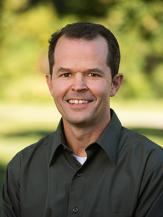
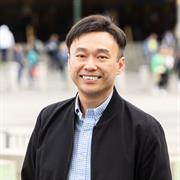
Eszter Iklodi is a PreDoc Researcher at the Databases and Artificial Intelligence department (E192-02) of Vienna University of Technology (TU Wien). She contributes to research projects focusing on artificial intelligence, natural language processing, and legal informatics, particularly in the development of explainable frameworks and annotated legal corpora. Her recent work includes the creation of the BRISE-plandok German legal corpus for building regulations and the POTATO framework for explainable information extraction, both published in high-impact venues like Language Resources and Evaluation and the ACM International Conference on Information & Knowledge Management (CIKM).
Dr. Jenna Lamphere is an Assistant Professor of Environmental Sociology and Coordinator for the Tourism and Coastal Community Development program at Texas A&M University at Galveston’s Department of Liberal Studies. She also serves as a Research Fellow at the Bush School of Government and Public Service , and contributes to UN initiatives through her membership in the World Ocean Assessment Pool of Experts . Her work focuses on multilevel governance of socio-environmental transformations, emphasizing just transitions and climate resilience in coastal communities. Education: Ph.D. in Environmental Sociology & Political Economy, University of Tennessee (2016) M.A. in Environmental Sociology, University of Tennessee (2012) B.A. in Sociology & Psychology, Arkansas Tech University (2004) Research Interests: Dr. Lamphere investigates how urban and environmental policies address climate change impacts, particularly through mixed-methods and stakeholder collaboration. Key themes include: - Sustainable community development in coastal regions - Green economy initiatives in politically conservative contexts - Governance of offshore energy and maritime industries - Socio-technical solutions for climate adaptation Grants & Leadership: Principal Investigator of a $60K Presidential Transformational Teaching Grant for TAMUG’s Sustainable Campus Initiative Co-PI of a $400K NSF REU Site for Ocean and Coastal Research Lead on projects analyzing offshore oil governance in Gulf of Mexico/Santos Basin Awards: ADVANCE NCFDD Faculty Success Fellowship (2021) ACUE Inclusive Teaching Certification (2021) Aggie Ally Diversity Certification (2018) Labs & Networks: Active in Texas A&M’s Institute for Science, Technology, and Public Policy , and global networks like Future Earth’s Sustainable Production & Consumption Knowledge-Action Network . Teaches courses on environmental sociology, urban development, and sustainability transitions.
Professor Xun Yi is a faculty member at RMIT University's School of Computing Technologies, specializing in cybersecurity, data privacy, and distributed computing. His research focuses on privacy-preserving technologies in cloud systems, blockchain applications, federated learning, and secure communication protocols. He has published over 150 papers in top-tier journals and conferences, including IEEE Transactions on Dependable and Secure Computing. Since 2014, he has served as an Associate Editor for the IEEE Transactions on Dependable and Secure Computing, and has organized major events like the Australasian Information Security Conference (AISC) in 2015 and 2016. Professor Yi actively supervises PhD and Master's research projects, focusing on topics like secure IoT systems, privacy-aware machine learning, and blockchain-enabled frameworks. His work emphasizes practical solutions for real-world challenges in data security and privacy. Research Interests: Data Privacy, Cyber Security, Cloud Security, Wireless/Mobile Security, Applied Cryptography Blockchain-based Systems, Federated Learning, Privacy-Preserving AI Recent Contributions: Developed frameworks for secure data aggregation in smart grids and healthcare systems Advanced techniques for privacy-preserving federated learning and graph neural networks Contributed to standards for secure authentication in vehicular networks (VANETs) Supervision: Open to mentoring students in cybersecurity, privacy-enhancing technologies, and IoT security.
Dr. Rumana Hossain is a Lecturer at UNSW Sydney's School of Materials Science & Engineering and a Research Associate at the Centre for Sustainable Materials Research & Technology (SMaRT@UNSW). She completed her Ph.D. in Material Science and Engineering at UNSW Sydney in 2020. Her research focuses on waste valorization, sustainable materials, microplastics pollution, and energy storage solutions, aligning with UN Sustainable Development Goals (SDGs) 7, 9, 12, 13, 14, and 15. Education: Ph.D. in Material Science and Engineering, UNSW Sydney (2020) Research Interests: Transformation of waste into high-performance materials Microplastics pollution and mitigation strategies Sustainable energy materials development Surface engineering and metallurgical innovations Grants: Co-Lead CI: Transforming Automotive Shredder Residue (ASR) into Green Materials (TRaCE Program, 2024-2027) Lead CI: TRaCE Industry Mobility Fellowship for Recycling E-Waste (2024-2025) Shared Grant: Upscaling Technology for Recycling Lithium-Ion Batteries (2024-2026) Awards: Early Career Researcher Prize, The Royal Society (2024) Women in Science (ECR) Award, AMSCA-2024 (2024) Australian Postgraduate Award (2016-2020) Advising & Grants: Supervising 6 HDR students in waste-to-value and sustainable material projects Leading industrial collaborations for circular economy initiatives Labs/Teams: Affiliated with SMaRT@UNSW, a globally recognized center for sustainable materials research.
Natalie Hold is a Lecturer in Sustainable Marine at the School of Ocean Sciences, Bangor University. Her research focuses on sustainable fisheries management, population genetics of marine species, and collaborative approaches with fishing industries. She holds expertise in fisheries science, ecosystem-based management, and gear technology innovation. Educations: MSc in Marine Environmental Protection, Bangor University (2008) PhD in Marine Biology (2012), focusing on scallop fisheries connectivity Research Interests: Marine resource management Crustacean population dynamics Impact of fishing gear on ecosystems Technological innovations for fisheries data collection Her work emphasizes stakeholder collaboration, evidenced by projects like the EMFF-funded Fisher-Scientist collaboration (£1.2m) and the Bass and Ray Ecology in Liverpool Bay initiative (£86K). She contributes to ICES working groups on crustaceans and scallops. Recent publications highlight advancements in gear selectivity, automated data capture, and ecological modeling of fisheries resources. Natalie actively engages with policy frameworks to translate research into actionable management strategies. Key Projects: EMFF Sustainable Fisheries in Wales (Project Manager) Video and Electronic Fisheries Data Collection (£140K grant) Bass and Ray Ecology in Liverpool Bay (£86K grant) She is affiliated with UK management groups for whelk and lobster fisheries, balancing scientific rigor with industry needs to ensure sustainable marine practices.
Dr. Lydia E.S. Cole is a Lecturer in Geography and Sustainable Development at the University of St Andrews, where she also serves as Deputy Director of the postgraduate programme Data Literacy for Social and Environmental Justice . She is Chair of the British Ecological Society’s Conservation Ecology Special Interest Group and a member of the Scientific Advisory Board of the International Peatland Society. Her research focuses on sustainable management of peatlands under global pressures, including remote monitoring tools, human-peatland interactions, and restoration challenges. Notably, she explores interdisciplinary solutions to environmental and social challenges in regions like Scotland, Malaysia, India, and the Peruvian Amazon. Her work bridges ecological science with policy, emphasizing co-designed solutions and equity. Key research themes include peatland restoration barriers (e.g., private finance impacts), tropical peatland vulnerability to extractive industries, and Indigenous knowledge systems in Amazonia. She advocates for policy frameworks that align climate goals with community needs. Scientific contributions span over 30 publications since 2019, addressing peatland mapping, carbon dynamics, and socio-ecological resilience. She presents her findings in interdisciplinary venues, including policy briefings for the Scottish Parliament. Current projects include analyzing Scotland’s Western Isles peatland carbon frontier and global peatland management trajectories. No scientific awards are explicitly listed in the provided information. Her advising and grant activities are not detailed here, but her leadership roles highlight collaborative research and training initiatives. Lydia’s work extends to public engagement, such as podcast appearances and project websites launching new research directions. She actively promotes data literacy as a tool for environmental justice.
Pei-Chi Lo serves as Assistant Professor in the Department of Information Management at National Sun Yat-sen University (NSYSU), Taiwan, where she leads research at the intersection of information retrieval, computational linguistics, and user profiling. Her work leverages knowledge graphs and large language models to advance contextual understanding systems and social media analysis. Education: PhD in Computer Science, Singapore Management University (supervised by Prof. Ee-Peng Lim) Research Focus: Dr. Lo pioneers knowledge-based information retrieval systems including contextual path generation and knowledge graph reasoning. Her computational linguistics work spans task-specific language models, Singlish (English Creole) processing, and LLM-based knowledge extraction. User profiling research examines behavior-based modeling, adaptive crowdsourcing, and social media personality analysis through community-specific language features. Publication Trends: Her 14 publications (2017-2025) reveal evolving expertise from foundational knowledge graph embeddings to contemporary LLM integration. Recent work (2023-2025) emphasizes causal reasoning with LLMs, judicial document analysis, and temporal knowledge discovery, while maintaining core strengths in contextual retrieval and low-resource language processing. Academic Leadership: Dr. Lo advises 8 Master's students across 2024-2025 cohorts and supervises undergraduate research teams. She has secured multiple competitive grants including NSTC projects on LLM-based causal reasoning (2025-2027) and temporal knowledge discovery (2024-2026), plus institutional funding for sustainable e-commerce and elderly care technology initiatives. Laboratory: Her NSYSU research lab actively recruits students for projects spanning judicial reasoning analysis, personalized travel planning systems, and Singlish processing tools, maintaining strong industry and community engagement through practical NLP applications.
Justin J. Podur is Professor and Associate Dean of Teaching and Learning at York University's Faculty of Environmental and Urban Change. He holds a PhD in Forestry from the University of Toronto and has established himself as a prominent scholar bridging environmental science and critical geopolitical analysis. His research spans two interconnected domains: political conflicts in regions affected by Western intervention (particularly Haiti, Colombia, Venezuela, and the DRC), and environmental science focusing on forest fire patterns in Ontario and climate change impacts. He integrates historical research with contemporary geopolitical analysis, drawing from extensive fieldwork in conflict zones where he has worked as both journalist and translator. Podur's academic work reveals clear trends: a consistent critical examination of Western intervention in the Global South, with particular attention to media narratives that justify military actions and economic sanctions. His environmental research demonstrates sophisticated use of quantitative methods and GIS to model ecological patterns while connecting them to broader political economic forces. NSERC Discovery Grant recipient Frank A. MacDougall Fellowship awardee Author of multiple scholarly books on geopolitics Host of 'The Anti-Empire Project Podcast' (175+ episodes) As a dedicated educator, Podur supervises graduate students in Geography and Environmental Studies while teaching courses ranging from environmental management to advanced statistical analysis. His public intellectual work through blogging and podcasting extends his academic insights to broader audiences, maintaining rigorous analysis while remaining accessible to non-specialists.
Hulya Yalcin is an Assistant Professor in the Department of Mechanical Engineering at Istanbul Technical University. Her research focuses on artificial intelligence applications in robotics, computer vision, and precision agriculture. She leads projects in musculoskeletal modeling, plant phenology monitoring, and assistive technologies for elderly care. Her work contributes to UN Sustainable Development Goals related to innovation, health, and sustainable agriculture. Key projects include using deep learning for crop yield estimation and developing exergaming systems to improve elderly health. She has authored 52 research outputs and secured funding for initiatives like AISENSE (EU-funded exergames) and plant classification via computer vision. Publications span robotics control, medical engineering, and agricultural informatics. Notable contributions include knee orthosis gait learning via deep reinforcement learning and low-resource Turkish speech recognition improvements. As Principal Investigator, she manages projects on plant classification using CNNs, drone-based depth mapping, and multimodal assisted living systems. Her research bridges AI with practical applications in healthcare, agriculture, and robotics.
Prof. Fırat Burat is a Professor at Istanbul Technical University's Department of Mineral Processing Engineering, Faculty of Mining Engineering. He specializes in mineral processing, e-waste recycling, and battery recovery technologies. His research focuses on optimizing flotation processes, rare earth element extraction, and sustainable resource management. He holds a PhD in Mining Engineering from ITU (2011) and has been a faculty member since 2004, advancing to Associate Professor in 2018 and full Professor thereafter. Education: PhD in Mining Engineering (ITU, 2011), Master's in ORE COAL Preparation (ITU, 2003), Bachelor's in Mining Engineering (ITU, 2001). Research Interests: E-waste recycling (e.g., lithium-ion batteries, printed circuit boards), coal beneficiation, rare earth element recovery, and industrial raw material processing. His work contributes to UN SDGs like responsible consumption and climate action. Notable projects include recycling spent batteries and recovering metals from electronic waste. He has authored over 45 publications and secured multiple awards, including ITU's 2024 Academic Performance Award. Prof. Burat leads research teams on battery recycling and mineral processing, advising 7+ graduate students. His lab focuses on innovative separation methods and sustainable resource utilization.
Stephen Amerman is a Professor of History at Southern Connecticut State University, specializing in American Indian history with a focus on 20th-century urbanization, education, and Connecticut regional studies. He holds a PhD from the University of Utah/Arizona State University and has taught at Southern since 2003. His work bridges historical scholarship and public education, emphasizing Indigenous perspectives in urban contexts. Education Background: Grew up in Des Moines, IA; earned undergraduate degree in North Carolina; completed graduate studies in Utah and Arizona. Research Interests: Amerman’s research examines Native American experiences in urban schools, tribal sovereignty issues, and the intersection of education policy with cultural preservation. His award-winning monograph Urban Indians in Phoenix Schools, 1940-2000 (Univ. of Nebraska Press, 2010) analyzes federal relocation programs’ impact on Native communities. He actively engages in reviewing scholarly works on Indigenous topics for top journals like the Journal of American History and Western Historical Quarterly . Presentations: Active in academic conferences including the Western History Association and Native American and Indigenous Studies Association. Recent talks include discussions on Mohegan cultural festivals and urban Native identity in Connecticut schools.
Henry Adobor is a Professor of Entrepreneurship & Strategy at Quinnipiac University. He holds a BS from the University of Ghana, an MBA from Baruch College, and a PhD from Concordia University. His research focuses on strategic management, supply chain resilience, AI applications in business, organizational ethics, and policy interventions in developing economies. He is professionally designated as Academically qualified (SA) by AACSB (2016). Education: BS (University of Ghana), MBA (Baruch College), PhD (Concordia University) Affiliations: Department of Entrepreneurship & Strategy at Quinnipiac University Professional Designation: SA AACSB (2016) Research Interests: His work bridges strategic leadership, AI-driven innovation, and global policy challenges. Key themes include: Supply Chain Resilience : Investigates adaptive strategies for unpredictable disruptions using dynamic and multidimensional frameworks. Artificial Intelligence Governance : Explores AI's role in combating corruption and optimizing supply chains while addressing ethical challenges. Policy and Development : Examines contested policy interventions in sectors like Ghana's artisanal mining, emphasizing historical context and governance. Ethical Leadership : Analyzes moral obligations in healthcare strikes and strategic decision-making under uncertainty. Publications Trends: Recent work emphasizes antifragility concepts, AI integration in business systems, and resilience frameworks. His 2023-2025 papers highlight organizational adaptation to volatility, while earlier works (2018-2021) focus on supply chain dynamics and open strategy formulation. Scientific Awards: Academically qualified (SA) AACSB Designation (2016) Teaching and Grants: Teaches courses like MBA 690 Strategic Management and STR 630 Corporate Governance . His research has been supported by institutional grants (details unspecified in provided text). Labs/Teams: No specific lab or research team mentioned in the provided materials.
Dr. Kevin Jones is an Associate Professor in the Faculty of Agricultural, Life and Environmental Sciences at the University of Alberta, serving as Director of Student Experience and Learning. He holds a PhD, MA, and BSocSc in interdisciplinary social sciences. His research focuses on governance innovation, public engagement, and transformative adaptation to social and environmental challenges, particularly in urban sustainability, food security, and community development. Jones co-chairs the Environmental Studies program and has supervised graduate students in areas like participatory governance and urban agriculture. He teaches courses on policy engagement and urban sustainability, emphasizing experiential learning and critical analysis. Research interests span science policy, risk governance, and collaborative urban development. Notable projects include studies on craft-based community development, nanoscience innovation impacts, and environmental impact assessments. Jones advocates for reflexive governance approaches that integrate public expertise into decision-making processes. His work bridges sociology, geography, and policy studies, addressing complex challenges like climate change and social justice through interdisciplinary frameworks. Publications highlight themes of institutional adaptation, urban agriculture's societal role, and risk communication failures. Teaching responsibilities include MACE 551 and R SOC courses on engagement and urban sustainability. Jones actively contributes to scholarly networks through ResearchGate and Google Scholar, maintaining a focus on practical policy applications and community-driven solutions.
Kok-Leong Ong is a Professor of Business Analytics at RMIT University's College of Business & Law, where he serves as Director of the CoBL Technology Initiative, Director of the Enterprise AI and Data Analytics Hub, and Head of the Department of Information Systems and Business Analytics. With over $1.4 million in research grants, he specializes in translating analytics and machine learning into practical business applications across multiple verticals including e-Commerce, public health, sports, urban studies, marketing, and learning. His research has consistently ranked in the top 25% and 5% of works in their domains according to Altmetric. Professor Ong's research spans Business Analytics, Artificial Intelligence, Machine Learning, and Information Systems, with a focus on making data actionable through analytics-2-business translation, automation, and applications. His work addresses critical challenges in cybersecurity for wearable health devices, ECG-based authentication systems, federated learning privacy, carbon accounting for maritime transport, and AI-driven solutions for vehicle damage detection. He has developed frameworks for operationalizing analytics in business contexts and has made significant contributions to mHealth applications for infant care and breastfeeding support. Among his notable scientific achievements, Professor Ong has received two VC's Teaching Awards and was named one of Australia's Leading Data Academics by CDO Magazine in 2021. He has secured over $1.4 million in research funding and serves on prestigious conferences including KDD and PAKDD. His research has been recognized for its high impact, with many works ranking in the top percentiles of their respective fields. Professor Ong actively supervises numerous research students across diverse topics including human-aligned AI, securing LLMs for financial applications, cyber risks in enterprise AI systems, ECG authentication security, and AI transformation for SMEs. He previously played a key role in establishing Australia's first Business Analytics degree and led La Trobe Business School's analytics program from 2015 to 2019 before joining RMIT in September 2021. Through the Enterprise AI and Data Analytics Hub and his role with RMIT University's Digital3 board, Professor Ong leads initiatives focused on bridging the gap between advanced analytics capabilities and business value creation. His work emphasizes practical implementation of AI and analytics solutions that address real-world challenges across multiple industry sectors.
Ulman Lindenberger is Managing Director (2006-2009, 2016-2019, 2025-2027) and Director of the Center for Lifespan Psychology at the Max Planck Institute for Human Development in Berlin. He concurrently serves as Co-Director of the Max Planck UCL Centre for Computational Psychiatry and Ageing Research. He holds honorary professorships at Freie Universität Berlin, Universität des Saarlandes, and Humboldt-Universität zu Berlin. Education includes a Dipl.-Psych. from Technische Universität Berlin (1985), Dr. phil. from Freie Universität Berlin (1990 summa cum laude ), and Habilitation in Psychology (1998). His research examines: Behavioral and neural plasticity across lifespan Brain-behavior relationships Lifespan developmental theory Multivariate developmental methodology Formal models of behavioral change His publications focus on cognitive aging patterns, neural plasticity mechanisms, and methodological innovations in lifespan psychology. Research demonstrates consistent themes: neurocognitive dedifferentiation in aging, dopaminergic modulation of cognition, and environmental influences on brain plasticity. Awards include: Gottfried Wilhelm Leibniz Prize (2010) Fellow of Royal Society (2025) Foreign Member of Royal Swedish Academy of Sciences (2023) Mentoring Award of German Psychological Society (2011) He has supervised over 50 doctoral students and secured major grants including DFG collaborative projects, BMBF initiatives (Berlin Aging Study I/II), EU Horizon 2020 (LIFEBRAIN), and Max Planck Society strategic funds. Leads multidisciplinary teams at Center for Lifespan Psychology and Max Planck UCL Centre, coordinating international projects like COBRA (Cognition, Brain, and Aging) and SYNAPSE.