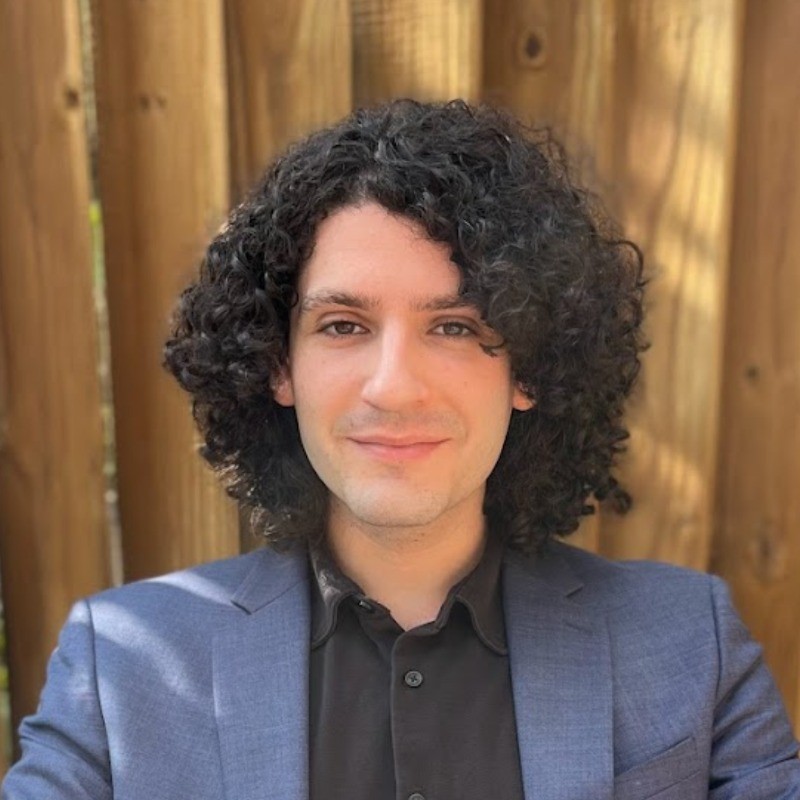
Jason Smith is a Postdoctoral Scholar at Northwestern University , affiliated with the Interactive Audio Lab . He earned his PhD in Music Technology from the Georgia Institute of Technology . Research Focus Human-AI collaboration in creative domains Interactive music systems AI-driven accessibility solutions Creative autonomy and neural audio generation Recommender systems for music libraries Publication Trends His work spans 2019–2025, emphasizing AI applications in music education, accessibility (especially for blind/visually impaired users), and immersive environments like AI holodecks. Key methodologies include co-design, hybrid recommendation algorithms, and automated creativity assessment. Lab Affiliation He contributes to the Interactive Audio Lab, exploring intersections of sound, code, and AI.
Max Pellert is a computational social scientist and cognitive scientist with faculty appointments at multiple institutions. Since 2022, he has served as an Assistant Professor at the Chair for Data Science in the Economic and Social Sciences at the University of Mannheim . He previously held an interim Professor position at the University of Konstanz and an Assistant Researcher role at Sony Computer Science Laboratories Rome. His work bridges computational methods with social science theory. Education M.Sc., University of Vienna (2017) in Middle European interdisciplinary Master's program in Cognitive Science (with distinction) Ph.D., Medical University of Vienna (2022) in Medical Informatics, Biostatistics & Complex Systems Research interests center on Computational Social Science , Digital Traces , and Natural Language Processing for emotion and sentiment analysis. He develops Temporal Adapters for tracking longitudinal emotional patterns and FAULTANA pipeline for polarization studies. His AI Psychometrics framework assesses personality-like traits in large language models. Recent publications include: (1) 2025 ACL work on political bias in LLMs; (2) 2025 ICWSM study of temporal emotion analysis; (3) 2024 Perspectives on Psychological Science paper on LLM psychometrics; (4) 2024 PNAS Nexus polarization analysis; (5) 2023 Emotion cross-cultural study of pandemic emotions. Scientific Awards Habilitation candidate status at University of Mannheim Teaching includes IS 616: Large Scale Data Analysis , IS 809: Advanced Text Mining Lab , and IS 723: Data Science Seminar at master’s and PhD levels. His Barcelona Supercomputing Center role focuses on principal investigator duties for computational social science projects.
Jennifer Neville is a Senior Principal Researcher at Microsoft Research Redmond and holds the Samuel Conte Chair Professor of Computer Science and Statistics at Purdue University. With over 100 publications and 10K citations, her research spans data mining, machine learning, and AI algorithms for relational and networked domains including social networks, epidemiology, and web analytics. Education: BS in Computer Science, University of Massachusetts Amherst (2000) MS in Computer Science, University of Massachusetts Amherst (2004) PhD in Computer Science, University of Massachusetts Amherst (2006) Her work focuses on relational learning techniques that exploit connections between entities to enhance pattern discovery. Recent research explores large language models (LLMs), emphasizing alignment with user intent through interaction at scale, while addressing statistical biases from graph structures. Selected scientific awards include the NSF Career Award (2012), ICDM Best Paper (2009), and IEEE’s 10 to Watch in AI (2008). She served on the AAAI Executive Council (2015-2018) and chaired multiple conferences including SIAM Data Mining (2019) and ACM Web Search (2016). Contact: neville@cs.purdue.edu jenneville@microsoft.com
Dr. Idalina Baptista serves as Associate Professor in Urban Anthropology at the University of Oxford's Department for Continuing Education, where she teaches urban theory in the MSc and DPhil in Sustainable Urban Development programs. A Fellow of Kellogg College and member of the Oxford Network for the Future of Cities, she bridges academic research with real-world urban challenges through her extensive fieldwork in African cities. Her academic credentials include a PhD in City and Regional Planning (2009) and Master of Landscape Architecture (1999) from the University of California, Berkeley, and a BEng in Environmental Engineering (1996) from Portugal's New University of Lisbon. This interdisciplinary foundation informs her critical approach to urban development. Baptista's research pioneers decolonial perspectives on African urbanization, focusing on energy infrastructure governance in Maputo, Mozambique. She examines how prepayment electricity systems reshape social relations, how colonial legacies influence contemporary urban landscapes, and how community energy initiatives can advance energy justice. Her work challenges Anglo-American urban models through ethnographic and archival methodologies, emphasizing localized knowledge production for sustainable urban futures. Analysis of her 2018-2024 publications reveals consistent thematic focus on energy access inequalities, infrastructure informality, and post-colonial governance in sub-Saharan Africa. Her articles demonstrate methodological innovation through socio-technical analysis of electricity practices, contributing significantly to debates on urban political ecology and energy transitions in the Global South. She actively supervises doctoral candidates including Yaseen Albarim and Patrick Brown, while leading major research initiatives such as the Electric Urbanism project on prepayment systems in Mozambique, the CESET project on community energy across Ethiopia/Malawi/Mozambique, and a British Academy-funded study on energy access in conflict-affected urban areas. Her past experience as an environmental planning consultant and NGO member grounds her academic work in practical policy engagement.
Prof. Xing Yang is a Professor at KU Leuven's Institute for Sustainable Metals and Minerals (ISM2), leading the Process Engineering for Sustainable Systems (ProcESS) research group. His work focuses on developing membrane-based technologies for sustainable resource recovery and environmental protection, with strong emphasis on metallurgical and wastewater applications. His research centers on advanced membrane engineering for separation processes, particularly membrane distillation, electrodialysis, and solvent extraction-based systems. Key interests include designing stimuli-responsive membranes, optimizing ion-selective transport, and developing energy-efficient processes for metal recovery from end-of-life batteries and industrial waste streams. His work bridges materials science, chemical engineering, and environmental sustainability to address critical resource scarcity challenges. Analysis of his 15 most recent publications (2024-2025) reveals a dominant focus on lithium and transition metal recovery through electro-driven membrane processes. He pioneers innovations in membrane architecture – including macrocycle-based channels, zwitterionic coatings, and PVDF modifications – to achieve unprecedented selectivity in complex matrices. His research consistently targets industrial applicability, with demonstrated applications in battery recycling, wastewater valorization, and CO 2 capture systems. The ProcESS research group operates within KU Leuven's Institute for Sustainable Metals and Minerals, collaborating across metallurgy, environmental engineering, and materials science disciplines. Their work integrates experimental membrane fabrication with process modeling to develop scalable solutions for circular economy implementation in resource-intensive industries.
Tomasz Majka serves as a Lecturer at the Department of Polymer Chemistry and Technology within the Faculty of Chemical Engineering and Technology at Tadeusz Kościuszko Cracow University of Technology. His academic career spans over a decade with continuous research and teaching activities focused on polymer engineering and materials science. His educational background includes a Licentiate in Applied Chemistry (2008) and Pedagogical Preparation (2008) from State Higher Vocational School in Tarnów, followed by MSc in Plastics Technology (2010) and Dr. Eng. in Technical Sciences (2015) from Tadeusz Kościuszko Cracow University of Technology. Majka's research primarily centers on polymer processing technologies , with special emphasis on thermal analysis and flammability of polymer materials , nanocomposite development , and terminal ballistics . His work bridges fundamental polymer science with practical industrial applications, particularly in developing sustainable flame retardant systems using biobased materials like lignosulfonamides. Recent publications reveal a strong focus on circular economy approaches through polymer recycling and biodegradable material development. His scientific contributions demonstrate consistent output in high-impact journals, with a notable shift toward sustainable polymer solutions since 2020, particularly in biodegradable composites and recycling technologies. The 15 most recent publications show expertise spanning flame retardancy mechanisms, nanocomposite engineering, and sustainable polymer processing. III place at International Session of WIiTCh Krakow University of Technology Science Clubs (2010) Award in 'Sustainable Development - Scientific Debut 2010' competition (2010) Award in 'Poster about famous scientist - Norio Taniguchi' competition (2011) II Prize in B-Innovative 'Be Entrepreneurial' business plan competition (2013) Majka actively supervises the Ballistic and Flammability Research Section within WIiTCH PK Chemistry Research Club and maintains strong industry connections through numerous industrial research projects. His professional engagements include international research stays at University of Bolton (UK) and Academy of Sciences of the Czech Republic, focusing on fire testing and polymer materials innovation. He serves as a scientific advisor for several industrial projects related to polymer processing and material safety. His laboratory work spans multiple specialized facilities including thermal analysis equipment, scanning electron microscopy, and polymer processing machinery. Current research directions include developing halogen-free flame retardants from lignin derivatives, optimizing biodegradable polymer composites, and advancing recycling technologies for post-consumer plastics.
Marta Severo is a Lecturer at University of Paris Nanterre in the Department of Information, Communication, Digital Media within the Faculty of Humanities and Social Sciences. She also maintains significant research affiliations with University of Lille where she has directed multiple projects including the PEPS Digital Routes Project (2015-2016). Her academic profile is characterized by interdisciplinary research at the intersection of digital technologies and cultural heritage. Her research focuses on digital representations of cultural heritage, particularly intangible cultural heritage (ICH) and cultural itineraries like the Via Francigena. She investigates how digital methods can be used to study, represent, and safeguard cultural heritage through social media analysis, network mapping, and participatory platforms. Her work examines the relationship between amateurs and institutions in knowledge production, with special attention to Wikipedia as a citizen science tool. Her publication portfolio demonstrates consistent scholarly output with significant contributions to understanding digital representations of cultural routes, stakeholder networks along heritage paths, and participatory approaches to cultural heritage management. Her research shows a clear trajectory from methodological development in digital humanities to applied studies of specific heritage contexts. Humboldt Research Fellowship for Experienced Researchers (2023-2025) for project on ethics of digital participation IUF project funding for 'Data in action' research on research trajectories of implication NEST project (Marie Skłodowska-Curie RISE Action Programme) visiting fellowship at UC Berkeley (2022) As a research leader, Marta Severo has directed multiple significant projects including the ANR COLLABORA project (construction of an observatory of cultural contributory devices), the Wikipatrimoine project (exploring collaborative management of cultural heritage), and the ICH Observatory project (mapping digital networks of ICH stakeholders in France). Her work demonstrates strong commitment to interdisciplinary collaboration across computer science, social sciences, and heritage management. She frequently partners with European institutions including the European Association of Via Francigena Routes and has presented at numerous international conferences on cultural heritage and digital methods.
W. Patrick Wade serves as an Assistant Professor in the Department of Communication at Georgia State University, where he contributes to undergraduate programs (B.A. Journalism, B.A. Speech) and graduate programs (M.A. Human Communication and Social Influence, M.A. Mass Communication, M.A. Digital Media Strategies, Ph.D. Public Communication). Education Ph.D., Northwestern University M.A., Northwestern University B.A., Emory University Research Interests Dr. Wade's scholarship centers on rhetorical studies of visual media, with concentrated expertise in 20th century war photojournalism, visual rhetoric, public memory, and the intersection of imagery with civic persuasion during societal conflicts. His work critically examines how photographic representations shape public understanding of military trauma, social justice movements, and environmental disasters. Publication Trends Spanning 2013-2024, his research demonstrates consistent engagement with visual communication in conflict zones—from Vietnam War narratives to contemporary racial justice protests and ecological crises. This trajectory reveals interdisciplinary connections between communication theory, historical analysis, and sociopolitical critique, particularly regarding how imagery mediates public discourse around militarism, race, and environmental trauma. Professional Recognition No scientific awards, fellowships, or major honors were documented in the source materials. Mentorship and Funding While the provided texts confirm his faculty role, specific details about graduate student advisement, research grants, or funded projects were not disclosed in the available documentation. Research Environment Information regarding dedicated laboratories, research centers, or collaborative teams affiliated with Dr. Wade's work was not specified in the extracted content.
Liesbeth Enneking is Professor of Corporate Responsibility and Sustainability at Erasmus School of Law (Erasmus University Rotterdam). She obtained her PhD in 2012 for research on civil litigation's role in corporate accountability for human rights and environmental violations. Her work focuses on legal frameworks for responsible business conduct in global value chains. Active legal expert in CSR debates Consulted for European Commission, Dutch ministries, NWO, and AXA Research Fund Current ancillary roles: Monitoring Committee for Dutch Insurance Sector's IRBC Agreement (since 2018), Dutch NCP for OECD Guidelines (since 2021), ABP Pension Fund CSR Committee (since 2022) Her research spans transnational litigation, private international law, and tort law applications to corporate accountability. Key projects include foreign direct liability cases, Shell Nigeria litigation, and EU sustainability directive implementation. Recent publications emphasize integrated compliance strategies and judicial remedies for host country communities. Scientific recognition includes: Rotating Professorship at University of Leuven (2015-2016) Utrecht University Focus program grants (2010-2012) 'Scriptie uit de la' prize (2007) Enneking has held positions at Utrecht Center for Accountability and Liability Law (2013-2017) and contributes to multidisciplinary research projects. She analyzes intersections between psychology and legal decision-making, particularly in evidence evaluation and liability determination.
Sriraam Natarajan is a Professor and Director of the Center for Machine Learning and StaRLing Lab at The University of Texas at Dallas (UTD), part of the Erik Jonsson School of Engineering & Computer Science. He holds additional roles as a hessian.AI Fellow at TU Darmstadt and an RBCDSAI Distinguished Faculty Fellow at IIT Madras. His expertise spans Artificial Intelligence, Machine Learning, and their applications in healthcare, with a focus on Relational Learning, Reinforcement Learning, and Graphical Models. He has been honored as an AAAI Fellow (2025), elected to the AAAI Executive Council, and recognized with the UTD Outstanding Graduate Teaching Award. Education: Completed his PhD in Computer Science at Oregon State University in 2007 under Prof. Prasad Tadepalli. Postdoctoral work at the University of Wisconsin-Madison with Professors Jude Shavlik and David Page. Previously served as faculty at Indiana University and Wake Forest School of Medicine. Research: Active in developing AI systems for healthcare, including predictive models for gestational diabetes and cardiac arrest in children. His work emphasizes integrating human knowledge into machine learning (e.g., Human-in-the-Loop systems) and advancing statistical relational AI frameworks like Markov Logic Networks and Probabilistic Circuits. Publications: Over 100 peer-reviewed articles, including notable works on causal learning, relational reinforcement learning, and knowledge graph construction. Recent focuses include explainable AI and scalable probabilistic models. Awards: AAAI Fellow, RBCDSAI Distinguished Fellowship, UTD Teaching Excellence Award. Advising and Collaboration: Mentored over 30 students, many now in academia and top institutions like IBM Research, Facebook, and Microsoft. Collaborates globally on projects like GLAD (Glocalized Anomaly Detection) and StaRLing Lab initiatives. Labs/Teams: Leads the StaRLing Lab, focusing on statistical relational AI, and directs UTD's Center for Machine Learning. Engaged in interdisciplinary projects with healthcare, robotics, and data science communities.
Nicholas B. Breyfogle is Professor of History and Director of the Goldberg Center at Ohio State University's College of Arts and Sciences. A specialist in Russian/Soviet and global environmental history, he focuses particularly on water history and the environmental dimensions of imperial expansion. His research examines: Intersections of nature, technology, and power in colonial contexts Historical water management systems across Eurasia Environmental impacts of warfare Public history dissemination through digital platforms Breyfogle leads major public history initiatives including Origins: Current Events in Historical Perspective and Picturing Black History. These platforms translate scholarly research for broad audiences through articles, podcasts, and visual narratives. His directorship of the Goldberg Center emphasizes innovative teaching methods and community engagement with historical scholarship. Honors include the American Historical Association's Herbert Feis Award for distinguished public history contributions and Ohio State's Alumni Distinguished Teaching Award. His publications consistently demonstrate methodological innovation in environmental historiography and archival research.
Mirella Lapata is a Professor of Computer Science at the University of Edinburgh , affiliated with the School of Informatics and the EdinburghNLP group. Her research focuses on developing AI systems that reason, generalize, and handle long contexts, with specific interests in compositional generalization, cross-lingual transfer, and verifiable generation. She leads projects funded by UKRI and ERC , including the UKRI AI Centre for Doctoral Training in Responsible NLP and Turing AI Fellowship for human-like reasoning in models. Research Emphasis : Coarse-to-fine decoding in semantic parsing, parameter-efficient LLMs, collaborative writing frameworks, and multimodal summarization. Advising : Supervises current PhD students and has mentored 23 PhD graduates since 2007, including notable alumni like Li Dong and Siva Reddy. Labs & Teams : Co-leads the Generative AI Laboratory (GAIL) and contributes to the Edinburgh Laboratory for Integrated Artificial Intelligence (ELIAI). Her recent work addresses hallucinations in generative models, cross-lingual semantic parsing, and structured reasoning in text-to-SQL tasks. She has co-authored 15+ publications in 2024 alone, spanning journals like TACL , NeurIPS , and ACL .
Jesse Liu is an Assistant Professor of Physics at the New York University College of Arts & Science , joining in Spring 2025. He collaborates with the ATLAS Experiment at CERN and leads the NYU Experimental Particle Physics group. Research Interests: Liu's work bridges fundamental particle physics and detector innovation. He investigates Tau-lepton electromagnetic dipoles via photon collisions at the LHC High-luminosity LHC silicon tracker upgrades Dark matter searches through collider experiments and the BREAD axion detection project Cosmic ray physics using ATLAS data Recent Publications focus on tau magnetic moment measurements, detector thermal stress mitigation, and cosmic ray signature analysis. His work has been featured in Phys. Rev. D , Phys. Rev. Lett. , and JINST . Outreach & Mentorship: Liu actively engages in public science communication through Pint of Science talks The Conversation articles School visits to CERN First-gen student mentorship at NYU CU*iP Contact: Office at 726 Broadway, Room 852, New York City. Email: jesse.liu2@nyu.edu
Timo Koivurova is a Research Professor at the Arctic Centre, University of Lapland. He holds visiting and adjunct professor roles at Kobe University (Japan), Riga Graduate School of Law, University of Eastern Finland, and University of Turku. His research focuses on Arctic law, international environmental law, and geopolitical dynamics in the Arctic region. He has authored over 465 publications and led 43 research projects, including major initiatives like the ICEBERG project on Arctic Ocean governance and the Co-CREATE project on solar radiation management. Key research interests include legal frameworks for indigenous peoples, climate change regulations, Arctic geopolitics, and China’s Arctic engagement. He has received awards such as the 2015 Honorable Mention for environmental policy analysis and the 2008 Nordenskiöld Stipend for Arctic legal research. Over 100 media contributions discussing Arctic policy and geopolitics. Active in 552 professional activities, including editorial roles and conference presentations. Principal Investigator for EU-funded projects like Arctic PASSION and MARCS. His work bridges legal scholarship with policy practice, addressing contemporary challenges like Arctic Council functionality post-2022 Ukraine invasion and sustainable development goals in the region.
Christopher P. Higgins serves as Professor and AMAX Distinguished Chair in the Department of Civil and Environmental Engineering at the Colorado School of Mines, a position he attained in 2025 following his 2022 designation as University Distinguished Professor. Joining Mines in 2009, he leads critical research on environmental contaminants with emphasis on poly- and perfluoroalkyl substances (PFASs) in natural and engineered systems. His educational foundation includes: PhD in Civil and Environmental Engineering from Stanford University (2007) MS in Civil and Environmental Engineering from Stanford University (2002) AB in Chemistry from Harvard University (1998) Dr. Higgins' research program investigates chemical fate and transport mechanisms, particularly PFAS movement through soils and water, human exposure pathways, and remediation technologies. His work integrates field studies, laboratory experiments, and mathematical modeling to address: PFAS leaching dynamics in vadose zones Advanced treatment methods for contaminated media Exposure assessment via water, food, and indoor environments Environmental risk characterization at contaminated sites His recent publications demonstrate increasing focus on analytical method development, source identification, and destruction technologies for ultrashort-chain PFAS compounds. Notable recognitions include: ASCE Huber Prize for Civil Engineering Research (2019) SERDP Environmental Restoration Project of the Year (2020) Honorary Professorship at The University of Queensland, Australia His research program has secured substantial funding from NSF, NIH, EPA, USDA, and DoD, supporting interdisciplinary collaborations and graduate student mentorship. Current initiatives emphasize translating laboratory findings to field applications through partnerships with regulatory agencies and industry stakeholders. Dr. Higgins directs the Center for Environmental Risk Assessment and co-leads the PFAS@Mines Initiative, which coordinates campus-wide research on PFAS contamination through integrated experimental, computational, and policy-focused approaches.