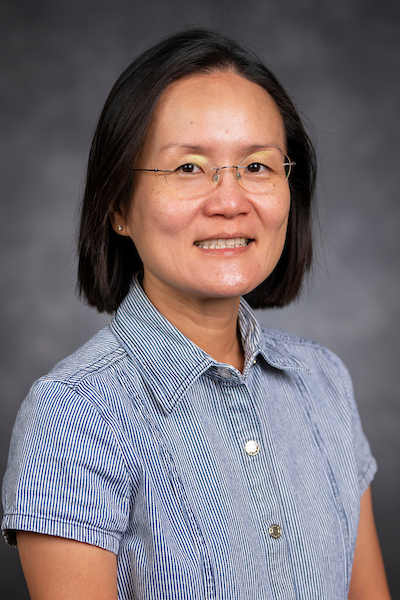
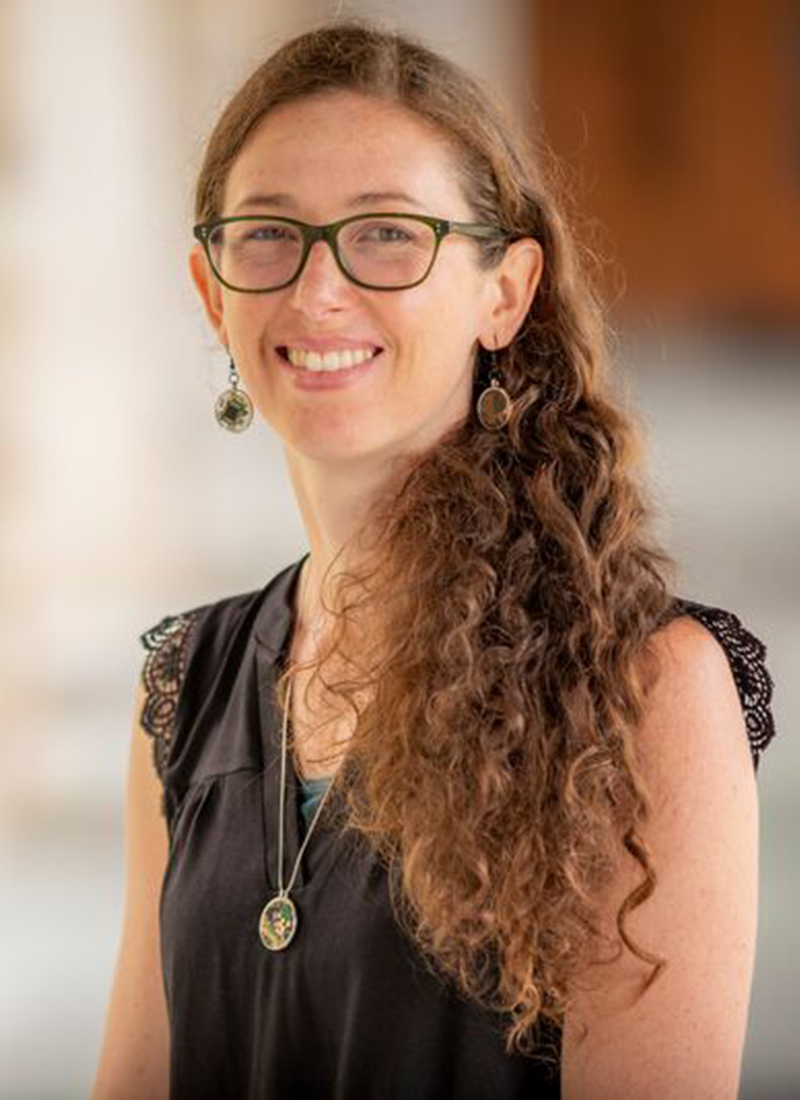
Hsiao-Hsuan 'Rose' Wang is a Senior Research Scientist at Texas A&M University's Department of Ecology and Conservation Biology, affiliated with the Ecological Systems Laboratory. She holds a Ph.D. in Forestry from Texas A&M University and academic degrees from National Taiwan University. Her primary roles include leading research on ecological modeling, managing the lab's Undergraduate Research Program since 2015, and editorial leadership as Editor-in-Chief of Ecological Modelling and Associate Editor of Biological Invasions and Plant Ecology . Dr. Wang's research focuses on developing analytical techniques to understand ecological processes across spatial and temporal scales, particularly in endangered species management, invasive species control, and disease vector management. She collaborates internationally with institutions like NIMBioS (US), SESYNC (US), and the Lorentz Center (Netherlands). Her work integrates socio-ecological systems, emphasizing cross-scale feedbacks and model validation frameworks. Her publications (2021-2025) address topics including agent-based modeling for estuary management, climate-driven species range shifts, and tick-borne disease dynamics. Key methodologies involve pattern-oriented modeling and scenario planning. She advocates for interdisciplinary approaches to ecological challenges, emphasizing practical conservation outcomes.
Dunja Šešelja is a Professor for Social Epistemology and Reasoning in Science at the Institute for Philosophy II, Ruhr University Bochum. She serves as an Editor-in-Chief of the European Journal for Philosophy of Science and co-coordinates the Research Group on Reasoning, Rationality and Science with Christian Straßer. She is also an Associate Editor of the European Journal for Philosophy of Science and a member of the Steering Committee of the European Philosophy of Science Association (EPSA). Šešelja's research focuses on integrating historically informed philosophy of science with formal models of scientific inquiry. Her work spans agent-based modeling (ABM), social epistemology, epistemic norms, and the interplay between zetetic and epistemic considerations in scientific disagreement. She examines topics like transient diversity, myside bias, evidence diagnosticity, and collective epistemic responsibility, often using computational simulations to explore socio-epistemic dynamics in scientific communities. Her publications analyze how ABMs can provide insights into theoretical aspects of scientific rationality, while highlighting the limitations of highly idealized models. She has contributed to debates on the role of conciliation versus steadfastness in peer disagreement, the impact of information flow on scientific efficiency, and the normative implications of zetetic reasoning. Her recent work includes modeling the effects of argumentative dynamics and higher-order evidence in fast-science contexts like pandemic policy-making. The articles Šešelja has authored or co-authored span 2025 to 2019, with themes centered on formal epistemology, network science, and the methodological foundations of agent-based modeling. A recurring focus is the epistemic function of models that simulate scientific interaction, bias, and consensus formation. She has also explored the relevance of historical cases (e.g., peptic ulcer disease) to contemporary philosophical discussions. Šešelja's educational background includes a PhD from Ghent University, where she studied epistemic evaluation in the context of scientific pursuit and argumentative methodology. Her professional journey includes visiting professorships at the University of Vienna, Ghent University, and postdoctoral positions at Ruhr-University Bochum and LMU Munich. She is actively engaged in editorial and organizational roles, advocating for inclusive academic knowledge-making practices.
Riccardo Morri is an Associate Professor at the Department of Modern Literature and Culture , Sapienza University of Rome . With a PhD in Geography (1999) and a Master in Human Geography (1993), he specializes in Historical Geography , Cartographic Education , and Public Geography . His work bridges geographical theory with educational practices and heritage preservation. Education PhD in Geography, University of Cassino (1999) Master in Human Geography, Sapienza University (1993) Morri's research focuses on historical urban landscapes , geographical heritage , and interdisciplinary methodologies . He explores how cartography and geography intersect with literature, memory, and education, particularly through projects like the MAGISTER initiative for territorial enhancement using geospatial tools. His recent publications (2022-2025) emphasize: Democratizing geographical knowledge Digital humanities applications in heritage studies Cartographic language in early childhood education Urban memory landscapes Participatory approaches to geographical heritage These works often integrate GIScience with cultural analysis and educational innovation. Scientific Awards include national qualifications as Full and Associate Professor, CNR's 'Promozione Ricerca 2005', and multiple research scholarships from Sapienza University and the Italian Foreign Office. Morri has: Led the MAGISTER Project (€165,000) for geospatial territorial enhancement Coordinated the Geocartography Laboratory at Sapienza since 2014 Managed EU-funded educational initiatives on remote sensing He serves on editorial boards for journals like J-Reading and Geotema , and organizes annual geography conferences with hundreds of participants.
Stéphane Joost is a Senior Scientist at the Laboratory for Biological Geochemistry (LGB) within EPFL's School of Architecture, Civil and Environmental Engineering (ENAC). His work bridges Geographic Information Science (GIS), molecular ecology, and precision population health through advanced spatial analysis techniques. PhD program committee member for Civil and Environmental Engineering Teaching Staff Member in EPFL's SSIE-ENS Member of the School Council ENAC Research focuses on: Spatial epidemiology and geomedicine Landscape/seascape genomics for climate adaptation Computational methods in environmental health Geospatial modeling of ecological systems Urban environmental exposome analysis Recent publications reveal a multidisciplinary focus combining neuroimaging with GIS, coral reef resilience studies, and spatiotemporal analysis of public health issues like cardiometabolic risk and SARS-CoV-2 spread. His work integrates high-resolution environmental proxies with genomic data to address climate adaptation challenges. Scientific Awards 2006 William L. Garrison Award for Computational Geography Dissertation Teaching includes GIS fundamentals for civil/environmental engineers and exploratory data analysis in environmental health. Mentors PhD candidates in molecular ecology, spatial statistics, and environmental DNA applications.
Blake Walker is a Professor of Digital Geography/Cultural Geography at the Institute of Geography, Friedrich Alexander University Erlangen-Nuremberg (FAU), where he has held his position since September 2019. His academic journey includes previous roles as a Visiting Researcher (2018-2019) and Visiting Lecturer (2017-2018) at the Geographical Institute, Humboldt University of Berlin. He earned his PhD in Geography from Simon Fraser University, Vancouver, Canada in 2017, following an MSc in Geography from the same institution in 2013 and a Professional Specialization in Population Health Data Analysis from the University of Victoria in 2015. His research spans several interconnected domains within geography, with a particular focus on the intersection of digital methods, health, and social issues. His work in digital geography employs innovative approaches to analyze spatial phenomena through critical GIS and remote sensing methodologies. In health geography, he investigates the relationship between environmental factors and health outcomes, particularly examining how urban green spaces impact mental wellbeing and how socioeconomic factors influence disease risk. His research on violence employs spatial analysis to understand patterns of interpersonal violence and injury, while his work in digital humanities explores how cultural narratives are represented in digital media, particularly video games. His recent publications demonstrate a consistent focus on applying spatial analysis techniques to pressing social and health issues, with an increasing emphasis on digital methods and critical approaches to geospatial data. His work often involves interdisciplinary collaboration across geography, public health, computer science, and social sciences. Professor Walker leads or participates in several research projects including REKKE (Resilience through Cultural Landscapes in Climate Change), VIBRANCE (Violence in Brazil: Analysis of Community Environments), STAGE (Spatial Transcoding of Artificial Geographical Environments), DigiDEM, and PURE SPACE (Prospective Urban and Rural Epidemiology: Spatial Analysis of Cardiovascular Environments). He teaches courses in Cultural Geography GIS/Critical Geoinformatics and Remote Sensing, Digital Geographies, Cultural Geography seminars on globalization and socioeconomics, Quantitative and Qualitative Methodology and applied (spatial) statistics, and Field Seminars on Space and Identities.
Prof. Dr. Heike Trautmann is a leading researcher in statistics and optimization at the University of Twente (2021-2026) and former Professor at WWU Münster (2013-2016). Her work bridges computational statistics, evolutionary optimization, and social media analytics. She has held visiting positions at TU Dortmund, Leiden University, and RWTH Aachen. Current affiliation: University of Twente (Data Science: Statistics and Optimization) Previous roles: WWU Münster (Professor for Information Systems and Statistics), TU Dortmund (Postdoctoral researcher) Research Focus: Multi-criteria optimization, automated algorithm selection, data stream mining, and disinformation detection in social media. Her methodological innovations in exploratory landscape analysis and evolutionary computation have transformed algorithm configuration practices. Developed COSEAL consortium for algorithm selection Co-founder of Benchmarking Network (2019) Principal investigator in projects like PropStop and MODERAT! Academic Contributions: Over 150 publications in top venues like GECCO, PPSN, and Evolutionary Computation journal. Pioneered feature-based landscape analysis tools (flacco, pflacco) and stream clustering frameworks.
Dr. Julia Moll is a Scientist at the Department of Soil Ecology, Helmholtz Centre for Environmental Research - UFZ (UFZ) in Halle/Saale, Germany. She currently holds a Temporary Position for Principal Investigator (DFG SPP 1374) at UFZ since March 2023, following her postdoctoral position from August 2018 to February 2023. Her research is situated within the Ecosystems of the Future research unit, focusing on soil microbial ecology and decomposition processes. Dr. Moll earned her PhD in the Department for Soil Ecology at the Helmholtz Centre for Environmental Research - UFZ, with her thesis titled "Fungi in an arable soil: Resource-related community dynamics, contribution to belowground food web and carbon flow." Prior to her PhD, she completed her Diploma thesis at the Freie Universität Berlin with a major in ecology and minors in microbiology and zoology. Her research focuses on microbial communities and their contribution to ecosystem processes , particularly examining how land use change and management intensities affect these communities. She employs advanced molecular techniques including Next Generation Sequencing (NGS), Metabarcoding, and qPCR to study fungal, bacterial, and nematode diversity in soil and deadwood ecosystems. Her work bridges the gap between molecular ecology and ecosystem functioning, with particular emphasis on decomposition processes in forest ecosystems. Dr. Moll's publication record demonstrates a strong focus on deadwood decomposition ecology and the microbial communities associated with this process. Her research spans multiple tree species and examines spatial and temporal patterns in microbial communities. She has made significant contributions to understanding the relationships between fungi, bacteria, and nematodes in deadwood ecosystems, as well as developing molecular methods for studying these complex communities. As a scientist at UFZ, Dr. Moll contributes to several major research projects including the Biodiversity Exploratories: BELongDead (Multitrophic Functional Diversity and Fungal Functional Diversity). Her current work examines fungal fruiting bodies and wood sampling in long-term deadwood experiments, continuing her longstanding interest in the role of fungi in carbon cycling and decomposition processes. Dr. Moll is actively involved in mentoring students and welcomes those interested in molecular-ecological research for final theses, internships, and student assistant positions. Her laboratory work combines field sampling with advanced molecular techniques to unravel the complex interactions within soil and deadwood ecosystems.
Tyler R Kartzinel is an Associate Professor in the Department of Ecology, Evolution, and Organismal Biology at Brown University and a member of the Institute at Brown for Environment and Society. He leads the Genomic Opportunities Lab (GenOps), an interdisciplinary research group that combines molecular ecology, fieldwork, ecological theory, and data science to understand biodiversity, species interactions, and environmental change. His work spans multiple continents including Africa (Kenya, Uganda, Tanzania), South America (Costa Rica, Chile), and North America (Yellowstone National Park, New England), focusing on conservation-relevant questions at the interface of genomics and ecology. Dr. Kartzinel's research interests center on conservation biology and molecular ecology, with particular emphasis on dietary DNA metabarcoding, gut microbiome analysis, and biodiversity monitoring. His work bridges fundamental ecological questions about species interactions and community dynamics with practical conservation applications. He has developed innovative genomic approaches to study food webs, dietary niche partitioning, and the impacts of large herbivores on ecosystem structure and function. His research integrates field experiments with laboratory molecular techniques to address pressing conservation challenges in a changing world. The 15 most recent publications reveal a strong focus on dietary ecology, microbiome science, and conservation genomics. His work consistently applies DNA-based techniques to understand wildlife diets, host-microbe interactions, and ecosystem dynamics across diverse systems from African savannas to Yellowstone National Park. Key trends include the development of CRISPR-based genomic tools for biodiversity science, investigation of diet-microbiome relationships across multiple taxa, and the application of molecular techniques to address conservation-relevant questions about endangered species and ecosystem management. 2018-2022 Ecological Society of America Early Career Fellow Dr. Kartzinel leads multiple research projects funded by the National Science Foundation and other agencies, including long-term studies in African savannas and Yellowstone National Park. His UHURU experiment in Kenya has generated over 12 years of data on large herbivore exclusion effects. He actively collaborates with conservation organizations worldwide to translate research findings into practical conservation solutions. His lab trains undergraduate and graduate students in molecular ecology techniques and conservation applications. The Genomic Opportunities Lab maintains state-of-the-art molecular facilities at Brown University for pre- and post-PCR work. The lab collaborates extensively with researchers across Brown's departments and with international conservation organizations. They develop and share field-tested protocols and open-source software to advance ecological research globally, with particular focus on making genomic tools accessible for conservation practitioners in diverse settings.
Annika Ehlers is a PhD Candidate at the Centre for Family Entrepreneurship and Ownership (CeFEO) within the Jönköping International Business School at Jönköping University. Currently on leave of absence, she maintains active research engagement with contact details including email annika.ehlers@ju.se and office room B6061C. Her academic profile bridges family business dynamics and digital innovation, reflecting CeFEO's mission to advance knowledge in entrepreneurial ownership structures. Her research spans family business strategy , media digital transformation , and location-based services across tourism and journalism contexts. Key interests include strategic implementation differences in family firms, job seeker motivations toward family employers, and technological opportunity recognition in regional media. This interdisciplinary focus reveals consistent patterns in organizational behavior during digital disruption, particularly examining how legacy media organizations adopt localization technologies and how family enterprises navigate strategic decision-making. Analysis of her publication trajectory shows evolving emphasis from foundational media management (2013-2017) toward specialized family business applications (2020-2025). Recent work demonstrates sophisticated integration of consumer behavior theory with practical technology implementation, especially in location-based services for tourism and journalism. Her 2025 strategy implementation framework for family firms represents a significant theoretical contribution addressing the 'implementation gap' unique to family enterprises. As part of CeFEO's research ecosystem, Ehlers contributes to JIBS's AACSB/EQUIS-accredited environment through collaborative projects examining ownership dynamics in entrepreneurial contexts. Her work supports the center's strategic focus on sustainable family enterprise development while addressing contemporary challenges in digital media transformation.
Xin Deng is a Lecturer in Innovation at the University of Manchester's department of IMP Innovation, Strategy and Sustainability. She holds a PhD in Industrial Economics from Nottingham University Business School and an MSc in International Business from Warwick Business School. Her research focuses on applied microeconomics, business innovation, intellectual property, and green innovation, with additional interests in corporate finance, linguistic complexity, and strategic management. Her work contributes to UN Sustainable Development Goals through studies on innovation systems and sustainable practices. Key research areas include the impact of public procurement on SME innovation in the UK, ownership structures in exploratory innovation, and the role of technology standards in financial markets. She is affiliated with the Manchester Institute of Innovation Research, exploring intersections between institutional ownership, corporate strategy, and innovation outcomes. Xin's research outputs span peer-reviewed articles and commissioned reports, analyzing topics like R&D service firm performance, M&A impacts on innovation, and the cost of equity in technology standardization contexts. Her work has garnered significant academic attention, with over 60 Mendeley readers and multiple citations. She is currently accepting PhD students and has collaborated internationally on projects addressing innovation policy, corporate governance, and knowledge-intensive industries. Her research bridges economic theory with practical applications in business strategy and sustainable development.
Professor Will Blake is Professor of Catchment Science at the University of Plymouth's School of Geography, Earth and Environmental Sciences. He directs the Sustainable Earth Institute and Consolidated Radioisotope Facility. His research applies environmental forensic approaches to soil erosion, sediment pollution, and land management challenges across diverse global environments. His research focuses on: Soil erosion processes and downstream impacts Radionuclide tracing of sediment sources Land-water interactions in degraded landscapes Community-engaged solutions for sustainable land management Professor Blake leads international projects including 'Jali Ardhi' in East Africa and watershed studies in Latin America. His teaching integrates field methods with theoretical concepts in river basin science, environmental pollution assessment, and geographical techniques. Recent publications demonstrate innovations in sediment fingerprinting techniques, applications of fallout radionuclides for erosion tracing, and assessments of carbon dynamics in coastal and Arctic environments.
Isabelle Chrisment is a prominent computer science academic and research leader, currently serving as Director of the Inria Research Center at the University of Lorraine and Inria Branch at the University of Strasbourg since July 1, 2025. Her career spans significant roles at Inria, including leadership positions in the MADYNES and RESIST project teams. Inria Center Director (University of Lorraine & Strasbourg) Professor at TELECOM Nancy (2006-present) Deputy Director (2009-2014) Scientific Director of MADYNES (2014-2017) Her research focuses on network security and resilient system design , particularly in the Cloud-Networks-IoT continuum . She specializes in creating secure communication systems and supervising dynamic networks. Her academic contributions include 30+ years of research projects across Inria's nine research centers, with particular emphasis on network lifecycle management and exploratory research actions . She continues to shape France's AI research landscape as Deputy Scientific Director for Inria's "Networks, Systems and Services, Distributed Computing" research area.
Dr. Aude Le Gallou is an Assistant Professor at the University of Geneva, specializing in critical urban geography and spatial studies. Her academic profile indicates active engagement in research on urban abandonment, tourism, and cultural heritage, with no indications of part-time status or retirement. Her research explores the intersection of cultural geography and tourism through abandoned urban spaces. Primary interests include: Ruin tourism and urban exploration (urbex) as cultural phenomena Heritage formation in post-industrial wastelands Socio-spatial inequalities in declining urban areas Memorial practices in contemporary ruins Tourist commodification of abandonment Analysis of her 15 most recent publications (2021-2024) reveals consistent focus on: Comparative studies of Berlin and Detroit as paradigmatic shrinking cities Critical examination of 'ruin tourism' practices Spatial justice dimensions in abandoned urban margins Theoretical frameworks connecting urban exploration with heritage studies No awards, grants, research labs, or student advising relationships were documented in the available materials.
Kelly Diamond is an Assistant Professor of Biology at Rhodes College. She holds a bachelor's degree from the University of Central Florida, a master's, and a PhD from Clemson University, and completed a postdoctoral fellowship at Seattle Children's Research Institute. Her research integrates mathematics, physics, and machine learning to analyze how animal morphology influences survival-related functions. University of Central Florida - BSc Clemson University - MSc, PhD Seattle Children's Research Institute - Postdoctoral Researcher Her primary research focuses on quantitative anatomy, functional morphology, and biomechanics across evolutionary transitions. Current projects include using CRISPR-modified zebrafish to study gene impacts on skeletomuscular systems, and analyzing shape and locomotion changes in growing horned lizards. She also investigates waterfall-climbing mechanics in gobiid fishes and develops machine learning tools for morphological analysis. Recent publications demonstrate expertise in computational anatomy, 3D morphological visualization, and species classification algorithms. Her work bridges integrative biology with technological innovation through collaborations with the Imageomics Institute and development of educational tools like SlicerMorph. She actively engages in community outreach via the Ask an Animal Scientist website and lab community initiatives emphasizing inclusivity and mental health. Principle Investigator, Shape and Scales Lab Developed SlicerMorph open platform for 3D morphology analysis Advocates inclusive lab policies and cross-cultural collaborations
Giovanni Di Franco serves as Full Professor in the Department of Social and Economic Sciences at Sapienza University of Rome's Faculty of Political Science, Sociology and Communication. He directs the book series "La cassetta degli attrezzi" (Franco Angeli Milano) and holds affiliations with CIRES at Roma Tre University and Bonanno publishing house's scientific committee. His research centers on Social Research Methodology , emphasizing data collection/analysis techniques, historical evolution of methods, qualitative-quantitative integration, and micro-macro data synthesis. Specialized in Electoral Sociology , he examines polling methodologies in digital contexts, while his work on Youth Attitudes explores values during economic crises. Additional expertise spans Europeanization Processes , Social Representations of eating disorders, and Social Cohesion frameworks. Recent publications reveal methodological innovation through machine learning applications and critical analysis of intergenerational inequality, reflecting his commitment to advancing sociological research in contemporary digital landscapes. Professor Di Franco has led significant projects including immigrant family-school interactions (2009-10), food education integration (2009), Campanian legality culture (2008), and European identity formation (2007-09), alongside European Commission-funded e-inclusion research. He supervises doctoral candidates through Sapienza's PhD program in Sociology and Applied Social Sciences. He contributes to interdisciplinary research through LARFAD laboratory and CIRES center, developing methodological tools for social analysis while directing academic publications that shape methodological discourse in Italian sociology.