معرفی
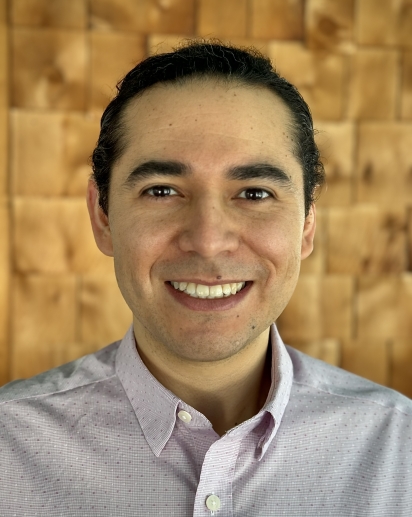
Blake Walker is a Professor of Digital Geography/Cultural Geography at the Institute of Geography, Friedrich Alexander University Erlangen-Nuremberg (FAU), where he has held his position since September 2019. His academic journey includes previous roles as a Visiting Researcher (2018-2019) and Visiting Lecturer (2017-2018) at the Geographical Institute, Humboldt University of Berlin. He earned his PhD in Geography from Simon Fraser University, Vancouver, Canada in 2017, following an MSc in Geography from the same institution in 2013 and a Professional Specialization in Population Health Data Analysis from the University of Victoria in 2015.
His research spans several interconnected domains within geography, with a particular focus on the intersection of digital methods, health, and social issues. His work in digital geography employs innovative approaches to analyze spatial phenomena through critical GIS and remote sensing methodologies. In health geography, he investigates the relationship between environmental factors and health outcomes, particularly examining how urban green spaces impact mental wellbeing and how socioeconomic factors influence disease risk. His research on violence employs spatial analysis to understand patterns of interpersonal violence and injury, while his work in digital humanities explores how cultural narratives are represented in digital media, particularly video games.
His recent publications demonstrate a consistent focus on applying spatial analysis techniques to pressing social and health issues, with an increasing emphasis on digital methods and critical approaches to geospatial data. His work often involves interdisciplinary collaboration across geography, public health, computer science, and social sciences.
Professor Walker leads or participates in several research projects including REKKE (Resilience through Cultural Landscapes in Climate Change), VIBRANCE (Violence in Brazil: Analysis of Community Environments), STAGE (Spatial Transcoding of Artificial Geographical Environments), DigiDEM, and PURE SPACE (Prospective Urban and Rural Epidemiology: Spatial Analysis of Cardiovascular Environments).
He teaches courses in Cultural Geography GIS/Critical Geoinformatics and Remote Sensing, Digital Geographies, Cultural Geography seminars on globalization and socioeconomics, Quantitative and Qualitative Methodology and applied (spatial) statistics, and Field Seminars on Space and Identities.