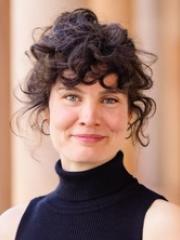
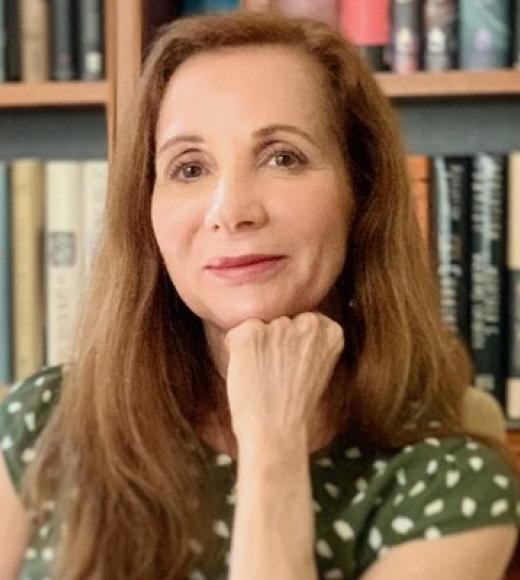
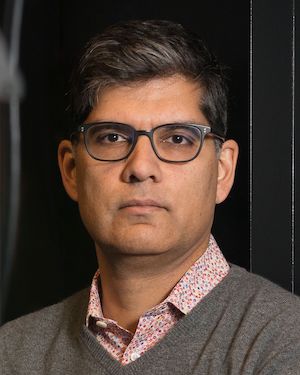
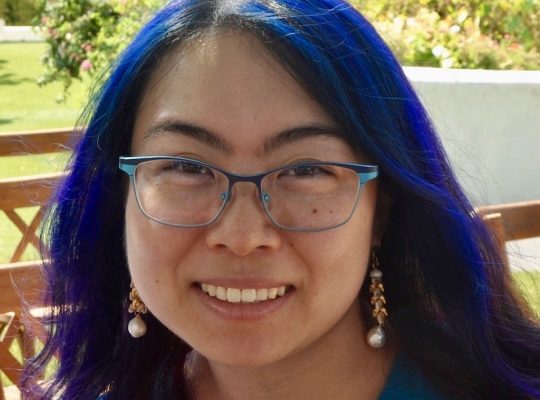
Francesco Pinzin is a Researcher at the Institute for Romance Languages and Literatures of Goethe University Frankfurt am Main. His work bridges theoretical and experimental approaches to language variation across historical and synchronic dimensions. Education: University of Padova (Italy), PhD in Linguistics from Ca' Foscari University of Venice (2018) Research Focus: Morphosyntactic analysis of deponent verbs in Latin and Romance languages Indeterminacy in Romance varieties (DiFuPaRo project, DFG: 361314741) Word order variations in medieval Italo-Romance and Gallo-Romance (MICLE project, DFG: 449439301) Corpus development (DiFuPaRo and MICLE corpora) Computational linguistics (SQL Tagging, Part of Speech Tagging, Syntactic Parsing) Contact: Norbert-Wollheim-Platz 1, Frankfurt am Main (Room: IG 6.213). Office hours by appointment via email.
Dr. Kathleen Jepson is a Lecturer in Linguistics at the School of Languages and Cultures , University of Queensland. Her research focuses on the phonetics and phonology of prosody in Australian and Pacific languages. Education: PhD in Linguistics (University of Melbourne), Bachelor of Arts (Honours) in Linguistics (Australian National University) Her research explores how prosodic structure influences speech segments, prosodic cues in information encoding, phonetic typology, and speech production/perception in endangered languages. Recent work examines vowel and consonant duration in Djambarrpuyŋu, remote speech data collection methods, and prosody in Australian language revitalization. Dr. Jepson has received prestigious awards including a Humboldt Fellowship and participation in an ERC Advanced Grant project. She co-developed the Linguistics Roadshow , an educational outreach program for high school students.
Dr. Tom Roberts is an Assistant Professor in the Department of Languages, Literature and Communication at Utrecht University, affiliated with the Faculty of Humanities and the UU Computational Linguistics Group. Areas of Expertise: Semantics, Pragmatics, Logic, Interfaces (syntax/semantics/pragmatics), Generative Linguistics, Human-centered Artificial Intelligence His research employs formal, experimental, and computational methods to investigate how linguistic meaning (semantics) is mentally represented and interacts with cognition and conversational contexts. He specializes in uncovering universal properties of meaning construction through seemingly idiosyncratic linguistic structures, with a focus on Estonian since 2015. He teaches courses in Computational Linguistics, Formal and Natural Languages, Machine Learning I, Meaning in Language, and Phonology and Fieldwork, contributing to the Artificial Intelligence (MSc/BSc) and Linguistics (BA) programs.
Fabio Del Prete is a Research Officer at the Cognition, Languages, Language, Ergonomics (CLLE) laboratory, affiliated with the University of Toulouse Jean Jaurès . His work bridges formal semantics, modal logic, and linguistic theory through rigorous analysis of natural language phenomena. Research Themes : Formal Semantics of Tense, Aspect, and Modality; Temporal Connectives; Scalar Approximation Adverbials; Modal Logic; Discourse Semantics; Event Concatenation Key Collaborations : Universitat Pompeu Fabra (Barcelona), Oxford University Press, Walter de Gruyter, CNRS Research Trends in his recent work include: Event concatenation in Sicilian verbal constructions Modal logic foundations for natural language semantics Cross-linguistic studies of temporal connectives Sign language temporal processing Italian polysemous adverbials Counterfactual conditionals in Romance languages Scientific Contributions include: Formal analysis of Sicilian Doubly Inflected Constructions Modal logic frameworks for temporal semantics Discourse presupposition models Experimental studies on temporal connectives Academic Activities span lectures at Universitat Pompeu Fabra, contributions to Genericity (Oxford University Press), and collaborative studies with leading institutions like ILLC Amsterdam and Institut Jean-Nicod.
Fabio Montermini is a 2nd Class Research Director at CNRS , affiliated with the Cognition, Languages, Language, Ergonomics (CLLE) unit at the University of Toulouse 2. His research focuses on inflectional and derivational morphology, morphophonology, and lexical representation, primarily in Romance languages including Italian, French, and Catalan. Research Interests : Formal modeling of morphological rules, corpus-based analysis of polysemy (e.g., Italian "altro"), cross-linguistic comparisons, and computational approaches to morphological transparency. Collaborations : Co-editor of the Morphology in Toulouse proceedings; contributor to the Démonette-2 French derivational database. Methodology : Combines theoretical morphology with experimental psycholinguistics, corpus analysis, and computational modeling.
Fernanda Ferreira is a Professor in the Department of Psychology at the University of California, Davis, and Principal Investigator of the Ferreira Lab. She also serves as Editor-in-Chief of the journal Glossa Psycholinguistics . Ph.D., Psychology, University of Massachusetts, Amherst (1988) M.A., Linguistics, University of Massachusetts, Amherst (1986) M.S., Psychology, University of Massachusetts, Amherst (1985) B.A., Psychology, University of Manitoba, Canada (1982) Professor Ferreira's research spans psycholinguistics , focusing on how formal linguistic theories inform language processing mechanisms. Her work integrates behavioral and neural measures , including eye-tracking (fixations, saccades, pupil diameter) and ERPs, to explore real-time language comprehension and production, prosody, disfluency, and individual differences. Her recent publications analyze prosody in human-AI interaction , working memory in bilingualism , ERP studies on disfluency , visual attention in language production , and cross-linguistic syntactic processing . Key themes include cognitive load, syntactic ambiguity, and the interplay between language and other cognitive systems. Scientific Honors and Awards: 1996 American Psychological Association Distinguished Scientific Award for Early Career Contribution to Psychology Fellow, American Association for the Advancement of Science Fellow, Cognitive Science Society Fellow, Royal Society of Edinburgh (FRSE) Fellow, Association for Psychological Science (APS) She teaches cognitive psychology , psycholinguistics , language production/comprehension , and prosody and disfluency at UC Davis. The Ferreira Lab investigates how language processing interacts with memory, vision, and action, with a focus on syntactic theory and experimental methods.
Sandeep Datta, M.D., Ph.D., is a Professor of Neurobiology at Harvard Medical School and Co-Director of the PiNBAC Program. His research focuses on understanding how the brain integrates sensory input and motor output to generate natural behaviors in unrestrained animals. He leads the Datta Lab, which employs interdisciplinary techniques such as optogenetics, single-cell sequencing, and machine learning to study olfactory systems, neural circuits, and behavior. The lab explores how sensory experiences shape motor actions and vice versa, with a particular emphasis on odor-driven behaviors in mice. Key methodologies include closed-loop experiments, functional imaging, and computational approaches like Motion Sequencing to decompose behavioral patterns into structured components. Dr. Datta’s work bridges neuroethology and systems neuroscience, emphasizing the study of animals in ecologically relevant settings. His research has advanced our understanding of olfactory cortex evolution, the interplay between internal states and sensory processing, and the neural mechanisms underlying exploration and learning. He has developed innovative tools for automated behavioral phenotyping, including algorithms for parsing rodent behavior into syntactical elements. His contributions span from molecular genetics to systems-level analyses, addressing fundamental questions about how brains construct purposeful behaviors. While no formal educational background details are provided, his academic credentials include an M.D. and Ph.D., reflecting his dual expertise in clinical and experimental neuroscience. His lab’s collaborations extend to computational neuroscience and biomedical engineering, as evidenced by patents related to facial analysis systems and 3D reconstruction of animal behavior (ArMo method). The Datta Lab actively investigates post-COVID-19 olfactory dysfunction, dopamine’s role in novelty-driven behavior, and the evolutionary conservation of neural circuits across vertebrate species.
Eszter Ronai is an Assistant Professor in the Department of Linguistics at Northwestern University, leading the Experimental Meaning Group. She holds a PhD from the University of Chicago and a BA from the University of Cambridge. Her research focuses on psycholinguistics, experimental semantics-pragmatics, and the role of discourse context in pragmatic inferences, with special attention to Hungarian linguistics. Her work explores scalar implicature, intonational meaning, and adjectival semantics. Education: PhD in Linguistics, University of Chicago BA in Linguistics, University of Cambridge Her research investigates how people process non-literal meanings like scalar implicature and examines cross-linguistic differences, particularly in Hungarian. She has published extensively on topics such as intonation’s role in scalar diversity, pragmatic inferences under Question Under Discussion (QUD), and syntactic processing in flexible word-order languages. Her recent articles highlight trends in experimental pragmatics, including studies on adjectival scales, exclusive modifiers, and the integration of phonetic and contextual information. She collaborates widely, with projects on intonation’s impact on scalar inferences and the cognitive mechanisms behind pragmatic calculations. Students: Thomas Sostarics Cassie Davenport Wesley Orth Rebekah Stanhope Kate Sandberg Ronai’s lab, the Experimental Meaning Group, conducts interdisciplinary research at the intersection of linguistics, psychology, and cognitive science. Her work has been supported by grants and presented at leading conferences like SALT, LSA, and AMLaP.
Dr Kelsey Sasaki is a Leverhulme Early Career Fellow in the Faculty of Linguistics, Philology, and Phonetics at the University of Oxford, and a Junior Research Fellow at Jesus College. She holds a PhD in Linguistics from UC Santa Cruz (2021) and a BA in Linguistics from New York University (2014). Her research focuses on pragmatics, psycholinguistics, and semantics, with particular attention to narrative discourse processing and linguistic fieldwork in indigenous languages like Santiago Laxopa Zapotec and Hawai’i Creole. Education: B.A. in Linguistics, New York University (2014) PhD in Linguistics, University of California, Santa Cruz (2021) Research interests include subconscious mental processes in narrative comprehension, experimental methods in semantics/pragmatics, and syntactic variation in endangered languages. Her fieldwork collaborations involve speakers of Santiago Laxopa Zapotec on projects like relative clause comprehension and language education initiatives. Her Leverhulme Fellowship supports research on discourse coherence mechanisms, combining formal pragmatics with psycholinguistic experiments. She teaches undergraduate courses in pragmatics and psycholinguistics at Jesus College, and her work bridges theoretical linguistics with applied fieldwork. Labs/Teams: Collaborates with UC Santa Cruz linguists and indigenous communities in Oaxaca, Mexico, on Zapotec language projects. Maintains active involvement in endangered language documentation and revitalization efforts.
Laura Stigliano is an Assistant Professor of Hispanic Linguistics in the Department of Spanish and Portuguese at The Ohio State University. She is affiliated with the Center for Latin American Studies and the Center for Cognitive and Brain Sciences. Her research focuses on syntax, semantics, morphology, and experimental linguistics, examining phenomena such as ellipsis, islands, resumptive pronouns, and quantification across Spanish, Galician, Portuguese, and Hungarian. Education: PhD in Linguistics, The University of Chicago (2022) MA in Linguistics, The University of Chicago (2018) Lic. en Letras, Universidad de Buenos Aires (2014) Research Interests: Syntax-semantics interfaces, experimental approaches to linguistic phenomena, and language-specific analyses of Spanish and related Romance languages. Her work bridges theoretical syntax with empirical methods, exploring topics like quantification patterns and nominal structure in multiple languages. Affiliations: Center for Latin American Studies Center for Cognitive and Brain Sciences Additional Services: Provides tutoring, translating, and editing services in Spanish at beginner, intermediate, and advanced levels.
Stefanie Wulff is an Associate Professor at the University of Florida's Department of Linguistics, part of the College of Liberal Arts and Sciences. She holds a Ph.D. in English Linguistics from the University of Bremen. Her research focuses on corpus linguistics, construction grammar, data-driven teaching, and second language acquisition. She co-directs the UF Corpus Linguistics Lab and is a Co-Editor-in-Chief of Corpus Linguistics and Linguistic Theory . Education: Ph.D. in English Linguistics, University of Bremen. Research Interests: Corpus Linguistics, Construction Grammar, Second Language Acquisition, Data-driven Instructional Methods. Labs/Groups: UF Corpus Linguistics Lab, AcqVA (Acquisition, Variation, and Attrition) Research Group, LAVA (Language Acquisition, Variation, and Attrition) Research Group. Her work bridges theoretical linguistics and pedagogical applications, emphasizing empirical methods. Notable projects include NSF-funded studies on data-driven learning in STEM writing and investigating cross-linguistic influence in morpheme acquisition. She collaborates widely and mentors students in corpus-based and experimental research. Recent publications explore usage-based SLA, bilingualism, and corpus methodologies. Her teaching includes courses on corpus linguistics, second language acquisition, and applied grammar for TESOL contexts.
Daniel Walter is an Associate Professor of German and Linguistics at Emory University's Oxford College, specializing in second language acquisition, psycholinguistics, and German language pedagogy. He earned his BA from Dickinson College, MA from Michigan State University, and PhD from Carnegie Mellon University. His research examines cognitive mechanisms in language learning, focusing on morphosyntax acquisition, pedagogical interventions, and heritage language contexts. Walter's work integrates experimental psycholinguistics with classroom applications, exploring how linguistic theory informs effective teaching practices. Recent publications investigate labor market benefits of heritage languages, technology-enhanced instruction, and pandemic impacts on language educators. He teaches courses spanning elementary German to psycholinguistics and advises undergraduate research projects.
Óscar Loureda is a Professor of Ibero-American Linguistics, Communication, and Translation Studies at the Heidelberg Center for Ibero-American Studies (HCIAS), Heidelberg University. He has been affiliated with the Faculty of Modern Languages and served as Vice-Rector for Quality Development. His research focuses on experimental pragmatics, sociolinguistics, and language demographics. Key projects include studies on Spanish in Europe, heritage languages, and discourse analysis. Loureda has supervised numerous doctoral students and pioneered degree programs in translation and cultural mediation. Education: Doctorate in relevant fields (details not specified). Affiliations: HCIAS, Director of the Center for Galician Studies, member of the Princess of Asturias Award committee, and Círculo Cívico de Opinión. Research Interests: Loureda’s work bridges linguistics with societal impacts, emphasizing communication dynamics, language policy, and migration. His projects on Spanish demographics in Europe and experimental pragmatics highlight interdisciplinary approaches. Recent studies explore pandemic discourse and Galician sociolinguistics. Articles Overview: Loureda’s publications span experimental linguistics, heritage language demographics, and AI applications for language accessibility. His 2025 work on Spanish in Southeast Europe is a landmark in language demography. Awards: Alexander von Humboldt Fellowship, honorary professorship from Universidad del Pacífico. Grants & Advising: Led degree programs like the BA+ in Spanish Translation and the double-degree in Specialized Translation. Advised over 15 doctoral students, many focusing on anaphoric processing and language demographics. Labs/Teams: Directs the Center for Galician Studies and collaborates with international institutions like the University of Salamanca and Pontifical Catholic University of Chile on translation programs.
L. Robert Slevc is an Associate Professor and Associate Chair in the Department of Psychology at the University of Maryland, with affiliations in the Program in Neuroscience and Cognitive Science (NACS) and the Maryland Language Science Center. He holds joint roles as Director of Graduate Studies and leads the Language and Music Cognition Lab. His research bridges psycholinguistics, music cognition, and language production, with a focus on cognitive mechanisms in normal and brain-damaged populations. He completed his Ph.D. at UC San Diego and a postdoc at Rice University before joining UMD. Education : Ph.D. in Psychology, University of California, San Diego B.A. in Psychology, University of Colorado, Boulder Research Interests : Dr. Slevc explores how language and music processing share cognitive resources, including studies on bilingual code-switching, aphasia, second-language acquisition, and the interplay between musical ability and cognitive functions. His work employs behavioral and neuroimaging techniques to uncover neural correlates of language and music syntax, attentional mechanisms in bilingualism, and developmental milestones. Articles Trends : Recent work emphasizes bilingualism’s cognitive effects, the role of musical training in language learning, and cross-domain priming between music and speech. His research highlights shared neural substrates for syntactic processing in both domains and the impact of auditory temporal processing on language skills. Advising & Grants : Currently not recruiting PhD students for Fall 2025. His grants and mentorship focus on promoting equity in music cognition research and advancing interdisciplinary methods in cognitive science. Labs/Teams : Directs the Language and Music Cognition Lab , investigating how language and music interact with cognition, memory, and attention through experimental and computational approaches.
Ian Dickson is an Assistant Professor (Teaching) in the Department of Music at Durham University. He holds a PhD in composition from the University of York and a PhD in musicology from the University of Cambridge, with additional studies at King's College London and composition courses directed by Louis Andriessen and Brian Ferneyhough. His research focuses on twentieth-century and contemporary music, particularly modernist aesthetics, Giacinto Scelsi's works, and intersections of music with language, semiotics, and metaphor. Dickson explores musical grammars and analytical approaches to avant-garde compositions. His publications demonstrate expertise in analyzing Scelsi's compositional techniques, including examination of small ensemble works, grammatical structures in late compositions, and rhetorical aspects of musical orality. Dickson's research contributes to both musicological theory and analytical methodologies. Current advisees include Darach Sharkey and Mike Mitchell. His music has been performed by ensembles including the BBC Philharmonic Orchestra and Moscow Contemporary Music Ensemble.