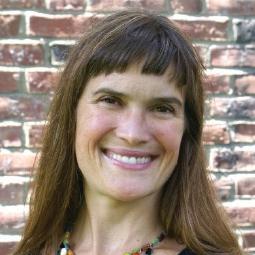
Rebecca Torrey is Associate Professor of Mathematics and Elementary Mathematics Coordinator at Brandeis University. She specializes in mathematics education research with focus on technology-enhanced learning. Research develops tools like CalcTutor to implement best practices in calculus instruction. Projects explore learning analytics through Markov models and dashboard visualizations.
Saheed Popoola, PhD, is an Assistant Professor at the University of Cincinnati's CECH - School of Information Technology. His research spans software engineering education, computational technology in K-12 classrooms, and model-driven engineering. He actively explores strategies to enhance collaborative learning environments through student-driven software projects and investigates challenges in open-source development and cybersecurity incident analysis. His work bridges empirical software engineering practices with educational technology, focusing on topics such as static analysis tool efficacy, user sentiment analysis in software communities, and ensemble learning techniques for network security. He has contributed to tools like Loupe for model analysis and has examined LabVIEW/Simulink model evolution patterns. Recent studies include the impact of computational thinking in K-12 education, early heart disease detection via machine learning, and strategies for managing diverse classroom environments. His research emphasizes practical applications in both academic and industrial software development contexts. Notably absent from the provided data are specific details about grants, awards, or direct student advising. However, his involvement in initiatives like the student software solutions center highlights a focus on experiential learning and community-driven development practices.
Dr. Tuan Vuong is a Senior Lecturer in Computer Science (Cyber-physical Security) at the University of Greenwich's School of Computing and Mathematical Sciences, within the Faculty of Engineering and Science. He holds a PhD in Cyber-Physical System Security with over 10 years of international experience in both academic and industrial settings. Research Focus: His research explores cyber-physical security frameworks, intrusion detection systems, and secure computation offloading for autonomous systems. His work bridges theoretical computer science with practical applications in vehicular networks and IoT security. Publication Trends: Vuong's recent publications focus on machine learning approaches for intrusion detection in robotic and vehicular systems, with consistent contributions to cybersecurity and edge computing literature.
Fiona Bailey is a Senior Lecturer in Primary & Early Years Education at Middlesex University's Education department. Her research explores innovative pedagogical approaches integrating art, technology, and nature-based learning in early childhood education. Research interests focus on: Developing ecological awareness through sensory experiences Integrating art pedagogy with outdoor education Designing collaborative virtual learning environments Building teacher confidence in experiential methods Publications demonstrate consistent focus on experiential learning environments, with recent work exploring ecopedagogical frameworks for teacher education and earlier research examining digital collaboration tools.
Dr. Diana De La Rosa-Pohl is an Instructional Associate Professor and Director of the Endeavour S-STEM Program at the University of Houston's Cullen College of Engineering. She holds a BS in Electrical Engineering from the University of Texas at Austin (1992), an MS in Physics from the University of Texas at Arlington (1997), an MEng in Electrical Engineering from the University of Houston (2003), and an EdD in Curriculum and Instruction from the same university (2011). Her professional experience spans over three decades, including roles as an Honors Engineering Program lecturer (2003–2013) and faculty member in the ECE department since 2013. Her research focuses on Motivation & Engagement , STEM Retention , and Project-Based Learning , with a particular interest in enhancing student success in diverse, urban university settings. She has led initiatives to adapt honors curricula for broader engineering populations and pioneered collaborative learning models between senior design students and first-year engineers. Key contributions include the Endeavour S-STEM Program , a multi-college initiative supporting underserved STEM students through scholarships and academic support. Her work emphasizes improving engagement metrics, analyzing student persistence factors, and bridging theoretical concepts with practical engineering challenges. Dr. De La Rosa-Pohl teaches core courses like Introduction to Engineering , Capstone Design , and Honors variants of foundational engineering subjects. Her research has been presented at major conferences including ASEE and AERA, focusing on pedagogical innovations and student success strategies in engineering education. Education: BS Electrical Engineering, UT Austin (1992) MS Physics, UT Arlington (1997) MEng Electrical Engineering, UH (2003) EdD Curriculum & Instruction, UH (2011) Her programmatic efforts and scholarly work reflect a commitment to creating inclusive, high-impact learning environments that address systemic barriers in STEM retention and achievement.
Dr. Chris Carroll is Department Chair and Associate Professor of Civil, Computer and Electrical Engineering at Saint Louis University's School of Science and Engineering. He holds a Ph.D. from Virginia Tech and specializes in structural engineering and innovative pedagogy. His research spans experimental work on concrete structures and educational methods using problem-based learning. He has co-hosted documentaries on History and Discovery channels exploring engineering heritage. Educational Innovations: Develops experiential learning modules for concrete design, geotechnical engineering, and structural analysis that integrate entrepreneurial thinking throughout engineering curricula.
Professor Daniela Damian holds the ECS-CAPI Chair in Inclusive Science, Technology and Engineering at the University of Victoria's Faculty of Engineering and Computer Science. Her research focuses on inclusive design, software ecosystems, and global software development, with particular emphasis on diversity and privacy in technology. She leads the SEGAL Lab, fostering collaborative, globally distributed software engineering practices. Damian is a Distinguished Visiting Professor at institutions like the University of Auckland and Singapore Management University, and has received accolades such as the Royal Society Catalyst Award and the SIGSOFT Distinguished Paper Award. Her teaching emphasizes experiential learning and real-world software engineering challenges, including courses on Global Software Engineering and Requirements Engineering. She pioneered the INSPIRE: STEM for Social Impact Program, empowering students to create tech solutions for societal issues. Damian actively contributes to academic communities through conference organization, editorial roles (e.g., ACM Transactions on Software Engineering), and mentoring doctoral students like Colin Werner and Zane Li. Research Interests: Inclusive software design, global collaboration, requirements engineering, privacy compliance (GDPR), and team coordination in distributed environments. Key Projects: Non-Functional Requirements in Continuous Software Engineering; Diversity and Inclusion in Software Engineering. Her work bridges academia and industry, advocating for ethical practices and equitable technology access. Damian’s TEDx talk on empathy as a technological force underscores her commitment to human-centric innovation.
Chachi Mathis is a Lecturer at the School of Interior Architecture , University of Tennessee, Knoxville. He combines roles as an artist, designer, and educator, emphasizing tactile engagement and experiential learning in design education. Education: Masters in Industrial Design from ECAL (Lausanne, Switzerland) Dual Bachelor’s degrees in Sculpture and Art Education from Massachusetts College of Art and Design Research & Practice focuses on integrating traditional craftsmanship with digital fabrication, exploring the interplay between creator and creation through minimalist forms. His work bridges self-referential objects and spatial design for makers. Professional Experience includes co-founding the Los Angeles-based design company California Carts and international collective Critical Plus Design . His projects have been exhibited at institutions such as the Milan Furniture Fair , Institute of Contemporary Art/Boston , and MUDAC (Lausanne) .
Bo Rodda is an Assistant Professor of Experiential Media and Design at Illinois Institute of Technology (Illinois Tech), and serves as the NCAA Faculty Athletic Representative (FAR) for Illinois Tech Athletics. He holds affiliations with the Ed Kaplan Family Institute for Innovation and Tech Entrepreneurship, the Humanities department, and the Center for Sports Innovation. His academic work integrates design, emerging technology, game design, and data-driven storytelling. Education: BFA in Studio Arts | Painting from Rhode Island School of Design (RISD). Research interests include experiential media, human-centered design, data visualization, and urban informatics. Notable projects include LakeSIM (an urban simulation platform funded by NSF), the Array of Things (urban sensing initiative), and the Chicago City Model projection system for real-time data visualization. His work bridges arts, science, and innovation through collaborations with institutions like Argonne National Laboratory and the University of Chicago. Media appearances include features in the New York Times, Scientific American, and Fast Company. He has presented at global summits such as the Zurich International Executive Committee Summit and KIN Global Summit.
Rachel Bonnette is an Assistant Professor in the Department of Engineering Education at the University at Buffalo's School of Engineering and Applied Sciences. Her research focuses on neurodiversity, disability studies, and inclusive education in STEM fields. She holds a PhD in Learning Sciences and Policy from the University of Pittsburgh (2020), a JD and MPP from Loyola University Chicago (2015), and a BFA in Film and Animation from Rochester Institute of Technology (2010). Her work addresses critical issues such as fostering belonging for neurodiverse students, designing inclusive learning environments, and broadening participation in STEM through collaborative research and intersectional approaches. Recent publications explore instructor-student perception gaps in neurodiversity support, assessment tools for research collaborations, and the role of makerspaces in supporting marginalized learners. Rachel's research emphasizes equity and social justice, particularly in higher education and computer science contexts. She has developed frameworks for measuring belonging and advocated for systemic changes to ensure equitable educational access for multiply marginalized groups.
Marisa K. Manheim is an Assistant Professor in the Department of Environment and Sustainability at the University at Buffalo. She holds a PhD in Sustainability (expected 2023) from Arizona State University, alongside degrees from Carnegie Mellon University. Her work focuses on leveraging embodied experiences to drive innovative sustainability solutions, bridging design, public participation, and governance frameworks. PhD Candidate: Arizona State University (2023) MS: Human-Computer Interaction, Carnegie Mellon University (2003) BS: Psychology & Communication Design, Carnegie Mellon University (2002) Her research explores sustainability transitions, governance mechanisms, and experiential futuring. Recent projects include studies on recycled wastewater decision-making in Arizona, supported by NSF grants and fellowships. She co-leads initiatives on urban flood adaptation justice and stakeholder engagement in working landscapes. Publications highlight themes of embodied cognition in water governance, sensory experiments for environmental memory, and collaborative research frameworks. Awards include the NSF Doctoral Dissertation Improvement Grant and Babbitt Center Fellowship. Previously, she served as policy director for an urban agriculture nonprofit in Pittsburgh. Current interests include labs focused on embodied decision-making tools and anticipatory governance methods for sustainability challenges.
Dr. Hector E. Will serves as Assistant Professor and Program Director of Electrical Engineering at the University of Evansville, based in Room 253 of the Koch Center for Engineering and Science. His work bridges engineering education and emerging technologies to transform STEM pedagogy. His academic credentials include: PhD in Physics, Purdue University MS in Business Technology & Management, Central American University of Technology Bachelor of Science in Electrical Engineering, Honduran University of Technology Integrated STEM Education Certificate, Purdue University Dr. Will pioneers model-based learning approaches using contemporary technologies to demystify complex scientific concepts. His research specifically targets curriculum innovation in Quantum Computing and Machine Learning education, while leveraging Augmented and Virtual Reality platforms to create immersive learning experiences. This work addresses critical gaps in technology-mediated STEM instruction across diverse educational levels. Analysis of his 2021-2023 publications reveals consistent emphasis on experiential technology integration, spanning Industrial IoT for smart manufacturing education, tactile VR for physics concepts, and AR-based quantum computing instruction. These works demonstrate cross-disciplinary applications from kindergarten science to advanced engineering curricula, highlighting his focus on accessible, hands-on learning methodologies. He maintains active professional engagement through memberships in: American Society of Engineering Education (ASEE) Association of Technology, Management, and Applied Engineering (ATMAE) Institute of Electrical and Electronic Engineers (IEEE) American Association of Physics Teachers (AAPT) National Association for Research in Science Teaching (NARST)
Sandipan Sen is a Professor of Marketing at the Harrison College of Business and Computing, Southeast Missouri State University. He holds a Ph.D. from the University of Memphis (2009) with a major in Marketing and a minor in Cognitive Psychology. His academic journey includes roles at the University of Memphis and the University of Tennessee at Martin before joining Southeast Missouri in 2008. Promoted to Associate Professor in 2014 and Professor in 2020, his expertise spans Marketing Strategy, Services Marketing, IMC, and Pedagogy. Dr. Sen’s education includes a Master’s in Business Administration (Bombay University, 2001) and a Bachelor’s in Electronics Engineering (University of Mumbai, 1999). He has over four years of corporate experience in international advertising in India. His research focuses on marketing strategy, digital IMC, services marketing, and pedagogy. He has published in journals like Journal of Business Research, Journal of Strategic Marketing, and British Food Journal, with over 50 peer-reviewed articles, book chapters, and conference proceedings. Notable awards include the Copper Dome Faculty Fellow for Excellence in Research (2012–2014) and multiple ADDY Awards for student projects. Dr. Sen actively serves on university and college committees, including the Harrison College Promotion and Tenure Committee, and is Secretary of the Society for Marketing Advances. He advises marketing students, mentors the International Business Club, and coaches students in DECA competitions. His teaching spans courses like Marketing Management, Digital Marketing, and Professional Selling, emphasizing experiential learning. Key contributions include advancing marketing education through interdisciplinary collaboration and fostering student achievement through applied projects, resulting in over 60 ADDY wins. His research often bridges theory and practice, addressing challenges faced by SMEs, supply chain dynamics, and digital marketing innovations.
Chen Ye is an Associate Professor of Management Information Systems (MIS) at Purdue University Northwest’s College of Business, specializing in technology user behavior, blockchain, and educational technology. He holds a Ph.D. and dual M.S. degrees in MIS and Mathematics from the University of Illinois at Chicago. His research bridges academic and practical insights, addressing topics like blockchain’s policy implications, IT project management complexities, and digital education tools. Published in journals such as CACM and CAIS, his work also extends to Brookings Institution blogs on central bank digital currencies. Ye teaches 11 MIS courses, redesigning curricula like ISM 10200 and CIS 20400, emphasizing experiential learning. A notable initiative involved a capstone project where students analyzed pandemic-related social media data for local communities, with some teams presenting at international conferences. Ye’s industry background as a Boeing avionics software engineer informs his teaching, helping students connect technical concepts to real-world applications. He actively develops new courses on blockchain business applications and integrates emerging technologies into classroom examples. His pedagogical approach emphasizes metacognition development and practical skill-building for future professionals.
Kirstyn Leuner is an Associate Professor in the Department of English at Santa Clara University, part of the College of Arts and Sciences. She specializes in British literature of the long eighteenth century, Digital Humanities (DH), women’s writing, and Romanticism. As Director of The Stainforth Library of Women’s Writing, she leads projects recovering 19th-century women’s literary histories through interdisciplinary methodologies combining literary analysis, feminist theory, DH, and book history. Her research also explores media archaeology, pedagogy, and prison writing archives. Leuner earned her Ph.D. in English Literature from the University of Colorado Boulder and completed a Postdoctoral Fellowship in Dartmouth College’s Neukom Institute for Computational Science. She teaches courses in letterpress printing, book history, and digital humanities, emphasizing experiential learning. Her work bridges traditional literary studies with modern digital practices, advocating for recovery scholarship to diversify canonical narratives. Recent initiatives include co-editing Lever Press’s Re-Editions Series, editing Romantic Circles Pedagogies volumes, and cataloging zines by incarcerated women. She has organized events like the “Resistance in the Materials” conference and led workshops on antiracism in DH. Leuner’s projects often involve student collaboration, such as digitizing prison writings and editing the Stainforth Library catalog, highlighting community engagement and pedagogical innovation.