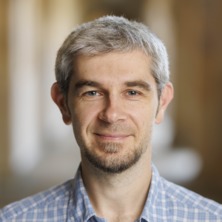
Sara Barsottiمشاهده پروفایل
پژوهشگر
Sara Barsotti is a researcher at the National Institute of Geophysics and Volcanology (INGV) specializing in volcanology and volcanic hazard assessment. Her key roles include: Associate Editor for Volcanology at Frontiers in Earth Science Review Editor for Geohazards and Georisks at Frontiers in Earth Science Contributor to the EU Center of Excellence for Exascale in Solid Earth (ChEESE) Member of the EUROVOLC citizen-science initiative Collaborator with European volcano observatories Her research focuses on computational geophysics, volcanic hazard modeling, and operational monitoring systems. She investigates tephra dispersion dynamics, lava flow behavior, and probabilistic hazard assessment using high-performance computing. Her work emphasizes European volcanic systems—particularly Icelandic eruptions—and integrates multidisciplinary approaches to improve crisis management protocols and public safety during volcanic events. Analysis of her recent publications reveals a strong trend toward operationalizing advanced computational methods for real-time hazard assessment. Key developments include exascale computing applications for solid earth simulations, refinement of the Aviation Colour Code system for aviation safety, and citizen-science data integration for eruption monitoring. These efforts consistently target practical risk mitigation strategies during active volcanic crises like the 2021 Fagradalsfjall eruption. Scientific awards: None mentioned in the provided text. While specific advised students or individual grants aren't documented, her leadership in major European projects (ChEESE, EUROVOLC) demonstrates substantial involvement in funded research initiatives. These projects coordinate transnational collaborations involving observatories, research centers, and emergency management agencies across Europe. Barsotti actively participates in integrated European volcano infrastructure teams, contributing to standardized monitoring protocols, hazard communication frameworks, and crisis response systems. Her work bridges institutional observatories (e.g., Icelandic Meteorological Office, INGV sections) with community-based monitoring tools, enhancing data collection and public engagement during volcanic unrest.