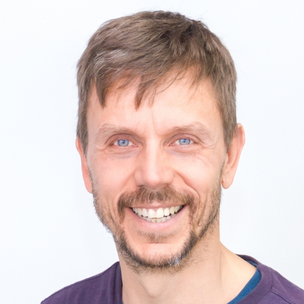
Dennis Krupke is a Researcher at the Department of Informatics, University of Hamburg, affiliated with the Human-Computer Interaction (HCI) group and the Technical Aspects of Multimodal Systems (TAMS). His work bridges robotics, virtual reality, and human-computer interaction, focusing on natural interfaces for human-robot cooperation. Education: Diploma in Informatics (2014), University of Hamburg Research Interests: Human-Robot Interaction (HRI) Bio-inspired Robotics and Sensor Systems Modular Robotics and Low-cost Prototyping Mixed Reality for Immersive Scenarios Scientific Awards: Finalist, IROS KROS Best Paper Award on Cognitive Robotics (2018) Highly Commended Paper, Industrial Robot Innovation Award (2017) CLAWAR Association Best Technical Paper Award (2015) Best Innovative Robot Award, CLAWAR (2014) Publications & Projects: Co-developed a printable modular robot with Florens Wasserfall Contributed to ROS-Unity integration for VR-based robotics Explored locomotion techniques for modular robots using reinforcement learning
Erik Otárola-Castillo is an Associate Professor in the Department of Anthropology at Purdue University, where he joined the faculty in 2015 and was promoted to Associate Professor. His interdisciplinary work bridges archaeology, human evolutionary biology, and biostatistics, focusing on prehistoric and modern hunter-gatherer populations and their responses to environmental change. His educational background includes: Ph.D. in Anthropological Science, Stony Brook University M.A. in Anthropology, Iowa State University B.A. in Anthropology, Stony Brook University Dr. Otárola-Castillo specializes in the evolution, ecology, and diversity of behavior in hunter-gatherer societies, with particular emphasis on climate change impacts and food availability effects on early North American native diets. As a computational anthropologist, he develops quantitative tools including 3D morphometrics software, statistical models for zooarchaeologists, and spatio-temporal analysis frameworks. His research integrates Geographic Information Systems (GIS) and Bayesian statistics to address core archaeological questions of space, time, and form, with applications ranging from bone surface modification analysis to human-megafauna interactions. Recent publications reveal a strong methodological trend toward Bayesian inference for archaeological hypothesis testing and computational morphometric analysis of artifacts and skeletal remains. Key thematic areas include lithic technology standardization, subsistence intensification mechanisms among Great Plains hunters, and health impacts of urbanization on indigenous Peruvian populations, demonstrating consistent application of quantitative rigor across diverse anthropological contexts. He is recognized as an international authority, evidenced by an invitation to contribute a review on Bayesian approaches to the Annual Review of Anthropology (2018). His work appears in high-impact journals including The Proceedings of the National Academy of Sciences (PNAS) and PLoS One. Dr. Otárola-Castillo directs the Laboratory for Computational Anthropology and Anthroinformatics (LCA), which develops open-source tools like geomorph and zooaRch for anthropological research. The lab's work enables advanced morphometric analysis and zooarchaeological quantification, supporting collaborative projects worldwide through computational innovation in data collection, analysis, and visualization.
Severin Sasso is a Professor of Plant Physiology at the University of Leipzig since 2019, where he leads the Plant Physiology Group. He is also a member of the German Centre for Integrative Biodiversity Research iDiv (since 2020) and President of the Wilhelm Pfeffer Foundation (since 2019). Previously, he served as Academic Councillor (2017-2019) and Junior Professor for Molecular Botany (2011-2017) at Friedrich Schiller University Jena, and has held research positions at ETH Zurich, University of Cambridge, and Carnegie Institute for Science. His research focuses on algal metabolism and microalgal-microbial interactions. Current position: Professor (W3) of Plant Physiology at University of Leipzig Education: Chemistry degree (1997-2002) and PhD (2002-2007) at ETH Zurich Postdoctoral training at ETH Zurich (2002-2007), University of Cambridge (2007-2010), and Friedrich Schiller University Jena (2010-2011) Dr. Sasso's research explores: Algal metabolism and environmental interactions Vitamin B12-dependent metabolic pathways in algae Polyketide synthase evolution in microalgae Circadian clock regulation in photosynthetic organisms Chemical mediators in microalgal-microbial communities Postgenomic natural product discovery from microalgae His publications reveal significant contributions to understanding: Molecular mechanisms in algal survival strategies Secondary metabolite biosynthesis in algae Cryptochrome photoreceptor functionality Mutualistic and antagonistic microalgal interactions Evolution of metabolic enzyme complexes Vitamin B12 utilization across photosynthetic organisms Scientific recognition includes: Presidency of Wilhelm Pfeffer Foundation Membership in iDiv biodiversity research center Ongoing participation in SFB 1127 Collaborative Research Center
Thomas Hiller is a postdoctoral researcher at the University of Hohenheim , Germany, within the Hans-Ruthenberg-Institute for Tropical Agricultural Sciences of the Faculty of Agricultural Sciences . His work focuses on tropical ecology, biodiversity, species interactions, and land-use change , using bats and birds as model organisms to understand ecosystem functions across agricultural landscapes in Germany, Indonesia, and South Africa. Education: He earned his PhD from the University of Ulm in collaboration with the Smithsonian Tropical Research Institute (STRI) in Panama, where he investigated biodiversity responses to anthropogenic land-use change and host-parasite networks involving bats and their ectoparasitic flies. Research Interests: His current projects employ automatic acoustic recorders to monitor bat and bird communities, examining how landscape composition and fragmentation affect species distributions and ecosystem services such as seed dispersal, pollination, and pest control. A particular fascination lies in the evolutionary ecology of bat flies (Streblidae, Nycteribiidae) and their hyperparasitic fungi (Laboulbeniales), exploring coevolutionary dynamics and morphological adaptations in these specialized host-parasite systems. Publications & Trends: Since 2017, he has authored or co-authored over 25 peer-reviewed articles spanning landscape ecology, conservation biology, parasitology, and mycology . Recent studies emphasize the impacts of rainforest fragmentation on plant-frugivore networks, the role of crop diversity in sustaining bat populations, and global syntheses of acoustic monitoring data. Collaborations & Outreach: He collaborates extensively with international teams, including citizen-science initiatives to track invasive species and emerging pathogens. His multidisciplinary approach bridges field ecology, phylogenetics, and applied conservation to inform sustainable land-use practices.
Nicolas Perrin-Gilbert is a CNRS Research Fellow at the Institute of Intelligent Systems and Robotics (ISIR), which is part of Sorbonne University in Paris, France. He has been working at ISIR since 2013 as part of the MLIA (Machine Learning and Artificial Intelligence) team, where he conducts research at the intersection of robotics and machine learning. His office is located at ISIR, Campus Pierre et Marie Curie, 4 place Jussieu, BC173, 75005 Paris. Dr. Perrin-Gilbert's research focuses on developing advanced algorithms for robot locomotion, control, and learning. His work bridges theoretical machine learning with practical robotics applications, particularly in reinforcement learning, motion planning, and humanoid robotics. He has made significant contributions to quality-diversity algorithms, state representation learning, and controller synthesis for dynamic multi-agent systems. His approach often combines insights from control theory with modern machine learning techniques to solve complex robotics challenges. His publication record shows consistent research output since 2010, with a notable acceleration in recent years. His work spans both theoretical contributions (such as unifying frameworks for motion planning and diversity search) and practical implementations (including humanoid robot control systems). A key trend in his research is the integration of motion planning techniques with reinforcement learning, creating more efficient and robust learning systems for robotics applications. Dr. Perrin-Gilbert is the primary maintainer of xpag , a modular reinforcement learning library with JAX agents that supports standard reinforcement learning and goal-conditioned reinforcement learning. This open-source project demonstrates his commitment to developing practical tools for the research community. The library has gained significant traction with 27 GitHub stars and 6 forks, and is used by other researchers in the field. His collaborations span multiple institutions and research groups, with frequent co-authorship with researchers from ISIR including Olivier Sigaud, Alexandre Chenu, and Stéphane Doncieux. He has also collaborated with researchers from other institutions on projects involving humanoid robots like COMAN and Cassie, demonstrating the applied nature of his work.
Prof. Dr.-Ing. Ivo Boblan holds a professorship at the Berlin University of Technology within the Department of Electrical Engineering . He leads the Compliant Robotics Lab (CoRoLab) and teaches modules in Cognitive Robotics , Pneumatic Robotics , Soft Robotics , and Bionics . His research focuses on biologically inspired robotics, human-robot interaction, and compliant actuator systems. Key research themes include: Development of bionic robotic systems like ZAR5 and BROMMI-TAK Integration of pneumatic muscles and fluidic actuators Biologically motivated control systems for compliant robotics Applications in rehabilitation devices and exoskeletons Human-robot interface design with variable stiffness Exploration of anthropomorphism and ethics in robotics His work emphasizes interdisciplinary collaboration across robotics, bionics, and human factors, with significant third-party funding exceeding €8.9 million. He actively contributes to international conferences and standardization efforts in bionic robotics.
Kim Payne serves as a Teaching Associate Professor in the Department of Ophthalmology at the University of Pittsburgh, where she has been a full-time teaching faculty member since 2015. Her academic foundation includes doctoral and postdoctoral training within the university's research ecosystem, with ongoing collaboration with the Hatfull Lab. Her educational trajectory: Ph.D. in Molecular Biology, University of Pittsburgh (2011), supervised by Graham Hatfull Postdoctoral Studies, University of Pittsburgh Department of Ophthalmology with Paul Kinchington Dr. Payne's scholarly identity bridges Molecular Biology and Virology, with deep expertise in mycobacteriophage enzymology and Herpes Simplex Virus type 1 pathogenesis. Her research legacy centers on phage-derived enzymes that degrade bacterial cell walls, revealing novel mechanisms in microbial warfare. As an educator, she pioneers experiential learning through upper-level laboratory courses where students genetically engineer fluorescent reporter mycobacteriophages alongside the Hatfull Lab, transforming theoretical concepts into tangible research outcomes. Her publication record demonstrates sustained focus on mycobacteriophage structural biology, particularly the modularity and catalytic diversity of endolysins. These studies illuminate evolutionary adaptations in phage enzymes with implications for antibiotic alternatives, spanning molecular mechanisms of cell wall degradation to enzyme engineering frameworks. Through her Virology Lab course coordination, Dr. Payne cultivates next-generation scientists in advanced virological techniques while maintaining active research integration. Her mentorship extends beyond traditional advising into immersive laboratory instruction where students contribute directly to phage engineering projects. Based at L-06 Clapp Hall (4249 Fifth Avenue, Pittsburgh), she remains accessible via kim.payne@pitt.edu and (412) 624-0445 for academic collaboration.
Tobias Renahan is a postdoctoral researcher at the University of Tübingen, affiliated with the Faculty of Science and Department of Computer Science. His work bridges genomic data analysis, machine learning, and biomedical research, focusing on precision medicine applications. Ph.D. in Biology (2023), University of Tübingen M.Sc. in Evolution, Ecology, and Systematics (2018), Friedrich-Schiller-University Jena B.Sc. in Biology (2015), Friedrich-Schiller-University Jena His research interests include: Representation learning for biomedical data integration Developmental plasticity mechanisms in nematodes Comparative anatomy using geometric morphometrics Phenotypic variation in model organisms Current projects leverage biobank datasets and machine learning to enhance patient stratification and disease subtyping through joint genomic-EHR representations. Recent publications span topics from nematode developmental genetics to taxonomic discoveries. Reinhold-and-Maria-Teufel Prize for doctoral excellence IMPRS doctoral fellowship Postdoctoral AI/Data Science fellowship German Zoological Society Master’s Award Contact: tobias.renahan@uni-tuebingen.de
Carlos Paul Palmquist Barrena is a Full Professor of Paleontology at the University of Malaga's Department of Ecology and Geology. His research integrates taphonomy, paleoecology, and evolutionary biology, with a geographic focus on the Plio-Pleistocene fossil sites of the Guadix-Baza Depression in southeastern Spain. He leads Paul Palmqvist's Lab, which investigates Quaternary mammals, hominin paleobiology, and paleoenvironmental reconstructions. Professor Palmqvist's research interests encompass: Paleoecology of large mammals and hominins Taphonomic processes in fossil site formation Ecomorphological adaptations in carnivores and herbivores Impacts of climate change on Pleistocene ecosystems Quantitative approaches in evolutionary studies His recent publications (2019-2025) demonstrate a focus on: Hominin-carnivore interactions at Early Pleistocene sites Isotopic reconstructions of past environments Evolutionary patterns in canids, felids, and suids Controversies in rewilding and conservation paleobiology Methodological advances in taphonomic and morphometric analysis No scientific awards are mentioned in available records. Laboratory resources include field access to key Iberian fossil sites and collaborations with international institutions. His teaching spans philosophy, biology, and environmental science curricula, emphasizing human evolution and paleontological principles.
Emmanuel Levy is a Full Professor at the Department of Molecular and Cellular Biology, University of Geneva. His research focuses on the self-organization of proteins, integrating computational and experimental approaches such as structural biology, proteomics, and synthetic biology. Using budding yeast as a model organism, his lab investigates principles of protein assembly, phase separation, and evolutionary constraints. Full Professor University of Geneva Department of Molecular and Cellular Biology Research interests include: Protein Structure and Assembly Synthetic Biology applications Proteomics and Evolutionary Biology Biomolecular Condensates Structural and Computational Biology Recent publications highlight work on: Protein complex alignment Co-translational assembly Evolution of oligomeric states Coiled coil analysis Stickiness and condensate recruitment Phase separation dynamics Laboratory name: Explorers and Architects of Cells' Proteome
Andrés Jonathan Abeliuk Kimelman is an Assistant Professor at the University of Chile's Faculty of Physical Sciences and Mathematics , affiliated with the Department of Computer Science . He holds a PhD in Computer Science (University of Melbourne, 2017) and a Civil Engineering degree in Computing (University of Chile, 2012). Research Focus : AI ethics, network analysis, natural language processing, and machine learning applications in social systems. Teaching : Leads undergraduate and postgraduate courses in Discrete Mathematics, Data Mining, and Computational Theory. Students : Advises multiple thesis and research projects, including works on AI-assisted urban planning, misinformation analysis, and algorithmic bias. Collaborations : Participates in the National Center for Artificial Intelligence (CENIA) as a co-investigator (2022-2027). Key Publications explore polarization detection, networked public spheres, and computational models for social systems. Current projects include unsupervised topic quantification and extreme multi-label classification in multilingual contexts.
Dr. Mian Wu is a Lecturer in International Business at Victoria University of Wellington's School of Marketing and International Business. She holds a PhD in International Business from Massey University, an MSc in Management from the University of Glasgow, and a BSc in Logistics Management from Harbin Normal University. Dr. Wu is a Fellow of the Higher Education Academy (FHEA) and maintains active research collaborations across Oceania and Asia. Her research specializes in: Digital platform internationalization and cross-border ecosystems AI applications in business development and dynamic capabilities FinTech innovation and mobile payment architectures Global value co-creation and digitally-enabled market strategies She employs methodologies including case studies, process patterning, and modularization analysis across diverse contexts from Chinese enterprises to Pacific remittance systems. Analysis of her 15 most recent publications reveals strong emphasis on: Cross-border digital ecosystems (53% of works) Platform economics and network effects (40%) AI/FinTech applications in emerging markets (33%) Strategic agility in volatile markets (20%) Notably, 80% of publications involve empirical studies of Asian-Pacific business environments. Honors include: Fellow of The Higher Education Academy (FHEA) Associate Fellow of The Higher Education Academy (AFHEA) Academic service includes: Programme Director for Undergraduate International Business (2025-2026) Supervision of doctoral candidates researching corporate environmental strategies Completed Master's supervision of Zhang Ting on digital transformation Active peer review for 12+ journals including Journal of Business Research
Matthias Kaschube is a Professor in the Faculty of Computer Science and Mathematics at Goethe University Frankfurt and a Senior Fellow at the Frankfurt Institute for Advanced Studies (FIAS). His research group focuses on understanding how the brain forms efficient representations of sensory environments and internal states through dynamic neural processes. He maintains active collaborations with leading neuroscience institutions including the University of Minnesota, Max Planck Florida Institute for Neuroscience, and Technion. Dr. Kaschube completed his physics studies at Goethe University Frankfurt and Georg-August-University Göttingen, graduating in 2000 and earning his doctoral degree in physics in 2005. His doctoral work was conducted at the Max Planck Institute for Dynamics and Self-Organization under Fred Wolf and Theo Geisel. He then held a Bernstein Fellowship before becoming a Theory Fellow at Princeton University's Lewis Sigler Institute from 2006-2011. In 2011, he joined Goethe University as Professor for Computational Neuroscience. His research spans four primary areas: the developmental emergence of cortical representations, flexible representations underlying learning and creativity, cognitive maps and representational spaces, and analysis methods for neural data. His group combines dynamic models of neural circuit function with neural data modeling techniques in close collaboration with experimental groups, creating an interdisciplinary interface between computer science, physics, biology, and AI. Notably, his work has revealed highly structured cortical networks prior to sensory experience that share similar architectural principles across sensory and association cortices. Analysis of his recent publications shows a consistent focus on understanding how endogenous neural activity patterns develop into reliable cortical representations through experience. His work spans multiple scales from molecular and cellular mechanisms to whole-brain functional organization, with particular emphasis on developmental processes in visual and auditory cortices. His methodological contributions include advanced techniques for analyzing chronic imaging data, tracking chromatophores in cuttlefish, and characterizing latent spaces in deep neural networks. Lewis Sigler Theory Fellowship (2006-2011) Bernstein Fellowship (2005) Professor Kaschube actively mentors a large group of PhD students including Lorenzo Butti, Jonas Elpelt, Santiago Galella, Deyue Kong, Maurycy Miekus, Ana Pamela Osuna Vargas, and Sigrid Trägenap. His research has been supported by multiple grants including NIH grants EY011488 and EY026273, Bernstein Focus Neurotechnology grant 01GQ0840, and BMBF project D-USA-Verbund: SpontVision. His group currently pursues three major research directions: the origin of distributed modular activity in neocortex, quantitative growth models for cuttlefish based on physical models, and the role of self-organization in linking endogenous cortical networks to sensory input.
Mebarek Lamara is a Professor and Regular Researcher at the Forest Research Institute (IRF) of the University of Quebec in Abitibi-Témiscamingue (UQAT), Rouyn-Noranda Campus. He serves as Director of the Master's in Ecology program and specializes in molecular genetics of plants and plant genetic improvement, with a focus on forest tree species. Dr. Lamara's research primarily investigates the genetic architecture of wood properties, tree resistance to pests like spruce budworm, and the impacts of climate change on forest ecosystems. His work integrates molecular biology, genetics, and ecological approaches to address fundamental questions in forest science and tree breeding. He has made significant contributions to understanding the genetic basis of adaptive traits in conifers, particularly white spruce. His publication record shows a consistent research trajectory focused on forest genetics, with recent work expanding into climate change impacts, industrial disturbance effects, and tree adaptation strategies. The publications reveal strong collaborations with researchers across Canada, particularly within the Centre for Forest Research (CFR/CEF) network, and demonstrate expertise spanning from molecular genetics to ecosystem-level processes. Sponsored student for a Canadian Forest Genetics Association CFGA meeting, Forest Genetics 2013 (UBC), Whistler, Canada Winner of Gene Namkoong Award for the best poster competition at CFGA meeting, Forest Genetics 2013 (UBC), Whistler, Canada As an active supervisor, Dr. Lamara has mentored numerous graduate students at both Master's and Doctoral levels, as well as postdoctoral researchers. His students' theses reflect his research interests in forest genetics, tree physiology, and ecological adaptation. His role as Director of the Master's in Ecology program indicates significant administrative responsibilities within his department.
Mark J. Burish, MD, PhD, is an Assistant Professor in the Department of Neurosurgery at McGovern Medical School, UTHealth Houston, and Director of the Will Erwin Headache Research Center. He holds board certifications in neurology and pain medicine. His clinical practice focuses on neck/back pain, neuropathic conditions, and headache disorders, with research centered on circadian mechanisms of headache disorders and neuroplasticity. Education & Training: MD/PhD: Vanderbilt University (2008-2010) Residency: Neurology, University of California, San Francisco Fellowship: Interventional Pain Management, UCSF Research Interests: Dr. Burish investigates circadian biology’s role in headache disorders (cluster headache, migraine), neuropathic pain pathways, and cortical reorganization after spinal cord injuries using primate models and clinical data. His lab studies the suprachiasmatic nucleus's involvement in pain chronobiology. Publication Trends: His 15 most recent articles (2004-2015) reveal a focus on neurophysiology, cortical plasticity, pain mechanisms, and translational neurology. Key themes include sensory processing in primates, spinal cord injury recovery, and clinical neurology case studies. Awards: Alpha Omega Alpha Honor Medical Society Core Clerkship Teaching Award (UCSF) Clinical & Research Leadership: Dr. Burish leads the Will Erwin Headache Research Center, where he develops models for circadian headache research and collaborates with biochemistry experts. He also conducts clinical trials for headache treatments.