Professor Verena Bögelein is a faculty member in the Department of Mathematics at the University of Salzburg, affiliated with the Faculty of Natural and Life Sciences. She serves as Deputy Head of Department and leads the Analysis Working Group. Research focuses on existence/regularity theory for nonlinear elliptic/parabolic PDEs Specializes in singular/degenerate PDE behavior with applications to fluid dynamics and glacier evolution Active in geometric analysis (Willmore/Helfrich functionals, knot energies) Supervises doctoral students and postdocs including Michael Strunk, Calvin Stanko, and Kristian Moring
Caleb Shor is a Professor in the Department of Mathematics at Western New England University, where he has taught since 2008. He also serves as director of the PROMYS for Teachers program at Boston University. His academic journey includes a Ph.D. in Mathematics from Boston University (2005) and a B.S. in Mathematics from Bates College (2000). Dr. Shor's educational background includes: Ph.D. in Mathematics, Boston University, 2005 B.S. in Mathematics, Bates College, 2000 Semester Abroad, Budapest Semesters in Mathematics, Technical University of Budapest, Spring, 1999 His dissertation was titled "On towers of function fields and the construction of the corresponding Goppa codes," advised by Dr. Emma Previato. Dr. Shor's primary research interests span multiple areas of pure mathematics with a focus on Numerical Semigroups , Algebraic Geometry , Number Theory , and Coding Theory . His work often bridges theoretical mathematics with applications in coding theory, particularly exploring connections between algebraic structures and error-correcting codes. A significant portion of his research examines properties of numerical semigroups, including their gaps, generators, and complementary structures, while his work in algebraic geometry frequently centers on superelliptic curves and Weierstrass points. Analysis of Dr. Shor's publication record reveals a consistent focus on numerical semigroup theory and algebraic geometry, with increasing attention to connections with coding theory in recent years. His most recent work (2022-2024) has explored equidistribution properties of numerical semigroup gaps and residues of shifted fractions, demonstrating the continued evolution of his research program while maintaining connections to his foundational work in semigroup theory. Dr. Shor has extensive teaching experience, having taught undergraduate courses including Introduction to Statistics, Calculus series, Differential Equations, Engineering Analysis, Linear Algebra, Modern Algebra, Complex Analysis, and Number Theory. At the graduate level, he teaches Calculus Revisited, Linear Algebra, and Number Theory in the MAMT program. He has advised numerous senior projects in mathematics, particularly in number theory, algebraic geometry, abstract algebra, numerical semigroups, and combinatorics.
Lutz Weis is a Professor at the Department of Mathematics, Karlsruher Institut für Technologie (KIT), Faculty of Mathematics. His research focuses on functional analysis, operator theory, and stochastic evolution equations with applications to partial differential equations. Functional analysis and its applications to PDEs Operator semigroups and stability theory Spectral theory and H∞-calculus Vector-valued harmonic analysis UMD Banach spaces His publications include foundational work on stochastic integration, Fourier multiplier theorems, and operator-valued kernels. Key collaborations include researchers like Jan van Neerven and Mark Veraar. Notable works address maximal regularity for stochastic equations, γ-boundedness, and paraproducts in vector-valued BMO spaces. Professor Weis contributes to the analysis of PDEs through operator-theoretic methods, including stability theorems for semigroups, perturbation results, and interpolation techniques. His recent articles explore stochastic maximal regularity, wavelet transforms, and embedding theorems for vector-valued function spaces. Co-author of the book Analysis in Banach Spaces (in preparation) Editor of conference proceedings and lecture notes Extensive work with UMD Banach spaces and Gaussian covariance structures
Elmar Haller is a Senior Lecturer in the Department of Physics at the University of Strathclyde, United Kingdom, where he leads the Experimental Quantum Optics and Photonics Group. His research focuses on ultracold atoms, quantum gases, and quantum simulation using optical lattices. He is affiliated with the Faculty of Science and is actively involved in major research initiatives such as the Quantum Advantage in Quantitative Quantum Simulation Programme Grant. His research interests span atomic and molecular physics, quantum optics, and nonlinear dynamics in quantum systems. He investigates transport phenomena, Floquet-driven matter waves, solitons, and quantum phases in confined geometries. His work combines experimental precision with theoretical insight to explore fundamental quantum phenomena. The recent publications highlight a strong focus on Floquet engineering, quantum-gas microscopy, and soliton dynamics. Themes include driven quantum systems, precision imaging, and interaction effects in 1D and lattice-confined gases, indicating a trend toward high-precision quantum simulation and control. Scientific awards include: DAMOP Dissertation Award, American Physical Society (2011) Marie Curie Individual Fellowship (2013) Chancellor’s Fellowship, University of Strathclyde (2015) Haller has secured significant research funding, including an EPSRC New Investigator Award and participation in EPSRC Programme Grants. He actively supervises PhD students and postdoctoral researchers, including Matthew Mitchell, Robbie Cruickshank, and former students Andrea Di Carli and Craig Colquhoun. He contributes to public engagement through outreach programs such as the Quantum Technology School and Science @ Strathclyde. His research group operates a state-of-the-art experimental setup for cooling cesium atoms to quantum degeneracy and studying quantum phenomena in optical lattices. The team explores topics such as Floquet solitons, precision measurements, and quantum phases, contributing to the advancement of quantum technologies.
Erin N. Bodine serves as the E.C. Ellett Professor and Department Chair of Mathematics & Statistics at Rhodes College in Memphis, Tennessee. Hired as an Assistant Professor in 2010, she achieved tenure in 2017 and was promoted to full Professor in 2024. Her academic career spans over 14 years at Rhodes, where she pioneered the Biomathematics major program and established herself as a leader in interdisciplinary mathematical biology. Her educational foundation includes: BS in Mathematics and BA in Anthropology from Harvey Mudd College (2003) PhD in Mathematics with a concentration in Mathematical Ecology from the University of Tennessee, Knoxville (2010) Bodine's research integrates mathematical rigor with urgent biological questions, employing difference equations, differential equations, and agent-based models to tackle complex systems. She specializes in endangered species conservation (particularly Florida bromeliads), infectious disease dynamics (Ebola, influenza, smallpox), and plant reproductive strategies. Her work consistently bridges theoretical mathematics with real-world ecological and public health challenges, emphasizing actionable insights for conservation and disease control. Analysis of her 15 most recent publications (2021-2025) reveals a dominant focus on conservation biology, with 80% addressing bromeliad population dynamics, evolutionary responses to invasive species, and reproductive strategies. The remaining 20% explores infectious disease modeling, particularly intervention strategies for Ebola, swine flu, and polio eradication. A unifying thread across all work is the application of optimal control theory to optimize conservation measures and public health responses, demonstrating her commitment to mathematically driven solutions for global challenges. Dr. Bodine holds the distinguished E.C. Ellett Professorship, a named chair recognizing exceptional scholarly achievement at Rhodes College. While no specific scientific prizes or fellowships are documented in the provided materials, this endowed position signifies institutional recognition of her academic impact. Her mentoring philosophy drives extensive undergraduate research engagement, with 2-8 students annually collaborating on biomathematics projects. Key educational contributions include: Spearheading Rhodes' Biomathematics major (first graduates in 2014) Developing foundational courses: Mathematical Modeling (Math 315), Discrete Math Modeling (Math 214), and Agent-Based Modeling (Math 314) Co-authoring the textbook Mathematics for the Life Sciences Sharing pedagogical resources via QUBES Hub for global educator use Bodine leads an active undergraduate research group focused on biomathematical applications in conservation and epidemiology. She maintains strong cross-disciplinary ties through the Environmental Studies and Sciences Program and contributes to national STEM education initiatives via conference presentations and open educational resource development.
David Riley is an Adjunct Professor at Maryland University of Integrative Health , specializing in medical publishing and health research reporting guidelines. He is board-certified in Internal Medicine and has been a senior medical editor since 1995, currently working with The Permanente Journal at Kaiser-Permanente. Education: Georgetown University Medical School (1979), University of Utah Medical School Dr. Riley's research focuses on scientific writing , case report methodology , and health research reporting standards . He pioneered the CARE guidelines for case reports and co-developed online training platforms like Scientific Writing in Health and Medicine (SWIHM) and CARE-writer . His publications emphasize reporting guidelines (CARE, CONSORT), integrative medicine , and clinical trial transparency . He collaborates with international academic networks like the EQUATOR Network and the CONSORT Group , advancing evidence-based practices across journals in Lancet , Annals of Internal Medicine , and JAMA . Dr. Riley's affiliations include the Academy of Integrative Health and Medicine . His work spans health promotion , herbal medicine , and medical education , reflecting MUIH's holistic philosophy of whole-person, relationship-centered care.
Marco Olivieri is a Postdoctoral Researcher at the Department of Mathematical Sciences , University of Copenhagen, focusing on mathematical physics and quantum theory. His work bridges rigorous analysis with physical applications in condensed matter and field theory. Research Interests: Semiclassical analysis, quantum dynamics, spectral theory, and effective models for many-body systems. Key Contributions: Exploring ground state properties of quantum gases, Casimir-Polder interactions, and quasi-classical limits in field theories. Publication Trends: Recent articles emphasize rigorous mathematical frameworks for quantum systems, including stability bounds, spectral analysis, and asymptotic behavior. Collaborations span European institutions in theoretical physics.
Rami Mansour is a Tenure Track Assistant Professor in the Department of Mechanical and Production Engineering at Aarhus University, under AU Engineering. His research is centered on mechanical behavior of materials, particularly in additive manufacturing, fatigue, plasticity, and fiber-based networked materials. He contributes to advanced modeling and experimental validation in material science and production engineering. Research Interests: His work spans additive manufacturing , fatigue and fracture mechanics , cyclic plasticity , stochastic modeling of fiber networks , and thermal stress analysis in metal 3D printing . He investigates how microstructural evolution and process parameters affect material performance and durability. The recent publications show a strong focus on fatigue life prediction of stainless steels (304L, 316L), damage modeling in anisotropic materials , and data-driven approaches such as machine learning for moisture dynamics. There is a consistent integration of numerical simulation with experimental validation , especially in additive manufacturing and fiber network mechanics. Scientific Projects: ACCURATE : Achieving Resilience through Manufacturing as a Service, Digital Twins and Ecosystems (2024–2026) Collaborations and Advising: While no formal students are listed, he collaborates extensively with researchers including M. Subasic, M. Alzweighi, A. Kulachenko, and G. Hultgren. His involvement in large-scale modeling and experimental projects suggests active supervision and team leadership. He is engaged in interdisciplinary work bridging mechanics, materials, and digital manufacturing. Laboratories and Facilities: His work involves advanced laboratories for mechanical testing, additive manufacturing (including electron beam melting), and computational modeling. The department supports experimental and simulation-based research in production engineering and material behavior.
Micah Warren is an Associate Professor in the Department of Mathematics at the University of Oregon, affiliated with the College of Arts and Sciences. His research focuses on geometric analysis, particularly nonlinear elliptic PDEs such as special Lagrangian equations, conformal geometry, and optimal transportation. He has contributed to Bitcoin security models and coauthored papers with Jingyi Chen, Yu Yuan, and Arunima Bhattacharya. Advisor: Yu Yuan Advisee: Arunima Bhattacharya Active in University Senate (representing Arts and Sciences since 2023) Research Interests: His work bridges geometric PDEs with applications in optimal transport, manifold learning, and Bitcoin economics. Key areas include regularity theory, Hessian estimates, and geometric evolution equations. Teaching: Courses include Differential Geometry (MATH 433) , Calculus (MATH 251-253) , and honors seminars on Bitcoin security. Office hours: Tuesdays 2-3 PM, Fridays 1:30-2:30 PM.
Luca Lussardi is an Associate Professor in the Department of Mathematical Sciences "G.L. Lagrange" (DISMA) at Politecnico di Torino, Italy. He is actively involved in teaching and research within the university's College of Management and Production Engineering and College of Mathematical Engineering. His research focuses on fundamental areas of mathematical analysis, particularly Calculus of Variations , Geometric Measure Theory , and Partial Differential Equations . His work applies variational principles to geometric problems, including membrane models, geometric flows, and minimal surfaces such as those in the Plateau problem. He is a member of the Nonlinear Analysis and Calculus of Variations research group and the TEACH research initiative at DISMA. The recent publications of Luca Lussardi demonstrate a strong trend in geometric analysis and applied variational methods, with applications in mathematical physics, materials science, and stochastic modeling. His work combines rigorous analytical techniques with physical intuition, particularly in the study of energy functionals, convergence of discrete systems, and geometric structures. He supervises PhD students in the Pure and Applied Mathematics program at Politecnico di Torino, including Andrea Pastore and Anna Kubin. There are no scientific awards explicitly mentioned in the available information. Lussardi teaches a wide range of courses across multiple engineering programs, including Mathematical Analysis I and II, Functional Analysis, Partial Differential Equations, and specialized graduate courses such as the Calculus of Variations and the Plateau Problem. He also contributes to teaching in problem-solving labs and mathematics fundamentals for various engineering disciplines. He is involved in research groups including: Nonlinear Analysis and Calculus of Variations (DISMA) TEACH - Teaching Engineering Avant-garde Challenge Host (DISMA)
María Isabel Sánchez Hernández is a Professor in the Department of Business Management and Sociology at the University of Extremadura, Spain. Her academic career spans over two decades, with a strong focus on corporate social responsibility (CSR), sustainability, social innovation, and responsible public administration. She has published extensively in journals and books, contributing significantly to research on the Fourth Sector, green economy, and CSR in cooperatives and public institutions. Research Interests: Her research centers on the intersection of business ethics and sustainable development. Key areas include: Corporate Social Responsibility (CSR) and internal CSR Social innovation and the Fourth Sector Responsible public administration and local governance Environmental marketing and green economy Sustainable entrepreneurship and cooperatives Responsible education and university social responsibility Publication Trends: Her recent work (2020–2025) emphasizes the Fourth Sector, social innovation, and sustainability in public and private organizations. There is a clear evolution from CSR in SMEs and cooperatives toward broader systemic models of social responsibility, including digital transparency, employer branding, and circular economy frameworks. Her publications often employ qualitative and structural modeling approaches, with a regional focus on Extremadura and broader European and international contexts. Scientific Contributions: Extensive publications in journals such as European Research on Management and Business Economics , International Review on Public and Nonprofit Marketing , and Business Research Quarterly Author and editor of multiple books on CSR, social innovation, and sustainable entrepreneurship Contributor to collective works on public marketing, ethics, and the social economy Researcher with a focus on policy implications for local and regional development Academic Leadership and Advising: She has directed and supervised several doctoral theses on topics such as organizational commitment, social capital in cooperatives, and intellectual capital in incubators. She has also coordinated collective works and contributed to academic conferences, playing a key role in advancing research on CSR and sustainability in Spain and beyond. Her work bridges academia and public policy, particularly in promoting socially responsible practices in public administration and education. Laboratories and Research Groups: While specific lab affiliations are not mentioned, her work is closely tied to research groups focusing on CSR, social economy, and sustainable development at the University of Extremadura. She collaborates extensively with scholars in Spain, Portugal, and Latin America, contributing to a growing international network on social innovation and responsible business practices.
Dr. Suman Gupta is a Lecturer in Population Health and Epidemiology at the School of Agricultural, Environmental and Veterinary Sciences, Charles Sturt University, Wagga Wagga, Australia. He holds a DVM, MPH, and PhD in veterinary epidemiology from the University of Queensland, with a research focus on biosecurity, animal disease surveillance, and public health. He is affiliated with the Gulbali Research Institute and actively contributes to research and teaching in veterinary epidemiology and One Health. Doctor of Veterinary Medicine (D.V.M.), 2004 Masters in Public Health (MPH), 2014 PhD in Veterinary Epidemiology, 2020 Dr. Gupta’s research interests include veterinary epidemiology, zoonotic diseases, antimicrobial resistance, biosecurity, animal disease surveillance, public health, and One Health. He employs advanced modeling techniques such as risk factor modeling, infectious disease spread modeling, structural equation modeling, and spatial analysis using tools like R, STATA, ArcGIS, and NVivo. His work emphasizes practical, actionable solutions for disease prevention and control in both animal and human populations. His recent publications span topics including avian influenza, antimicrobial resistance, epilepsy burden, and novel vaccine development. These works reflect a strong trend in applying epidemiological modeling to zoonotic and infectious diseases, with a geographic focus on Bangladesh and the Asia-Pacific region. His research bridges veterinary science, public health, and digital innovation in disease surveillance. Best Higher Degree Research Paper 2020, UQ School of Veterinary Science Global Talent Recognition for Outstanding Academic and Professional Achievements, 2020 Nippon Foundation Scholarship, Japan Summa Cum Laude Distinction (Gold Medal) in MPH Asha Lata Dey Memories Student Scholarship Merit Scholarship for Academic Excellence Dr. Gupta has supervised PhD students as principal and co-supervisor and has contributed to teaching veterinary epidemiology, biosecurity, and public health. He has developed innovative educational tools, including a web-based FMD outbreak simulation for veterinary students and training materials for field veterinarians across the Asia-Pacific. He has also led training programs for biosecurity officers in collaboration with the Department of Agriculture, Fisheries and Forestry and CSU Biosecurity Training Centre. His research is supported by international collaborations with FAO, USAID, and other global health organizations. He is actively involved in the development of biosecurity training materials for diverse stakeholders including commercial and backyard poultry farmers, live bird market personnel, and community members. His work with the FAO advisory panel on avian influenza highlights his international recognition. He continues to lead research on diseases such as avian influenza, rabies, bluetongue, and Q fever, aiming to translate findings into policy and practice.
Pablo Cerda Duran is an Associate Professor at the Universitat de València, affiliated with the Faculty of Physics, Department of Astronomy and Astrophysics. He is a member of the Computational Astrophysics and Cosmology (CompAC) research group and previously contributed to the Computer Aided Modeling of Astrophysical Plasma (CAMAP) group. He earned his PhD in 2006 with a thesis on the general relativistic collapse of rotating stellar cores under the supervision of Dr. José Antonio Font Roda. His research lies at the intersection of numerical relativity, computational astrophysics, and high-performance computing. He specializes in developing and applying numerical methods to simulate extreme astrophysical phenomena, particularly involving compact objects such as neutron stars and black holes. His work includes general relativistic hydrodynamics and magnetohydrodynamics, Einstein’s equations, and instabilities in rotating stars. The body of his recent publications reveals a strong focus on algorithmic innovation in numerical relativity—such as implicit time integration schemes, constrained evolution formulations, and iterative solvers—applied to problems in relativistic astrophysics. His simulations span core collapse, neutron star instabilities, and boson star dynamics, often in the context of gravitational wave sources. Email: pablo.cerda@uv.es His scientific contributions appear in leading journals like Classical and Quantum Gravity , Journal of Computational Physics , and Astronomy & Astrophysics . Although no formal awards are listed, his sustained publication record and collaborative network indicate significant recognition in the field. He has co-authored works with prominent figures such as José Antonio Font, Miguel-Ángel Aloy, and Eric Gourgoulhon. Pablo Cerda Duran leads and contributes to advanced computational modeling efforts, advancing the simulation capabilities of relativistic systems. His work continues to support the theoretical interpretation of gravitational wave signals and high-energy astrophysical events.
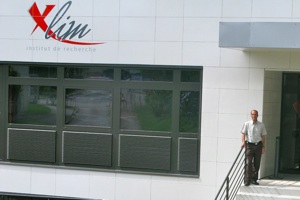
Samir Adly is a Full Professor in the Department of Mathematics and Computer Science (DMI) at the University of Limoges, France. He holds leadership roles, including President of the French Society of Industrial and Applied Mathematics (SMAI) since 2023 and Director of the Mathematics and Information Security Department (Mathis) at XLIM Institute (CNRS UMR 7252) since 2016. His research focuses on convex and variational analysis, nonsmooth dynamical systems, optimization, and PDEs. He has authored over 170 publications and serves on editorial boards of journals like Computational Optimization and Applications and Journal of Convex Analysis . Education: PhD in Applied Mathematics, University of Limoges (1995) Habilitation à Diriger des Recherches (HDR), University of Limoges (2005) Research Interests: His work spans convex analysis, variational inequalities, nonsmooth dynamics, numerical optimization, and applications in mechanics and engineering. Key areas include sweeping processes, Lur'e systems, and inertial algorithms for optimization. Teaching: He teaches advanced courses such as Nonsmooth Dynamical Systems, Convex Analysis, and Numerical Optimization at the Master's level, focusing on theoretical foundations and practical applications in MATLAB and AMPL. Grants & Collaborations: Coordinator of the Master’s program ACSYON (Applied Mathematics, Algorithmics, Symbolic Computation, and Numerical Optimization) Founder of the MOD team (Modelling, Optimization, Dynamics) at XLIM Labs & Teams: He leads research at XLIM Institute, particularly in the MOD team, and collaborates internationally on projects like the International Conference on Variational Analysis and Society of Applied and Industrial Mathematics (SMAI) .
Kristian Debrabant is an Associate Professor at the Department of Mathematics and Computer Science, Faculty of Science and Engineering, University of Southern Denmark. He is also affiliated with the STEM Center for Educational Research – FNUG, highlighting his dual engagement in research and pedagogical development. His academic credentials include a Dr.rer.nat. degree, reflecting a strong foundation in mathematical sciences. Department: Department of Mathematics and Computer Science Position: Associate Professor in Computational Science Additional Affiliation: STEM Center for Educational Research – FNUG Email: debrabant@imada.sdu.dk ORCID: https://orcid.org/0000-0003-2901-162X His research lies at the intersection of numerical analysis and stochastic modeling, with a focus on developing and analyzing numerical methods for stochastic differential equations (SDEs). Key areas include Runge-Kutta methods, exponential integrators, weak and strong convergence, and applications in computational science. He also contributes to interdisciplinary work, such as urban traffic modeling and environmental systems. Recent publications show a consistent trend in advancing numerical schemes for SDEs, particularly those with non-standard noise (e.g., fractional Brownian motion), stiff systems, and non-globally Lipschitz coefficients. His work spans theoretical developments in convergence and order conditions to practical implementations in finance, ecology, and engineering. The integration of B-series and tamed schemes reflects a deep engagement with both classical and modern numerical frameworks. Kristian Debrabant supervises PhD students, as indicated by the 'PhD supervision (2)' note in his profile. While specific grant details are not listed, his publication record and active research suggest ongoing funding support. His involvement with the STEM Center implies leadership or significant contribution to educational innovation in STEM disciplines.