معرفی
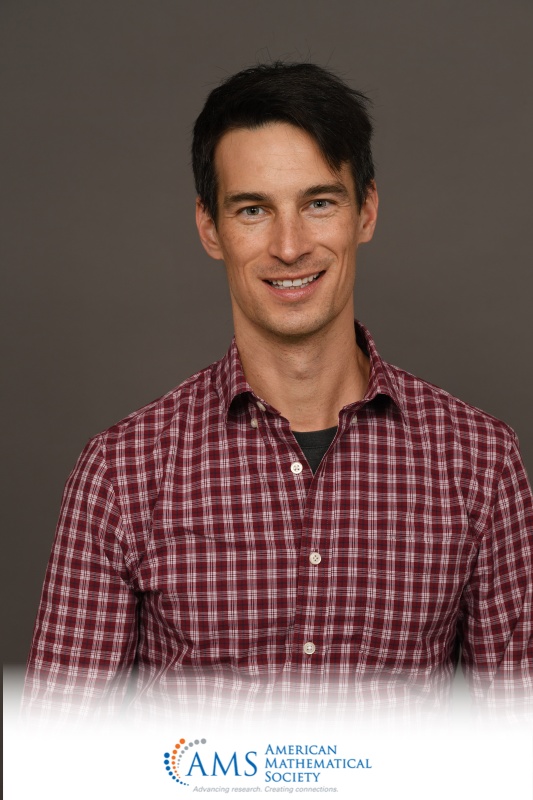
Caleb Shor is a Professor in the Department of Mathematics at Western New England University, where he has taught since 2008. He also serves as director of the PROMYS for Teachers program at Boston University. His academic journey includes a Ph.D. in Mathematics from Boston University (2005) and a B.S. in Mathematics from Bates College (2000).
Dr. Shor's educational background includes:
- Ph.D. in Mathematics, Boston University, 2005
- B.S. in Mathematics, Bates College, 2000
- Semester Abroad, Budapest Semesters in Mathematics, Technical University of Budapest, Spring, 1999
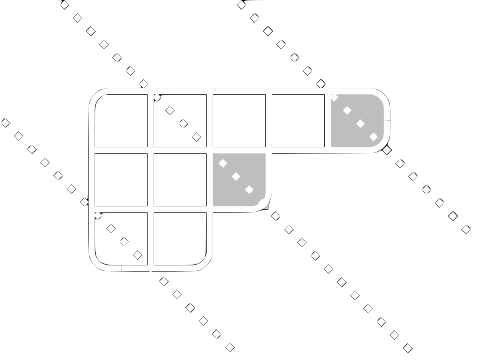
Dr. Shor's primary research interests span multiple areas of pure mathematics with a focus on Numerical Semigroups, Algebraic Geometry, Number Theory, and Coding Theory. His work often bridges theoretical mathematics with applications in coding theory, particularly exploring connections between algebraic structures and error-correcting codes. A significant portion of his research examines properties of numerical semigroups, including their gaps, generators, and complementary structures, while his work in algebraic geometry frequently centers on superelliptic curves and Weierstrass points.
Analysis of Dr. Shor's publication record reveals a consistent focus on numerical semigroup theory and algebraic geometry, with increasing attention to connections with coding theory in recent years. His most recent work (2022-2024) has explored equidistribution properties of numerical semigroup gaps and residues of shifted fractions, demonstrating the continued evolution of his research program while maintaining connections to his foundational work in semigroup theory.
Dr. Shor has extensive teaching experience, having taught undergraduate courses including Introduction to Statistics, Calculus series, Differential Equations, Engineering Analysis, Linear Algebra, Modern Algebra, Complex Analysis, and Number Theory. At the graduate level, he teaches Calculus Revisited, Linear Algebra, and Number Theory in the MAMT program. He has advised numerous senior projects in mathematics, particularly in number theory, algebraic geometry, abstract algebra, numerical semigroups, and combinatorics.