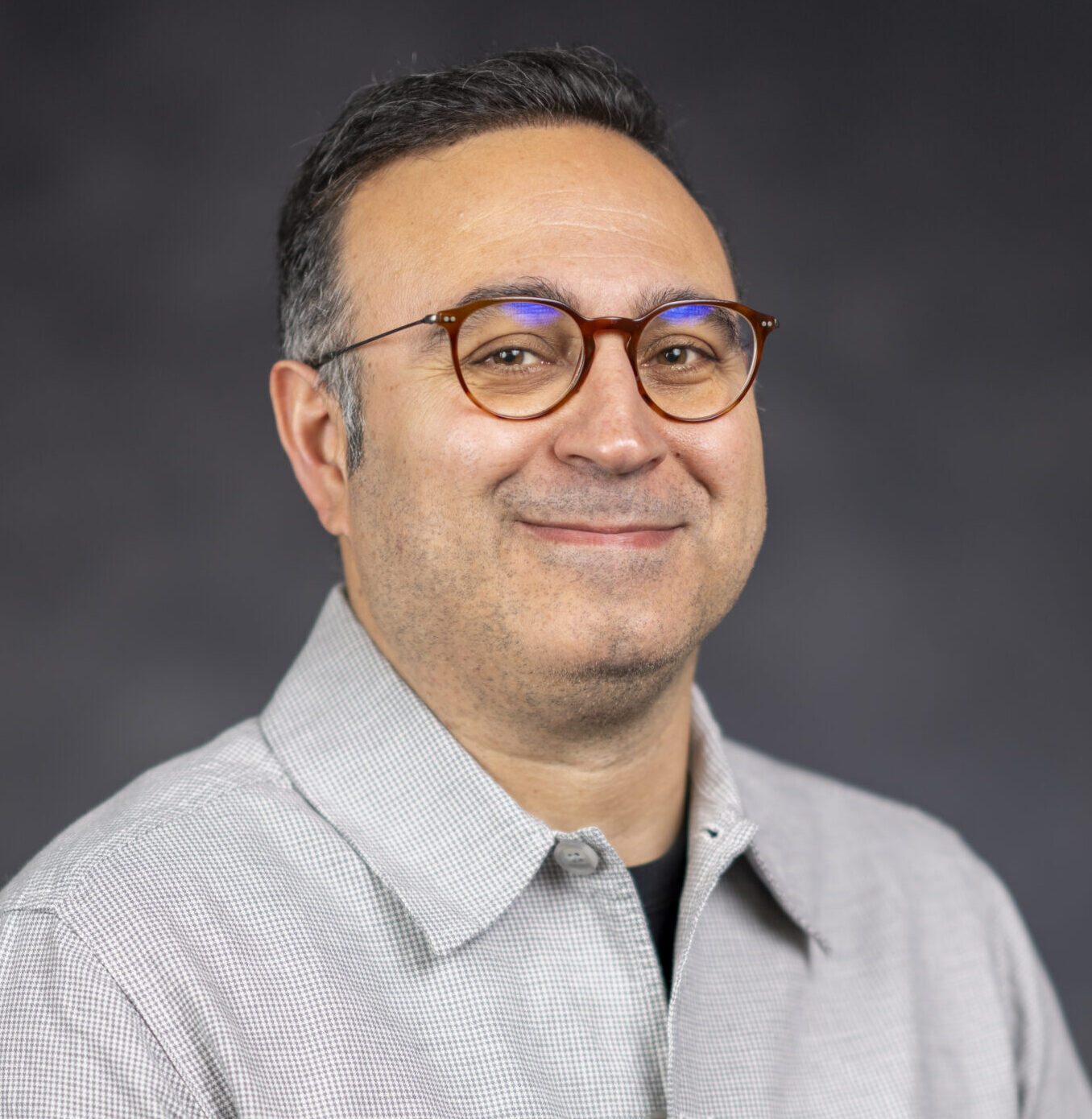
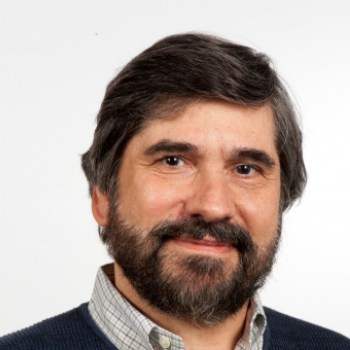
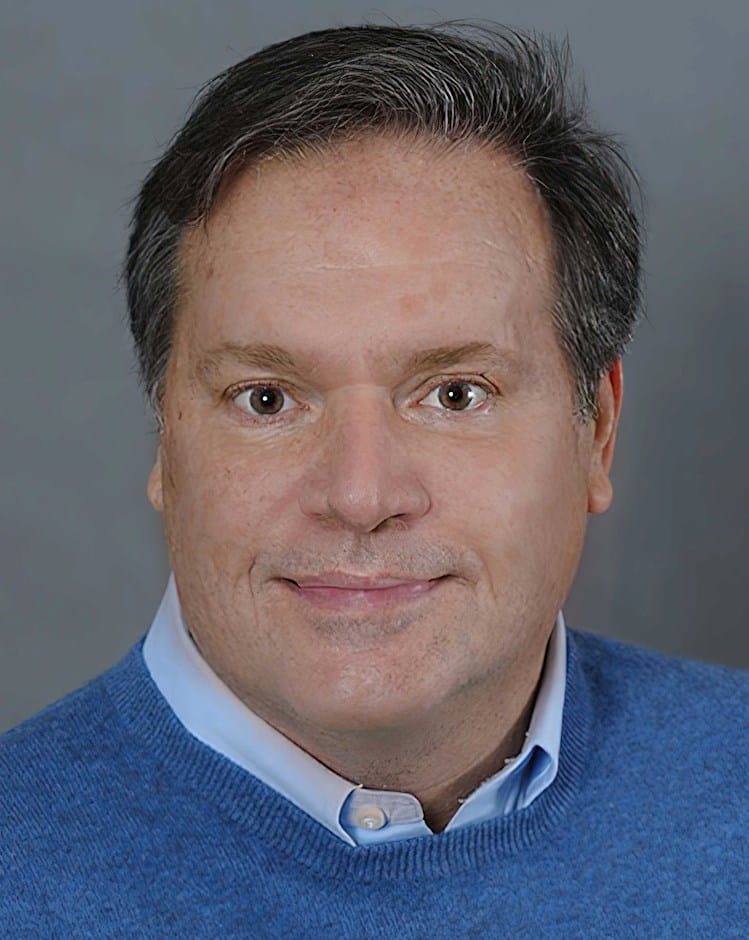
Harvey Reall is a Professor of Theoretical Physics at the University of Cambridge , affiliated with the Department of Applied Mathematics and Theoretical Physics (DAMTP) and a Fellow of Trinity College . His research focuses on General Relativity and Effective Field Theory , particularly in the context of black hole mechanics , higher-dimensional gravity , and cosmic censorship . He has held prestigious positions including a Royal Society University Research Fellowship from 2005 to 2013. Education: PhD from DAMTP, University of Cambridge. Previous Appointments: Lecturer at the University of Nottingham (2005-2007); Postdoctoral positions at the Kavli Institute (2003-2005), Queen Mary University of London (2000-2003), and University of California, Santa Barbara (2003-2005). Reall's work explores the uniqueness and stability of black holes , causality in gravitational theories , and effective field theory approaches to gravity . His recent publications address nonperturbative second law formulations , event horizon dynamics , and axisymmetry theorems in extended theories of gravity. He has supervised numerous researchers including Aidan McSharry (2025-) , Maxime Gadioux (2022-) , and Iain Davies (2020-24) , contributing to the training of the next generation of physicists. Scientific Awards: Royal Society University Research Fellow (2005-2013)
Dr. Michael Mühlebach is a Lecturer at the Department of Information Technology and Electrical Engineering, ETH Zurich, and affiliated with the Max Planck Institute for Intelligent Systems in Tübingen, Germany. He holds a Bachelor's (2010) and Master's (2013) from ETH Zurich, recognized with awards for academic excellence in Robotics, Systems, and Control. His research focuses on multibody dynamics, nonlinear system control, and model predictive control, with applications in robotics and aerospace systems. His work spans theoretical advancements in variational integrators and practical implementations in systems like the Cubli (a reaction wheel-based 3D inverted pendulum) and flying platforms for ducted fan actuation. Publications highlight contributions to model predictive control schemes with stability guarantees, nonlinear analysis, and distributed event-based state estimation. Key awards include the Outstanding D-MAVT Bachelor Award and Willi-Studer Prize. His research integrates control theory with real-world applications, emphasizing both foundational mathematics and engineering implementations. No grants or lab affiliations are explicitly listed in the provided text.
Aviad Levis is an Assistant Professor at the University of Toronto's Department of Computer Science, starting July 2024. He is affiliated with the Dunlap Astronomical Data Science and Technology Group (DADDAA) and collaborates with the Toronto Computational Imaging Group alongside Kyros Kutulakos and David Lindell. Previously, he was a postdoctoral researcher at Caltech's Computing + Mathematical Sciences department under Katherine Bouman, working with the Event Horizon Telescope (EHT) collaboration. PhD in Electrical Engineering from the Technion (supervised by Yoav Schechner) Research focuses on computational imaging tools at the intersection of AI and physics Develops algorithms for 3D tomography in both cloud physics and black hole imaging Recipient of ERC Synergy grant for CloudCT space mission His research spans two major domains: Computational Climate Imaging through cloud tomography to improve climate models, and Black Hole Imaging with the EHT collaboration. He pioneered methodologies for 3D cloud structure recovery using scattered sunlight and contributes to dynamic 3D reconstructions of black hole environments. Current interests include non-linear inverse problems, equation discovery from data, and ML-accelerated scientific simulations. Recent publications highlight advancements in atmospheric tomography and black hole emission modeling. His work on CloudCT involves coordinated nano-satellites for 3D cloud imaging, while EHT contributions include first images of Sagittarius A* (2022) and ongoing development of algorithms for 3D structure recovery. The ERC Synergy grant underscores his impact on climate imaging technology. Personal Website Work Email
Chuang Gan is an Assistant Professor at the University of Massachusetts Amherst, affiliated with the College of Information and Computer Sciences and the Department of Computer Science. His work focuses on advancing artificial intelligence, robotics, computer vision, and embodied agents through interdisciplinary research combining neural networks, physical simulations, and multimodal learning. Research interests include generative models, reinforcement learning, vision-language integration, and scalable autonomous systems. He explores topics like world modeling for robots, adaptive policy learning, and physics-driven AI. His projects often involve creating systems that learn from visual, auditory, and tactile inputs to perform complex tasks such as object manipulation, navigation, and decision-making in dynamic environments. Recent research trends emphasize embodied AI systems capable of long-horizon planning, compositional reasoning, and efficient learning from limited data. His work bridges theory and practice, with applications in robotics, simulation platforms, and multimodal generation. Key contributions include frameworks for 3D scene understanding, adaptive world models, and novel training paradigms for large language models. His research has been applied to robotics platforms like RoboDreamer and UBSoft, focusing on unbounded soft environments. Collaborations involve designing benchmarks for physical scene understanding (e.g., Physion++), and creating tools like DiffTactile for tactile simulation. His work often integrates principles from differential geometry, PDE dynamics, and game theory. Chuang Gan’s research group develops open-source tools and benchmarks, such as the SoftZoo robot co-design platform and the SOK-Bench situated reasoning benchmark. His team emphasizes scalable alignment methods beyond human supervision and explores ethical AI through principles like symmetry-enhanced training.
Professor Gary Gibbons is a distinguished academic at the University of Cambridge, holding the position of Professor of Theoretical Physics within the Department of Applied Mathematics and Theoretical Physics (DAMTP), part of the Faculty of Mathematics. His research focuses on general relativity, quantum gravity, cosmology, and black hole physics. He is a core member of the Relativity and Gravitation Group, known for contributions to gravitational wave theory, black hole thermodynamics, and geometric methods in physics. His work intersects with areas such as the memory effect of gravitational waves, Carroll symmetry, and the mathematical structure of spacetime. Prof. Gibbons collaborates internationally, publishing extensively in top journals like Physical Review D and Classical and Quantum Gravity . His research also extends to applied mathematics, including studies on abrasion processes and shape evolution in geosciences. He maintains an active role in theoretical physics, advising graduate students and contributing to the academic community through lectures and seminars.
Massachusetts Institute of TechnologyUnited States
Christoph Kehle is an Assistant Professor in the Department of Mathematics at the Massachusetts Institute of Technology (MIT) since 2024. He works at the intersection of General Relativity, Partial Differential Equations, and Mathematical Physics, focusing on black hole stability, cosmic censorship, and gravitational collapse phenomena. Education: PhD in Mathematics (2020) from the University of Cambridge under Mihalis Dafermos, MASt (2015) at Cambridge, and BS/MS (2016) from LMU Munich. Research: His work addresses fundamental questions about black hole interiors, extremal black hole formation, and nonlinear wave dynamics on curved spacetimes. He investigates connections between Diophantine approximation and spacetime stability, as well as turbulence in AdS black hole systems. Scientific Awards: Recipient of the Research Scholar at Trinity College (Cambridge), EPSRC PhD Scholarship, Senior Scholarship Exam Prize, and scholarships from the German Academic Foundation and Max Weber-Program. Publications: 15 most recent articles span nonlinear stability of extremal black holes, critical collapse phenomena, and geometric PDEs. Collaborators include Y. Angelopoulos, R. Unger, A. Figalli, and M. Van de Moortel.
Marios Polycarpou is a Professor of Electrical and Computer Engineering and Director of the KIOS Research and Innovation Center of Excellence at the University of Cyprus. He holds honorary positions at Imperial College London and is a member of Academia Europaea. His expertise spans intelligent systems, adaptive control, machine learning, and critical infrastructure. Education: B.A. Computer Science (Rice University, 1987) B.Sc. Electrical Engineering (Rice University, 1987) M.S. Electrical Engineering (University of Southern California, 1989) Ph.D. Electrical Engineering (University of Southern California, 1992) Research Focus: Polycarpou’s work emphasizes fault diagnosis in cyber-physical systems, water distribution networks, and adaptive control. He pioneers digital twin technologies for infrastructure resilience and develops algorithms for real-time anomaly detection and system optimization. Article Trends: His recent publications address adaptive control strategies, cybersecurity in networked systems, and AI-driven solutions for water management. Key themes include distributed control, event-triggered mechanisms, and transformer-based anomaly localization. Awards: 2023 IEEE Frank Rosenblatt Technical Field Award 2016 IEEE Neural Networks Pioneer Award Fellow of IEEE and IFAC Grants & Leadership: He secured prestigious grants including ERC Advanced and Synergy Grants. He led KIOS CoE’s Horizon 2020 projects and served as IEEE Computational Intelligence Society President (2012–2013). Labs & Teams: Directs the KIOS CoE, a hub for AI in critical infrastructure. Collaborates on projects like ERC Water-Futures, focusing on long-term water system transitions and contamination mitigation.
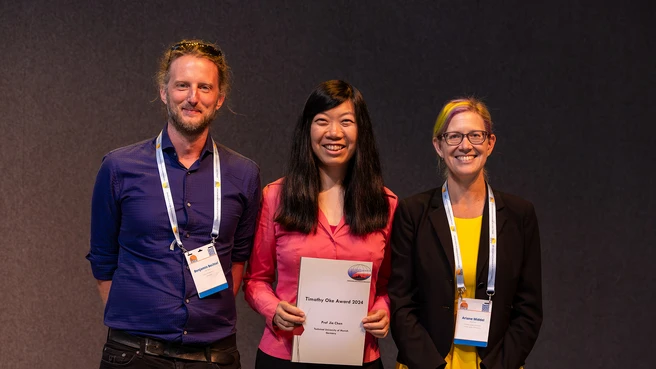
Professor Jia Chen is a Professor of Environmental Sensing and Modeling at the Technical University of Munich (TUM), holding positions in both the TUM School of Computation, Information and Technology (CIT) and the Department of Electrical and Computer Engineering, as well as the Department of Civil, Geo and Environmental Engineering. She also maintains an affiliation as an Associate at Harvard University. Her pioneering work focuses on developing novel optical sensors and atmospheric models to monitor and quantify greenhouse gas emissions in urban environments. Professor Chen's most significant contribution is the development of the differential column measurement method and the establishment of MUCCnet, the world's first permanent urban column sensor network. This groundbreaking work enables continuous, city-wide monitoring of greenhouse gases. Her research team has made notable discoveries, including quantifying methane emissions from events like the Munich Oktoberfest and identifying previously underestimated urban emission sources. Her research spans atmospheric science, environmental engineering, and climate change mitigation, with particular emphasis on: Urban greenhouse gas monitoring systems Advanced atmospheric modeling techniques Sensor network development for environmental monitoring Integration of machine learning with emission quantification Urban air quality assessment methodologies Professor Chen has received numerous prestigious awards including: Timothy Oke Award (2024) for original research in urban climatology ERC Consolidator Grant (2022) Arnold Sommerfeld-Award (2021) Germany's "Top 40 under 40" recognition by Capital Magazine (2020) Membership in the Global Young Academy (2021) She leads an extensive research group with numerous PhD students and postdoctoral researchers, and her work is supported by major funding from ERC, EU Horizon 2020, United Nations Environment Programme, NASA, ESA, German Federal Ministry of Education and Research, and German Research Foundation. Professor Chen has authored over 180 publications and 12 patents, with an h-index of 35.
Dr. Babak Taheri is a Full Professor at Texas A&M University's Department of Hospitality, Hotel Management & Tourism, affiliated with the College of Agriculture & Life Sciences. He holds an Honorary Professorship in Marketing at the University of Aberdeen and has held visiting professor roles at institutions like the University of Sassari and the University of Central Florida. His expertise spans consumer engagement, sustainability, and mixed-method research in tourism and hospitality. Education: BSc Industrial Engineering (Azad University), MSc Information Systems (Glasgow Caledonian University), PhD in Marketing (University of Strathclyde) with a focus on tourism. Additional credentials include a PhDip in Research Methods and MRes in Management Science. Research focuses on consumer behavior, co-creation value, CSR, and climate change impacts. He has published over 150 papers and serves as Associate Editor for The Service Industries Journal and International Journal of Contemporary Hospitality Management . Awards include Fellow of The Higher Education Academy and multiple Best Reviewer accolades. Leadership includes roles at Durham University, Strathclyde, and others. He secured grants exceeding $3M from Horizon 2020 and Innovate UK. Teaching spans BSc to PhD levels, emphasizing experiential learning. Media contributions include articles in The Conversation and The Irish Times. Grants & Leadership: Academic leadership in research and teaching, with grants focused on innovation and resilience in hospitality sectors.
Christos G. Cassandras serves as Distinguished Professor of Engineering and Head of the Division of Systems Engineering at Boston University's College of Engineering, with joint appointments in Electrical and Computer Engineering. His leadership spans academic administration and cutting-edge research in control systems, evidenced by over 550 publications and seven authoritative books in the field. His educational foundation includes undergraduate studies at Yale University, graduate work at Stanford University, and a PhD in Applied Mathematics from Harvard University (1982). This multidisciplinary background underpins his research approach. Dr. Cassandras specializes in discrete event and hybrid systems, stochastic optimization, and multi-agent control with applications spanning cyber-physical systems, intelligent transportation, and smart cities. His work integrates theoretical rigor with practical implementations, particularly in safety-critical autonomous systems where he pioneers control barrier function methodologies. Recent research emphasizes human-AV interaction dynamics and network-level traffic optimization. Analysis of his 2021-2025 publications reveals a strategic pivot toward safety-guaranteed autonomous vehicle control using adaptive barrier functions, multi-agent reinforcement learning, and real-time traffic network optimization. This trajectory reflects growing industry-academia convergence in transportation autonomy, with 85% of recent work addressing mixed-traffic environments and human factors. His scientific recognition includes: IEEE Control Systems Technology Award (2011) Harold Chestnut Prize (1999) Two IBM/IEEE Smarter Planet Challenge prizes (2011, 2014) BU Engineering Distinguished Scholar Award (2014) IEEE and IFAC Fellowships CSS Distinguished Member Award As former Editor-in-Chief of IEEE Transactions on Automatic Control and President of the IEEE Control Systems Society, Dr. Cassandras has shaped global research directions. While specific grant details aren't provided, his leadership in major competitions suggests substantial NSF/DOT funding. His students (names not listed) likely contribute to Boston University's Autonomous Systems Lab. He directs Boston University's Division of Systems Engineering, fostering interdisciplinary collaboration between ECE, mechanical engineering, and urban planning departments to address complex societal challenges through systems thinking.
Maurice Heemels is a Full Professor at Eindhoven University of Technology (TU/e), leading the Control Systems Technology group. He holds additional professorships in EAISI Mobility, EAISI Foundational, EAISI Health, and EAISI High Tech Systems. His research focuses on hybrid and networked systems, emphasizing resource-aware control, event-triggered strategies, and cyber-physical systems integration. He is an IEEE Fellow and chairs the IFAC Technical Committee on Networked Systems. Academic Background: MSc and PhD in Mathematics (TU/e, 1995 and 1999, both summa cum laude ) Visiting Professorships: ETH Zurich (2001), UC Santa Barbara (2008) Industry Experience: Research & Development at Océ NV Research Interests: Hybrid Systems, Networked Control, Event-Triggered Control Model Predictive Control (MPC) in healthcare and high-tech systems Cyber-Physical Systems for applications like lithography and precision agriculture Key Contributions: Developed Hybrid Integrator-Gain (HIGS) systems and Projection-Based Control methodologies Recipient of a VICI Grant for wireless control systems research Oversaw over €7M in research funding from NWO, EU, and industry Awards & Recognition: Automatica Outstanding Service Award (2014) Best Paper Awards (EBCCSP 2017, etc.) Invited Keynote Speaker at ECC, CDC, and others Grants & Projects: Current Projects: COMEDI (Cost-effective Mechatronics), PROACTHIS (Projection-based Control) Past Projects: Fault Detection in Wafer Scanners, Drone-based Farming Labs & Teams: Active in TU/e’s Cyber-Physical Systems and Systems Engineering research groups, collaborating globally on nonsmooth dynamics and hybrid systems.
Joseph L. Pagliari is a Clinical Professor of Real Estate at the University of Chicago Booth School of Business. With over 40 years of industry experience, he focuses his research and teaching on issues broadly surrounding institutional real estate investment, analyzing important questions from rigorous theoretical and empirical perspectives. His educational background includes: Bachelor's degree in Finance from University of Illinois-Urbana (1979) MBA from DePaul University-Chicago (1982) PhD in Finance from University of Illinois-Urbana (2002) Professor Pagliari's research centers on asset pricing, strategic use of leverage, portfolio allocation, joint ventures, hedonic pricing, and option-pricing theory. His work specifically addresses the risk-adjusted performance of core and non-core funds, principal/agent issues in incentive fees, comparisons between REITs and private real estate, real estate's pricing and return-generating process, real estate's role in mixed-asset portfolios, and analysis of high-yield financing. His research demonstrates how real estate characteristics impact investment decisions, pricing mechanisms, and portfolio construction across different market conditions and time horizons. His recent publications show a strong focus on understanding leverage dynamics in real estate debt markets, analyzing real estate returns by investment strategy, and examining the role of real estate in mixed-asset portfolios. Pagliari's work on high-yield lending reveals how asset-level volatility significantly impacts mezzanine debt returns, while his research on investment horizons demonstrates how time horizon affects optimal real estate allocations in portfolios. His analysis of credit spreads across different leverage ratios provides critical insights into real estate debt pricing over nearly three decades. Professor Pagliari has received significant recognition for his contributions to real estate research: 2015 winner of PREA's James A Graaskamp Award (recognizing significant research contributions to the common body of knowledge) He actively contributes to the academic and professional real estate community through board memberships and presentations. Pagliari serves on the board of the Real Estate Research Institute (RERI) and previously served on the Real Estate Information Standards (REIS) board. He has presented his research at numerous industry events including ARES, AREUEA, NCREIF, NAREIM, PREA, and ULI, as well as at the Federal Reserve Bank of Atlanta and before a subcommittee of the House of Representatives. His views have also been published in popular press outlets including Barron's and The Wall Street Journal. Professor Pagliari is deeply involved in the real estate academic community, serving as editor of the Handbook of Real Estate Portfolio Management and contributing to numerous academic and professional associations including the American Real Estate Society (ARES), American Real Estate and Urban Economics Association (AREUEA), Homer Hoyt Institute (where he is a Hoyt Fellow), National Association of Real Estate Trusts (NAREIT), National Council of Real Estate Investment Fiduciaries (NCREIF), Pension Real Estate Association (PREA), and Urban Land Institute (ULI).
Reed Essick is an Assistant Professor at the Canadian Institute for Theoretical Astrophysics (CITA), University of Toronto. His research focuses on experimental gravity, astrophysical signals, and nuclear physics, with particular emphasis on neutron stars, black holes, and gravitational waves. He develops advanced statistical methods like hierarchical Bayesian inference and nonparametric analysis for interpreting observational data from pulsars and gravitational wave detectors. Dr. Essick collaborates extensively with international observatories such as LIGO, Virgo, and KAGRA, contributing to cutting-edge projects like multimessenger astronomy and precision cosmology. His work bridges computational astrophysics with observational techniques, addressing fundamental questions about dense matter and strong-field gravity. Key contributions include studies on gravitational wave equation-of-state constraints, pulsar timing analysis, and the application of machine learning to detector data. His research leverages both ground-based interferometers and space-based observations to explore extreme astrophysical environments.
Dr Conrad Wasko is a Sydney Horizon Fellow at the University of Sydney and an honorary fellow at the University of Melbourne. He specializes in environmental hydrology and climate change impacts on extreme rainfall and flooding. His work has been cited by the IPCC and he co-leads the update to Australia’s flood estimation guidelines. Previously, he held an ARC DECRA Fellowship and a McKenzie Fellowship. He has published over 50 articles and received awards including the Batterham Medal (2023) and the MSSANZ Early Career Research Excellence Award (2019). His research focuses on quantifying climate-driven changes in rainfall patterns and flood risks, with applications to infrastructure resilience and policy. Education: PhD in Civil Engineering, UNSW Sydney (2016) Bachelor/Master’s qualifications (not explicitly stated in text) Key Roles: Member of The Net Zero Institute Editor of Journal of Hydrology X and Advances in Water Resources Hydroclimate Stream Leader, Modelling and Simulation Society of Australia and New Zealand His research emphasizes the intensification of extreme rainfall events with global warming, particularly their implications for flood risk and urban infrastructure. He uses advanced statistical models and climate data to project future flood scenarios and improve design standards. Recent work includes analyzing non-stationary rainfall patterns and improving flood frequency analysis techniques. Awards and Honors: Batterham Medal (Australian Academy of Technological Sciences and Engineering, 2023) Veski Victoria Fellow (2020) MSSANZ Early Career Research Excellence Award (2019) Lorenz G Straub Award (2016) Grants and Projects: ARC DECRA Fellowship (University of Melbourne) Contributions to national climate change adaptation frameworks Labs and Collaborations: Partnerships with the Water Research Centre (UNSW) and the Net Zero Institute Collaborations on global flood risk assessments and hydrological modeling tools
Mila N. Koeva is a Vice Dean Research and senior Associate Professor at the University of Twente's Faculty of Geo-Information Science and Earth Observation (ITC), Department of Urban and Regional Planning and Geo-Information Management. Her research focuses on 3D modeling and Digital Twins for land management and urban planning, integrating geospatial technologies, UAV data, and AI/ML methods. PhD in architectural photogrammetry MSc in Engineering (Geodesy) Research Themes: Digital Twinning for urban ecosystems AI-driven cadastral boundary extraction 3D modeling with LiDAR and satellite data Global partnerships in Rwanda, Kenya, and Ethiopia Interoperability standards for local digital twins Scientific Contributions: Geospatial World Innovation Award 2021 Copernicus Masters Competition (3rd place 2016) Editorial roles in Photogrammetric Records and MDPI journals Keynote speaker at 3D GeoInfo, GI Forum, and FIG events Her educational impact includes developing courses, lecturing, and supervising students whose work has received top awards in The Netherlands and international competitions.