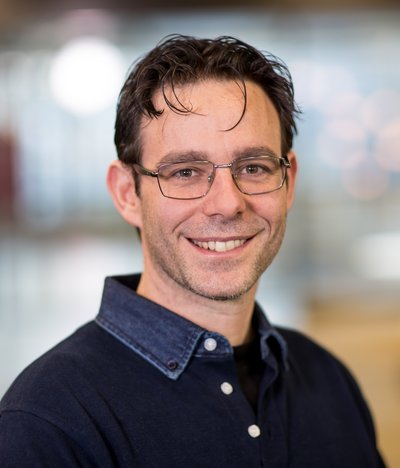
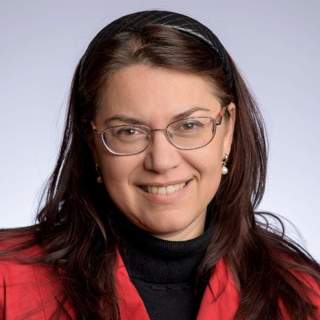
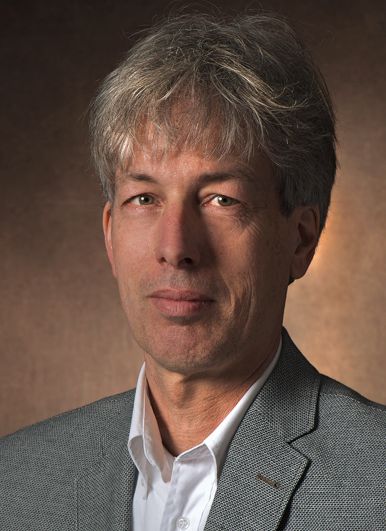
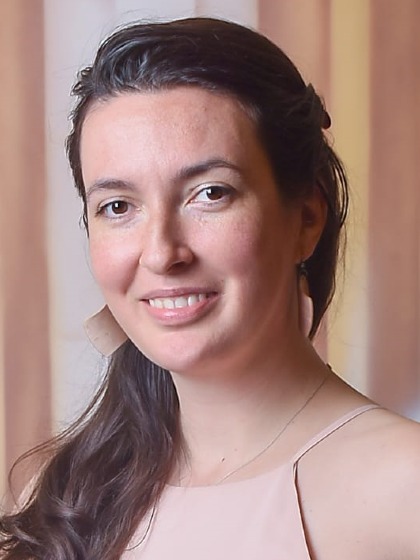
Massimo Mischi is a Full Professor at the Faculty of Electrical Engineering of the Eindhoven University of Technology (TU/e) and chairs the Signal Processing Systems (SPS) Division , the largest division at TU/e with over 250 researchers. He founded the Biomedical Diagnostics (BM/d) Lab in 2012, which now includes 180 researchers and clinical/industrial advisors, focusing on biomedical signal processing for diagnostics and monitoring.
Dr. Peter Fokker is a Researcher at Utrecht University's Faculty of Geosciences, specifically within the Department of Earth Sciences and the Experimental Rock Deformation/HPT group. He is affiliated with the Research Programme in Earth Sciences Utrecht (DES/IVAU) and has been actively publishing in geomechanics, subsidence modeling, and induced seismicity for over three decades. His work primarily focuses on the application of geomechanical principles to understand and model subsurface processes related to resource extraction and geothermal energy. Dr. Fokker's research interests span several interconnected domains in geomechanics and subsurface engineering. His primary focus is on experimental rock deformation , studying how rocks behave under various stress conditions. He has made significant contributions to subsidence modeling , particularly in the context of gas field depletion in the Netherlands. His work on induced seismicity has helped understand the relationship between subsurface operations and seismic events. Additional interests include geothermal energy systems , reservoir engineering , and the application of data assimilation techniques to improve subsurface characterization. His research often bridges theoretical models with practical applications in energy resource management. An analysis of Dr. Fokker's recent publications (2020-2025) reveals a strong focus on practical applications of geomechanics to real-world challenges. His work increasingly integrates InSAR technology and data assimilation methods to monitor and model subsidence processes. There's a clear emphasis on geothermal energy applications , reflecting growing interest in sustainable energy solutions. His research also demonstrates a sophisticated approach to modeling complex reservoir behaviors across multiple scales, from laboratory experiments to field-scale operations. The interdisciplinary nature of his work is evident in collaborations spanning geology, engineering, and environmental science. Dr. Fokker has supervised multiple research projects and students throughout his career, as indicated by the "Supervised Work (4)" reference in his profile. His research has been supported by various grants focused on subsidence modeling, geomechanics of energy resources, and induced seismicity. He has been involved in significant collaborative efforts, including the Dutch National Scientific Research Program on Land Subsidence. Dr. Fokker is part of the Experimental Rock Deformation/HPT group at Utrecht University, which conducts laboratory experiments and develops theoretical models to understand rock behavior under various conditions. His work contributes to the broader research ecosystem focused on sustainable resource management and understanding subsurface processes, with particular relevance to the Dutch context of gas extraction and land subsidence.
Nelly V. Litvak is a Full Professor in Algorithms for Complex Networks at Eindhoven University of Technology (Mathematics and Computer Science). She works on mathematical methods and algorithms for complex networks (social networks, WWW) using random graph models. She joined TU/e as a part-time professor in 2017 after being an Associate Professor at the University of Twente since 2012. Affiliations: 4TU Applied Mathematics Institute, Data Science Center Eindhoven, CTIT Industry Partners: ABN-AMRO Bank, Philips Lighting, Thales Editorial Role: Managing Editor of Internet Mathematics Her research focuses on extracting value from network data across three areas: (1) Information extraction and prediction, (2) Mathematical analysis of network characteristics, and (3) Efficient algorithms for incomplete network data. Key topics include PageRank, HITS algorithm, random graphs, homophilic networks, and network epidemiology. Recent work (2022-2025) spans network growth mechanisms, fairness in ranking algorithms, educational pedagogy, and pandemic forecasting dashboards. She contributes to SDGs through data-driven approaches to societal challenges. Teaching activities include course development at TU/e and earlier institutions, with innovative methods for computer engineering students' statistical understanding.
Michel Mandjes is a Professor at the University of Amsterdam's Faculty of Science and holds a Visiting Professor position at the Faculty of Economics and Business (FEB). His research focuses on stochastic processes, queueing theory, and probability theory, with applications in risk modeling, network analysis, and operations research. Recent publications highlight his contributions to multivariate Hawkes processes , Lévy-driven systems , and dynamic random graphs , emphasizing large deviations, rare event simulation, and statistical inference. His work bridges theoretical probability with practical challenges in traffic flow, financial risk, and social network modeling. The trends in his research include the development of stochastic models for network stability, appointment scheduling optimization, and inference techniques for non-stationary processes. His methodological innovations often leverage advanced probability theory and queueing frameworks to address real-world problems in transportation, healthcare, and finance.
Mila N. Koeva is a Vice Dean Research and senior Associate Professor at the University of Twente's Faculty of Geo-Information Science and Earth Observation (ITC), Department of Urban and Regional Planning and Geo-Information Management. Her research focuses on 3D modeling and Digital Twins for land management and urban planning, integrating geospatial technologies, UAV data, and AI/ML methods. PhD in architectural photogrammetry MSc in Engineering (Geodesy) Research Themes: Digital Twinning for urban ecosystems AI-driven cadastral boundary extraction 3D modeling with LiDAR and satellite data Global partnerships in Rwanda, Kenya, and Ethiopia Interoperability standards for local digital twins Scientific Contributions: Geospatial World Innovation Award 2021 Copernicus Masters Competition (3rd place 2016) Editorial roles in Photogrammetric Records and MDPI journals Keynote speaker at 3D GeoInfo, GI Forum, and FIG events Her educational impact includes developing courses, lecturing, and supervising students whose work has received top awards in The Netherlands and international competitions.
Maarten van Steen is a Professor active in the fields of Distributed Systems , Artificial Intelligence , and Cybersecurity . With an h-index of 35 and over 5,400 citations, his work focuses on Edge AI , Privacy Preservation , and WiFi-Based Sensing . His research emphasizes non-intrusive authentication, anonymization techniques, and crowd monitoring without compromising individual privacy. Key research areas: Distributed Systems, Privacy Preservation, WiFi Security Recent projects: RoomKey, LocKey, FlowPrint Crowd-monitoring applications: Subway travelers, pedestrian dynamics Van Steen's work combines Machine Learning with Homomorphic Encryption to develop privacy-first solutions. He has contributed to mobile app fingerprinting , WiFi authentication , and blockchain scalability challenges. His 2024–2025 publications reveal trends in contextual security , crowd behavior analysis , and automated threat intelligence . Notable methods include Bloom Filters, automata learning, and WiFi beacon frame analysis. Dutch Cyber Security Best Research Paper Award 2024 Runner-up (shared prize) Van Steen supervises research teams and collaborates on datasets like Code for Threat Intelligence Processing and DeepCASE . His work spans 20+ years , with 208 total research outputs and significant contributions to decentralized systems, network traffic analysis, and urban mobility.
Arno Siebes is Professor of Algorithmic Data Analysis in the Department of Information and Computing Sciences at Utrecht University's Faculty of Science. His research focuses on data mining methodologies, particularly pattern mining and Minimum Description Length (MDL) principles. Key research areas include: Developing efficient algorithms for pattern discovery Applying MDL to data characterization Creating interpretable models for complex datasets Addressing challenges in data science education Recent publications demonstrate applications in diverse domains including mobility analysis, genomic screening, and pandemic response. His work combines theoretical foundations with practical implementations for knowledge discovery.
National Research Institute for Mathematics and Computer ScienceNetherlands
Prof. Sander M. Bohte holds a part-time appointment as a Professor of Computational Neuroscience at the Swammerdam Institute for Life Sciences (SILS), University of Amsterdam, and is a researcher at the CWI Machine Learning group. His research focuses on computational models of neural information processing, emphasizing spiking neural networks, predictive coding, and reinforcement learning. He bridges computational neuroscience and machine learning, exploring how biological insights can improve neural network designs and vice versa. Key collaborations include work with Cyriel Pennartz (UvA), Pieter Roelfsema (NIN), and Steven Scholte (B&C). His applied research spans scientific machine learning applications in finance and genomics. He actively supervises MSc thesis students, prioritizing those from UvA, with projects ranging from biologically inspired neural architectures to efficient spiking network simulations. Research highlights include developing biologically plausible learning rules for deep networks, predictive coding models for sensory data, and spiking network models for working memory tasks. His work also addresses challenges in temporal dynamics and scalable neural computation, leveraging both theoretical and applied perspectives.
Elena Mocanu is an Assistant Professor in the Department of Datamanagement & Biometrics and a faculty member of the Digital Society Institute. Her research focuses on advancing neural network architectures, particularly through dynamic sparse training techniques to enhance computational efficiency and model performance. Key areas include deep reinforcement learning applications in building energy optimization, federated learning for collaborative data environments, and sparse connectivity models that reduce resource usage without sacrificing accuracy. She has contributed to frameworks like the Digital Twin for autonomous driving and energy systems, emphasizing sustainability and scalability. Her work bridges theoretical advancements and practical implementations, addressing challenges in energy-efficient AI, robust noise filtering in reinforcement learning, and feature selection for medical imaging tasks. She actively organizes conferences such as ICLR workshops on sparsity in neural networks and IJCAI events, fostering interdisciplinary collaboration in artificial intelligence. Awards : Best Paper Award at AAMAS 2022 Workshop, ICML 2022 Outstanding Reviewer Award Conference Leadership : Organized ICLR 2023 Sparsity Workshop, EPIA 2023/2022 Conferences Research highlights include scalable training methods inspired by network science, energy optimization in smart buildings, and sparse ensembling techniques that achieve efficiency gains without overhead. Her contributions span foundational machine learning theory to applied domains like smart grids and autonomous systems.
Chantal D'Amore is a Postdoc researcher at the Department of Social Psychology within the Faculty of Behavioural and Social Sciences at the University of Groningen. Her work focuses on political polarization, morality, and attitude moralization, often employing quantitative methods to analyze social dynamics and political discourse. She has contributed to studies on the psychosocial impact of gas extraction in Groningen and the theoretical integration of intergroup conflict models. Teaching: Research Practicum and Master thesis supervision Science communication: Blogging for The Inquisitive Mind Magazine (Dutch) Her research explores how perceived polarization influences moralization processes, with longitudinal studies during significant events like the 2020 U.S. election. Collaborations involve projects on community well-being, entrepreneurship in turbulent contexts, and intergroup value protection dynamics. Awards: Best Scientific Paper Award (2024), Jan Brouwer Thesis Award (2020) Publications include analyses of Dutch societal issues (e.g., Zwarte Piet controversy) and international frameworks explaining conflict escalation in democratic societies.
National Research Institute for Mathematics and Computer ScienceNetherlands
Karl Aberer is a full Professor for Distributed Information Systems at École polytechnique fédérale de Lausanne (EPFL) since 2000. From 2005 to 2012, he led the Swiss National Research Center for Mobile Information and Communication Systems (NCCR-MICS). Currently serving as Vice-President of EPFL responsible for information systems, he contributes to academic leadership while maintaining an active research profile. His research spans Distributed Systems Data Mining Machine Learning Social Computing Web Science Graph Neural Networks with recent work focusing on multimodal learning, federated unlearning, and social media analysis. He serves on the editorial boards of the VLDB Journal ACM Transactions on Autonomous and Adaptive Systems World Wide Web Journal and contributes to PeerJ Computer Science.
Patrick J.F. Groenen is a full Professor of Statistics at the Erasmus School of Economics (ESE), Erasmus University Rotterdam , and currently serves as its Dean. His academic career spans leadership roles, including Director of the Econometric Institute (2014-2020) and President of the International Association for Statistical Computing (2015-2017). He has held visiting positions at Stanford University and contributed extensively to multidimensional scaling (MDS), data science , and statistical genetics . His research focuses on numerical algorithms for MDS, support vector machines , and optimization techniques applied to diverse fields. He is a founding editor of the open-access journal Journal of Data Science, Statistics, and Visualisation and has authored major textbooks including Modern Multidimensional Scaling and Applied Multidimensional Scaling and Unfolding . His work appears in top journals like Nature Genetics , Psychometrika , and Journal of Machine Learning Research . Recent publications highlight advancements in convex clustering , genomic prediction , and robust statistical methods . He has developed influential R packages such as GenSVM , SVMMaj , and smacof for multiclass classification and MDS software. His supervisory record includes 14 PhD students across economic psychology, genetics, and data science. Academic activities include editorial roles at Advances in Data Analysis and Classification and Psychometrika , alongside organizing international conferences like CARME 2007 on correspondence analysis. His contributions to nonlinear biplots and response style modeling have advanced visual data interpretation in social sciences.
Andreea Sburlea is an Assistant Professor in Human Centered Intelligence at the Faculty of Science and Engineering, University of Groningen . Her expertise focuses on Brain-Computer Interfaces , Machine Learning , and Neuroprosthetics , with a particular emphasis on uncertainty quantification in BCI systems. Research Trends : Recent publications highlight her work in applying machine learning and deep learning to motor imagery BCI, transfer learning for P300-based systems, and quantifying classification uncertainties in biosignal applications. Collaborations : Active in international research networks, she collaborates with institutions like the German Research Center for Artificial Intelligence (DFKI) and contributes to conferences such as the Graz Brain-Computer Interface Conference . Contact : Email a.i.sburlea@rug.nl | ORCID
Albert Gatt is a Professor of Natural Language Processing at Utrecht University's Department of Information and Computing Sciences, where he also serves as Programme Director for AI & Data Science. He holds an Associate Professor position (on leave) at the University of Malta's Institute of Linguistics and Language Technology. His research focuses on Natural Language Generation (NLG), multimodal models, and under-resourced language support, particularly for Maltese. He leads projects like NL4XAI and MASRI, addressing challenges in explainable AI and speech recognition. Education: Advanced degrees in computational linguistics and AI (not explicitly detailed in text). Key Projects: Multilingual NLG, Vision-Language benchmarks, Maltese ASR, and NLP evaluation methodologies. Research interests span data-to-text generation, vision-language interfaces, and evaluation practices. His work bridges computational linguistics with cognitive science, emphasizing human-AI collaboration. Notable contributions include the TUNA corpus, SimpleNLG toolkit, and foundational studies on referring expression generation. Publications (2025-2024) explore robust fine-tuning, LLM evaluation, and visual-linguistic grounding. Collaborations span academia and industry, addressing ethical AI and language equity. Supervises a global team of researchers and PhD students across multiple institutions, fostering innovation in NLG, multimodal AI, and Maltese language tech.
Prof. Antske Fokkens is a Full Professor in Computational Linguistic Methods at Vrije Universiteit Amsterdam, with joint appointments in the Faculty of Humanities and the Network Institute. She directs the Text Mining/Language and AI track in the Linguistics Master's program and serves as Vice Dean of Research. Her research investigates methodological aspects of computational linguistics, focusing on language models, interpretable AI, and digital humanities. She develops tools to extract patterns from large text corpora for applications in social science and history, emphasizing transparency and interdisciplinary collaboration. Current projects include analyzing perspective expression in media and semantic modeling for biographical data. Recent publications examine shortcut learning in text classification, persona-driven content generation, hate speech model alignment, and cross-disciplinary approaches to stance detection. Her work integrates NLP with social science theories to analyze discourse on sustainability, polarization, and media framing.